
Softlogic Systems is No. 1 institute for J2ee training in Chennai for assured placements. Our J2EE syllabus covers the Java 2 Platform, Enterprise Edition concepts such as Servlets, JSP, EJB, JDBC, and Web Services. Our J2ee course in Chennai comes with placement support, flexible schedules, real-time projects, and certification to help you successfully launch your career. Our placement team connects you with top IT companies for a smooth career transition.
J2ee Training In Chennai
DURATION
2 Months
EMI
0% Interest
Mode
Live Online / Offline
Let's take the first step to becoming an expert in J2EE
100% Placement
Assurance
Get Certified
JOB PLACEMENT ELIGIBILITY TEST
Your Placement Eligibility Report
Want more details about J2EE Course?
Course Schedules
Course Syllabus
Course Fees
or any other questions...
Fees, Duration & Batch Timings for J2EE Course
Hands On Training
3-5 Real Time Projects
60-100 Practical Assignments
3+ Assessments / Mock Interviews
July 2026
Week days
(Mon-Fri)
Online/Offline
2 Hours Real Time Interactive Technical Training
1 Hour Aptitude
1 Hour Communication & Soft Skills
(Suitable for Fresh Jobseekers / Non IT to IT transition)
July 2026
Week ends
(Sat-Sun)
Online/Offline
4 Hours Real Time Interactive Technical Training
(Suitable for working IT Professionals)
Save up to 20% in your Course Fee on our Job Seeker Course Series
Syllabus of J2EE Course
Module 1: Remote Method Invocation (RMI)
- Object Persistence and Serialization
- Introduction to Distributed Computing
- RMI Architecture
- Importance of RMI Registry
- Developing Simple RMI application
- Callback Implementation in RMI
Module 2: CORBA
- Introduction to CORBA
- CORBA for Distributed computing
- ORB & IIOP
- Interface Definition Language (IDL)
Module 3: Java EE Application
- Java EE Architecture
- Introduction to Java EE Components, Containers and
- Connectors
- Java EE Modules (Web App, EJB JAR, App Client)
- Structure of Java EE Application (Enterprise Archive)
- Packaging and Deploying Java EE Applications
Module 4: JNDI (Java Naming and Directory Interface)
- Introduction to Naming Services
- JNDI as Java API to Naming Services
- Using JNDI
Module 5: JDBC Extension
- javax.sql package (Extension to JDBC)
- DataSource and Connection Pool
- Using JDBC and JNDI
Module 6: Enterprise JavaBeans [EJB 3]
- Introduction to Server-Side Components
- EJB Design Goals and Roles
- EJB Architecture
- Simplified EJB 3 API
- Metadata Annotations in place of XML
- RMI over IIOP
Types of EJB
- Session Bean
- MessageDriven Bean
- Entity Bean
EJB Container Services
- Transactions
- Security
- Life Cycle Management
- State and Persistence of EJB
Session Beans
- Role of Business Interface
- Remote and Local Interfaces
- Session Bean Lifetime
- Developing Stateless Beans
- Developing Stateful Beans
- Standalone and Web Clients
Module 7: Java Persistence API (JPA)
- Designing Persistent Class
- Entity Fields and Properties
- Entity Instance Creation
- Primary Keys and Entity Identity
- Entity Relationships
- Entity Operations
- Entity Manager
- Entity Instance Life Cycle
- Persistence Context
- Query API
- Query Language
Module 8: Java Transaction Management (JTA)
- The ACID Test for Transactions
- Introduction to JTS & JTA
- Container-Managed Transactions
- Bean-Managed Transactions
- Transaction Attributes
- Using JTA
Module 9: Security Model
- Role-Driven Access Control
- Security Identity
- Security and the Deployment Descriptor
- Using Security Roles
- Accessing Security Information via EJBContext
- Using JAAS to access secure EJB
Module 10: Java Message Service (JMS)
- Benefits of using JMS
- Pub/Sub Model
- Point-to-Point Model
- Message Formats, Headers & Properties
- How JMS fits into EJB system
- Developing Message Driven Beans (MDB)
Module 11: Web Services
- Introduction to Web Services
- Service Oriented Architecture
- Architecture and Advantages
- SOAP Significance
- WSDL Importance
- Web Service Annotations
- Implementing a Web Service
- Java API for XML Web Services (JAX-WS)
- Writing a Web Service Client
Objectives of J2EE Training
Using real-world examples and exercises, this J2EE course in Chennai at SLA will cover the usage of procedural J2EE working. The course will teach students how to develop progressively complex J2EE programs, covering database interfaces, J2EE programmer class library functions, error and exception checking, and object-oriented programming with J2EE.
- Use Java Servlet to Develop Web Applications
- Control web sessions using JSP and servlets.
- Use JSP JavaBeans
- Create Custom JSP Tags
- Manage Exceptions and Errors in Web Applications
- Utilize the NetBeans IDE to develop J2EE applications.
Why Softlogic Systems is the Best Choice for J2EE Training – Learn, Practice, and Get Placed!
Online & Offline Training Options
Learn from 100+ Real-Time Developers
Hands-on Projects & Codeathons
0% EMI Fee Options
Resume & Interview Support
Placement with Top IT Firms
1000+ Hiring Partners
No Backdoor Jobs
Highlights of J2EE Course
What is J2EE?
Java 2 Platform, Enterprise Edition is commonly referred to as J2EE. J2EE is the industry standard framework for building business applications, and it is made for those that depend on servers. Developers can generate workflows and access resources like databases or web services thanks to J2EE’s APIs.
What are the reasons for learning J2EE?
J2EE (also known as Java EE or Jakarta EE) training can be quite beneficial for prospective programmers and technical professionals. Here are some good reasons for learning J2EE:
- High Demand in the Job Market: J2EE technologies are embraced extensively by many businesses, particularly large organizations. J2EE development expertise is therefore in high demand, making it a lucrative ability in the employment market.
- Career Growth and Recognition: Acquiring J2EE knowledge and certifications can accelerate your professional development and increase a solid reputation in the IT sector.
- Cloud-Native Adaptability: J2EE has evolved to support cloud-native application development, making it relevant for modern cloud-based architectures and deployments.
What are the prerequisites for learning J2EE?
There are no prerequisites for studying J2EE, nevertheless you require an adequate foundation in basic Java programming and a basic grasp of web development principles. The following are the primary prerequisites for learning J2EE:
- Core Java
- HTML, CSS, and JAvaScript
- Database Concepts
- Servlets and JSP
What are the course fees and duration?
The fees for our Core Java and J2EE Course may vary depending on the program level (basic, intermediate, or advanced) and the course format (online or in-person). On average, J2EE Course Fees in Chennai are often affordable and the duration lasts for 20 Days, including international certification. For precise and up-to-date information on fees, duration, and certification, please contact our J2EE Training in Chennai directly.
What are some job roles related to J2EE?
Enterprise-level applications are often developed using J2EE, and there are many career opportunities related to J2EE development. Common job roles linked to J2EE include:
- Java Developer
- Web Developer
- Enterprise java Developer
- J2EE Architect
- Java Analyst
- Full Stack Developer
- Cloud Solutions Architect
List a few J2EE real-time applications
J2EE are frequently employed to create real-time applications that must be reliable and responsive. Real-time applications that successfully use J2EE include the following:
- Financial Trading Systems
- Online Payment Systems
- Healthcare Systems
- Instant Messaging and Chat Applications
- Online Auction platforms
What is the salary of J2EE developers?
The J2ee Developer salary in India is ₹1.9 lakhs to ₹8.0 lakhs, with an average of ₹4.6 lakhs per year. The median yearly salary for a mid-career senior J2EE developer with 4–9 years of experience is ₹13.0 lakhs, while the average yearly salary for an experienced senior J2EE developer with 10–20 years of experience is ₹21.2 lakhs.
Boost Your Skills with Our J2EE Training Experts
Our Mentors are from Top Companies like:
- Our trainers are highly experienced J2EE specialists with 10+ years of experience in developing Java-based enterprise applications.
- They have the proven ability of properly deploying applications in the enterprise environment using the J2EE architecture. They are experienced in developing multi-tier applications using Java EE technologies, frameworks, and Web services.
- They possess in-depth understanding of Object-Oriented programming model and expert knowledge of Java, J2EE, Servlets, JMS, EJB, JDBC, JSP, XML, JavaScript, HTML and CSS.
- They are skilled in designing lightweight and secure applications which align with the architectural principles and industry standards.
- They are knowledgeable in web technology, design patterns and industry best practices.
- They have exceptional working knowledge of Hibernate, Spring, Struts and AJAX to build interactive web applications.
- They possess comprehensive understanding of the JDBC APIs, web services RESTful/SOAP, Enterprise JavaBeans, messaging technologies.
- They are experienced in developing messaging & integration architectures using WebLogic JMS, MQSeries, Tibco EMS, Apache Camel.
- They are certified in Oracle Certified Master Java EE 5/6, Java SE Programmer, Spring Certified Professional, and Oracle Certified Professional Java SE 6 Programmer.
- They have a collaborative spirit and positive attitude to helping students learn J2EE, preparing for their interview, and cracking their interview like a breeze.
What Modes of Training are available for J2EE Course?
Offline / Classroom Training
- Direct Interaction with the Trainer
- Clarify doubts then and there
- Airconditioned Premium Classrooms and Lab with all amenities
- Codeathon Practices
- Direct Aptitude Training
- Live Interview Skills Training
- Direct Panel Mock Interviews
- Campus Drives
- 100% Placement Support
Online Training
- No Recorded Sessions
- Live Virtual Interaction with the Trainer
- Clarify doubts then and there virtually
- Live Virtual Interview Skills Training
- Live Virtual Aptitude Training
- Online Panel Mock Interviews
- 100% Placement Support
Corporate Training
- Industry endorsed Skilled Faculties
- Flexible Pricing Options
- Customized Syllabus
- 12X6 Assistance and Support
Certifications
Improve your abilities to get access to rewarding possibilities
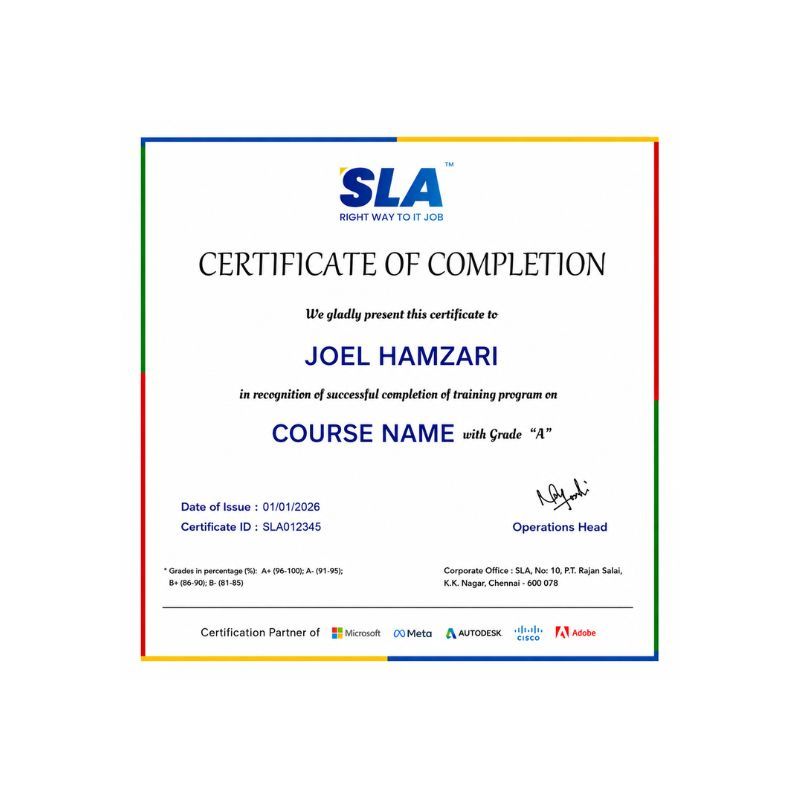
Earn Your Certificate of Completion
Take Your Career to the Next Level with Certifications
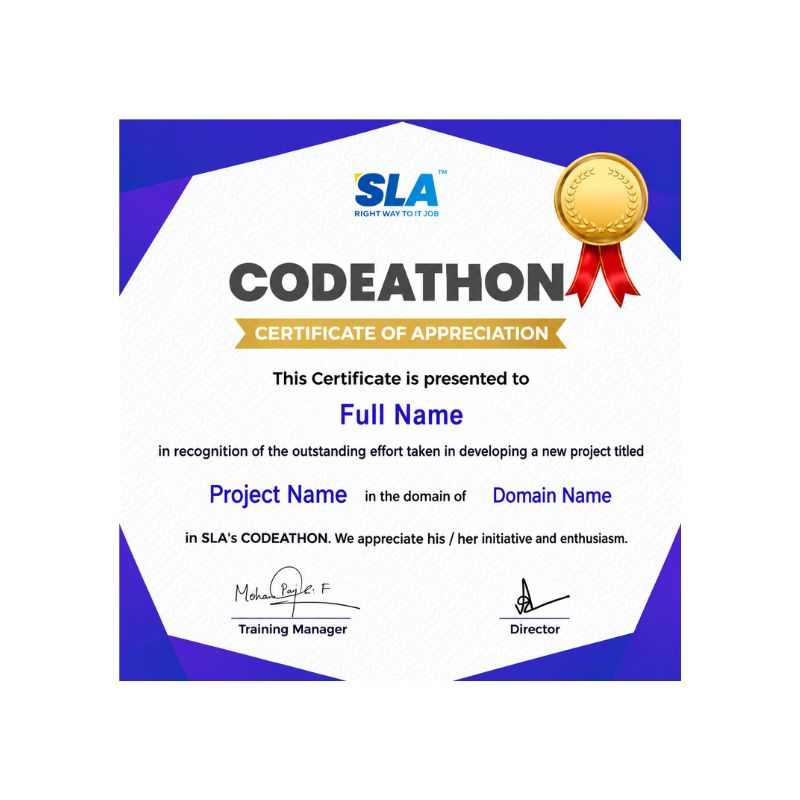
Stand Out from the Crowd with Codethon Certificate
Hands-on Project Practices in J2EE Course
Recruitment System
Car Rental System
E-commerce Recommendation Engine
Expense Reimbursement System
Recruitment Portal
Help Desk Ticketing System
Bug Tracking System
Online Auction Management System
Content Management System (CMS)
The SLA Way to Get Placed in Top IT Companies
Enrollment
Technology Training
Realtime Projects
Placement Training
Interview Skills
Panel Mock
Interview
Unlimited
Interviews
Interview
Feedback
100%
IT Career
Placement Support for a J2EE Job
Genuine Placements. No Backdoor Jobs at Softlogic Systems.
Aptitude Training
from Day 1
Interview Skills
from Day 1
Softskills Training
from Day 1
Build Your Resume
Build your LinkedIn Profile
Build your GitHub
digital portfolio
Panel Mock Interview
Unlimited Interviews until you get placed
Life Long Placement Support at no cost
FAQs
Are you looking for exciting offers?
Call +91 86818 84318 right away and find out all about the great deals that are now available to you!
What programs are included in the J2EE platform?
The J2EE platform consists of a set of services, application programming interfaces (APIs) and protocols that provide the functionality for developing multitier, web-based applications. The platform includes Java Servlets, JavaServer Pages (JSP), Java Server Faces (JSF), Java Persistence API (JPA), Enterprise JavaBeans, Web Services, and Java Message Service.
What are Java Servlets?
Java Servlets are server-side programs (running inside a web server) that handle client requests and generate a response based on the request. Servlets provide a component-based, platform-independent method for building Web-based applications, without the performance limitations of CGI programs.
What is JavaServer Pages (JSP)?
JavaServer Pages (JSP) is an extension of the Java Servlet technology that was created to simplify the process of developing web-based applications. JSP pages are text-based documents that contain JSP tags, which are used to produce dynamic web content.
What is the Enterprise JavaBeans (EJB) Architecture?
The Enterprise JavaBeans (EJB) architecture is a component-based architecture for developing secure, scalable, and distributed business applications. The EJB architecture simplifies the development process and provides a framework for secure and reliable deployment of components over the Internet.
What are Web Services?
Web services are a group of independently executable modules that can be linked together to create an interconnected web application. By using web services, developers can create more complex applications more quickly.
What kind of J2EE training does Softlogic System Training Institute provide?
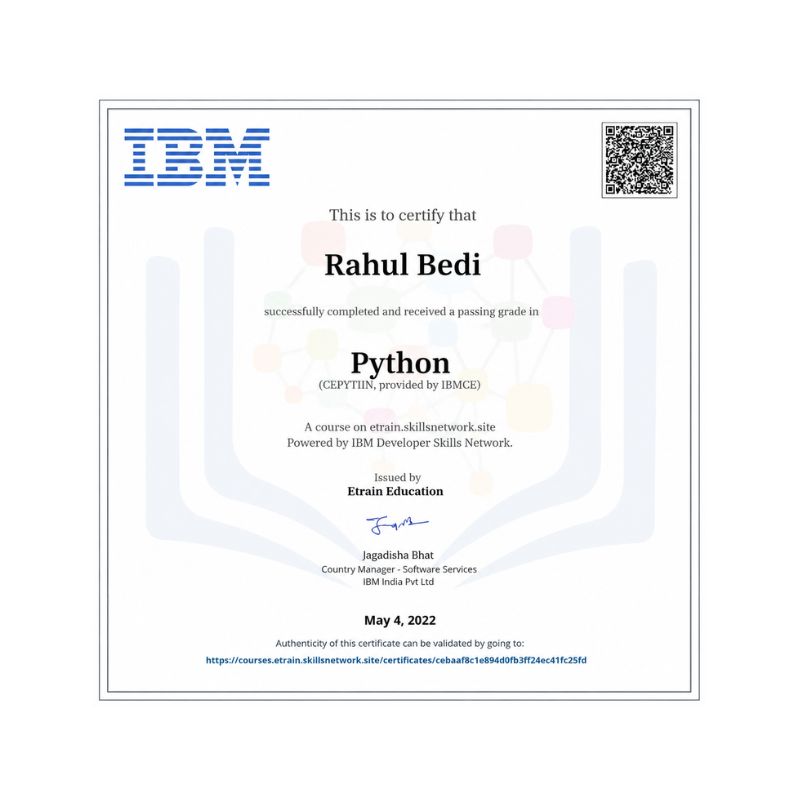
Softlogic offers comprehensive classroom training and online training courses in Java and J2EE technologies. Our courses include the fundamentals of Java and J2EE, various advanced topics, hands-on project development, IBM-accredited course completion certificate, and placement support.
What methods of payment are available?
We accept all major payment methods. Cash, debit cards, credit cards (including Master, Visa, and Maestro), net banking, UPI, etc.
Does Softlogic provide training in the latest J2EE technologies and frameworks?
Yes, Softlogic provides training in the latest versions of J2EE technologies and frameworks such as Java Server Faces (JSF), Java Server Pages (JSP), Java Persistence API (JPA), Enterprise JavaBeans (EJB), and Web Services.
What makes Softlogic Systems a good place to study?
At Softlogic Systems, you will receive hands-on experience and rigorous training from industry professionals. The course content covers both introductory and advanced-level material.
Learning from J2EE training in Chennai, which combines excellence and innovation, will provide you with abilities and expertise that are unique and essential in both your personal and professional lives.
When compared to competitors in the software training market, our placement services are unparalleled.
Additional Information for
the J2EE Course
Demand for J2EE
We cannot deny that Java is the most prominent thing that happened to the IT industry across the world after C++. It has a great journey right from its beginning. Java is the backbone of several new products and services that have taken the world by storm. The best part of Java is that its ecosystem is self-sustaining from mobility to middleware. Moreover the whole world is focused on web application and J2EE is one of the most wanted methods to develop it. So there is a lot of opportunities that you can select from. You can also enhance your skills by learning frameworks besides this including Struts, Hibernate and Spring. If you want to know better about the future scope of Java and its platforms, you can contact our educational counselors who would be glad to clarify your queries.
What is unique about the J2EE training in Chennai from Softlogic?
If you are not aware of the fundamentals of Core Java, we suggest that you begin from the basics. This is due to the reason that recruiters question from the fundamentals of Core Java. Suppose you already have experience and confidence in Core Java, then you can begin with J2EE or Hibernate or Spring. Softlogic offers hands on training in J2EE. Our trainers are passionate about Java and this is the reason we are the Leading J2EE Training Institute in Chennai. They put in lot of efforts in training the students and also make the students ready to meet the industry requirements. The students will also be in a position to crack the interviews with great confidence.