
Softlogic Systems Clinical SAS Course Syllabus is specifically designed for College Students, Freshers, and Job Seekers. Our Clinical SAS Syllabus covers the SAS programming basics, data manipulation, statistical analysis, clinical data management, CDISC standards, and generating FDA-compliant reports. Our Clinical SAS Course Content helps you learn Clinical SAS step by Step with real-time projects and Interview Preparations.
Clinical SAS Course Syllabus
4.70
(1253)
DURATION

2 Months
JOB READY

Syllabus
CERTIFIED

Courses

Let's take the first step to becoming an expert in Clinical SAS
Click Here to Get Started
Lifelong Placement
Support
Get Certified
Check Your Job Eligibility
×
Your Placement Eligibility Report
Syllabus for The Clinical SAS Course
Download Syllabus
Working in the SAS Environment
- Functionality of SAS Windows.
- Creating and managing SAS Libraries.
- Overview of SAS Data states.
- Types of Libraries.
- Storing files temporarily and permanently.
- Referencing SAS files.
Creation database from raw data
- Steps to create a SAS dataset.
- Creating SAS dataset using text file.
- Creating SAS dataset using text file with delimiters.
- Creating SAS dataset using structured text file.
- Creating SAS dataset using unstructured text file.
- Creating SAS dataset using Excel file.
- Creating SAS dataset using Access file.
- Creating SAS dataset using values inside the code.
Output delivery system
- Concepts of output delivery system.
- How ODS works and viewing output of ODS in different format.
- HTML, RTF, PDF etc..
Combination the dataset
- One-o-one reading
- One to many
- Many to many
- Concatenation
- Interleaving,
- Match merge
Functions
- Character function
- Numerical function
- Arithmetical function
- Mathematical function
- Date Function
Loops in SAS: Do Loops
- Do Loop
- Do While
- Do Until
Array
- Definition of array
- Example of array
PROCEDURES
- Procedure Format.
- Procedure Contents.
- Procedure Options.
- Procedure Append.
- Procedure Compare.
- Procedure Transpose.
- Procedure Print.
- Procedure Import.
- Procedure Export.
- Procedure Datasets.
- Procedure Tabulate.
- Procedure Chart, Gchart, Gplot.
- Procedure Report.
GRAPHS
- Introduction to graphics.
- Introduction to graphics.
- Types of Graphics (with latest models)
- Defining procedure Graphics.
ProcSql
- Generate detail reports by working with a single table, joining tables, or using set operators in the SQL procedure.
- Generate summary reports by working with a single table, joining tables, or using set operators in the SQL procedure.
- Construct sub-queries and in-line views within an SQL procedure step.
- Compare solving a problem using the SQL procedure versus using traditional SAS programming techniques.
Macro
- Create and use user-defined and automatic macro variables within the SAS Macro Language.
- Automate programs by defining and calling macros using the SAS Macro Language.
Introduction of SAS and Clinical research
- SAS role in Clinical Research.
- What is Clinical trial?
- What is Protocol and role of Protocol in Clinical Research?
- Which is playing main role in Clinical Research?
Clinical Trials Data Structures
- Identify the classes of clinical trials data (demographic, lab, baseline, concomitant medication, etc.).
- Identify key CDISC principals and terms.
- Describe the structure and purpose of the CDISC SDTM data model.
- Describe the structure and purpose of the CDISC ADaM data model.
- Describe the contents and purpose of define.xml.
Transform Clinical Trials Data
- Apply categorization and windowing techniques to clinical trials data.
- Transpose SAS data sets.
- Apply ‘observation carry forward’ techniques to clinical trials data (LOCF, BOCF, WOCF).
- Calculate ‘change from baseline’ results.
The SLA way to Become
a Clinical SAS Expert

Enrollment

Technology Training
Coding Practices
Realtime Projects
Realtime Projects

Placement Training
Aptitude Training
Interview Skills
Interview Skills

Panel Mock
Interview

Unlimited
Interviews

Interview
Feedback

100%
IT Career
FAQ
What type of data can I analyze using Clinical SAS?
Clinical SAS can be used to analyze patient and clinical trial data from studies involving drugs and biologics. It can be used for descriptive analytics, biomarker analysis, clinical trial data integration, safety analysis, and more.
What are the skills required for a Clinical SAS developer?
A Clinical SAS developer should be skilled in SAS programming, managing data, analyzing statistics, understanding clinical trials, following regulations, cleaning data, creating reports, solving problems, and communicating clearly.
Why opt for SLA as your preferred Clinical SAS Training Institute in OMR?
Choose SLA as your preferred Clinical SAS Training Institute in OMR for its expert-led training, hands-on learning, guaranteed placement guidance, flexible scheduling, and personalized support. Our program guarantees your success in mastering Clinical SAS.
What type of data can I analyze using Clinical SAS?
Clinical SAS can be used to analyze patient and clinical trial data from studies involving drugs and biologics. It can be used for descriptive analytics, biomarker analysis, clinical trial data integration, safety analysis, and more.
How can I access datasets in Clinical SAS?
Data can be accessed in Clinical SAS using the Data step. This step retrieves data from an external source such as a text file, database, or an Excel spreadsheet, and stores it in the LIBREF library for further manipulation and analysis.
Does Clinical SAS require coding?
Yes, Clinical SAS involves coding. You need to write SAS programs to handle, analyze, and report on clinical trial data. Coding is necessary for working with data and generating reports.
Does SLA provide EMI options for students?
Yes, SLA offers EMI options for students with 0% interest to make the training more financially manageable.
How can I access datasets in Clinical SAS?
Data can be accessed in Clinical SAS using the Data step. This step retrieves data from an external source such as a text file, database, or an Excel spreadsheet, and stores it in the LIBREF library for further manipulation and analysis.
How can I clean the data using Clinical SAS?
The data can be cleaned using functions such as ‘SET’, ‘WHERE’, ‘DELETE’, and ‘KEEP’. These functions help in conditionally selecting data for analysis, deleting records, and rapidly updating existing datasets.
Does SLA have any other branch?
SLA operates two branches, one in K.K. Nagar and the other in OMR Navalur, providing students with convenient access to their training centers.
How can I clean the data using Clinical SAS?
The data can be cleaned using functions such as ‘SET’, ‘WHERE’, ‘DELETE’, and ‘KEEP’. These functions help in conditionally selecting data for analysis, deleting records, and rapidly updating existing datasets.
Can I learn Clinical SAS on my own?
Yes, you can learn Clinical SAS by yourself. There are plenty of online resources and tutorials available. However, taking a course or getting some guidance can make learning easier.
How can I check the data integrity in Clinical SAS?
Data integrity in Clinical SAS can be checked using the ‘DATA VALIDATE’ command. This command verifies the consistency of the data values in a dataset and help identify inconsistencies in the data.
Is Clinical SAS easy to learn?
Clinical SAS can be challenging to learn due to its complex nature and the need for understanding clinical research principles. However, with dedication and proper guidance from experienced instructors, mastering Clinical SAS is achievable.
Is Clinical SAS still in demand?
Yes, Clinical SAS is still in demand. It is widely used in clinical research and pharmaceuticals for analyzing and managing clinical trial data, which keeps it a valuable skill in the industry.
How can I check the data integrity in Clinical SAS?
Data integrity in Clinical SAS can be checked using the ‘DATA VALIDATE’ command. This command verifies the consistency of the data values in a dataset and help identify inconsistencies in the data.
How can I generate reports from Clinical SAS?
Reports in Clinical SAS can be generated using the ‘PROC REPORT’ command. This command helps in creating reports based on criteria such as data sorting, calculation, tabulation, and multi-column formats for a better understanding of the data.
How can I generate reports from Clinical SAS?
Reports in Clinical SAS can be generated using the ‘PROC REPORT’ command. This command helps in creating reports based on criteria such as data sorting, calculation, tabulation, and multi-column formats for a better understanding of the data.
Can I still join job placement events if I already have a job offer?
Definitely! We offer ongoing placement assistance to help candidates achieve their career goals. Contact our career advisor to arrange a free demo for the leading Clinical SAS course, featuring placement support.
Is Clinical SAS a good career option?
Yes, Clinical SAS offers a promising career path, especially for those interested in the pharmaceutical, healthcare, and clinical research industries. With the increasing demand for data management and analysis in clinical trials, proficiency in Clinical SAS can lead to lucrative job opportunities.
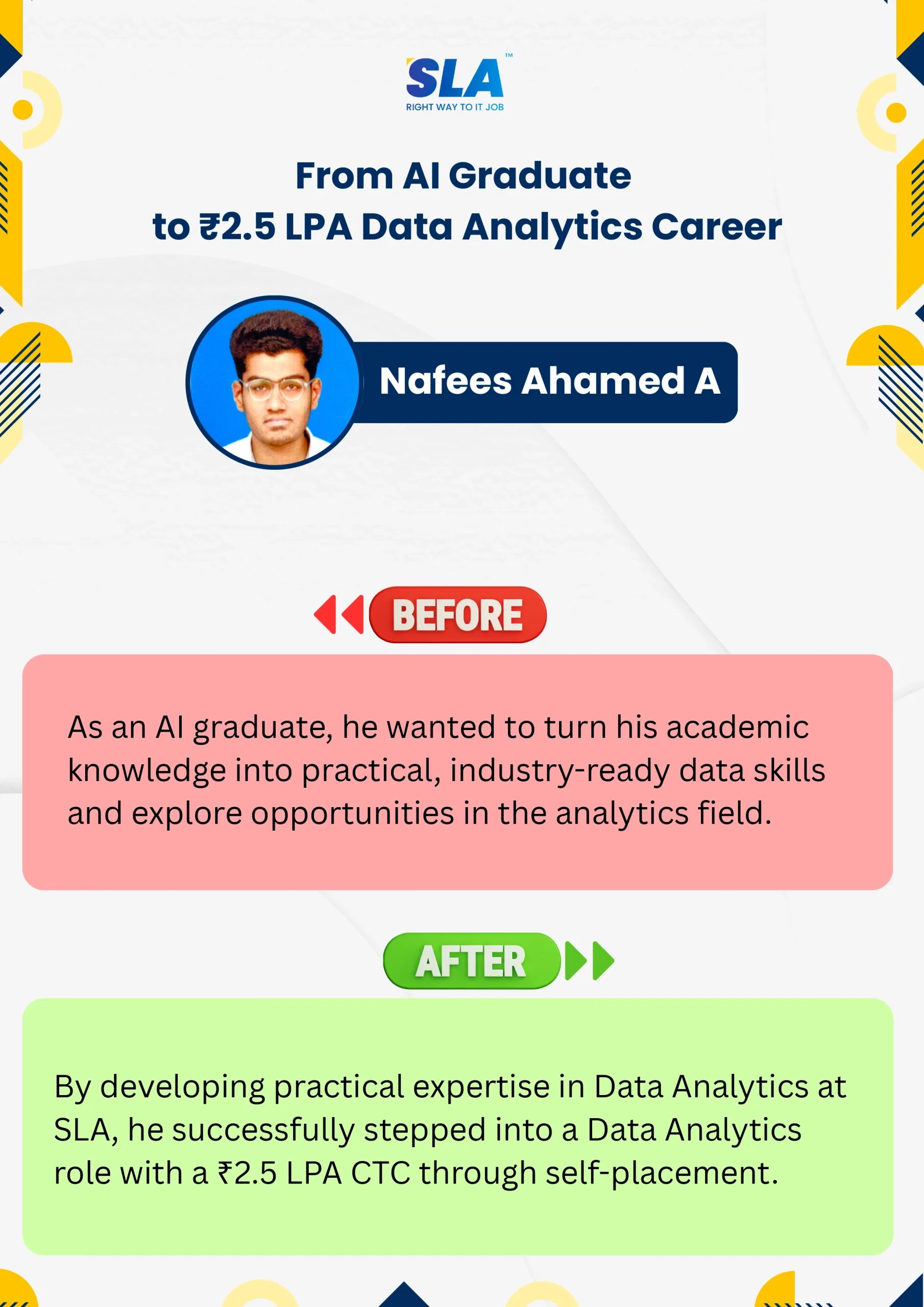
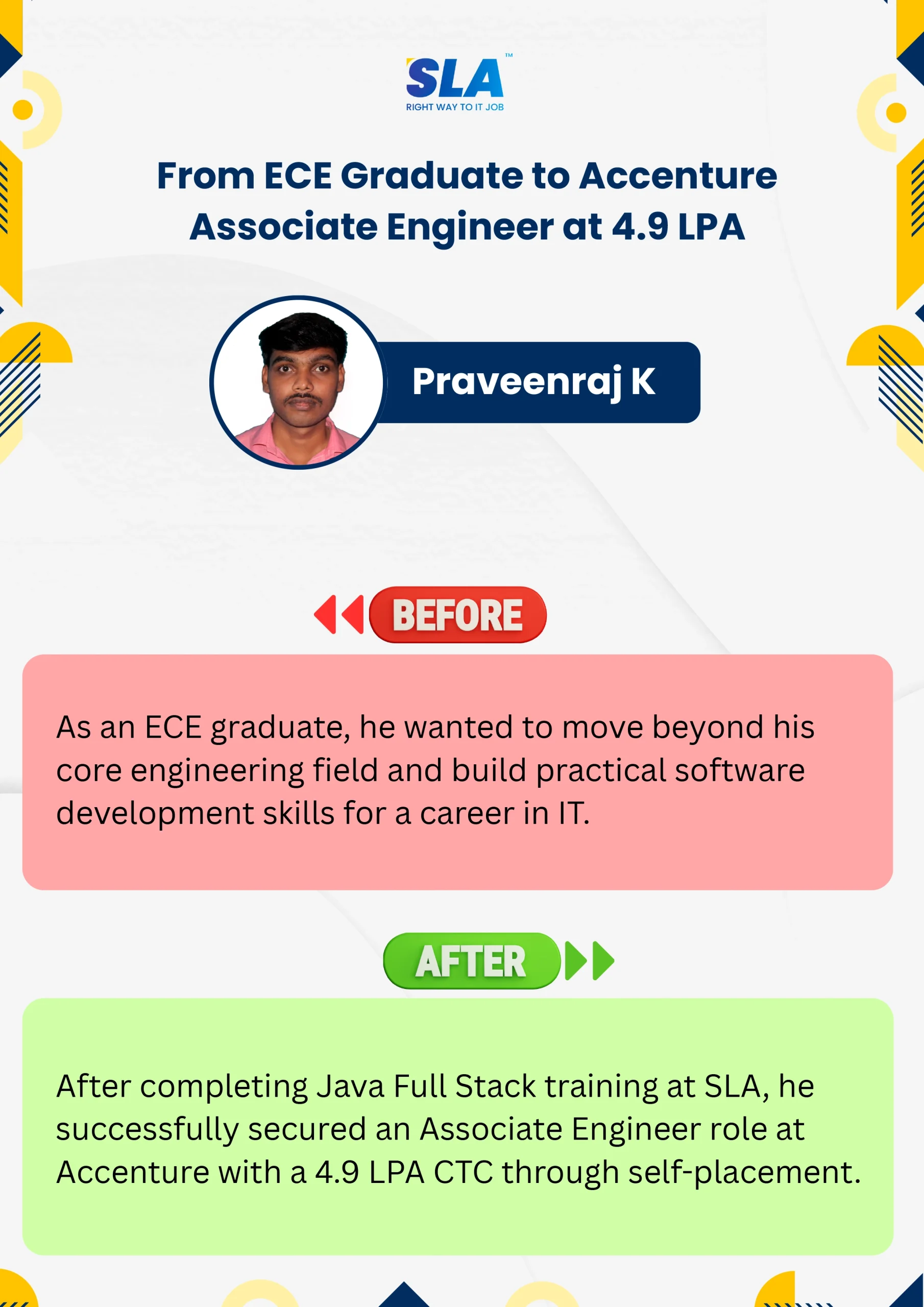
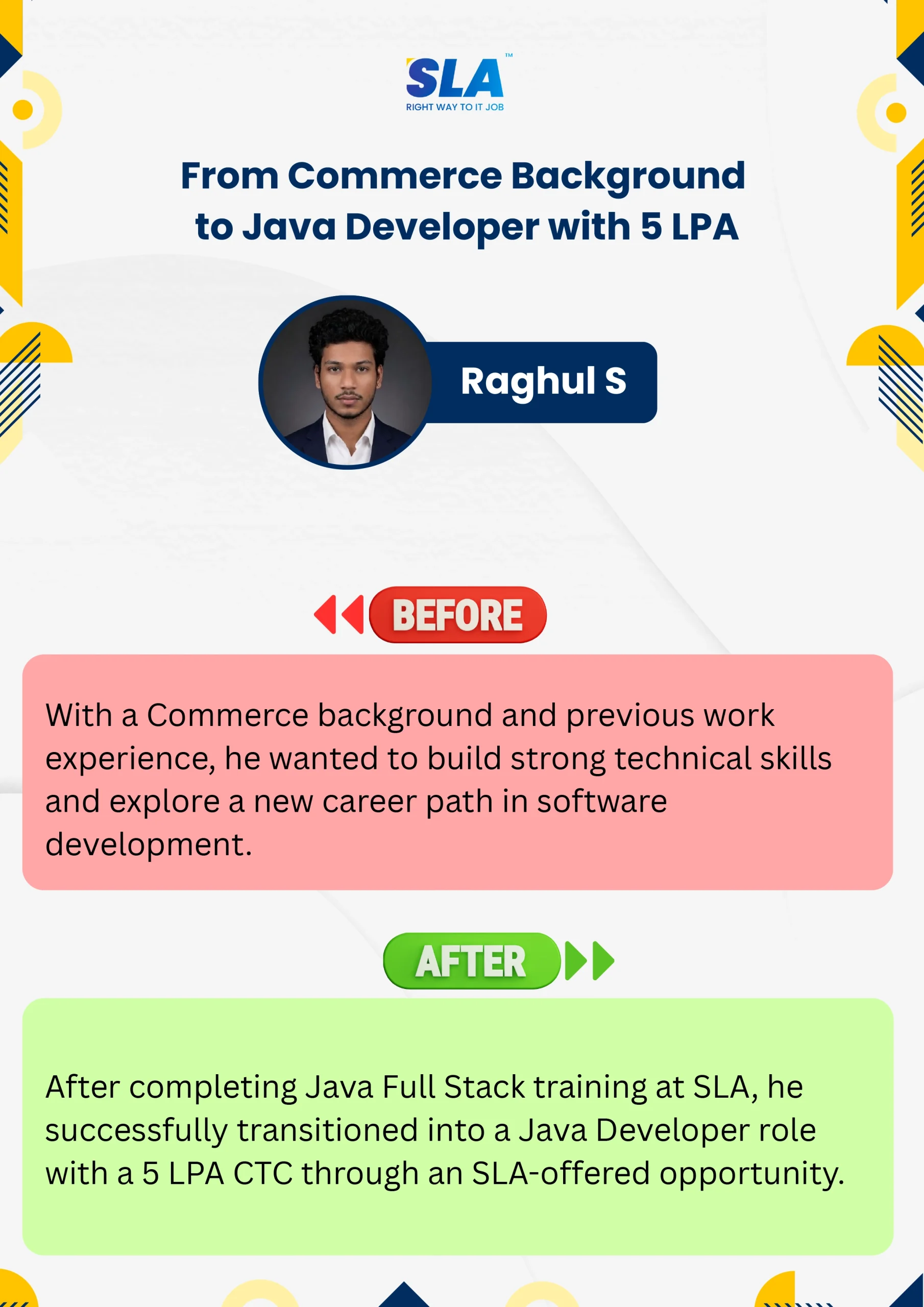
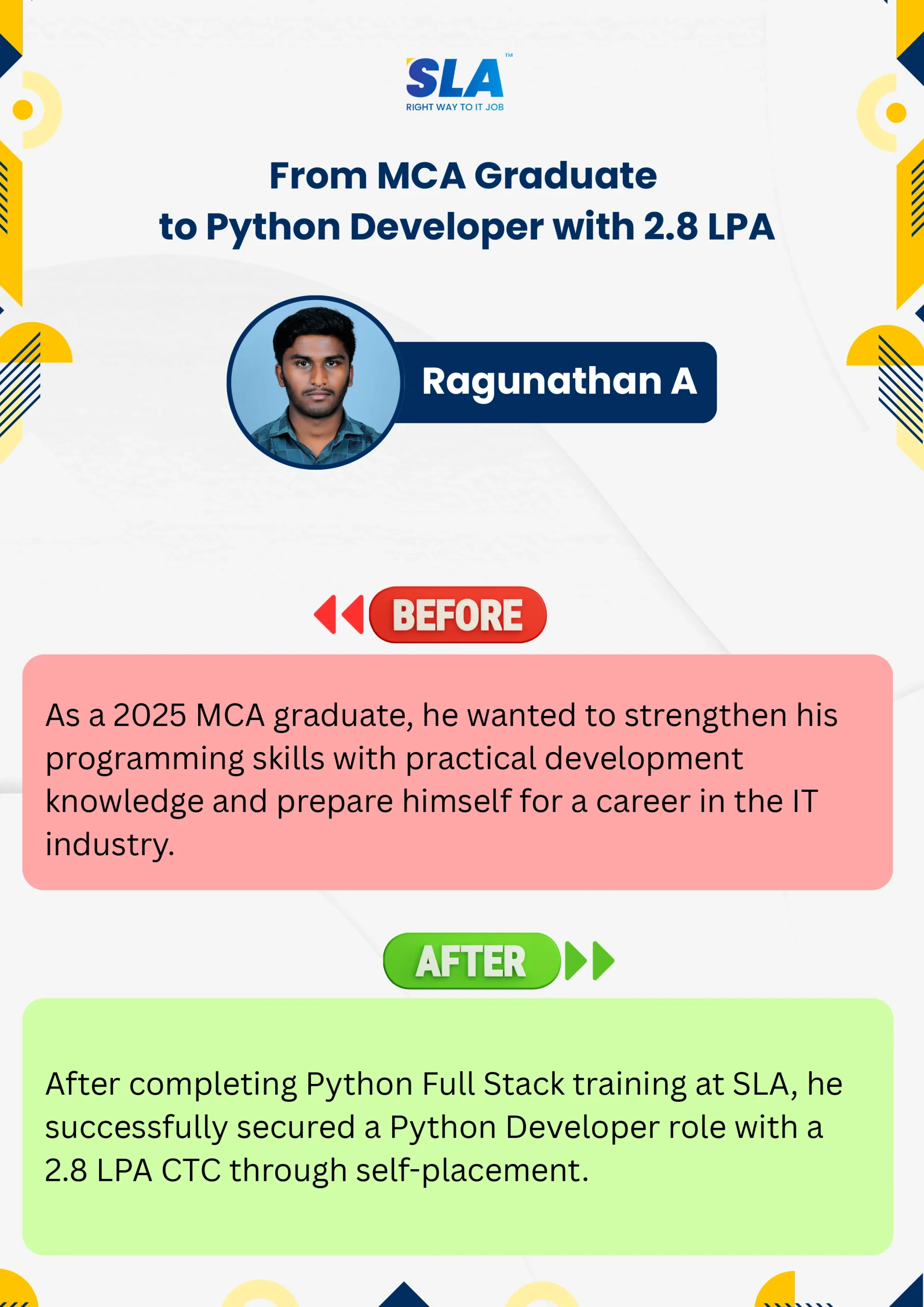
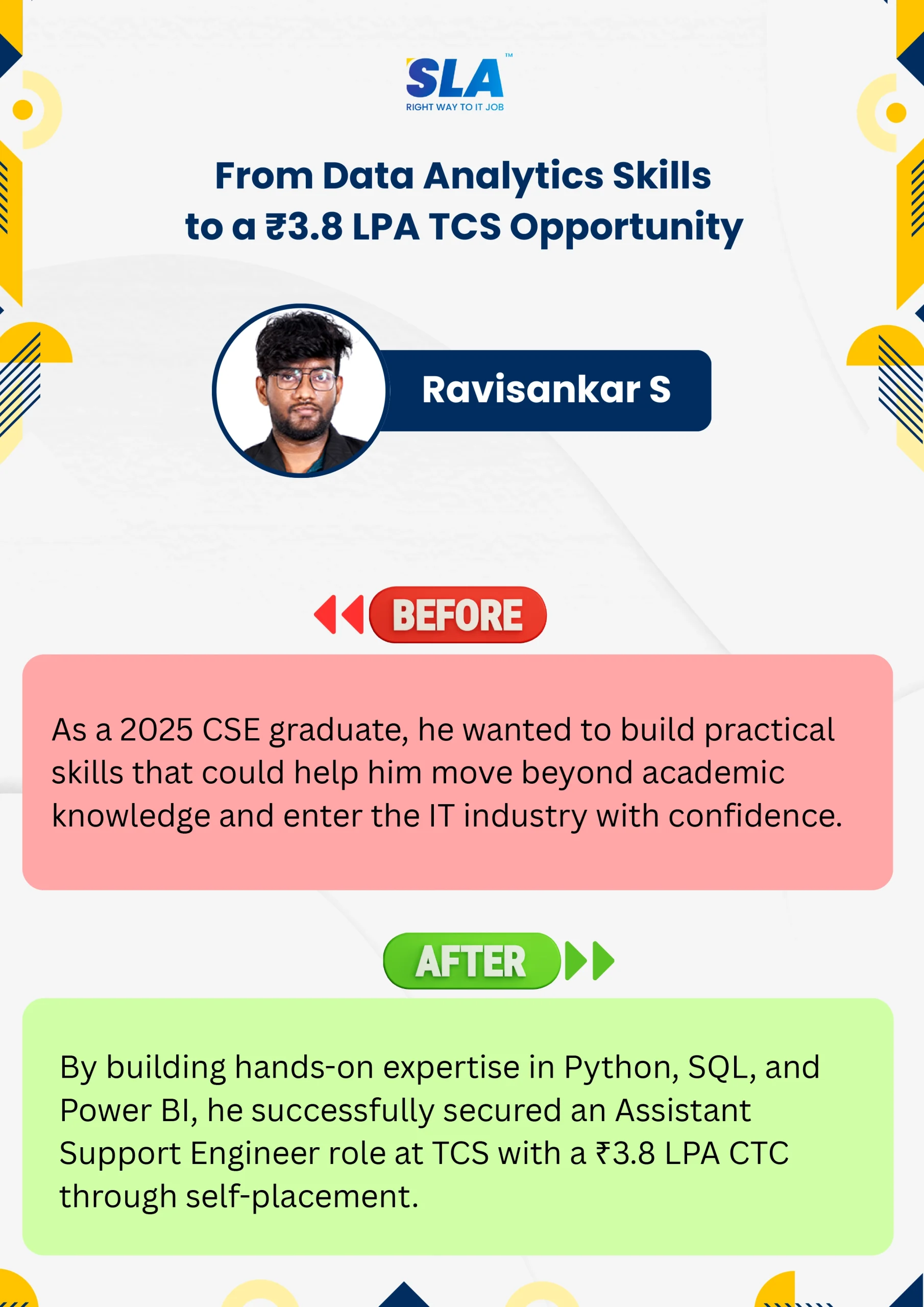
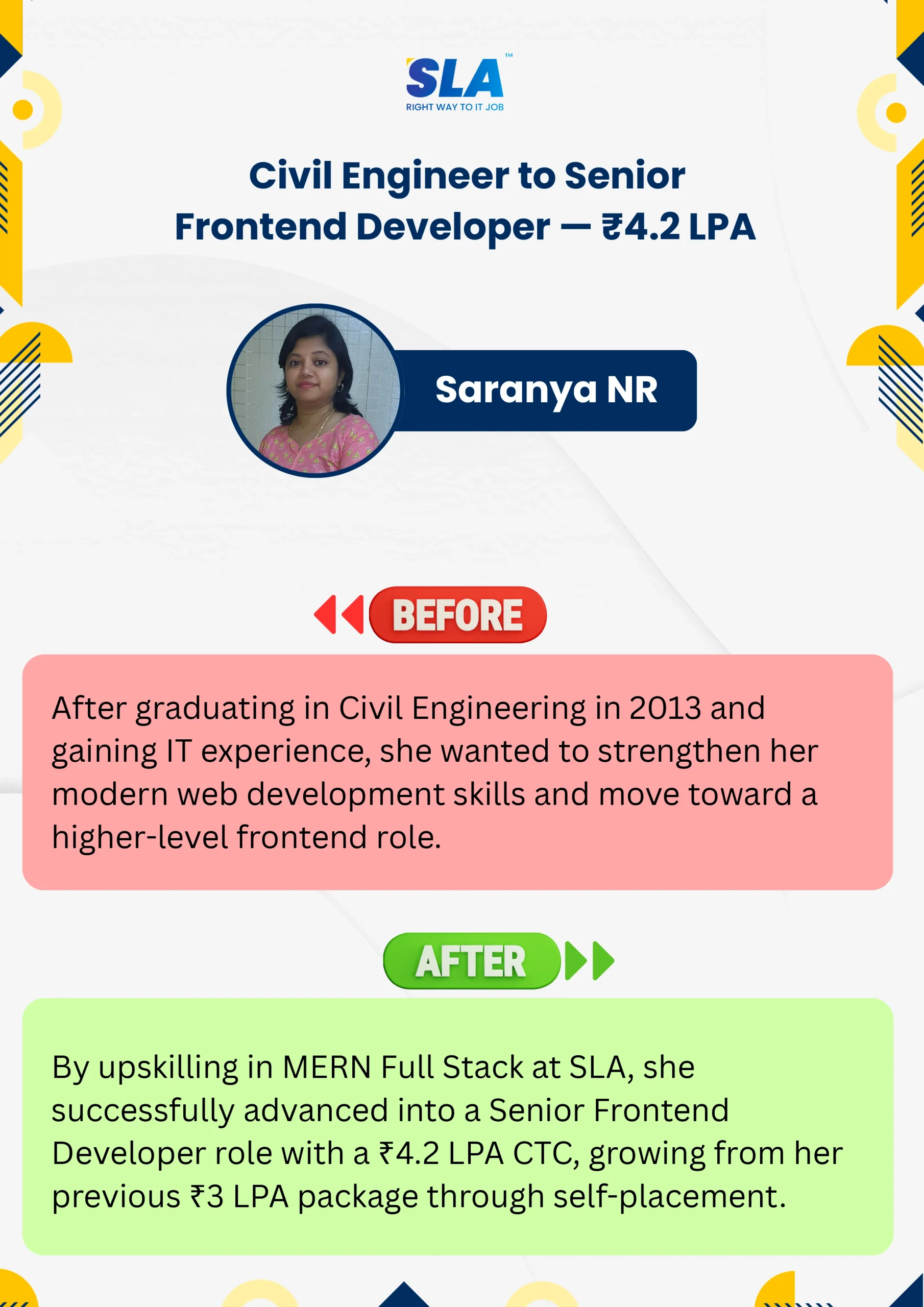
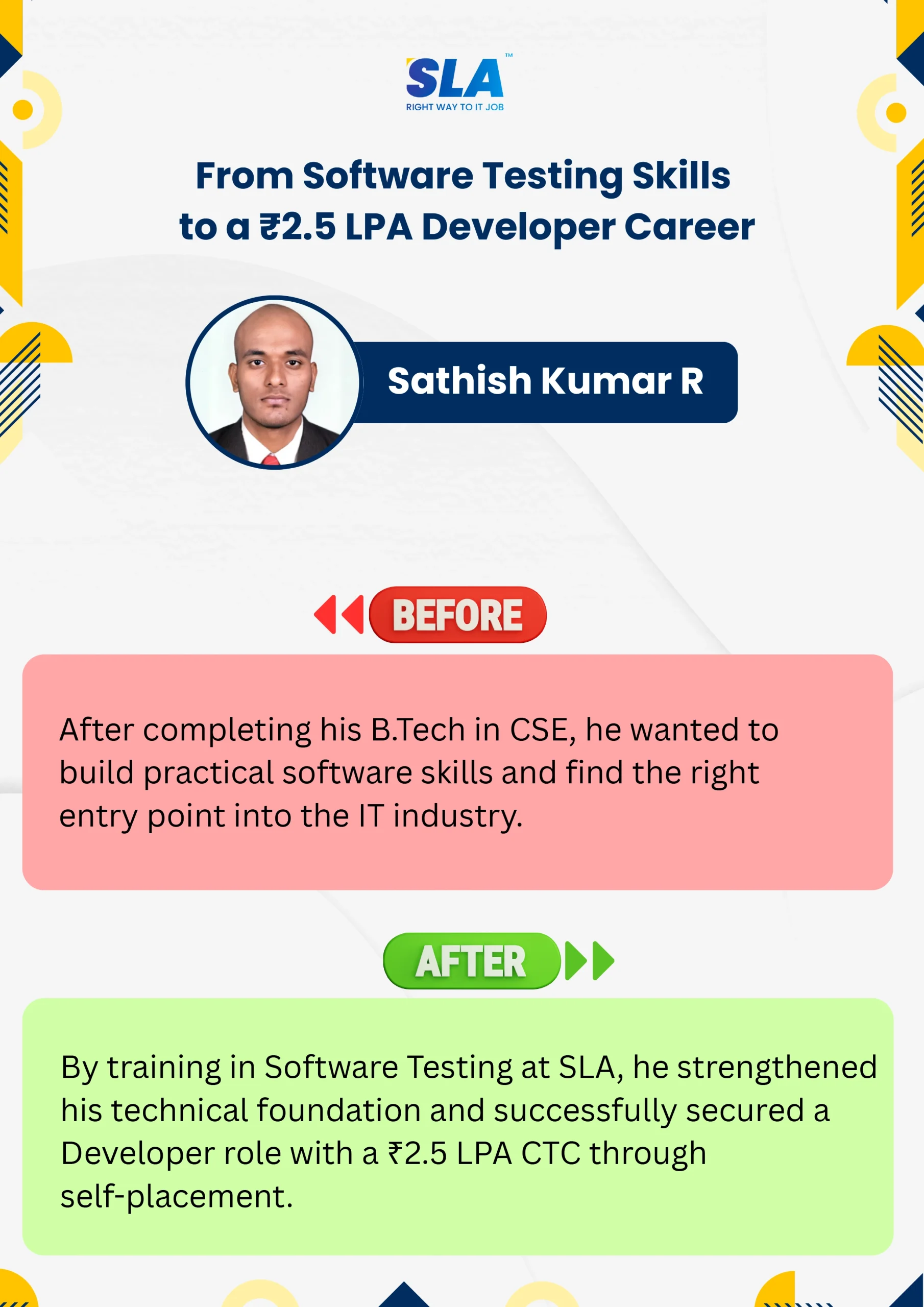
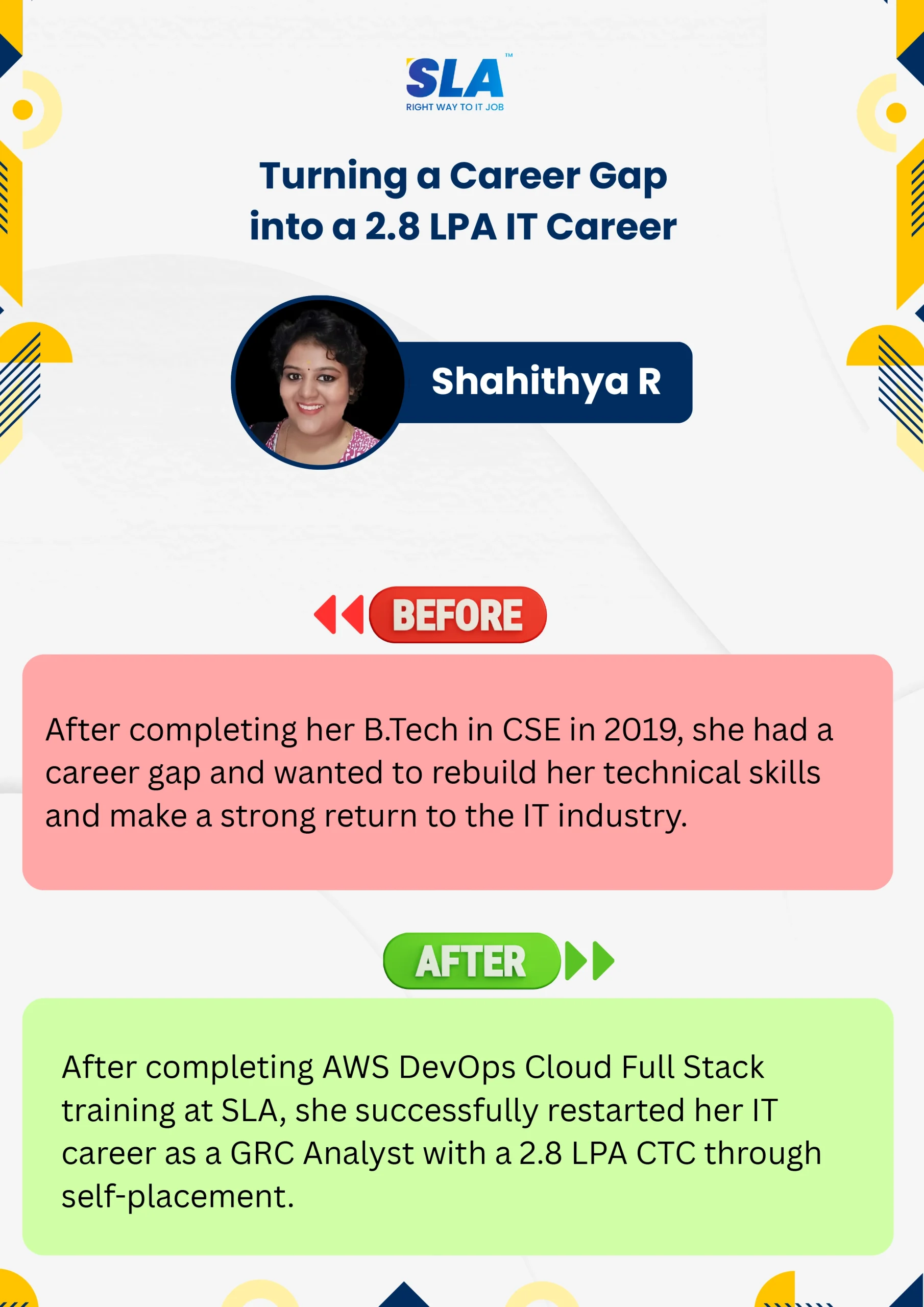
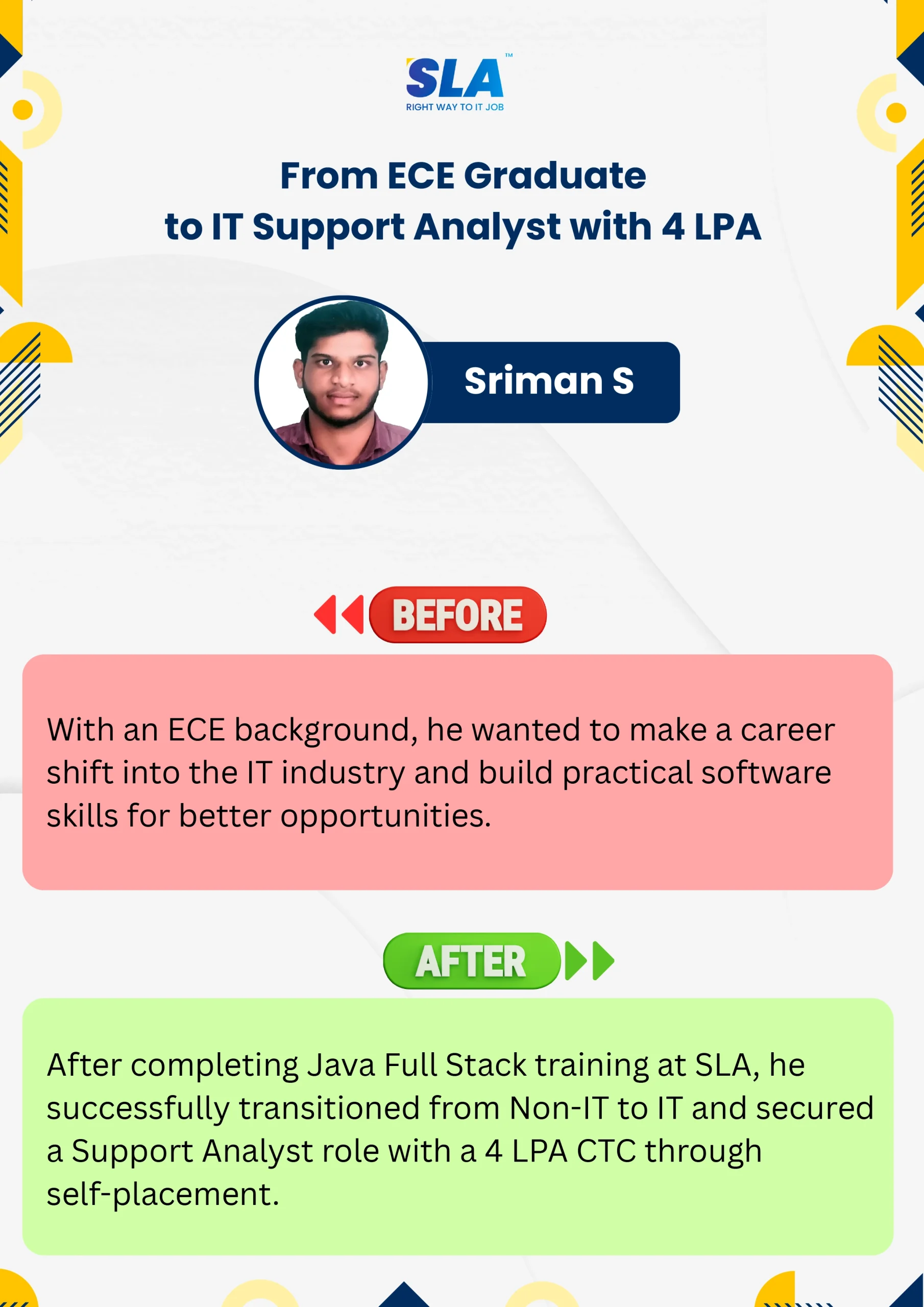
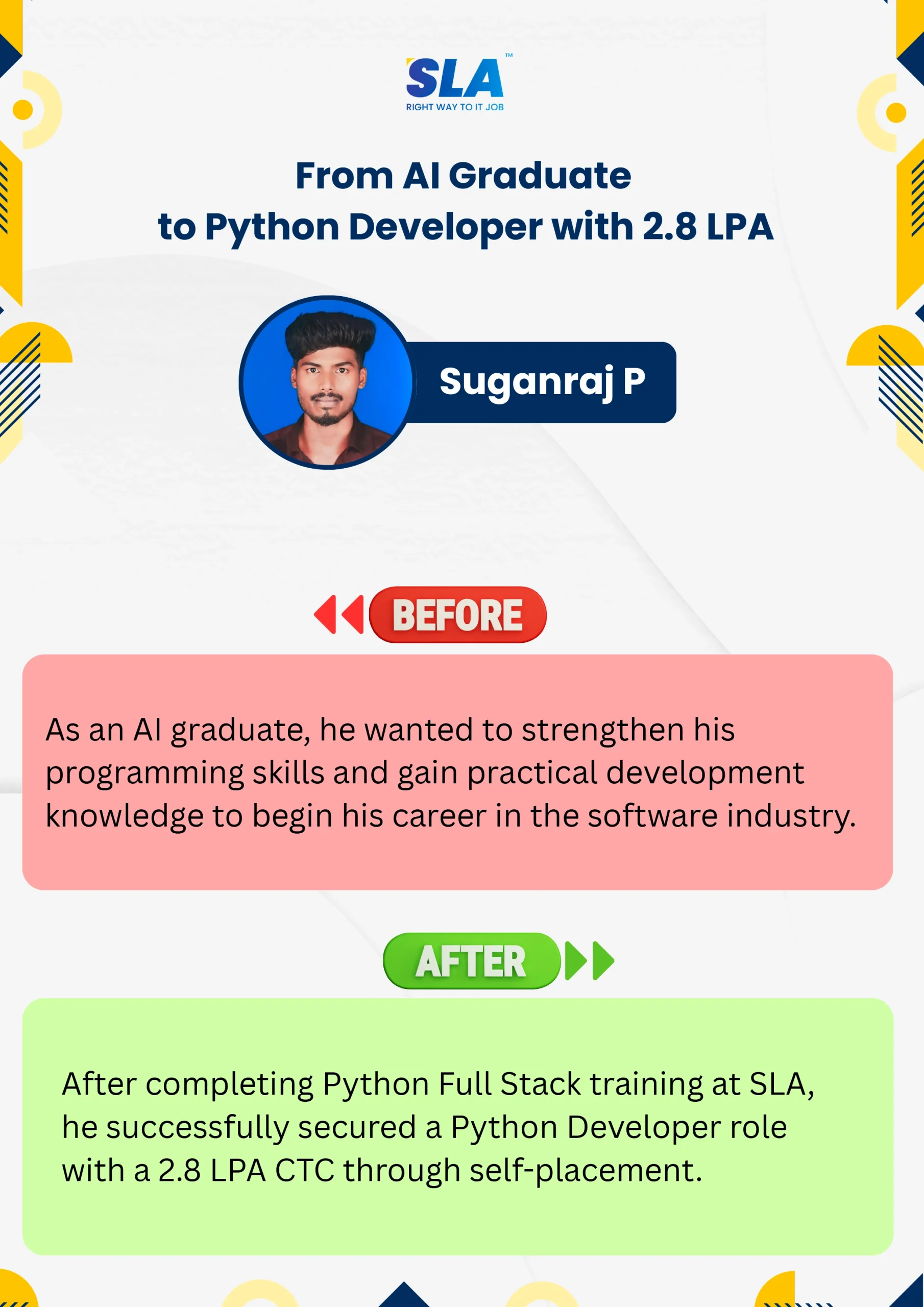
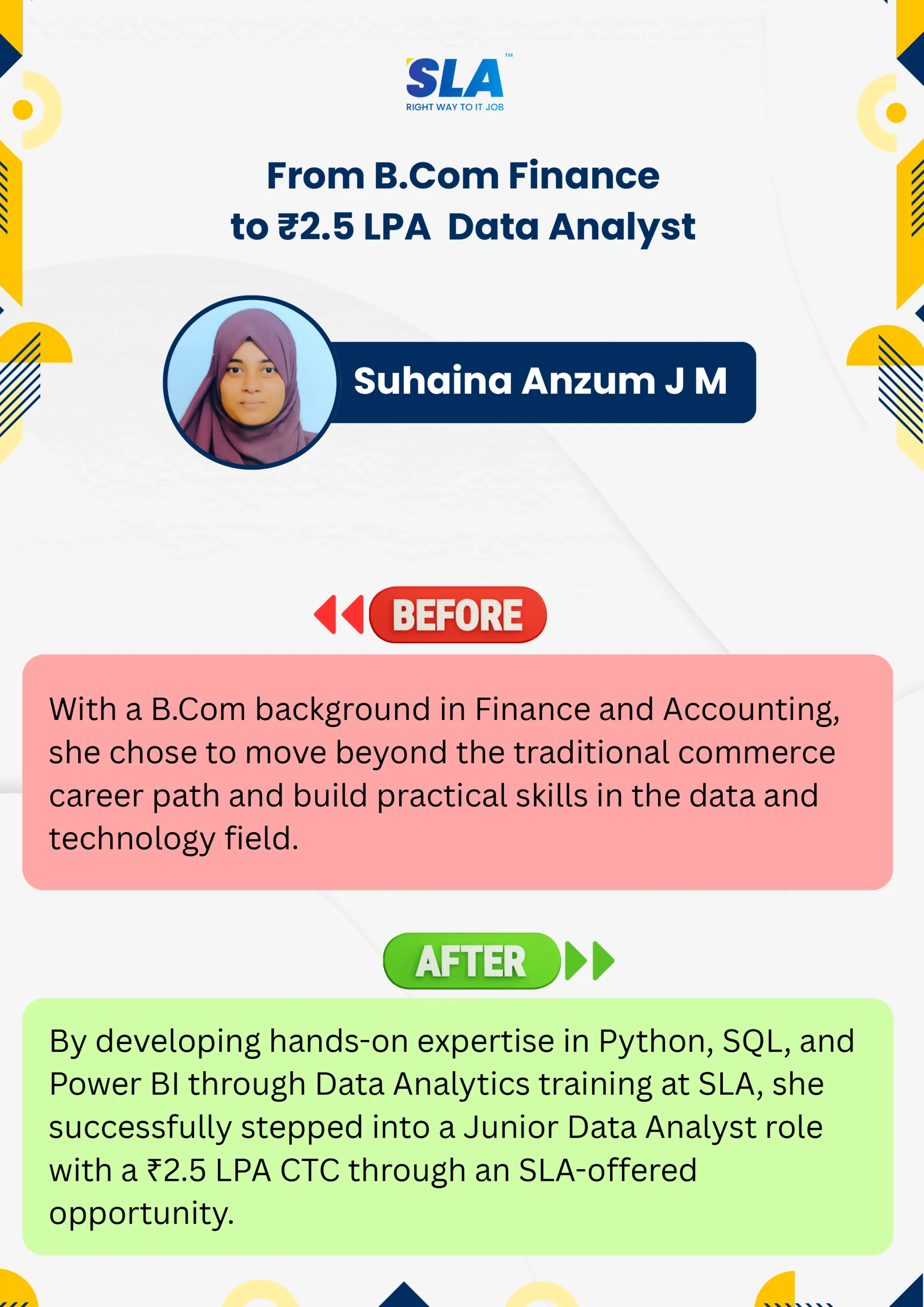
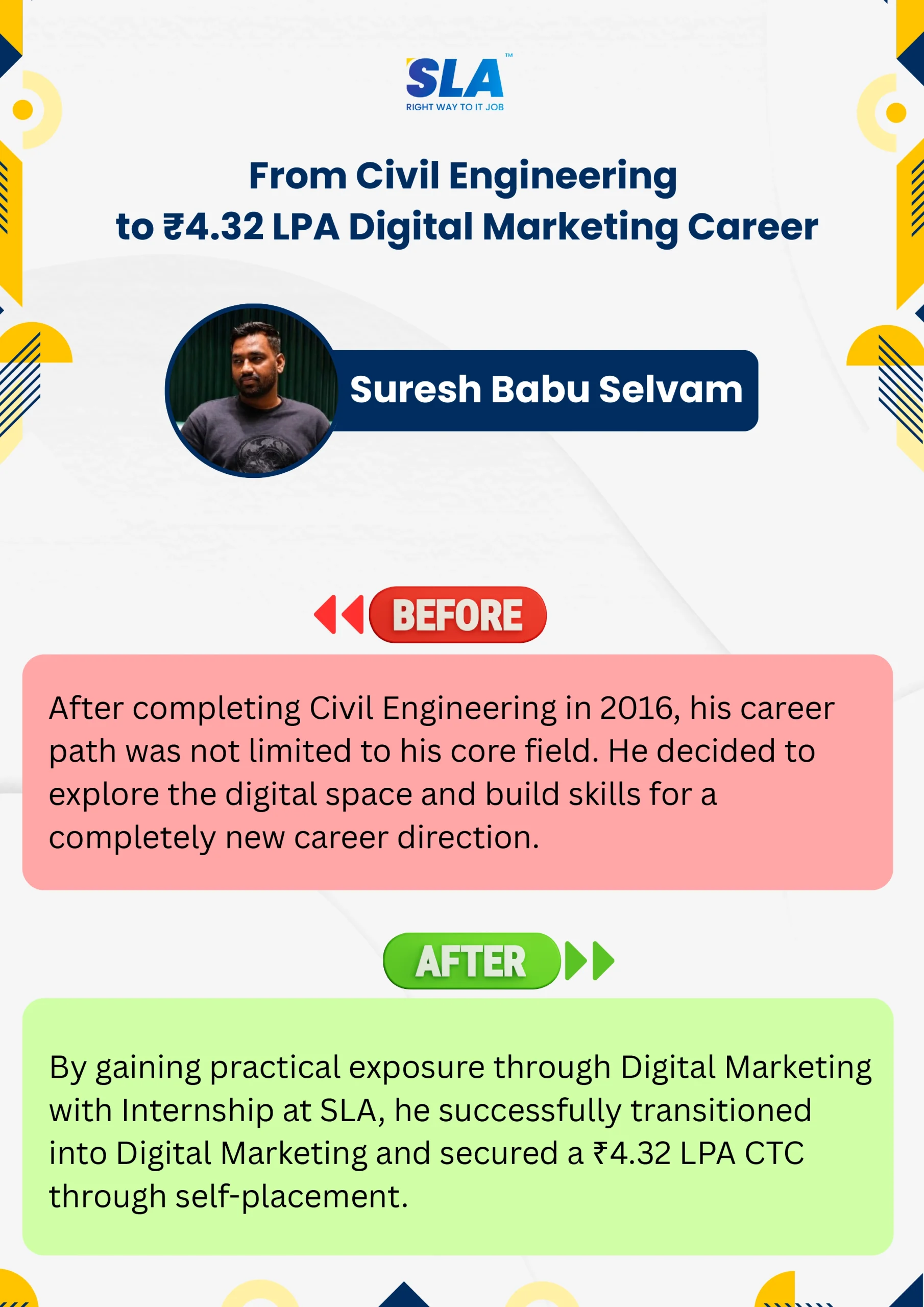
Google Reviews

Rating
4.8
1,053 Google reviews

Nithish Sahoo
I had an excellent experience taking this DevOps course. The curriculum is well-structured and covers both fundamental and advanced DevOps concepts in a clear manner.…

Click here for Full Review

Surya
Special thanks to Vishal Sir, the Placement Officer, for his interview guidance, resume support, and continuous motivation throughout the placement process. I would also like…
Click here for Full Review

NalluKumar Ravichandran
Hi, I recently completed the DOT NET Full Stack Development course at SLA, and I had a great learning experience. The teaching style and student…
Click here for Full Review

SARAN M
SLA Institute provides training in communication and aptitude along with strong technical skills. The trainers explain concepts clearly with a practical approach, which helps build…
Click here for Full Review

Shaaru Menan
I had a 3 year career break. Joined SLA on Java Full Stack course and completed it.Did projects with the help of my Mentor. They…
Click here for Full Review

MATHAN KUMAR G EEE
SLA Institute provides a structured learning environment for data analytics. The syllabus is relevant, and trainers are knowledgeable. Some sessions were very useful practically, while…
Click here for Full Review
Discover What Our Students Have To Say
See More ReviewsRelated Blogs for
The Clinical SAS Course
Clinical SAS Challenges and Solutions for Beginners
Published On: November 2, 2024
Introduction A key tool for capturing and evaluating this data is Clinical SAS (Statistical Analysis…
Clinical SAS Project Ideas
Published On: November 1, 2024
Working on Clinical SAS Project Ideas gives learners practical exposure to how clinical trial data…
Clinical SAS Programmer Salary For Freshers and Experienced
Published On: September 16, 2024
Introduction Clinical SAS Programming forms the foundation of data analysis and reporting in clinical trials…
Clinical SAS Tutorial for Beginners
Published On: August 3, 2024
Introduction Having problems getting started with Clinical SAS? Overwhelmed by difficult terms and their use…
Clinical SAS Interview Questions and Answers
Published On: April 2, 2021
Introduction Top companies around the world are employing certified and skilled clinical SAS professionals to…