
Softlogic is one of the Top Training institutes for Full Stack. Learn how to use Full Stack, from beginner basics to advanced techniques. Our Full Stack Syllabus covers the front-end technologies like HTML, CSS, JavaScript, and modern frameworks such as React or Angular, along with back-end development using Node.js, Express.js, or Java/.NET. We offer a Full Stack Course with Placement Assistance, Mock interviews, Resume building, and certification.
Full Stack Developer Training And Placement
4.80
(1538)
DURATION

2 Months
EMI

0% Interest
Mode

Live Online / Offline

Let's take the first step to becoming an expert in Full Stack Developer
Click Here to Get Started
Lifelong Placement
Assistance
Get Certified
JOB PLACEMENT ELIGIBILITY TEST
×
Your Placement Eligibility Report
Want more details about Full Stack Developer?
Fill out the form, and our counsellors will get in touch with you at your preferred time. You can have all your queries answered. Once you decide that SLA is the perfect fit for your training needs, our counselors will guide you through the process every step of the way.

Course Schedules

Course Syllabus

Course Fees

or any other questions...
Fees, Duration & Batch Timings for Full Stack Developer
Hands On Training
3-5 Real Time Projects
60-100 Practical Assignments
3+ Assessments / Mock Interviews
July 2026
Week days
(Mon-Fri)
Online/Offline
2 Hours Real Time Interactive Technical Training
1 Hour Aptitude
1 Hour Communication & Soft Skills
(Suitable for Fresh Jobseekers / Non IT to IT transition)
Course Fee
July 2026
Week ends
(Sat-Sun)
Online/Offline
4 Hours Real Time Interactive Technical Training
(Suitable for working IT Professionals)
Course Fee
Save up to 20% in your Course Fee on our Job Seeker Course Series
Learn More
Syllabus of Full Stack Developer
Download Syllabus
All-in-One Javascript Development Suite
- Fundamentals Of JavaScript
- JavaScript for Beginning Web Developers
- JavaScript for Absolute Beginners
- Fundamentals of jQuery
- Fundamentals of Ajax Development
- Create a node.js Real Time Chat Application
- Advanced JavaScript
All-In-One HTML/HTML5 And CSS/CSS3 Suite
- All-In-One HTML/HTML5 And CSS/CSS3 Suite
- Applying Designs to WireFrames with HTML5 and CSS3
- Build Your Own HTML5 Video Player
- Building Responsive Websites with HTML5 and CSS3
- HTML5 and CSS3 Site Design
- HTML5 Mobile Game Development by Example – Educational Game
- HTML5 Mobile Game Development by Example -Veggies vs Zombies
- Make HTML5 Games with No Coding Required
- Understanding HTML5 Input Types
- Website Wireframing with HTML5 and CSS3
Node.Js Training
- Introduction and Foundation
- Node Projects
- Working with shrink-wrap to lock the node modules versions
- Working with asynchronous programming
- Building a HTTP Server with Node.JS using HTTP APIs
- File System
- Buffers, Streams, and Events
- Multi-Processing in NodeJS
- ExpressJS
- Express JS with MongoDB and Sqlite
- io, The Front-end, and A Chat App
- Introduction to Task Managers with unit testing
Angular Training
- What is a SPA? What is Angular?
- Preparing for TypeScript
- Angular-4 new features
- Building with A4 Components
- Bootstrap Scaffolding
- Angular 4 Binding and Events
- Dependency Injection and services
- Directives
- Pipes
- Forms
- HTTP, Promises, and Observables
- Testing
MongoDB Developer and Administrator
- Course Introduction
- Introduction to NoSQL databases
- MongoDB A Database for the Modern Web
- CRUD Operations in MongoDB
- Indexing and Aggregation
- Replication and Sharding
- Developing Java and Node JS Application with MongoDB
- Administration of MongoDB Cluster Operations
React.js
- Welcome to Starting with React
- React Components
- React State and Props
- React Event Handling
- Routing in React React flux
- Styling React
- Course Conclusion
Linux
- Installing Linux
- Getting To Know The Command Line
- It’s All About The Files
- Working With Command Line
- More Advanced Command Line And Concepts
SQL
- Rational Databases
- SQL Querying
- Your First Queries
- Filtering Your Results
- Consolidating Your Data
- Grouping Your Data
- Joining Tables
- Subqueries
- Manipulating Your Data
- Transaction Control
- Creating Database Objects And Adding Business Logic
Objectives of Full Stack Developer
The Full Stack Developer Training will cover all the topics ranging from fundamental to advanced concepts, which will make it easy for students to grasp Full Stack Developer. The Full Stack Developer Course Curriculum is composed of some of the most useful and rare concepts that will surely give students a complete understanding of Full Stack Developer as well. So, some of those curriculum are discussed below as objectives:
- To make students well-versed in fundamental concepts of Full Stack like – Java Script Development Suite – Fundamentals Of JavaScript, All-In-One HTML/HTML5 And CSS/CSS3 Suite, Applying Designs to WireFrames with HTML5 and CSS3, Build Your Own HTML5 Video Player etc.
- To make students know more about Full Stack Development by making them learn topics like – Node.Js, Angular.Js, Introduction to NoSQL databases, MongoDB A Database for the Modern Web, CRUD Operations in MongoDB etc.
- To make students know more about advanced Full Stack topics like – React Components, React State and Props, React Event Handling, Linux, SQL – SQL Querying, Your First Queries, Filtering Your Results etc.
Request a Free Callback
Why Softlogic Systems is the Best Choice for Full Stack Developer – Learn, Practice, and Get Placed!
Online & Offline Training Options
Learn at your convenience with flexible classroom and live online training.

Learn from 100+ Real-Time Developers
Get trained by industry professionals with years of hands-on experience.

Hands-on Projects & Codeathons
Practice with real-time projects and coding challenges to build confidence.
0% EMI Fee Options
Pay your course fees flexibly with easy EMI plans at zero interest.

Resume & Interview Support
Get expert help with resume building, mock interviews, and soft skills.

Placement with Top IT Firms
Access placement opportunities with leading MNCs and IT companies.

1000+ Hiring Partners
Benefit from Softlogic’s strong recruiter network for faster job placement.

No Backdoor Jobs
We ensure only genuine placement opportunities with trusted companies.
Request a Free Callback
Highlights of Full Stack Developer
What is Full Stack Development?
Full Stack Development involves managing both the front-end and back-end aspects of a web application. It includes designing user interfaces, handling server-side logic, managing databases, integrating APIs, deploying applications, and performing maintenance. This comprehensive approach ensures cohesive and efficient development by covering all layers of the technology stack.
What are the reasons for learning Full Stack Development?
The following are the reasons for learning Full Stack Development:
- Broad Skill Set: Mastery of both front-end and back-end technologies makes you a versatile web developer.
- Improved Problem-Solving: A comprehensive understanding of the development process enhances your ability to troubleshoot and optimize applications effectively.
- Diverse Career Options: Proficiency in both domains expands job opportunities, from full stack roles to more specialized positions.
- Project Coordination: Full Stack developers manage all facets of a project, leading to better coordination and quicker development.
What are the prerequisites for learning Full Stack Development?
The following are the prerequisites for learning Full Stack Development, but they are not mandatory:
- Basic Programming Knowledge: Grasping core programming concepts and languages such as JavaScript, Python, or Ruby is essential.
- HTML & CSS: Mastery of HTML for structuring web pages and CSS for styling is crucial for front-end development.
- JavaScript Proficiency: Expertise in JavaScript and its frameworks or libraries, such as React, Angular, or Vue.js, is important for creating dynamic user interfaces.
- Version Control: Knowledge of version control systems like Git is important for tracking and managing code changes.
What are the course fees and duration?
Our Full Stack Development Course Fees may vary depending on the specific course program you choose (basic / intermediate / full stack), course duration, and course format (remote or in-person). On an average the Full Stack Development Course Fees range from 45k to 60k, for a duration of 3-4 months total with international certification.
What are some of the jobs related to Full Stack Development?
The following are the jobs related to Full Stack Development:
- Full Stack Developer
- Front-End Developer
- Back-End Developer
- Software Engineer
- Web Developer
- DevOps Engineer
List a few real time Full Stack Development applications.
The following are the real-time Full Stack Development applications:
- Social Media Platforms
- E-commerce Websites
- Online Collaboration Tools
- Streaming Services
- Project Management Tools
- Banking and Financial Services
Boost Your Skills with Our Full Stack Developer Experts
Our Mentors are from Top Companies like:
- Our trainers boast over a decade of expertise in web development, focusing on full stack technologies including HTML, CSS, JavaScript, React JS, Angular JS, PHP, and jQuery.
- They are committed to ensuring that each student in our Full Stack Developer course gains a thorough understanding of the latest web development tools and techniques from start to finish.
- Always staying aware of industry advancements, they integrate cutting-edge technologies into their teaching practices.
- With comprehensive knowledge of the entire web development lifecycle—covering design, coding, testing, and deployment—they are adept at instructing both beginners and experienced developers.
- Their hands-on approach emphasizes foundational principles to strengthen students’ web development capabilities.
- Utilizing a range of resources, they support skill enhancement for students in the Full Stack Developer course.
- Their strong technical background ensures that students receive up-to-date information and relevant tools for the field.
- Throughout the course, they provide ongoing technical support and personalized assistance to foster student success.
- They are also skilled in helping students create effective resumes and prepare for industry-standard interviews, leveraging their extensive industry experience.
Request a Free Callback
What Modes of Training are available for Full Stack Developer?
Offline / Classroom Training

A Personalized Learning Experience with Direct Trainer Engagement!
- Direct Interaction with the Trainer
- Clarify doubts then and there
- Airconditioned Premium Classrooms and Lab with all amenities
- Codeathon Practices
- Direct Aptitude Training
- Live Interview Skills Training
- Direct Panel Mock Interviews
- Campus Drives
- 100% Placement Support
Online Training

Instructor Led Live Training! Learn at the comfort of your home
- No Recorded Sessions
- Live Virtual Interaction with the Trainer
- Clarify doubts then and there virtually
- Live Virtual Interview Skills Training
- Live Virtual Aptitude Training
- Online Panel Mock Interviews
- 100% Placement Support
Corporate Training

Blended Delivery model (both Online and Offline as per Clients’ requirement)
- Industry endorsed Skilled Faculties
- Flexible Pricing Options
- Customized Syllabus
- 12X6 Assistance and Support
GET Free Consultation
Certifications
Take your career to new heights with Softlogic's software training certifications.
Improve your abilities to get access to rewarding possibilities
Improve your abilities to get access to rewarding possibilities

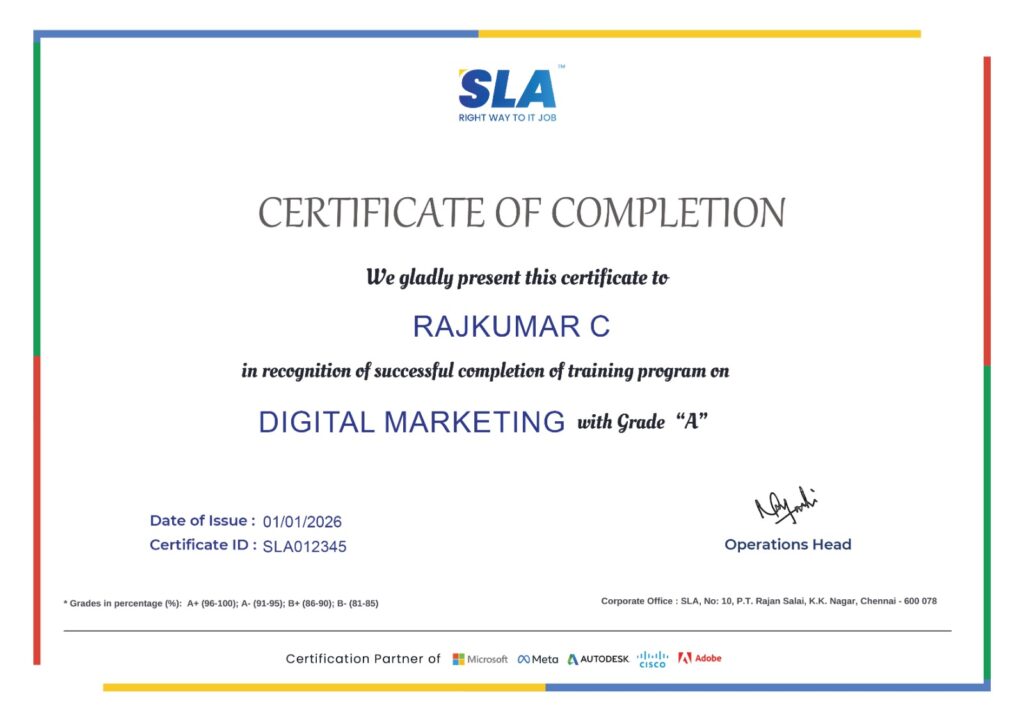
Earn Your Certificate of Completion
Validate your achievements with Softlogic's Certificate of Completion, verifying successful fulfillment of all essential components.
Take Your Career to the Next Level with Certifications
Get a certifications through our training programs to gain a competitive edge in the industry.

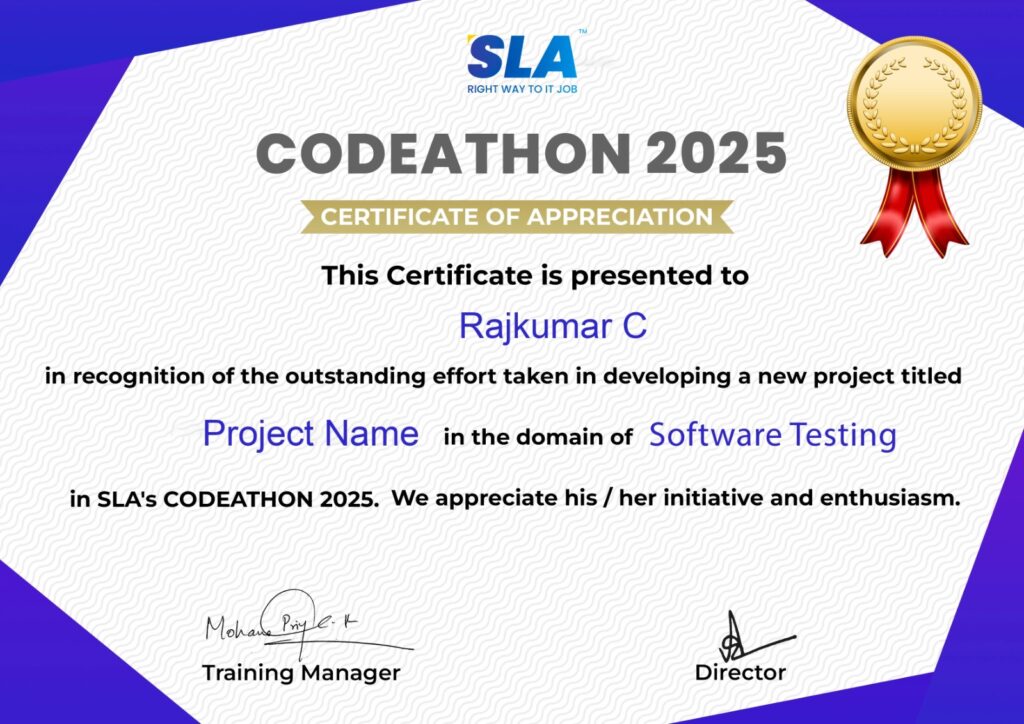
Stand Out from the Crowd with Codethon Certificate
Verify the authenticity of your real-time projects with Softlogic's Codethon certificate.
Hands-on Project Practices in Full Stack Developer
Recipe Sharing Site
Learning Management System (LMS)
Weather App
Job Portal
Real-Time Messaging App
Task Manager
Blogging Site
Social Media Platform
E-Commerce Website
The SLA Way to Get Placed in Top IT Companies
Enrollment

Technology Training
Coding Practices
Realtime Projects
Realtime Projects
Placement Training
Aptitude Training
Interview Skills
Interview Skills
Panel Mock
Interview

Unlimited
Interviews

Interview
Feedback
100%
IT Career
Placement Support for a Full Stack Developer Job
Genuine Placements. No Backdoor Jobs at Softlogic Systems.

Aptitude Training
from Day 1
Interview Skills
from Day 1

Softskills Training
from Day 1
Build Your Resume

Build your LinkedIn Profile

Build your GitHub
digital portfolio

Panel Mock Interview
Unlimited Interviews until you get placed

Life Long Placement Support at no cost
Request a Free Callback
FAQs
What distinguishes front-end development from back-end development?
Front-end development focuses on creating the user interface and user experience, using technologies like HTML, CSS, and JavaScript. Back-end development involves server-side logic, database interactions, and application functionality using languages and frameworks such as Node.js, Django, or Ruby on Rails.
How do you handle state management in a single-page application (SPA)?
State management in SPAs can be handled using libraries or frameworks like Redux or Vuex, which manage the state of the application across various components and ensure a consistent user experience by synchronizing data.
What are some common design patterns used in Full Stack Development?
Common design patterns include MVC (Model-View-Controller), REST (Representational State Transfer), and microservices. These patterns help organize code, improve scalability, and facilitate the development of maintainable applications.
What measures can be taken to secure web applications?
Ensuring web application security involves practices such as input validation, authentication, authorization, data encryption, and protection against common vulnerabilities like SQL injection, cross-site scripting (XSS), and cross-site request forgery (CSRF).
What are the advantages and disadvantages of using a microservices architecture?
Advantages of microservices include improved scalability, independent deployment, and better fault isolation. Disadvantages can involve increased complexity in service management, data consistency challenges, and the overhead of inter-service communication.
How do you manage and deploy a Full Stack application?
Managing and deploying a Full Stack application involves using version control systems like Git, continuous integration/continuous deployment (CI/CD) pipelines, containerization with Docker, and orchestration with tools like Kubernetes. Deployment can be done on cloud platforms such as AWS, Azure, or Google Cloud.
How do APIs contribute to Full Stack Development?
APIs (Application Programming Interfaces) facilitate communication between the front-end and back-end of an application, allowing the front-end to request data from the back-end or perform actions like user authentication and data submission.
How do you handle performance optimization in Full Stack applications?
Performance optimization can be achieved through techniques such as optimizing code and queries, using caching strategies, minimizing asset sizes, implementing load balancing, and employing content delivery networks (CDNs) to improve load times and responsiveness.
Where is the corporate office of Softlogic Systems located?
The corporate office of the Softlogic Systems is located at the institute’s K.K.Nagar branch.
What payment methods does Softlogic accept?
Softlogic accepts a wide range of payment methods, including:
- Cash
- Debit cards
- Credit cards (MasterCard, Visa, Maestro)
- Net banking
- UPI
- Including EMI.
Additional Information for
the Full Stack Developer
Scopes available in the future for learning Full Stack Development.
The following are the scopes available in the future for learning the Full Stack Developer Course:
- Integration with Emerging Technologies: Full Stack Developers will increasingly work with emerging tech such as blockchain, augmented reality (AR), virtual reality (VR), and the Internet of Things (IoT) to create innovative applications.
- Cloud and DevOps Expertise: Mastery of cloud platforms (e.g., AWS, Azure, Google Cloud) and DevOps practices will be essential for managing infrastructure, enabling continuous integration and deployment, and building scalable applications.
- Real-Time Data Processing and Analytics: The need for real-time data handling and analysis is growing. Future Full Stack roles will involve managing real-time data streams, leveraging big data technologies, and optimizing applications for instant analytics and decision-making.
- Microservices and Serverless Architecture: As applications move towards microservices and serverless models, Full Stack Developers will need to understand and implement these architectures to build scalable, resilient systems.
- AI and Machine Learning Integration: Incorporating artificial intelligence (AI) and machine learning (ML) into applications will become more prevalent, requiring Full Stack Developers to integrate these technologies for advanced functionality and smarter user experiences.
- Advanced Security Practices: With evolving cyber threats, there’s a growing emphasis on implementing robust security measures in applications, including secure coding practices, encryption, and thorough vulnerability assessments.
- Progressive Web Apps (PWAs): The development of Progressive Web Apps, which provide offline capabilities and a native app-like experience, will be increasingly important. Full Stack Developers will need to create and manage PWAs that work seamlessly across various devices.
- API-First Development: With a rising reliance on APIs for integration, Full Stack Developers will need to adopt API-first development approaches, focusing on designing and managing APIs that support diverse applications and services.
Related Blogs
Full Stack Developer Course Eligibility
Published On: February 18, 2025
Understanding the Full Stack Developer course eligibility is essential for anyone looking to master both…
Full Stack Developer Course Fee in Chennai
Published On: January 29, 2025
Full Stack Developer Course Fee in Chennai Full-stack developer training programs typically offer a wide…
Top 10 Full Stack Developer Challenges and Solutions
Published On: November 19, 2024
Introduction Full stack engineers have to oversee both client-side and server-side development, which can be…
Full Stack Developer Project Ideas
Published On: October 12, 2024
Building real-world applications is essential for mastering both frontend and backend development. Full Stack Developer…
Full Stack Developer Salary for Freshers and Experienced
Published On: September 25, 2024
Introduction With the rapid growth of web and mobile applications, Full Stack Developers have become…
Full Stack Developer Tutorial for Beginners
Published On: September 14, 2024
Introduction Overwhelmed by how much tech you need to learn in order to become a…
Full Stack Developer Interview Questions and Answers
Published On: January 23, 2022
Introduction The demand for full-stack developers is increasing every day in the job market. Companies…
Google Reviews

Rating
4.8
1,053 Google reviews

Surya
Special thanks to Vishal Sir, the Placement Officer, for his interview guidance, resume support, and continuous motivation throughout the placement process. I would also like…

Click here for Full Review

NalluKumar Ravichandran
Hi, I recently completed the DOT NET Full Stack Development course at SLA, and I had a great learning experience. The teaching style and student…
Click here for Full Review

Shaaru Menan
I had a 3 year career break. Joined SLA on Java Full Stack course and completed it.Did projects with the help of my Mentor. They…
Click here for Full Review

Nithish Sahoo
I had an excellent experience taking this DevOps course. The curriculum is well-structured and covers both fundamental and advanced DevOps concepts in a clear manner.…
Click here for Full Review

MATHAN KUMAR G EEE
SLA Institute provides a structured learning environment for data analytics. The syllabus is relevant, and trainers are knowledgeable. Some sessions were very useful practically, while…
Click here for Full Review

SARAN M
SLA Institute provides training in communication and aptitude along with strong technical skills. The trainers explain concepts clearly with a practical approach, which helps build…
Click here for Full Review