
Our Robotic Process Automation Online Training programs are designed for students, freshers, and working professionals who want to upskill and stay relevant. We offer Robotic Process Automation Online Courses that are practical, interactive, and aligned with the latest industry demands. Our RPA syllabus covers the RPA concepts, bot creation, workflow automation, data extraction, integration with applications, and deployment. Enroll now and learn from industry experts with flexible timings and get Job support.
Robotic Process Automation Online Training
DURATION
1 Months
EMI
0% Interest
Mode
Live Online / Offline
Let's take the first step to becoming an expert in Robotic Process Automation
Lifelong Placement
Assistance
Get Certified
JOB PLACEMENT ELIGIBILITY TEST
Your Placement Eligibility Report
Want more details about Robotic Process Automation?
Course Schedules
Course Syllabus
Course Fees
or any other questions...
Fees, Duration & Batch Timings for Robotic Process Automation
Hands On Training
3-5 Real Time Projects
60-100 Practical Assignments
3+ Assessments / Mock Interviews
July 2026
Week days
(Mon-Fri)
Online/Offline
2 Hours Real Time Interactive Technical Training
1 Hour Aptitude
1 Hour Communication & Soft Skills
(Suitable for Fresh Jobseekers / Non IT to IT transition)
July 2026
Week ends
(Sat-Sun)
Online/Offline
4 Hours Real Time Interactive Technical Training
(Suitable for working IT Professionals)
Save up to 20% in your Course Fee on our Job Seeker Course Series
Syllabus of Robotic Process Automation
Module: 1 – Robotic Automation Process Studio
- Running a Process
- Basic Skills
- Process Validation
- Decision Stage
- Calculation Stage
- Data Items
Module: 2 – Process Flow
- Decisions
- Circular Paths
- Controlling Play
- Set Next Stage
- Breakpoints
- Collections and Loops
- Layers of Logic
- Pages for Organization
Module: 3 – Inputs and outputs
- Input Parameters
- Stepping and Pages
- Data Item Visibility
- Data Types
Output Parameters - Start-up Parameters
- Control Room
- Process Outputs
Module: 4 – Business Objects
- Object Studio
- Business Objects
- BLUE PRISM CONTENT
- Action Stage
- Inputs and Outputs
- The Process Layer
Module: 5 – Object Studio
- Creating a Business Object
- Application Modeler
- Spying Elements, Attributes
- Attribute Selection, Launch, Wait, Timeouts, Terminate
- Write, Press, Attach and Detach, Read, Actions
- Action Inputs and Outputs, Data Items as Inputs
Module: 6 – Error Management
- Exception Handling
- Recover and Resume
- Throwing Exceptions
- Preserving the Current Exception
- Exception Bubbling
- Exception Blocks
- Exception Handling in Practice
Module: 7 – Case Management
- Queue Items Commercial in Confidence
- BLUE PRISM CONTENT
- Work Queue Configuration
- Defer, Attempts, Pause and Resume
- Filters Reports
Module: 8 – Additional Features
- Safe Stop, Collection Actions
- Choice Stage, Logging, Log Viewer, System Manager
- Process/Business Object Grouping
- Process and Object References, Export and Import
Module: 9 – Consolidation Exercise
- Order System Process
- Consolidation Exercise Checklist
- Submitting Your Completed Solution
Objectives of Robotic Process Automation
Our Robotic Process Automation Online Training is curated by expert IT professionals, who created it while bearing in mind the current trends and industry stands of the IT industry. The syllabus is specially customized to fit both beginners and experienced students, so due to that the syllabus covers everything starting from fundamental and advanced topics, some of those are listed below:
- The syllabus starts with fundamental topics such as, Robotic Automation Process Studio, where you will learn about Running a Process, Basic Skills, Process Validation etc.
- The syllabus will dive a little deep into RPA through topics like, Business Objects, Object Studios, Error Management etc.
- The syllabus then goes to advanced topics like, Case Management, Blue Prism Content, Filters Reports etc.
Why Softlogic Systems is the Best Choice for Robotic Process Automation – Learn, Practice, and Get Placed!
Online & Offline Training Options
Learn from 100+ Real-Time Developers
Hands-on Projects & Codeathons
0% EMI Fee Options
Resume & Interview Support
Placement with Top IT Firms
1000+ Hiring Partners
No Backdoor Jobs
Highlights of Robotic Process Automation
What is Robotic Process Automation?
Robotic Process Automation (RPA) is a technology employing software robots to automate repetitive, rule-based tasks traditionally carried out by humans. These bots simulate human interactions with digital systems, like data entry, form submission, and document processing. RPA’s goal is to enhance business processes, boost efficiency, minimize errors, and enable employees to concentrate on more strategic tasks. It finds applications across industries, including data entry, migration, and customer service.
What are the reasons for learning Robotic Process Automation?
The following are the reasons for learning Robotic Process Automation:
- Automation of Repetitive Tasks: RPA allows for automating dull, repetitive tasks, giving employees more time to concentrate on strategic and creative endeavors.
- Improved Efficiency: RPA streamlines routine processes, resulting in faster completion times, heightened productivity, and overall efficiency.
- Reduced Errors: RPA minimizes the chances of human error in manual tasks, ensuring tasks are executed with greater precision and consistency.
What are the prerequisites for learning Robotic Process Automation Online Training?
SLA does not demand any prerequisites for any courses as all the courses cover topics from fundamental to advanced level. However having a basic knowledge on these below topics can be beneficial in learning Robotic Process Automation easily:
- Basic Computer Skills: Knowing how to use computers, manage files, and work with software is crucial for using RPA tools effectively.
- Understanding of Business Processes: Having knowledge about how businesses operate and their workflows helps in recognizing which tasks can be automated and in creating efficient automation solutions.
- Logical Thinking: Having strong logical and analytical abilities is helpful for recognizing patterns, establishing rules, and resolving issues in automation processes.
Our Robotic Process Automation Course is suitable for:
- Students
- Job Seekers
- Freshers
- IT professionals aiming to enhance their skills
- Professionals seeking career change
- Enthusiastic programmers
What are the course fees and duration?
The Robotic Process Automation course fees depend on the program level (basic, intermediate, or advanced) and the course format (online or in-person).On average, the Robotic Process Automation course fees come in the range of ₹25,000 to ₹50,000 INR for 1 month, inclusive of international certification. For some of the most precise and up-to-date details on fees, duration, and certified Robotic Process Automation certification, kindly contact our Best Placement Training Institute in Chennai directly.
What are some of the jobs related to Robotic Process Automation?
The following are some of the jobs related to Robotic Process Automation:
- RPA Developer
- RPA Analyst
- RPA Architect
- RPA Consultant
What is the salary range for the position of RPA Developer?
The RPA Developer freshers salary typically with less than 1 year of experience earn approximately ₹2-3 lakhs annually. For a mid-career RPA Developer with around 3 years of experience, the average annual salary is around ₹5-6 lakhs. An experienced RPA Developer with more than 5 years of experience can anticipate an average yearly salary of around ₹7-8 lakhs. Visit SLA for more courses.
List a few real time Robotic Process Automation applications.
Here are several real time Robotic Process Automation applications:
- Invoice Processing Automation
- HR Onboarding Automation
- Customer Service Automation
- Data Migration Automation
Boost Your Skills with Our Robotic Process Automation Experts
Our Mentors are from Top Companies like:
The following are our trainer’s profile for the Robotic Process Automation Online Training:
- At Softlogic System, we provide RPA training led by instructors with over 5 years of experience in the field and a passion for teaching, offering both classroom and online classes with flexible schedules.
- Our trainers, professionals in leading MNCs, are proficient in various RPA tools like Automation Anywhere, UiPath, Blue Prism, and more, with degrees from prestigious colleges.
- They possess extensive experience in developing and testing automation workflows across various RPA tools, along with proficiency in creating process documentation using cognitive software tools and programming languages like C#, Java, HTML, CSS, .Net, etc.
- Highly skilled in Microsoft Technologies, Process Analysis, Design, and Implementing Technical Demands for RPA solutions, our trainers excel in UAT testing and providing bug fix solutions using automation testing tools like Selenium.
- With excellent communication skills and a commitment to staying updated with industry advancements, our trainers ensure top-notch RPA training, maintaining strong connections with HR professionals from leading MNCs to align our curriculum with industry requirements at Softlogic Systems.
What Modes of Training are available for Robotic Process Automation?
Offline / Classroom Training
- Direct Interaction with the Trainer
- Clarify doubts then and there
- Airconditioned Premium Classrooms and Lab with all amenities
- Codeathon Practices
- Direct Aptitude Training
- Live Interview Skills Training
- Direct Panel Mock Interviews
- Campus Drives
- 100% Placement Support
Online Training
- No Recorded Sessions
- Live Virtual Interaction with the Trainer
- Clarify doubts then and there virtually
- Live Virtual Interview Skills Training
- Live Virtual Aptitude Training
- Online Panel Mock Interviews
- 100% Placement Support
Corporate Training
- Industry endorsed Skilled Faculties
- Flexible Pricing Options
- Customized Syllabus
- 12X6 Assistance and Support
Certifications
Improve your abilities to get access to rewarding possibilities
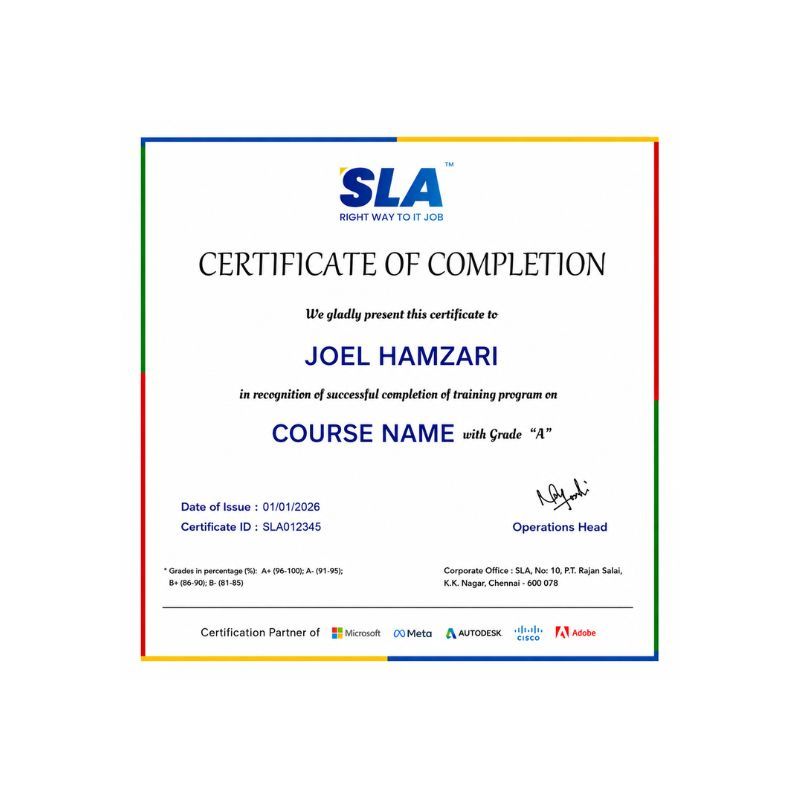
Earn Your Certificate of Completion
Take Your Career to the Next Level with Certifications
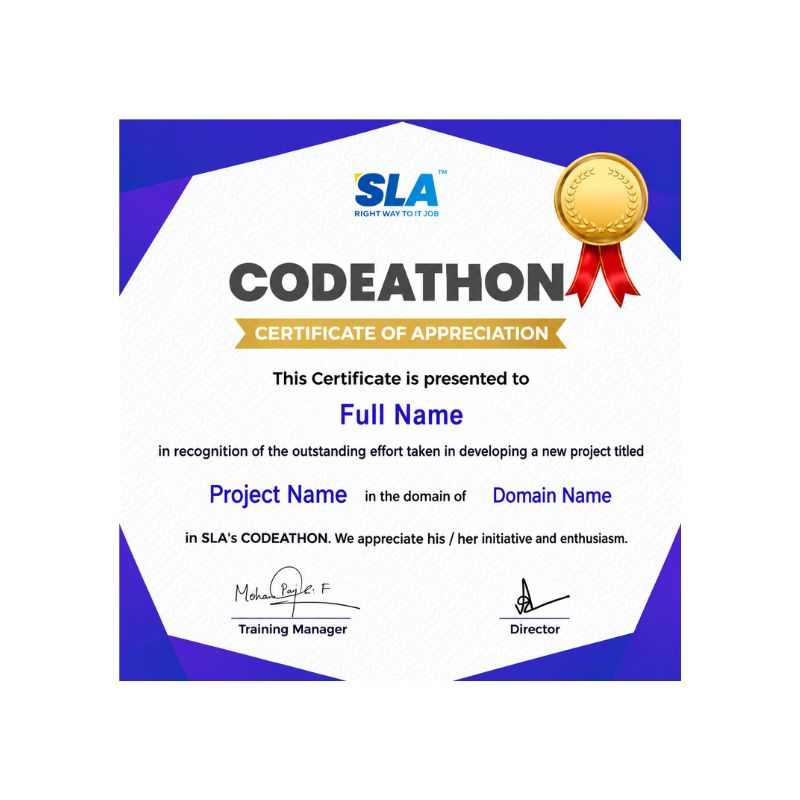
Stand Out from the Crowd with Codethon Certificate
Hands-on Project Practices in Robotic Process Automation
Document Management and Filing
Compliance Monitoring and Reporting
Customer Feedback Analysis
Inventory Replenishment Automation
Expense Management Automation
Social Media Management
Automated Report Generation
Data Extraction and Validation
Email Automation
The SLA Way to Get Placed in Top IT Companies
Enrollment
Technology Training
Realtime Projects
Placement Training
Interview Skills
Panel Mock
Interview
Unlimited
Interviews
Interview
Feedback
100%
IT Career
Placement Support for a Robotic Process Automation Job
Genuine Placements. No Backdoor Jobs at Softlogic Systems.
Aptitude Training
from Day 1
Interview Skills
from Day 1
Softskills Training
from Day 1
Build Your Resume
Build your LinkedIn Profile
Build your GitHub
digital portfolio
Panel Mock Interview
Unlimited Interviews until you get placed
Life Long Placement Support at no cost
FAQs
What types of payment methods does SLA accept?
SLA currently accepts all types of payments ranging from cash, card (debit/credit), cheques, and every other type of digital UPI payment methods also.
What is SLA’s policy on student grievances?
SLA will definitely resolve student grievances through the specially appointed HR personnel.
How experienced are SLA’s trainers?
SLA’s trainers are specially trained and have years of experience in both IT and teaching.
How many branches does SLA have?
SLA has two branches at the moment, one is in Navalur, OMR and another is in K.K. Nagar.
What are the unique characteristics about the SLA OMR branch?
SLA’s OMR branch is conveniently located in the middle of OMR’S IT hub where a cluster of IT companies are located, so this gives the students of SLA’s OMR branch a lot of opportunities when it comes to internships and placements.
How does Robotic Process Automation (RPA) differ from traditional automation methods?
Traditional automation often requires custom coding and extensive IT involvement, while RPA uses software robots to automate repetitive tasks without changing existing systems.
What are the main benefits of implementing RPA in an organization?
Implementing RPA can improve efficiency, cut operational costs, boost accuracy, ensure compliance, and free up human resources for more strategic work.
What types of tasks are suitable for automation using RPA?
RPA works well for automating rule-based, repetitive tasks involving structured data and manual entry, like data entry, form filling, validation, report generation, and data migration.
How does RPA handle exceptions or errors during automation processes?
RPA platforms have built-in exception handling mechanisms allowing bots to manage errors encountered during automation, including logging errors, retrying failed steps, or notifying human operators for resolution.
When implementing RPA what security measures should be considered ?
Security measures for RPA include data encryption, role-based access control, audit trails, secure credential management, and compliance with regulations like GDPR and HIPAA, along with regular security assessments to identify and address vulnerabilities.
Additional Information for
the Robotic Process Automation
Current trends in Robotic Process Automation
- Hyper Automation: Hyper Automation merges RPA with AI, ML, and process mining to automate entire business processes from start to finish.
- Intelligent Automation: Intelligent automation integrates RPA with cognitive technologies like NLP, computer vision, and predictive analytics, enabling bots to handle more complex tasks and make independent decisions.
- Cloud-based RPA: Cloud-based RPA solutions are gaining popularity, allowing organizations to use scalable infrastructure and reduce upfront costs while maintaining flexibility and accessibility.
- Citizen Development: Citizen development empowers non-technical users to create and deploy RPA bots using low-code or no-code platforms, making automation accessible to everyone and speeding up digital transformation efforts within companies.