
Opens in a new tab
Software Training Institute in Chennai with 100% Placements – SLA Institute

Oracle Sql Training In Chennai

4.90
(16231)
DURATION
Real-Time Location Services
2 Months
EMI
0% Interest
Mode
Rank-Based Percentile Gui Calculator using Tkinter
Live Online / Offline

Upgrade your career with the Oracle SQL Training in Chennai at Softlogic Systems. Our Oracle SQL syllabus covers the Oracle database architecture, SQL syntax, DDL & DML commands, joins, subqueries, views, indexes, and performance tuning. Our Oracle SQL course in Chennai comes with placement support, flexible schedules, real-time projects, and certification to help you successfully launch your career. Our placement team connects you with top IT companies for a smooth career transition.
Enroll Now
Download Syllabus
0%

AI Powered Syllabus

0+

Realtime Projects

0+

Students Placed in Sept

0+

Certificates

Check Your Eligibilty for IT Training

Ready to start your tech career? Whether you have recently graduated and want to begin your IT career, or want to upskill for your next phase, our Eligibility Assessment Form makes the process easy to begin. For this Oracle Sql Course In Chennai Developer Course, we will match your skills and goals to the best training structure for you. Just fill in the form below for an easy start on your course. Take your first step today!
What We'll Need From You?
Personal & Contact Details
Name and phone number for direct interview updates
Academic Background
Age category, educational qualification, and graduation year.
Technical Experience
Prior programming knowledge and relevant IT certification details.
KNOW MORE ABOUT COURSE +91 86818 84318

IT Training ELIGIBILITY TEST

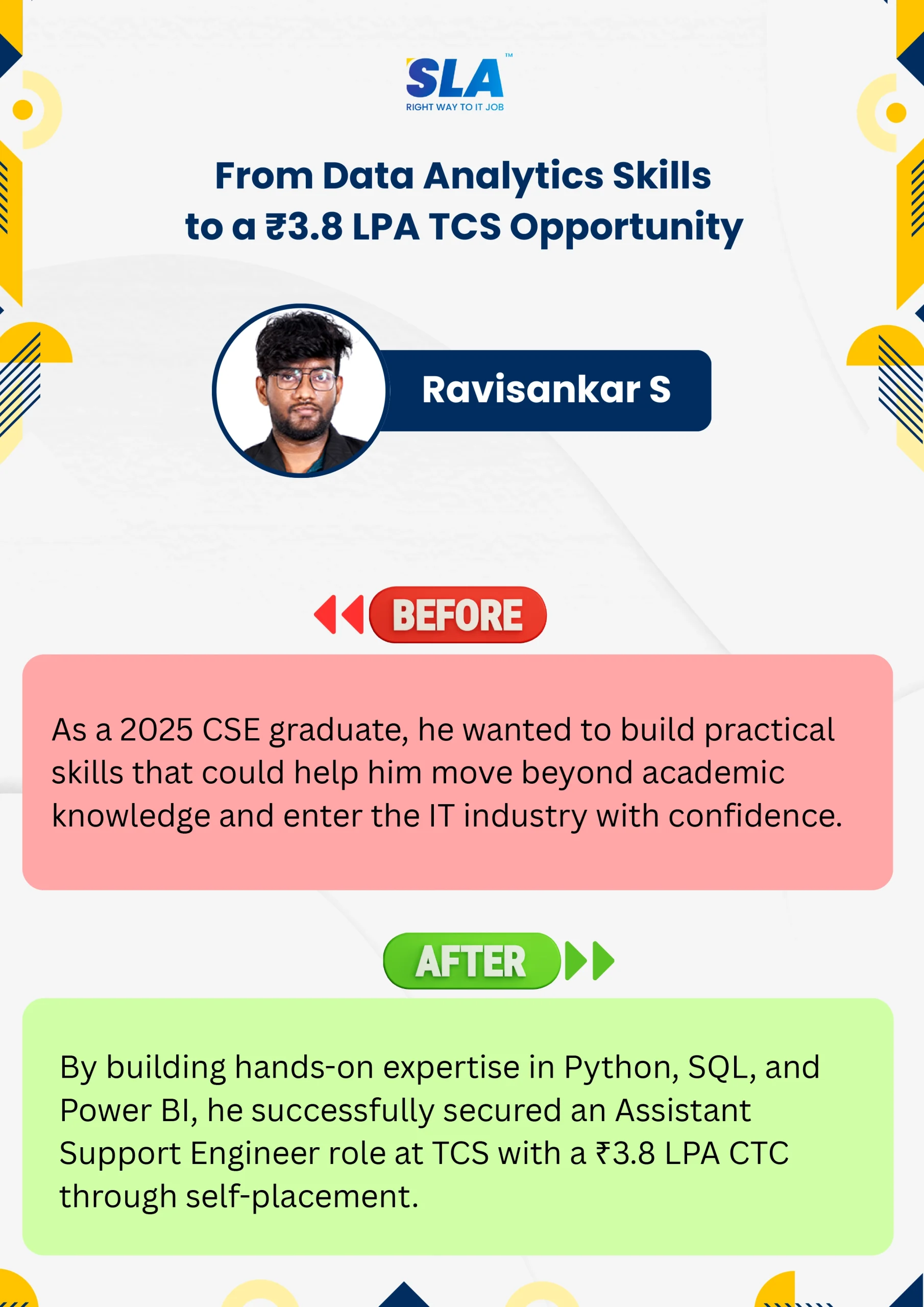
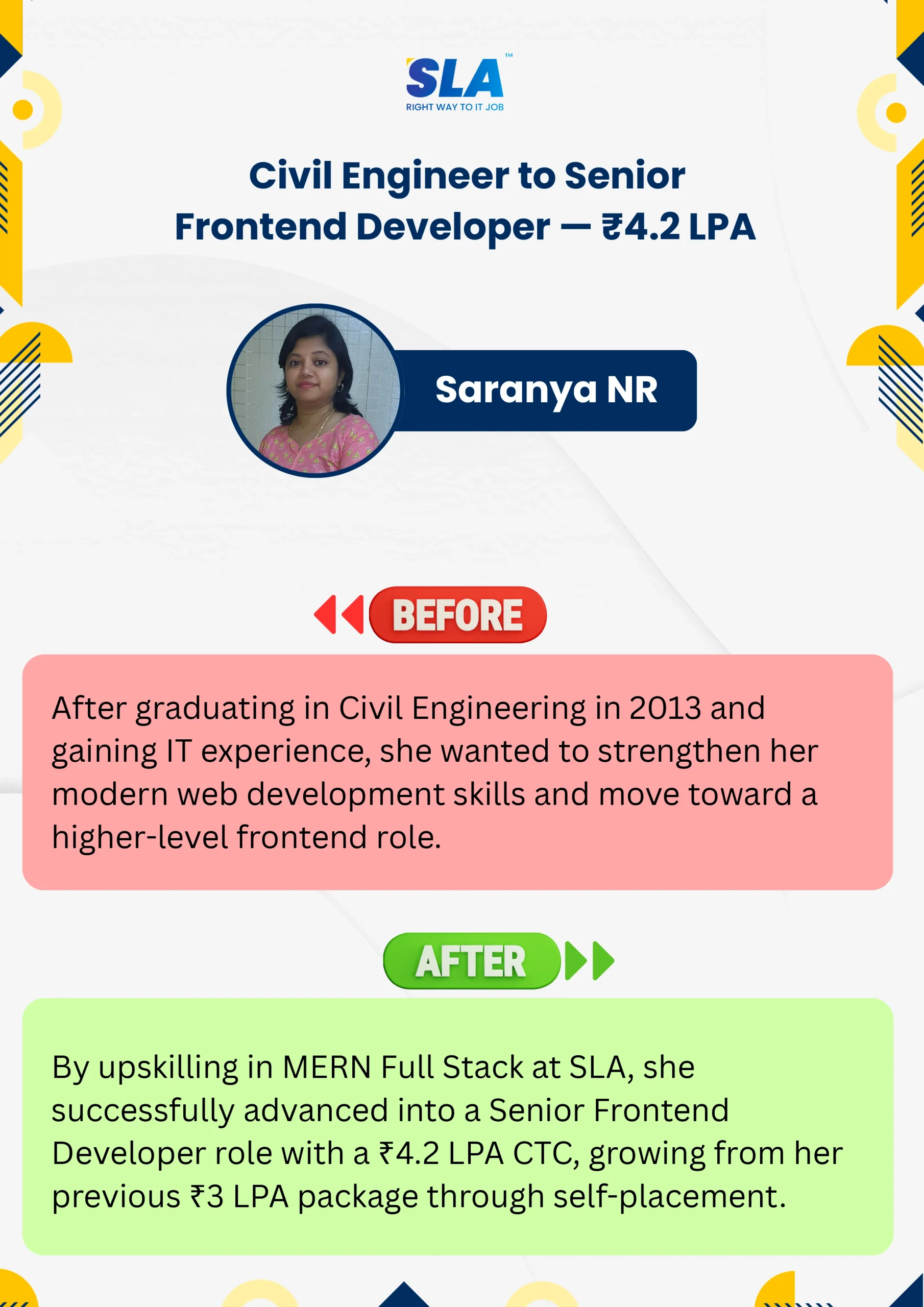
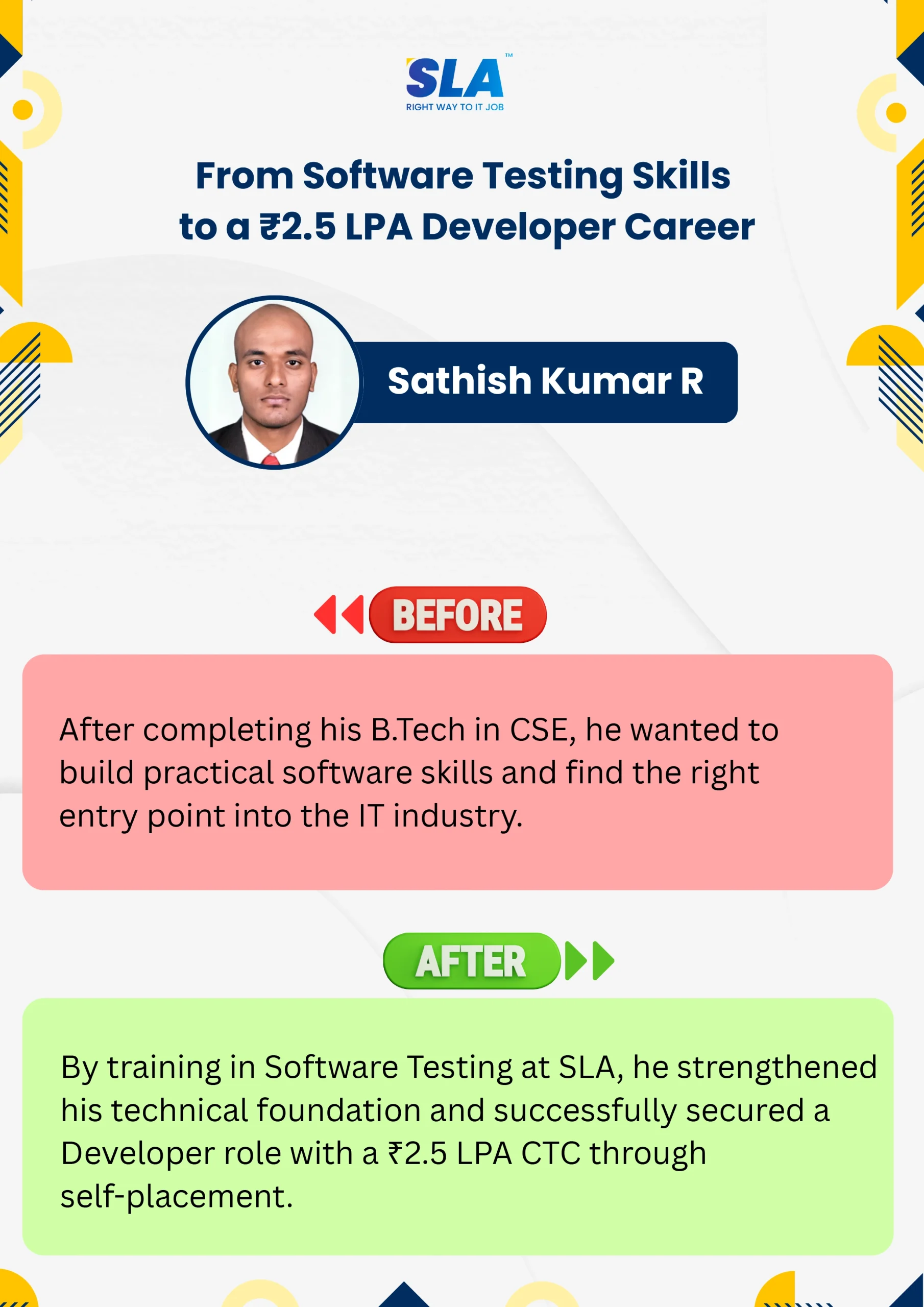
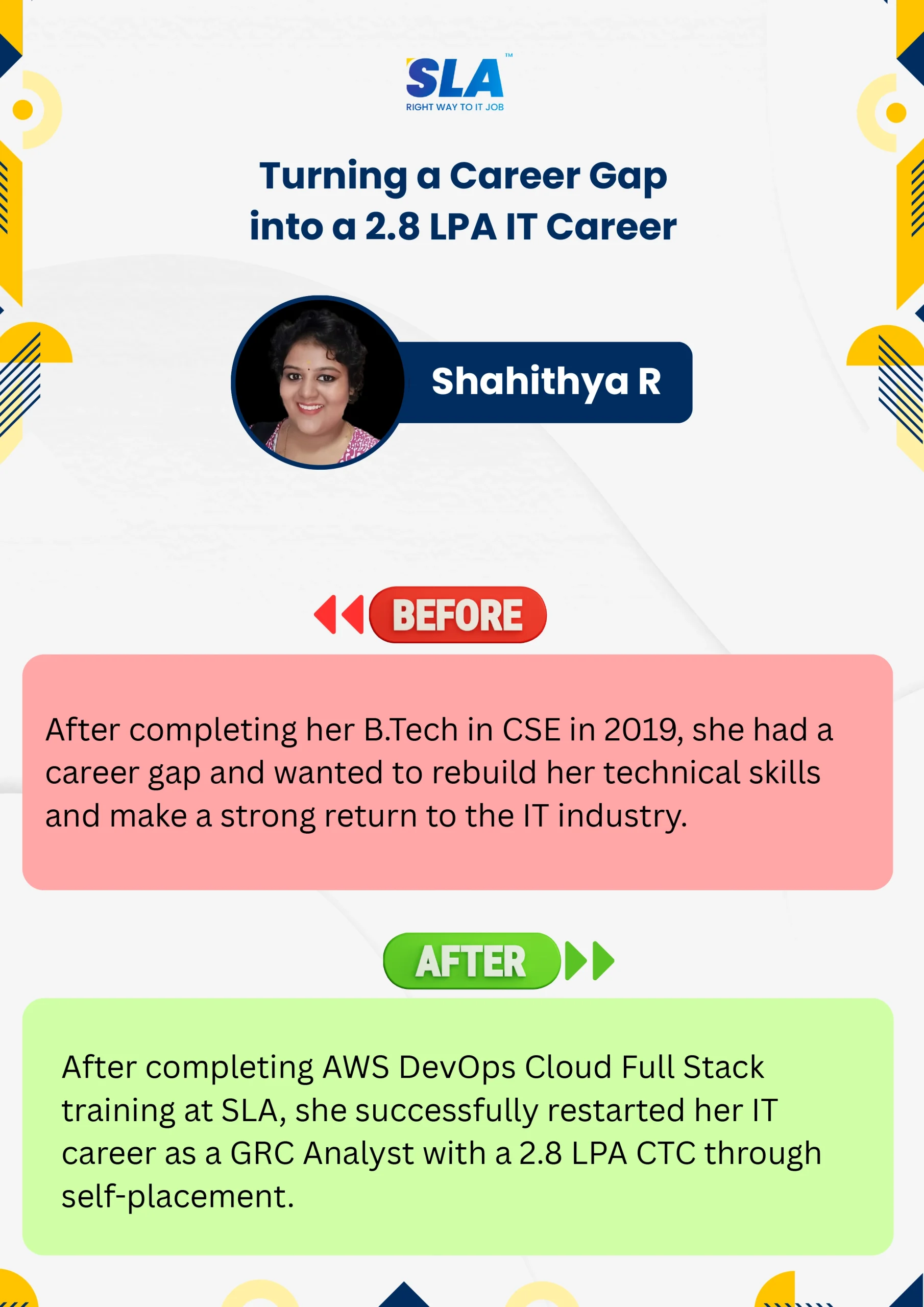
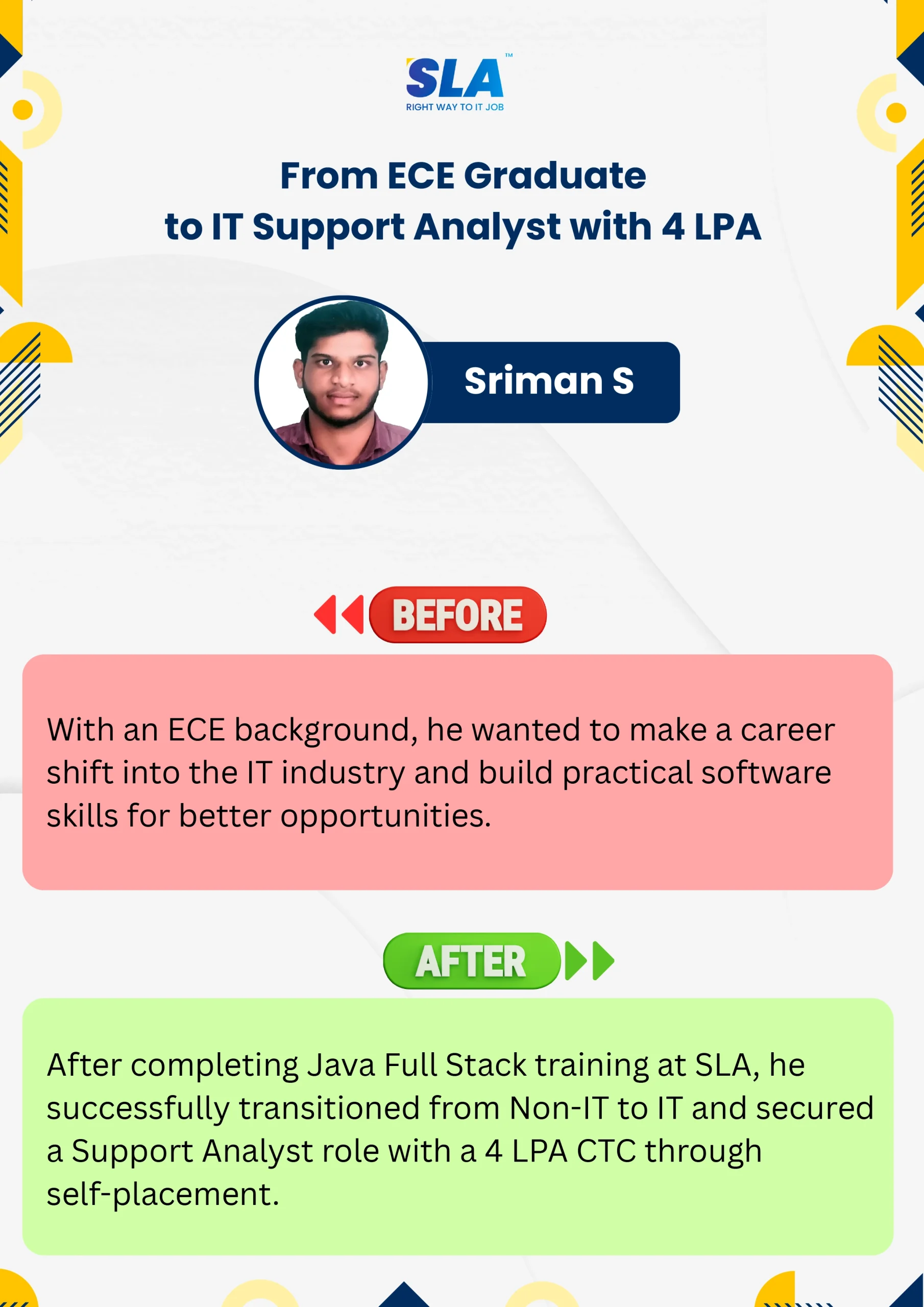
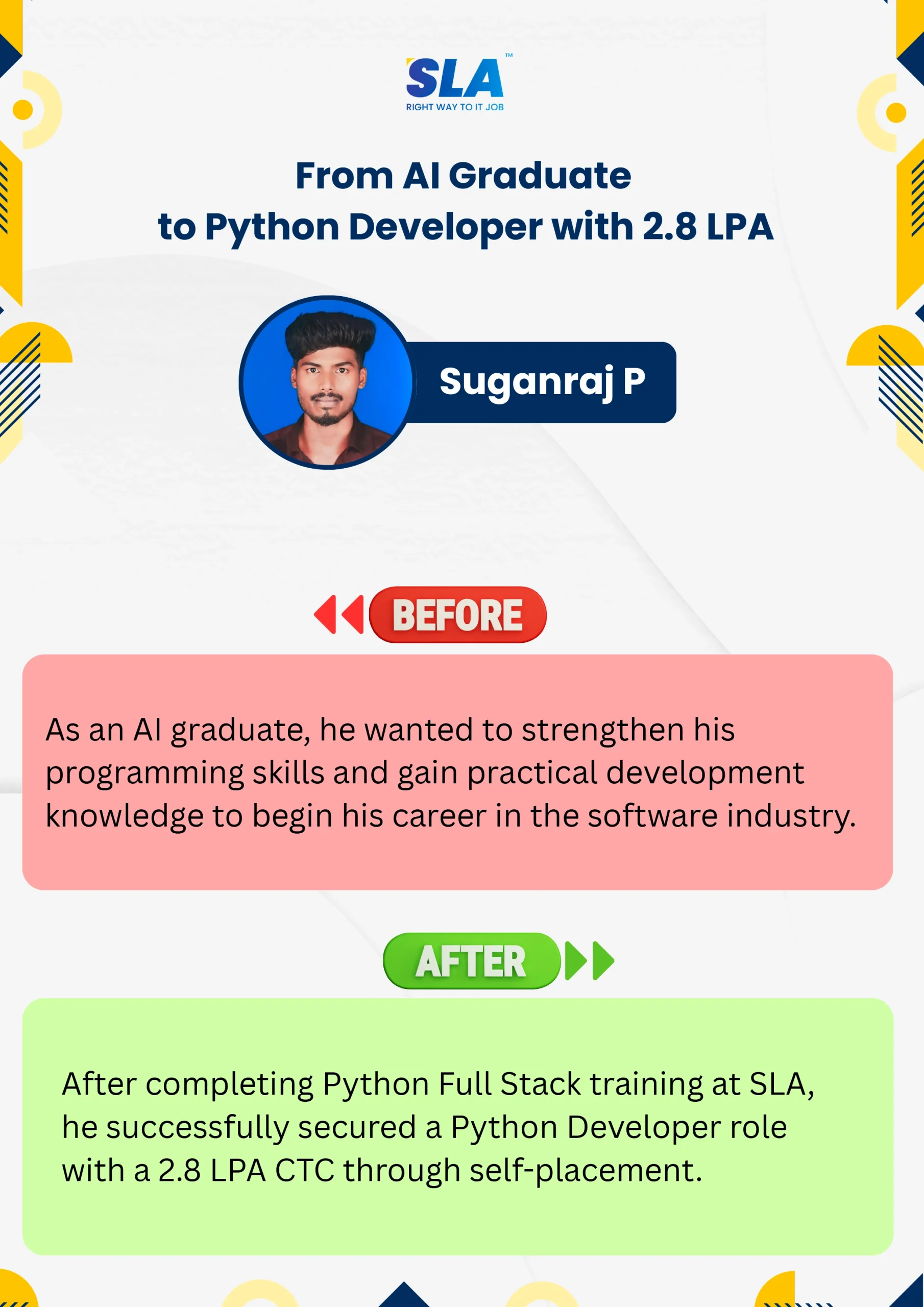
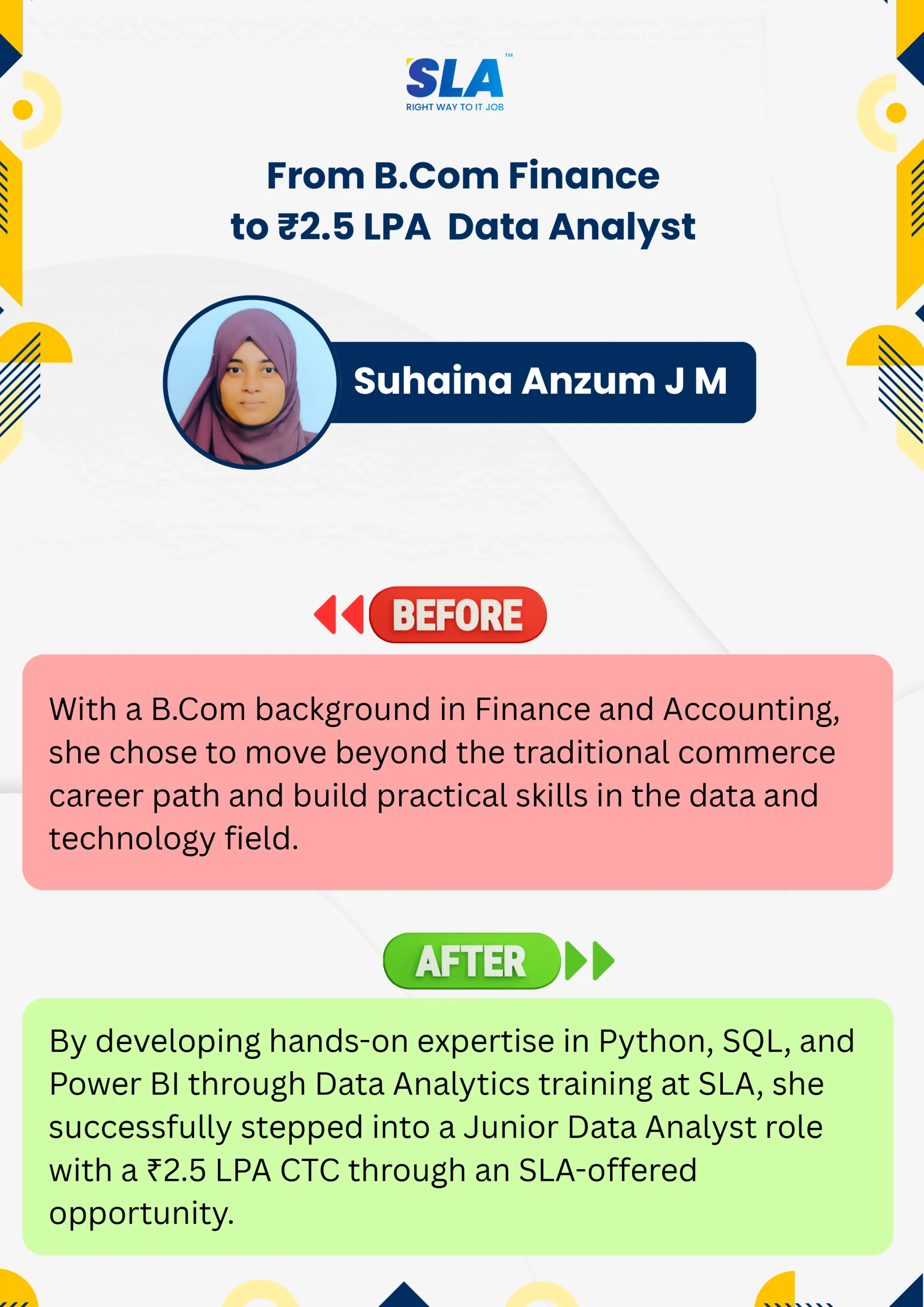
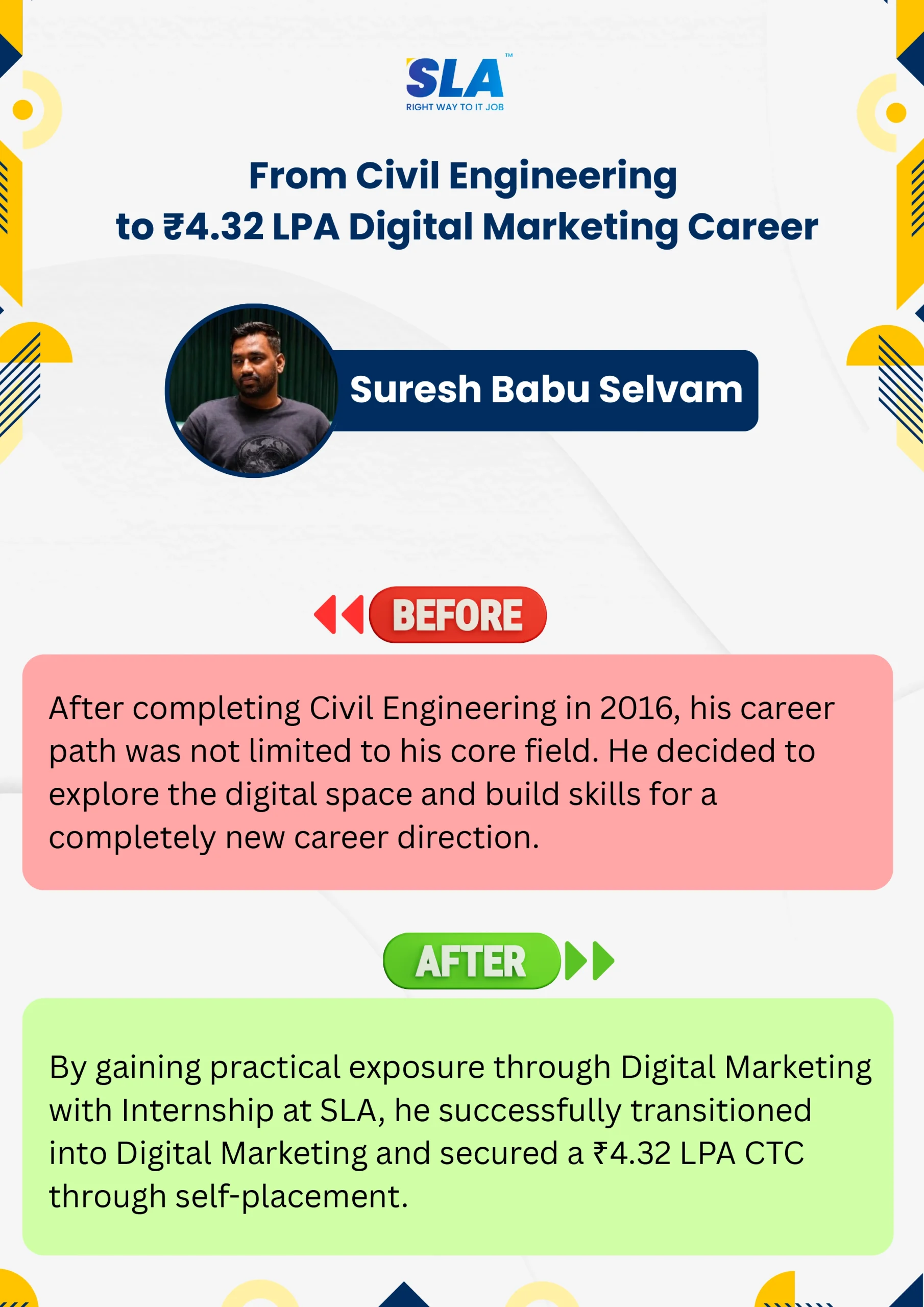
Life Changing Stories

Explore Our Students' Inspiring Leap Stories!

See More Success Stories

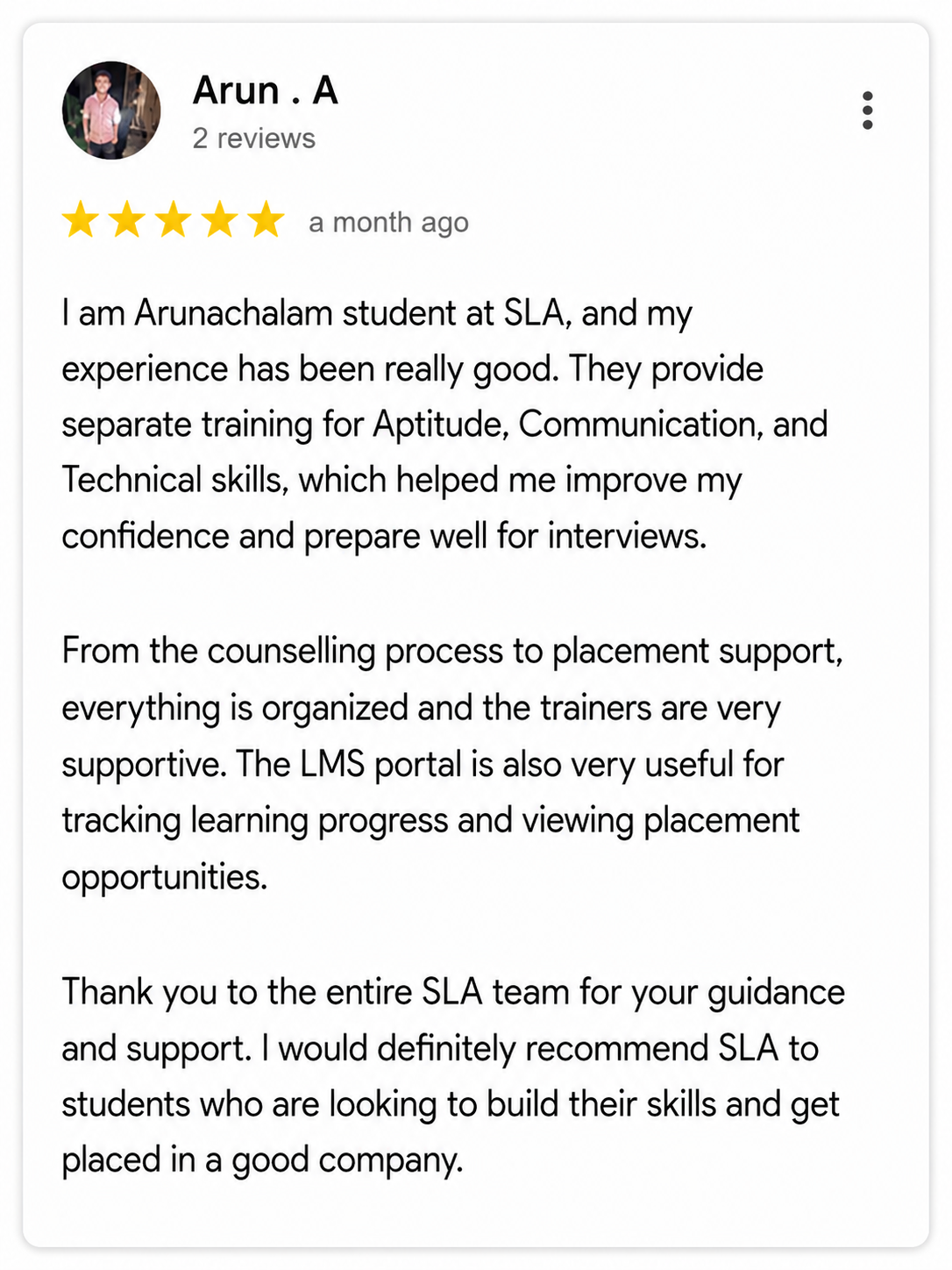
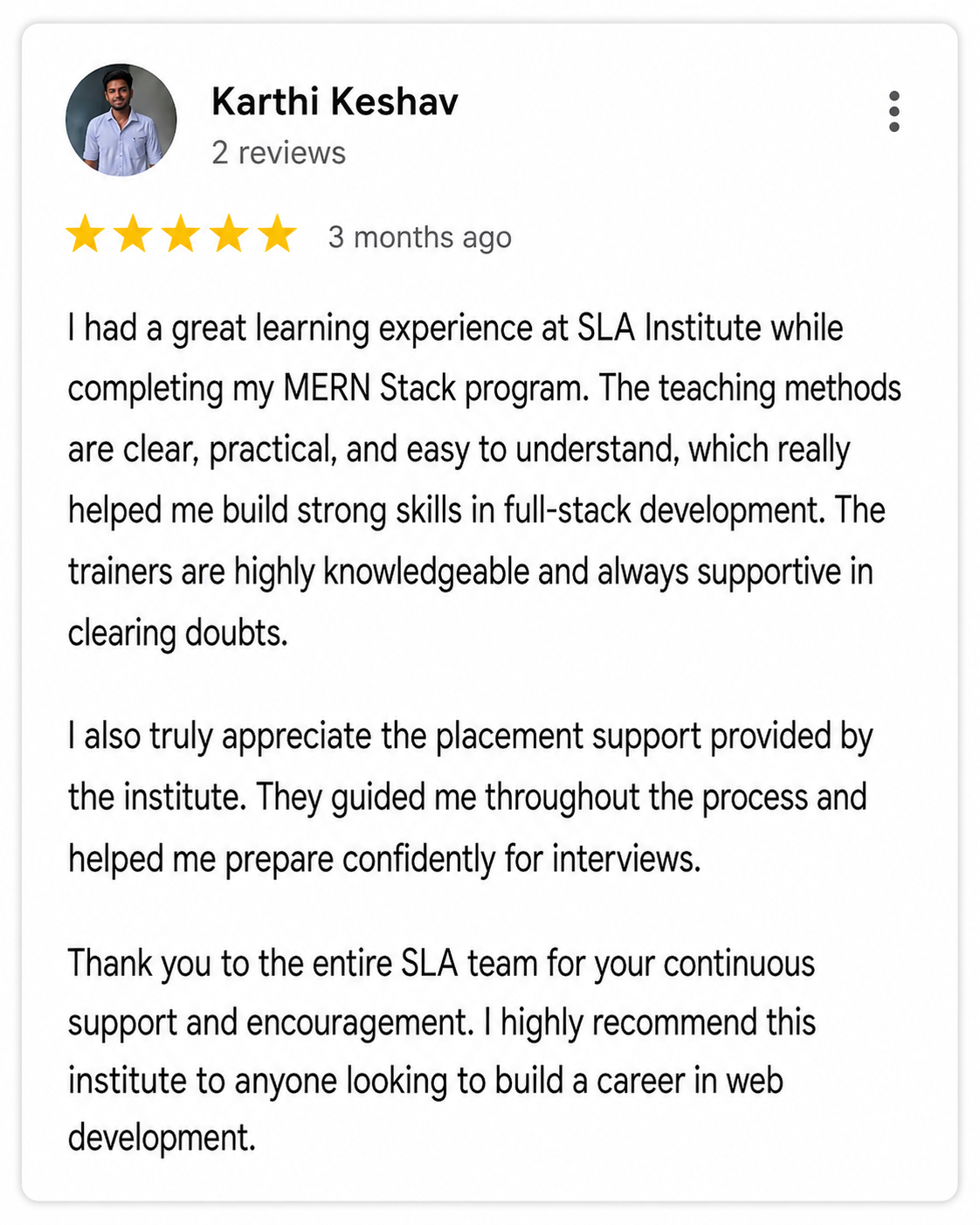
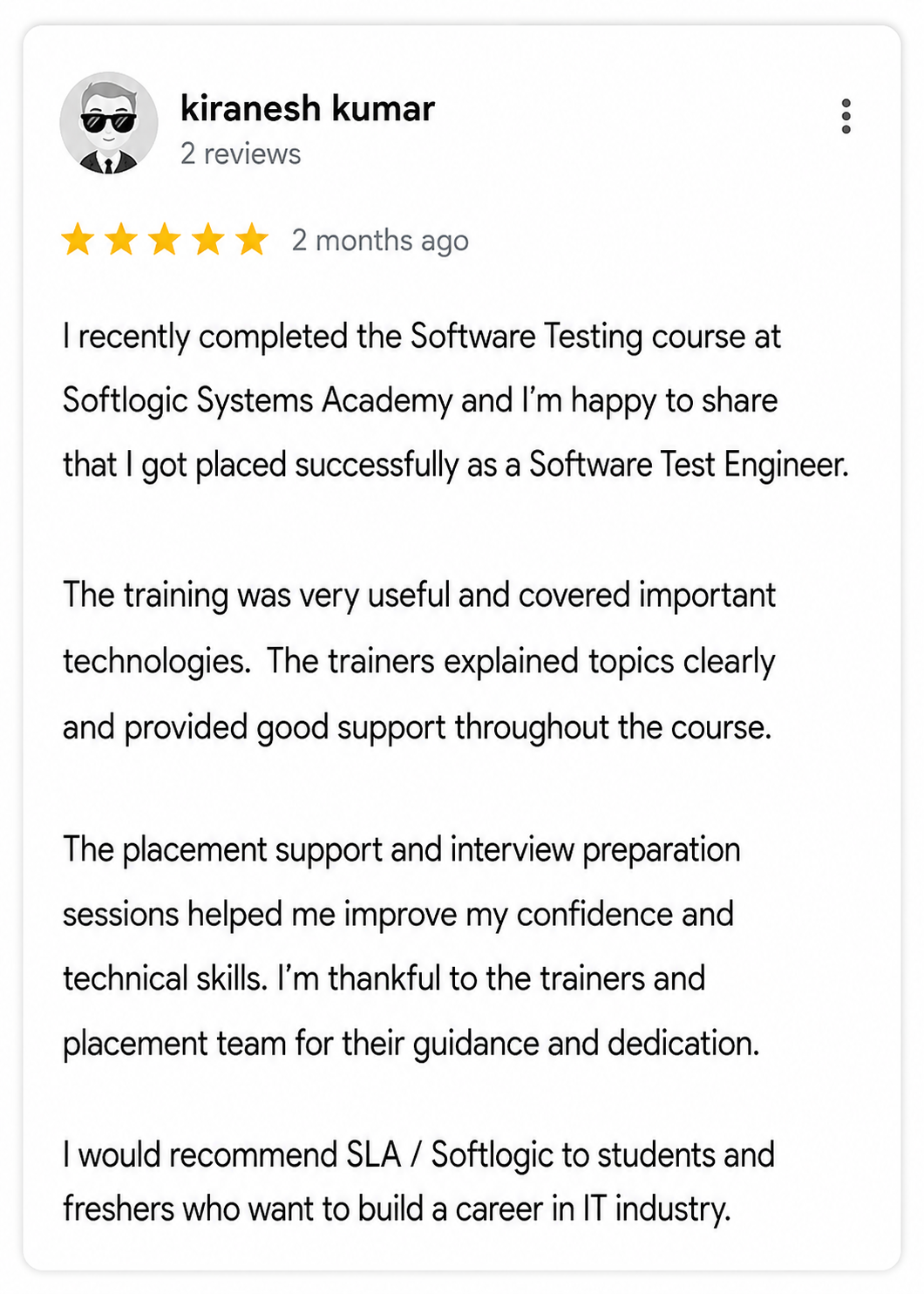
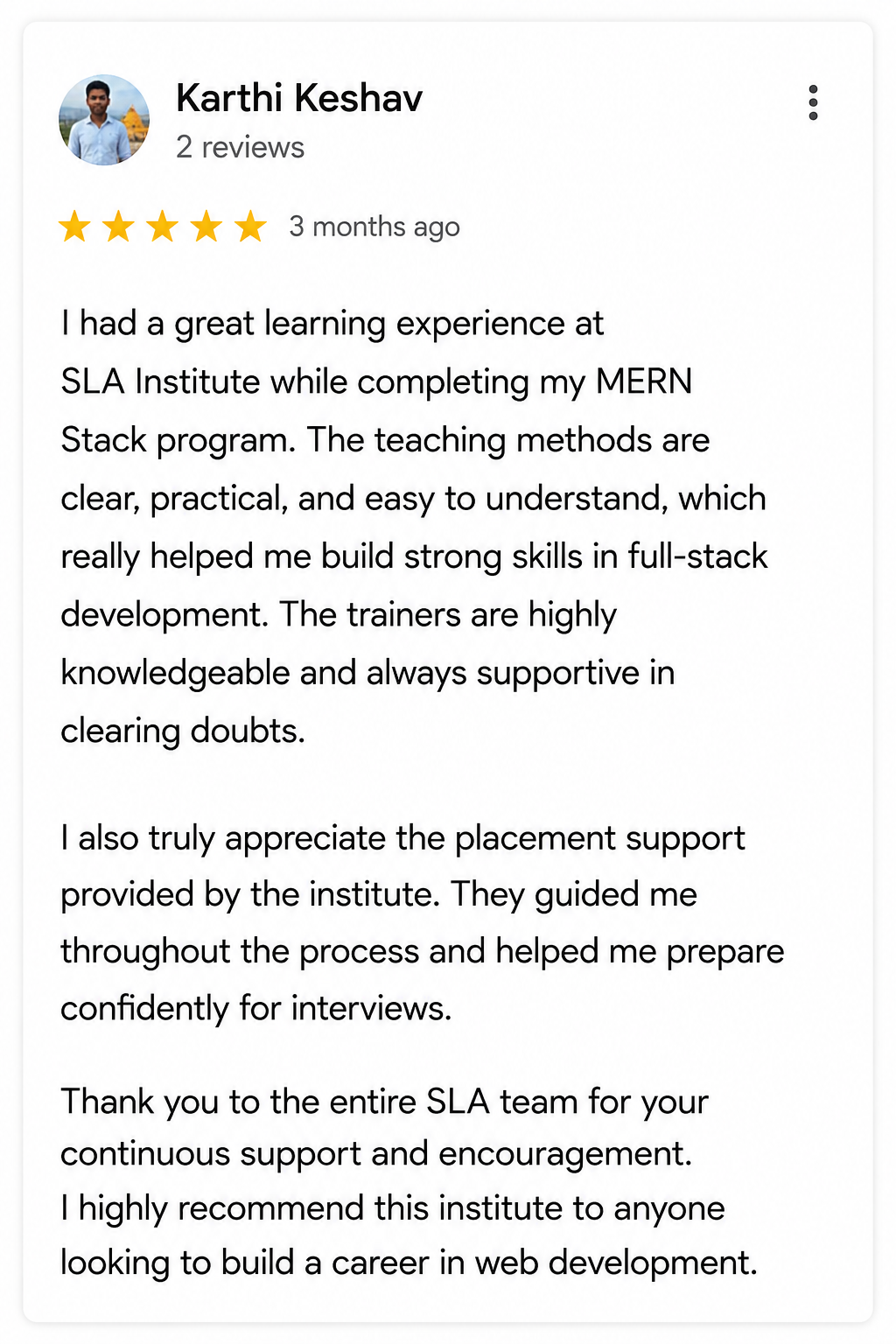
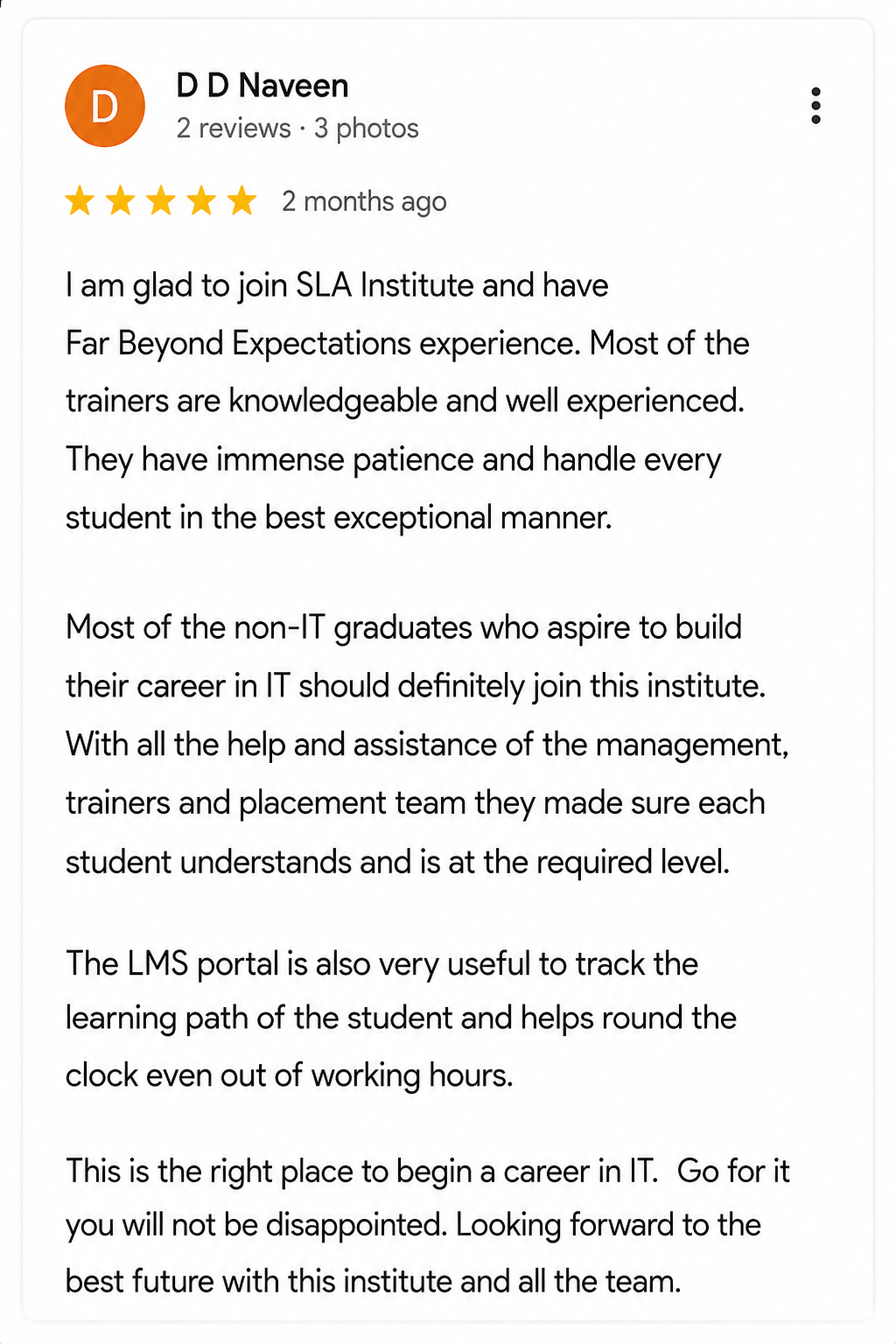
Check our Google Reviews

3D Coverflow Carousel
Review Image
Click here to view all Reviews

Syllabus of Oracle Sql Course In Chennai

Download Syllabus
  • List the features of Oracle Database 11g
  • Discuss the basic design, theoretical, and physical aspects of a relational database
  • Categorize the different types of SQL statements
  • Describe the data set used by the course
  • Log on to the database using SQL Developer environment
  • Save queries to files and use script files in SQL Developer
  • List the capabilities of SQL SELECT statements
  • Generate a report of data from the output of a basic SELECT statement
  • Select All Columns
  • Select Specific Columns
  • Use Column Heading Defaults
  • Use Arithmetic Operators
  • Understand Operator Precedence
  • Learn the DESCRIBE command to display the table structure
  • Write queries that contain a WHERE clause to limit the output retrieved
  • List the comparison operators and logical operators that are used in a WHERE clause
  • Describe the rules of precedence for comparison and logical operators
  • Use character string literals in the WHERE clause
  • Write queries that contain an ORDER BY clause to sort the output of a SELECT statement
  • Sort output in descending and ascending order
  • Describe the differences between single row and multiple row functions
  • Manipulate strings with character function in the SELECT and WHERE clauses
  • Manipulate numbers with the ROUND, TRUNC, and MOD functions
  • Perform arithmetic with date data
  • Manipulate dates with the DATE functions
  • Describe implicit and explicit data type conversion
  • Use the TO_CHAR, TO_NUMBER, and TO_DATE conversion functions
  • Nest multiple functions
  • Apply the NVL, NULLIF, and COALESCE functions to data
  • Use conditional IF THEN ELSE logic in a SELECT statement
  • Use the aggregation functions in SELECT statements to produce meaningful reports
  • Divide the data in groups by using the GROUP BY clause
  • Exclude groups of date by using the HAVING clause
  • Write SELECT statements to access data from more than one table
  • View data that generally does not meet a join condition by using outer joins
  • Join a table by using a self join
  • Describe the types of problem that sub-queries can solve
  • Define sub-queries
  • List the types of sub-queries
  • Write single-row and multiple-row sub-queries
  • Describe the SET operators
  • Use a SET operator to combine multiple queries into a single query
  • Control the order of rows returned
  • Describe each DML statement
  • Insert rows into a table
  • Change rows in a table by the UPDATE statement
  • Delete rows from a table with the DELETE statement
  • Save and discard changes with the COMMIT and ROLLBACK statements
  • Explain read consistency
  • Categorize the main database objects
  • Review the table structure
  • List the data types available for columns
  • Create a simple table
  • Decipher how constraints can be created at table creation
  • Describe how schema objects work
  • Create a simple and complex view
  • Retrieve data from views
  • Create, maintain, and use sequences
  • Create and maintain indexes
  • Create private and public synonyms
  • Differentiate system privileges from object privileges
  • Create Users
  • Grant System Privileges
  • Create and Grant Privileges to a Role
  • Change Your Password
  • Grant Object Privileges
  • How to pass on privileges?
  • Revoke Object Privileges
  • Add, Modify and Drop a Column
  • Add, Drop and Defer a Constraint
  • How to enable and disable a Constraint?
  • Create and Remove Indexes
  • Create a Function-Based Index
  • Perform Flashback Operations
  • Create an External Table by Using ORACLE_LOADER and by Using ORACLE_DATAPUMP
  • Query External Tables
  • Explain the data dictionary
  • Use the Dictionary Views
  • USER_OBJECTS and ALL_OBJECTS Views
  • Table and Column Information
  • Query the dictionary views for constraint information
  • Query the dictionary views for view, sequence, index and synonym information
  • Add a comment to a table
  • Query the dictionary views for comment information
  • Use Subqueries to Manipulate Data
  • Retrieve Data Using a Subquery as Source
  • Insert Using a Subquery as a Target
  • Usage of the WITH CHECK OPTION Keyword on DML Statements
  • List the types of Multitable INSERT Statements
  • Use Multitable INSERT Statements
  • Merge rows in a table
  • Track Changes in Data over a period of time
  • Time Zones
  • CURRENT_DATE, CURRENT_TIMESTAMP, and LOCALTIMESTAMP
  • Compare Date and Time in a Session’s Time Zone
  • DBTIMEZONE and SESSIONTIMEZONE
  • Difference between DATE and TIMESTAMP
  • INTERVAL Data Types
  • Use EXTRACT, TZ_OFFSET and FROM_TZ
  • Invoke TO_TIMESTAMP,TO_YMINTERVAL and TO_DSINTERVAL
  • Multiple-Column Subqueries
  • Pairwise and Nonpairwise Comparison
  • Scalar Subquery Expressions
  • Solve problems with Correlated Subqueries
  • Update and Delete Rows Using Correlated Subqueries
  • The EXISTS and NOT EXISTS operators
  • Invoke the WITH clause
  • The Recursive WITH clause
  • Use the Regular Expressions Functions and Conditions in SQL
  • Use Meta Characters with Regular Expressions
  • Perform a Basic Search using the REGEXP_LIKE function
  • Find patterns using the REGEXP_INSTR function
  • Extract Substrings using the REGEXP_SUBSTR function
  • Replace Patterns Using the REGEXP_REPLACE function
  • Usage of Sub-Expressions with Regular Expression Support
  • Implement the REGEXP_COUNT function

Objectives of Oracle Sql Course In Chennai

Our SQL training program provides a comprehensive introduction to SQL, covering key concepts and techniques essential for working with databases.

  • Understand SQL basics and its importance in database management.
  • Learn data retrieval techniques for efficient information extraction from databases.
  • Gain proficiency in using DDL commands to create and modify database objects.
  • Master DML commands for managing data in databases.
  • Understand integrity constraints and their role in maintaining data accuracy and consistency.
  • Explore built-in functions for calculations and data manipulation.
  • Learn about data aggregation, joins, set operators, and subqueries for advanced data retrieval and manipulation.
Click Here to Get Started

Highlights of Oracle Sql Course In Chennai?

Oracle SQL is a variant of SQL that is used in Oracle Database to manage and manipulate relational databases, including retrieval of information, manipulation, and administration. Software developers, database architects, and data analysts all prefer it.

An abundance of advantages and considerations exist for learning Oracle SQL, including:

  • Career Opportunities: When it comes to database development, administration, data analysis, and related IT operations, Oracle SQL proficiency can lead to a wide range career options
  • Data-Driven Decision Making: Oracle SQL enables you to derive valuable insights from data, boosting data-driven business decision-making operations.
  • Industry Standard: any individual working with Oracle-based technologies must be familiar with Oracle SQL, which is widely acknowledged as the industry standard language for maintaining and querying Oracle databases.

There are no certain prerequisites for learning Oracle SQl, however, there are specific prerequisites that can enhance the learning process. They are,

  • Basic Computer Skills
  • Database Fundamentals
  • SQL Concepts
  • Exposure to Oracle Database

The fees for our Oracle SQL Course in Chennai may vary depending on the program level (basic, intermediate, or advanced) and the course format (online or in-person). On average, Oracle SQL Course Fees in Chennai ranges around 30,000 INR and the duration lasts for 1-2 months, including international certification. For precise and up-to-date information on fees, duration, and certification, please contact our Oracle SQL Training Institute in Chennai directly.

Oracle SQL expertise opens up an abundance of job prospects in the information technology industry. The following are some prominent job roles associated with Oracle SQL:

  • Database Developer
  • Data Engineer
  • Data Analyst
  • Software Developer
  • Data Architect
  • Database Consultant
  • ETL Developer, etc

Oracle SQL’s reliability, performance, and scalability make it a popular choice for multiple real-time applications in a wide range of industries. Some of few are,

  • Supply Chain Management Systems
  • Data Warehousing and Business Intelligence
  • Online Booking and Reservation Systems
  • Online Transaction Processing (OLTP) Systems
  • Enterprise Resource Planning (ERP) Systems
  • IoT (Internet of Things) Applications
  • Healthcare Information Systems

According to Ambition Box, the average salary for a fresher Oracle SQL Developer in India is ₹7.6 Lakhs per year for those with less than 1 year to 4 years of experience. At Oracle, fresher SQL Developers’ salaries range from ₹5 Lakhs to ₹13 Lakhs per year.

Boost your skills with Oracle Sql Course In Chennai with Experts

Our Mentors are from Top Companies like:
  • Our trainers of Oracle-SQL training are highly experienced and certified professionals in the field.
  • They have extensive knowledge of database creation and the associated storage requirements.
  • They are experts in designing, optimizing and managing large-scale production databases and in-memory databases.
  • They have deep experience in developing SQL, PL/SQL and database triggers in the Oracle environment.
  • Our trainers have the ability to design and develop stored procedures and packages in the Oracle platform.
  • They understand the importance of data security and the associated technologies to ensure secure data access and updates.
  • Our trainers have the technical proficiency to define roles and privileges in Oracle databases and ensure best practices related to tuning, indexing and replication.
  • They are adept at devising efficient strategies for defining business requirements and for transforming them into technically precise solutions.
  • In addition, they are accomplished in designing and developing methods and protocols for data and information exchange between applications and databases.
  • Our trainers are highly communicative and form collaborative relationships with students to ensure the most effective transfer of knowledge.
Click Here to Get Started

Explore Real Projects Built by Softlogic Students

Explore the real-world, enterprise-level projects designed and executed by our successful alumni. Gain the same hands-on exposure to live industry projects, build a standout portfolio, and prove your practical skills to top hiring managers instantly.
Oracle SQL-powered E-commerce Database
Supplier Management Database
Wholesale Management Database
Project Practices for Oracle Sql Course In Chennai

Why Softlogic Systems is the Best Choice for Oracle Sql Course In Chennai

Crowdfunding Platform
Online & Offline Training Options
Learn at your convenience with flexible classroom and live online training.
Learn from 100+ Real-Time Developers
Get trained by industry professionals with years of hands-on experience.
Voting System with Python Django
Hands-on Projects & Codeathons
Practice with real-time projects and coding challenges to build confidence.
0% EMI Fee Options
Pay your course fees flexibly with easy EMI plans at zero interest.
Resume & Interview Support
Get expert help with resume building, mock interviews, and soft skills.
Placement with Top IT Firms
Access placement opportunities with leading MNCs and IT companies.
500+ Hiring Partners
Benefit from Softlogic’s strong recruiter network for faster job placement.
No Backdoor Jobs
We ensure only genuine placement opportunities with trusted companies.
Request a Free Callback

Certifications

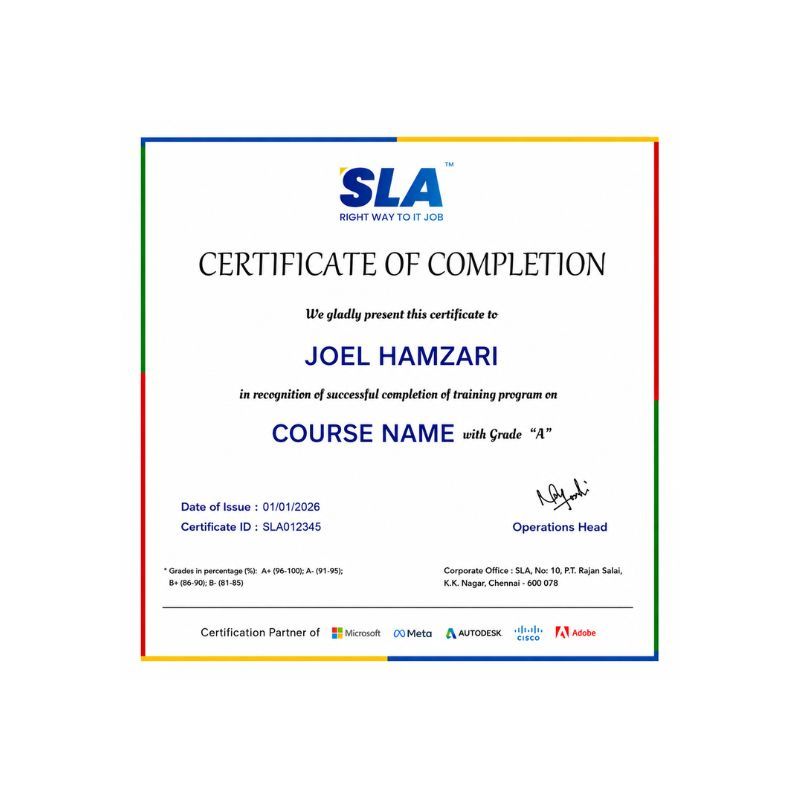
Earn Your Certificate of Completion
Validate your achievements with Softlogic's Certificate of Completion, verifying successful fulfillment of all essential components.
Take Your Career to the Next Level with  Certifications
Get a certifications through our training programs to gain a competitive edge in the industry.
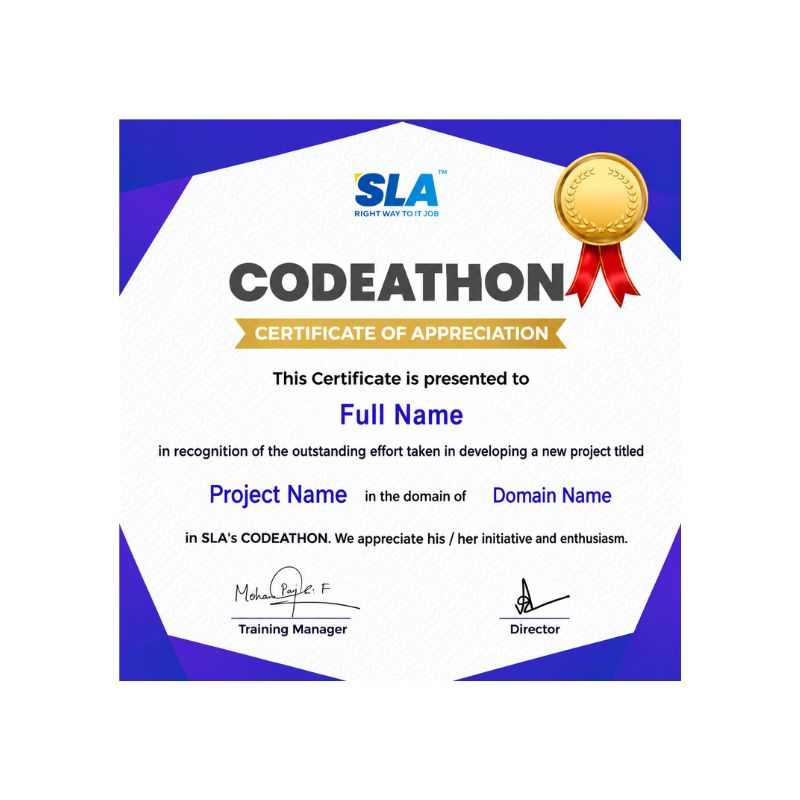
Stand Out from the Crowd with Codethon Certificate
Verify the authenticity of your real-time projects with Softlogic's Codethon certificate.

The Global Edge: Certified Vs. Uncertified

With Global Certification

  • ✅ Visibility in ATS Filters
  • ✅Command Higher Hikes
  • ✅ Verified Skill Proof
  • ✅Global Job Access
  • ✅ Fast-Tracked Senior Roles

Without Global Certification

  • ❌ Stuck in Screening
  • ❌ Lower Starting Pay
  • ❌ Unproven Technical Ability
  • ❌ Limited Local Scope
  • ❌ Slower Career Leader
  •  
Let's take the First Step to a better future! GET Free Career Guidance
The SLA Way to Get Placed

The SLA Way to Get Placed

Seven connected stages, one continuous path from enrollment to your career launch — here is exactly how it works, step by step.

01
🎓

Technical Mastery

Industry-aligned curriculum, daily coding tasks, real-time projects

02
💻

Career Readiness

Aptitude, Communication, ATS-friendly resume optimization

03
🎯

Placement Prep

Aptitude, communication tuning and technical interview mastery.

04
💬

Panel Mock Interviews

Real company-pattern mocks with expert panel feedback.

05
👨‍💼

Interview schedule

Multiple company drives with lifetime placement support.

06
📝

Interview Feedback

Detailed performance analysis and one-on-one guidance.

07
🏆

Launch Your Career

Land your first job with lifetime alumni and career support.

Listen to Our Students' Video Testimonials

FAQ

SQL stands for Structured Query Language and is used to interact with relational databases to manipulate data. It includes commands such as SELECT, INSERT, UPDATE, and DELETE that allow users to query and modify data.

Call +91 86818 84318 right away and find out all about the great deals that are now available to you!

You can connect to an Oracle database using SQL by using sqlplus, a command-line interface for writing and running SQL scripts. This can be done either directly or through programming languages such as Java, PHP, Python, etc.

The basic sql commands in oracle are CREATE, ALTER, INSERT, SELECT, UPDATE and DELETE. These commands help in creating, altering, inserting, selecting, updating and deleting the data respectively.

The different types of SQL data types are NUMERIC, VARCHAR, BOOLEAN, DATE and TIMESTAMP.

The different types of SQL clauses are SELECT, FROM, WHERE, ORDER BY, GROUP BY, HAVING, and JOIN.

Learning Oracle-SQL has many benefits such as you become proficient in managing data in relational databases; you can develop sound knowledge of relational database management systems; you become capable of writing efficient and optimized queries; you can create databases for better data storage and querying.

Oracle-SQL is one of the most popular database marketing and query languages, and is in high demand in most organizations. Professionals trained in Oracle-SQL often find plenty of job opportunities in both private and public organizations.

Oracle-SQL training typically includes topics such as relational databases, database objects, relational data integrity and constraints, query writing, query performance tuning, advanced SQL and PL/SQL programming, etc.

Yes, Oracle-SQL can be used for web development as it is a query language specifically designed for relational databases. It can be used to create websites and web applications that store and retrieve data from a database.

Related Blogs

Our counselors will share the Syllabus PDF with you via Email / Whatsapp

Get Your Instant Job & Placement Eligibility
Report in Just 30 Seconds!

We are excited to get started with you

Give us your information and we will arange for a free call (at your convenience) with one of our counsellors. You can get all your queries answered before deciding to join SLA and move your career forward.