
Software Training Institute in Chennai with 100% Placements – SLA Institute
⭐ Exclusive Summer Courses Offer ⭐ 💰 Flat ₹5,000 - ₹10,000 off on all courses 👨‍👩‍👧 Additional discounts for group enrollments 🎓 100% Placement Support 🏆 90,000+ Students Successfully Placed 🚀 Avail now! Limited seats only!

Oracle Pl Sql Online Training

4.80
(25914)

Our Oracle PLSQL Online Training programs are designed for students, freshers, and working professionals who want to upskill and stay relevant. We offer Oracle PLSQL Online Courses that are practical, interactive, and aligned with the latest industry demands. Our Oracle PL SQL syllabus covers the PL/SQL architecture, variables & data types, cursors, exceptions, procedures, functions, packages, and triggers. Enroll now and learn from industry experts with flexible timings and get Job support.
DURATION
Real-Time Location Services
2 Months
EMI
0% Interest
Mode
Rank-Based Percentile Gui Calculator using Tkinter
Live Online / Offline

Let's take the first step to becoming an expert in Oracle PL/SQL

Click Here to Get Started

100% Placement
Assurance

Get Certified

JOB PLACEMENT ELIGIBILITY TEST

×

Your Placement Eligibility Report

Want more details about Oracle PL/SQL Course?

Fill out the form, and our counsellors will get in touch with you at your preferred time. You can have all your queries answered. Once you decide that SLA is the perfect fit for your training needs, our counselors will guide you through the process every step of the way.

Course Schedules

Course Syllabus

Course Fees

CRM System Testing

or any other questions...

Fees, Duration & Batch Timings for Oracle PL/SQL Course

Hands On Training
3-5 Real Time Projects
60-100 Practical Assignments
3+ Assessments / Mock Interviews
July 2026
Week days
(Mon-Fri)
Online/Offline

2 Hours Real Time Interactive Technical Training 

1 Hour Aptitude 

1 Hour Communication & Soft Skills

(Suitable for Fresh Jobseekers / Non IT to IT transition)

Course Fee
July 2026
Week ends
(Sat-Sun)
Online/Offline

4 Hours Real Time Interactive Technical Training

(Suitable for working IT Professionals)

Course Fee

Save up to 20% in your Course Fee on our Job Seeker Course Series

Learn More

Syllabus of Oracle PL/SQL Course

Download Syllabus
Introduction to Oracle Database
  • List the features of Oracle Database 12c
  • Discuss the basic design, theoretical, and physical aspects of a relational database
  • Categorize the different types of SQL statements
  • Describe the data set used by the course
  • Log on to the database using SQL Developer environment
  • Save queries to files and use script files in SQL Developer
Retrieve Data using the SQL SELECT Statement
  • List the capabilities of SQL SELECT statements
  • Generate a report of data from the output of a basic SELECT statement
  • Select All Columns
  • Select Specific Columns
  • Use Column Heading Defaults
  • Use Arithmetic Operators
  • Understand Operator Precedence
  • Learn the DESCRIBE command to display the table structure
Learn to Restrict and Sort Data
  • Write queries that contain a WHERE clause to limit the output retrieved
  • List the comparison operators and logical operators that are used in a WHERE clause
  • Describe the rules of precedence for comparison and logical operators
  • Use character string literals in the WHERE clause
  • Write queries that contain an ORDER BY clause to sort the output of a SELECT statement
  • Sort output in descending and ascending order
Usage of Single-Row Functions to Customize Output
  • Describe the differences between single row and multiple row functions
  • Manipulate strings with character function in the SELECT and WHERE clauses
  • Manipulate numbers with the ROUND, TRUNC, and MOD functions
  • Perform arithmetic with date data
  • Manipulate dates with the DATE functions
Invoke Conversion Functions and Conditional Expressions
  • Describe implicit and explicit data type conversion
  • Use the TO_CHAR, TO_NUMBER, and TO_DATE conversion functions
  • Nest multiple functions
  • Apply the NVL, NULLIF, and COALESCE functions to data
  • Use conditional IF THEN ELSE logic in a SELECT statement
Aggregate Data Using the Group Functions
  • Use the aggregation functions to produce meaningful reports
  • Divide the retrieved data in groups by using the GROUP BY clause
  • Exclude groups of data by using the HAVING clause
Display Data From Multiple Tables Using Joins
  • Write SELECT statements to access data from more than one table
  • View data that generally does not meet a join condition by using outer joins
  • Join a table to itself by using a self-join
Use Sub-queries to Solve Queries
  • Describe the types of problem that sub-queries can solve
  • Define sub-queries
  • List the types of sub-queries
  • Write single-row and multiple-row sub-queries
The SET Operators
  • Describe the SET operators
  • Use a SET operator to combine multiple queries into a single query
  • Control the order of rows returned
Data Manipulation Statements
  • Describe each DML statement
  • Insert rows into a table
  • Change rows in a table by the UPDATE statement
  • Delete rows from a table with the DELETE statement
  • Save and discard changes with the COMMIT and ROLLBACK statements
  • Explain read consistency
Use of DDL Statements to Create and Manage Tables
  • Categorize the main database objects
  • Review the table structure
  • List the data types available for columns
  • Create a simple table
  • Decipher how constraints can be created at table creation
  • Describe how schema objects work
Other Schema Objects
  • Create a simple and complex view
  • Retrieve data from views
  • Create, maintain, and use sequences
  • Create and maintain indexes
  • Create private and public synonyms
Control User Access
  • Differentiate system privileges from object privileges
  • Create Users
  • Grant System Privileges
  • Create and Grant Privileges to a Role
  • Change Your Password
  • Grant Object Privileges
  • How to pass on privileges?
  • Revoke Object Privileges
Management of Schema Objects
  • Add, Modify, and Drop a Column
  • Add, Drop, and Defer a Constraint
  • How to enable and Disable a Constraint?
  • Create and Remove Indexes
  • Create a Function-Based Index
  • Perform Flashback Operations
  • Create an External Table by Using ORACLE_LOADER and by Using ORACLE_DATAPUMP
  • Query External Tables
Manage Objects with Data Dictionary Views
  • Explain the data dictionary
  • Use the Dictionary Views
  • USER_OBJECTS and ALL_OBJECTS Views
  • Table and Column Information
  • Query the dictionary views for constraint information
  • Query the dictionary views for view, sequence, index and synonym information
  • Add a comment to a table
  • Query the dictionary views for comment information
Manipulate Large Data Sets
  • Use Subqueries to Manipulate Data
  • Retrieve Data Using a Subquery as Source
  • Insert Using a Subquery as a Target
  • Usage of the WITH CHECK OPTION Keyword on DML Statements
  • List the types of Multitable INSERT Statements
  • Use Multitable INSERT Statements
  • Merge rows in a table
  • Track Changes in Data over a period of time
Data Management in different Time Zones
  • Time Zones
  • CURRENT_DATE, CURRENT_TIMESTAMP, and LOCALTIMESTAMP
  • Compare Date and Time in a Session’s Time Zone
  • DBTIMEZONE and SESSIONTIMEZONE
  • Difference between DATE and TIMESTAMP
  • INTERVAL Data Types
  • Use EXTRACT, TZ_OFFSET and FROM_TZ
  • Invoke TO_TIMESTAMP,TO_YMINTERVAL and TO_DSINTERVAL
Retrieve Data Using Sub-queries
  • Multiple-Column Subqueries
  • Pairwise and Non-pairwise Comparison
  • Scalar Subquery Expressions
  • Solve problems with Correlated Subqueries
  • Update and Delete Rows Using Correlated Subqueries
  • The EXISTS and NOT EXISTS operators
  • Invoke the WITH clause
  • The Recursive WITH clause
Regular Expression Support
  • Use the Regular Expressions Functions and Conditions in SQL
  • Use Meta Characters with Regular Expressions
  • Perform a Basic Search using the REGEXP_LIKE function
  • Find patterns using the REGEXP_INSTR function
  • Extract Substrings using the REGEXP_SUBSTR function
  • Replace Patterns Using the REGEXP_REPLACE function
  • Usage of Sub-Expressions with Regular Expression Support
  • Implement the REGEXP_COUNT function
Introduction to PL/SQL
  • Overview of PL/SQL
  • Identify the benefits of PL/SQL Subprograms
  • Overview of the types of PL/SQL blocks
  • Create a Simple Anonymous Block
  • How to generate output from a PL/SQL Block?

Objectives of Oracle PL/SQL Training

Upon the successful completion of our Oracle PL/SQL Online Course, learners can

  • Create effective PL/SQL applications to connect to Oracle databases.
  • Control code flow (loops, control structures) conditionally
  • Create screen and file outputs, and utilize a few of the PL/SQL packages that Oracle has provided.
  • Maximize reuse, minimize code maintenance, and use stored procedures.
  • Use native dynamic SQL to construct SQL statements at runtime.
  • Utilize cursor variables and cursors to control data retrieval.
  • Improve collection datatype performance using bulk operations
  • Handle problems with dependency
  • Understand when and how to use overloading.
  • Establish triggers to address business issues and uphold company policies.

Why Softlogic Systems is the Best Choice for Oracle PL/SQL Training – Learn, Practice, and Get Placed!

Crowdfunding Platform
Online & Offline Training Options
Learn at your convenience with flexible classroom and live online training.
Learn from 100+ Real-Time Developers
Get trained by industry professionals with years of hands-on experience.
Voting System with Python Django
Hands-on Projects & Codeathons
Practice with real-time projects and coding challenges to build confidence.
0% EMI Fee Options
Pay your course fees flexibly with easy EMI plans at zero interest.
Resume & Interview Support
Get expert help with resume building, mock interviews, and soft skills.
Placement with Top IT Firms
Access placement opportunities with leading MNCs and IT companies.
1000+ Hiring Partners
Benefit from Softlogic’s strong recruiter network for faster job placement.
No Backdoor Jobs
We ensure only genuine placement opportunities with trusted companies.
Want to Speak to a Trainer about Oracle PL/SQL?Request a Free Callback

Highlights of Oracle PL/SQL Course

The procedural elements of programming languages are combined with SQL to create PL/SQL. To improve SQL’s capabilities, Oracle Corporation created it in the early 1990s. Learn further in our Oracle PL/SQL Online Course.

Here are the reasons to learn Oracle PL/SQL for your promising career in databases:

  • Programs created in PL/SQL have portability.
  • Its robust features reduce design and debugging time.
  • grants entry to pre-established SQL packages.
  • Both static and dynamic SQL are supported.
  • DDL commands can be embedded in PL/SQL blocks thanks to dynamic SQL.
  • Static SQL helps with DML operations and transaction control.
  • It offers a great degree of security.
  • Programmers can be highly productive as they can query, update, and alter a database.

There are no hard prerequisites for beginners to learn our online Oracle PL/SQL course. On the other hand, a basic comprehension of the following enhances the educational process.

  • A fundamental understanding of SQL
  • Knowledge of SQL Developer and SQL Plus
  • A basic knowledge of PL/SQL 

Our Oracle PL/SQL Online Course is suitable for:

  • Students/Freshers
  • Working professionals seeking a career change
  • Any Job Seekers

The Oracle PL/SQL online course fees may change based on the type of course and program level. The Oracle PL/SQL online training cost is normally about 30,000 INR, for the duration of 2 months, including international certification. For further details, like discounts and other benefits, contact the learning advisors of our Oracle PL/SQL online training institute.

Mastery of Oracle PL/SQL opens you to a wide range of job opportunities in database application development. Some of the jobs include:

  • PL/SQL Administrator
  • PL/SQL Developer
  • Unix Administrator or Developer
  • Data Analyst Roles
  • Database Administrator
  • SQL Developer
  • ETL Developer

The Oracle PL/SQL Developer Salary for Freshers in India is between ₹2.7 lakhs and ₹8 lakhs annually. The Oracle PL/SQL Administrator Salary for experienced professionals is around ₹28.5 LPA. Join our Oracle PL/SQL Certification Online Training to get high-paying jobs in the database field.

Some of the real-time Oracle PL/SQL applications for data processing are:

  • Banking and Financial Systems
  • E-Commerce Platforms
  • Medical Sector
  • Data Analytics
  • ETL Solutions

Boost Your Skills with Our Oracle PL/SQL Training Experts

Our Mentors are from Top Companies like:
  • Our Oracle PL/SQL trainers are professionals in both ERP techniques and Oracle software products.
  • They have a great teaching style and a solid understanding of PL/SQL and Oracle databases.
  • They have 12+ years of professional experience and are certified Oracle PL/SQL trainers.
  • The Oracle Database’s many features, such as PL/SQL, SQL, procedures, triggers, functions, packages, indexing, and more, have been well-trained by our trainers.
  • Our instructors teach students how to use Oracle’s features and functionality to create sophisticated applications efficiently.
  • Their cooperative approach and optimistic outlook enable learners to acquire Oracle PLSQL, get ready for interviews, and ace them with ease. 
Want to Speak to a Trainer about Oracle PL/SQL?Request a Free Callback

What Modes of Training are available for Oracle PL/SQL Course?

Offline / Classroom Training

A Personalized Learning Experience with Direct Trainer Engagement!
  • Direct Interaction with the Trainer
  • Clarify doubts then and there
  • Airconditioned Premium Classrooms and Lab with all amenities
  • Codeathon Practices
  • Direct Aptitude Training
  • Live Interview Skills Training
  • Direct Panel Mock Interviews
  • Campus Drives
  • 100% Placement Support
Explore Offline Courses

Online Training

Interactive Quiz Website
Instructor Led Live Training! Learn at the comfort of your home
  • No Recorded Sessions
  • Live Virtual Interaction with the Trainer
  • Clarify doubts then and there virtually
  • Live Virtual Interview Skills Training
  • Live Virtual Aptitude Training
  • Online Panel Mock Interviews
  • 100% Placement Support
Explore Online Courses

Corporate Training

Blended Delivery model (both Online and Offline as per Clients’ requirement)
  • Industry endorsed Skilled Faculties
  • Flexible Pricing Options
  • Customized Syllabus
  • 12X6 Assistance and Support
Explore Offline Courses
Want to Master your Skills in Oracle PL/SQL?GET Free Consultation

Certifications

Take your career to new heights with Softlogic's software training certifications.
Improve your abilities to get access to rewarding possibilities
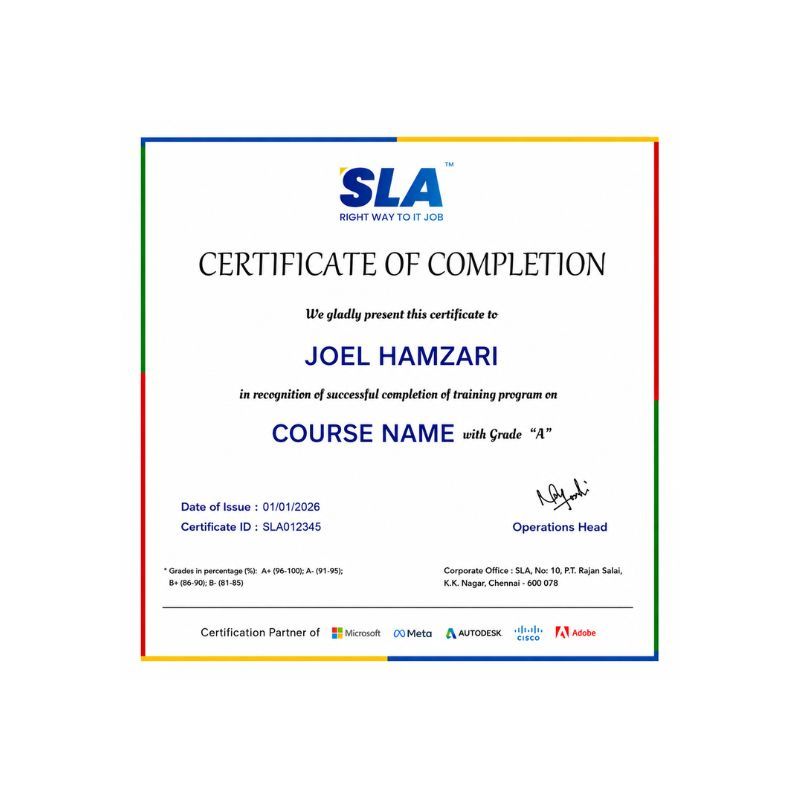
Earn Your Certificate of Completion
Validate your achievements with Softlogic's Certificate of Completion, verifying successful fulfillment of all essential components.
Take Your Career to the Next Level with  Certifications
Get a certifications through our training programs to gain a competitive edge in the industry.
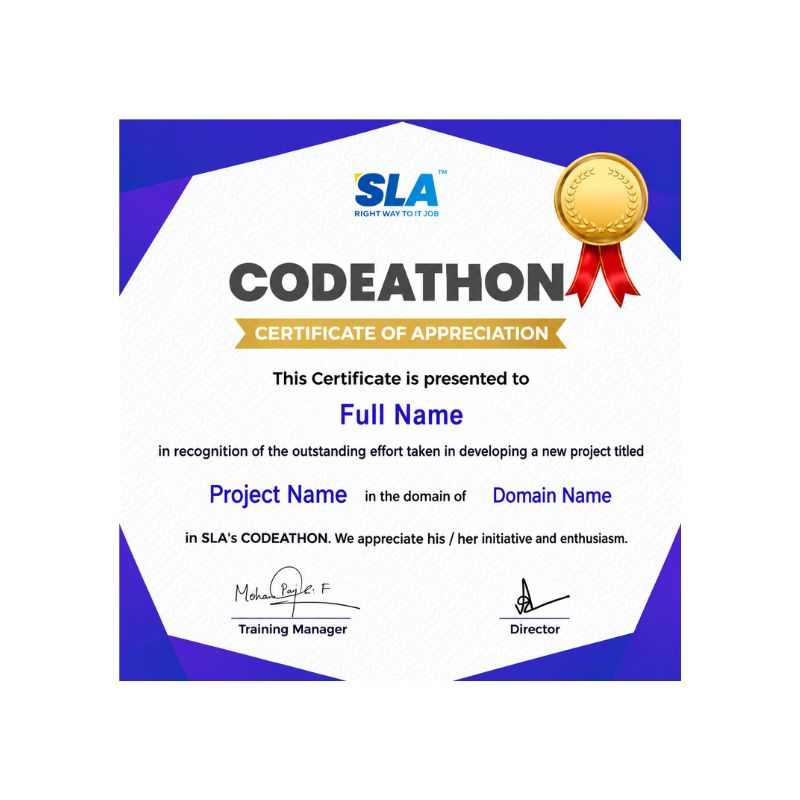
Stand Out from the Crowd with Codethon Certificate
Verify the authenticity of your real-time projects with Softlogic's Codethon certificate.

Hands-on Project Practices in Oracle PL/SQL Course

Sentiment Analysis
Digital Music Store
World Population Analysis
International Debt Statistics
Road Safety Analysis
Customer Segmentation
Sales Data Analysis
Bookstore Analysis
Soccer Game Analysis

The SLA Way to Get Placed in Top IT Companies

Enrollment

Technology Training

Coding Practices
Realtime Projects

Placement Training

Aptitude Training
Interview Skills
CRM System Testing

Panel Mock
Interview

Unlimited
Interviews

Interview
Feedback

100%
IT Career

Placement Support for a Oracle PL/SQL Job

Genuine Placements. No Backdoor Jobs at Softlogic Systems.

Aptitude Training
from Day 1

CRM System Testing

Interview Skills
from Day 1

Softskills Training
from Day 1

Build Your Resume

Build your LinkedIn Profile

Build your GitHub
digital portfolio

Panel Mock Interview

Unlimited Interviews until you get placed

Life Long Placement Support at no cost

Unlock Career Opportunities with our Placement TrainingRequest a Free Callback

FAQs

With the block-structured language PL/SQL, developers may leverage procedural statements and the capabilities of SQL. When all of a block’s statements are sent to the Oracle engine at once, processing speed is accelerated and traffic is reduced. To learn more, enroll in our Oracle PL/SQL online training at SLA.

PL/SQL developers use their understanding of database management systems to administer, test, and implement computer databases. Organize database modifications in a coordinated manner. Determine, look into, and fix problems with the capacity, scalability, and performance of your database. 

No. PL/SQL and Oracle SQL are different. The structured query language that Oracle uses is called Oracle SQL. On the other hand, Oracle SQL, a procedural language that features functions, control structures, and triggers, is extended by PL/SQL.

With the addition of Oracle’s own PL/SQL extensions, it uses the same database architectural principles and SQL (Structured Query Language). As long as you understand SQL and Linux well, learning them is not too difficult. Learning Oracle databases is possible if you have already studied SQL Server.

Yes. PL/SQL is still quite strong and very helpful as a database programming language.

Yes. Owing to its versatility, it has emerged as one of the most sought-after languages globally.

Oracle PL/SQL Online Training can take 2 to 3 months, depending on your commitment. Many beginners can pick up the fundamentals of Oracle PL/SQL within a few days, but to get comfortable with the system, they need regular practice.

Yes, we help our students get into various jobs through our Oracle PL/SQL Online Course. To assist you in beginning your job search, we offer extra tools like recruiting drives, practice interviews, and interview preparation classes in our Oracle PL/SQL online training institute.

Payments in cash, checks, cards, and UPI payments of any form are all accepted in our Oracle PL/SQL Online Course.

SLA is located in two places: K.K. Nagar and OMR, Navalur along with Oracle PL/SQL online training program.

Additional Information for
the Oracle PL/SQL Course

PL/SQL programmers’ salaries will have increased by 2020. By 2024, PL/SQL programming will be a highly compensated specialty, and the pay boost will draw in new developers.

Latest Features of Oracle PL/SQL

With Oracle PL/SQL 2024, new features include:

  • SQL Transpiler
  • The Boolean Data Type
  • Extended CASE Controls
  • JSON Constructor and JSON Value Support

Enhance your skills by enrolling in our Oracle PL/SQL Online Training.

Related Blogs

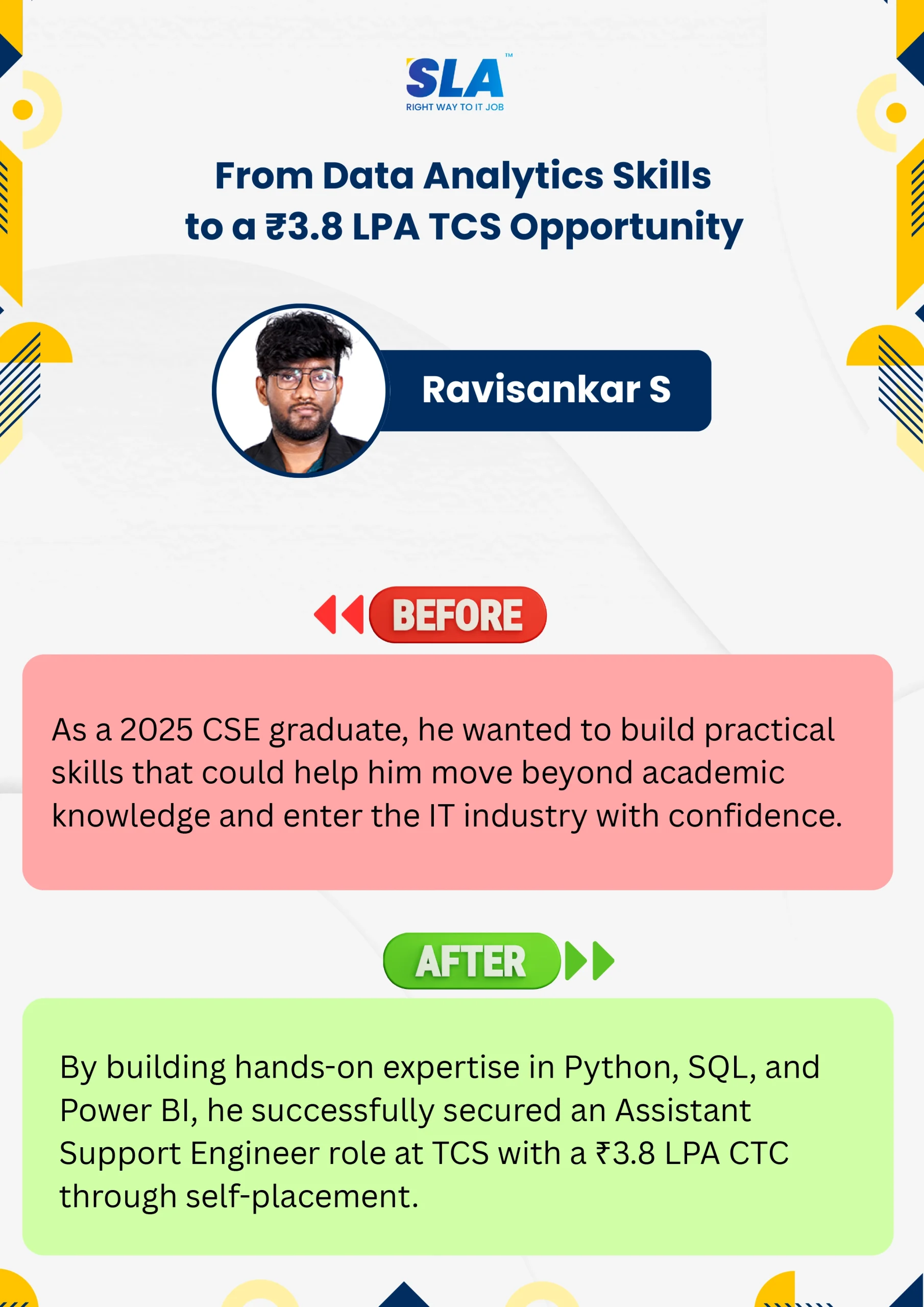
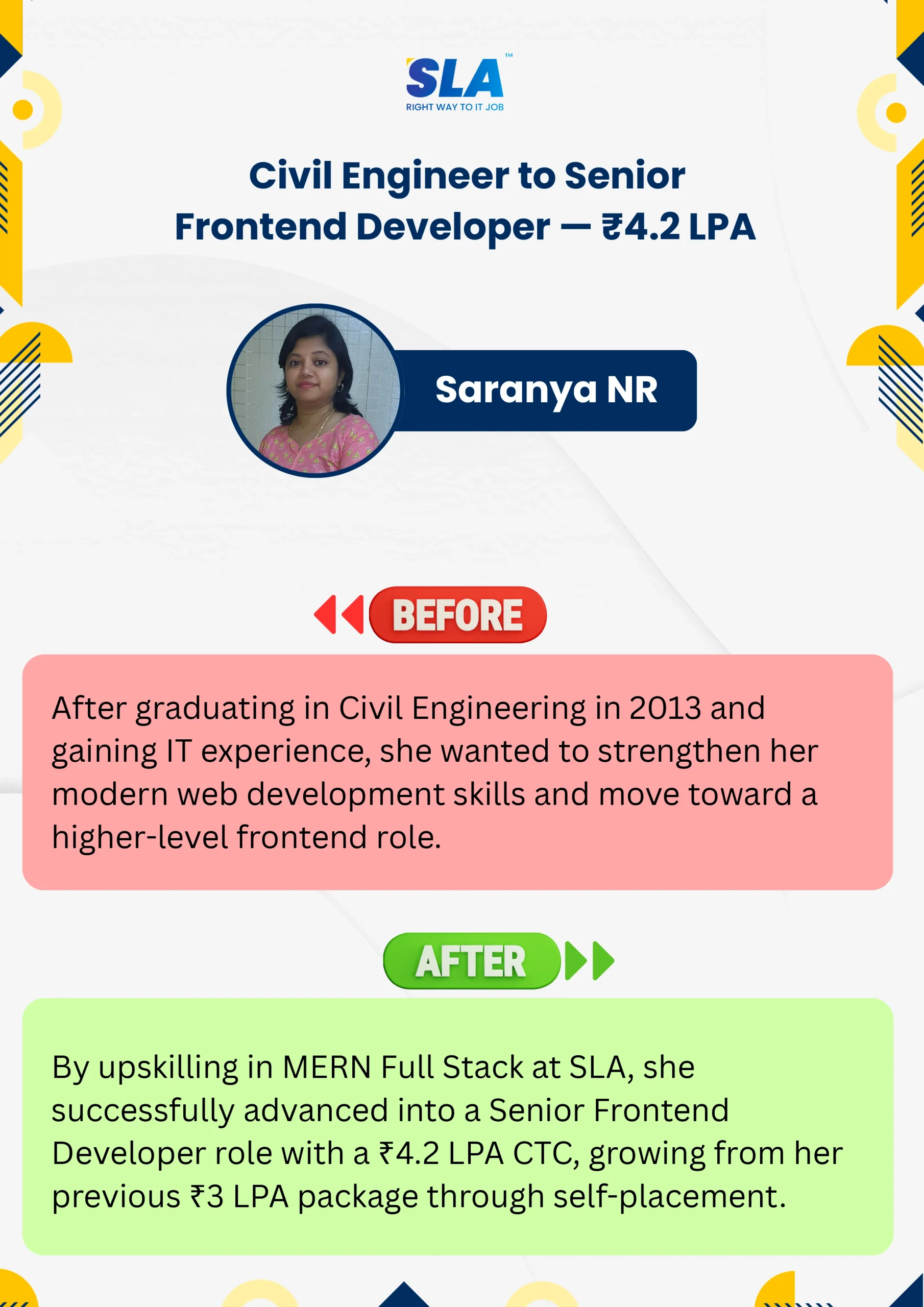
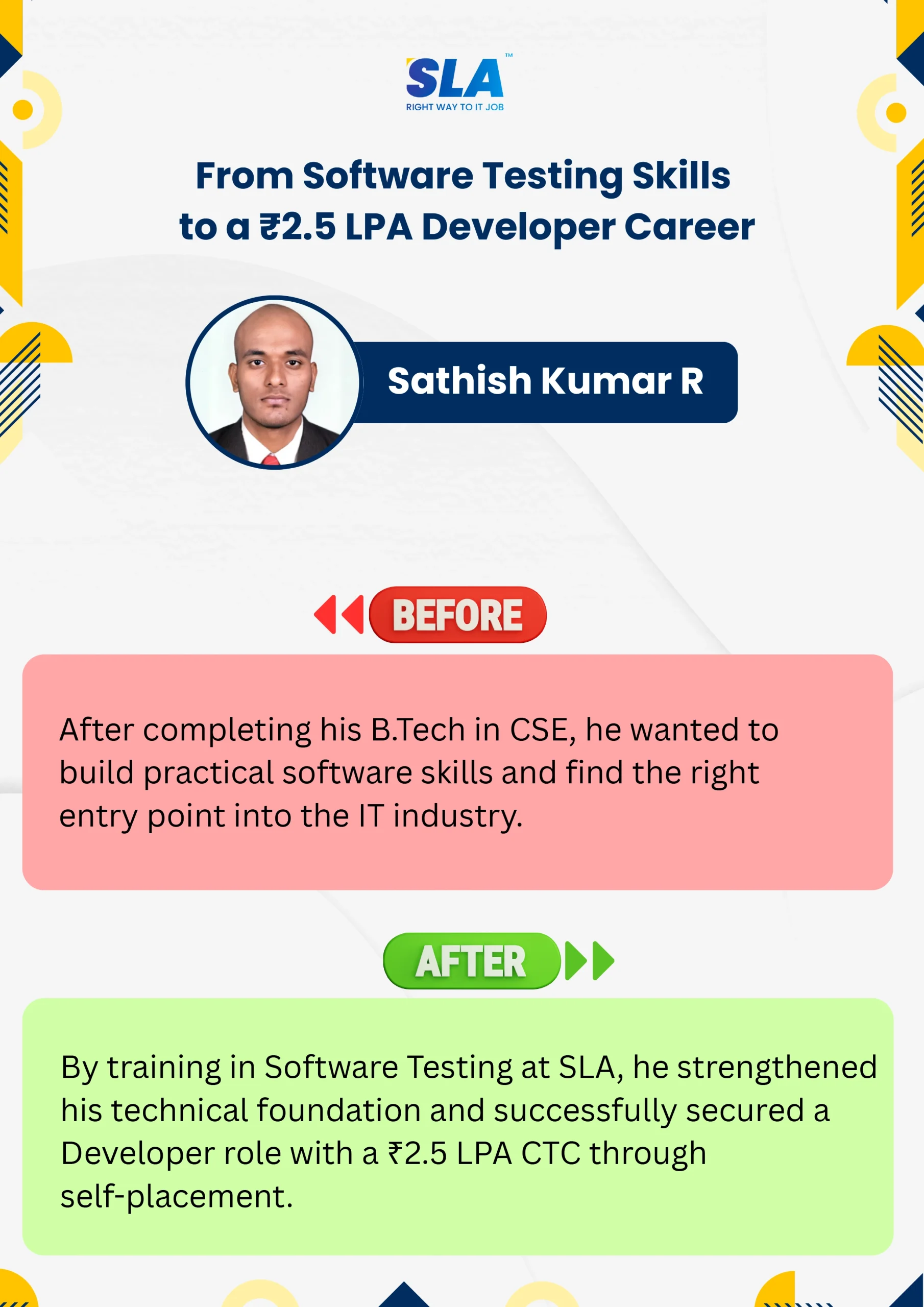
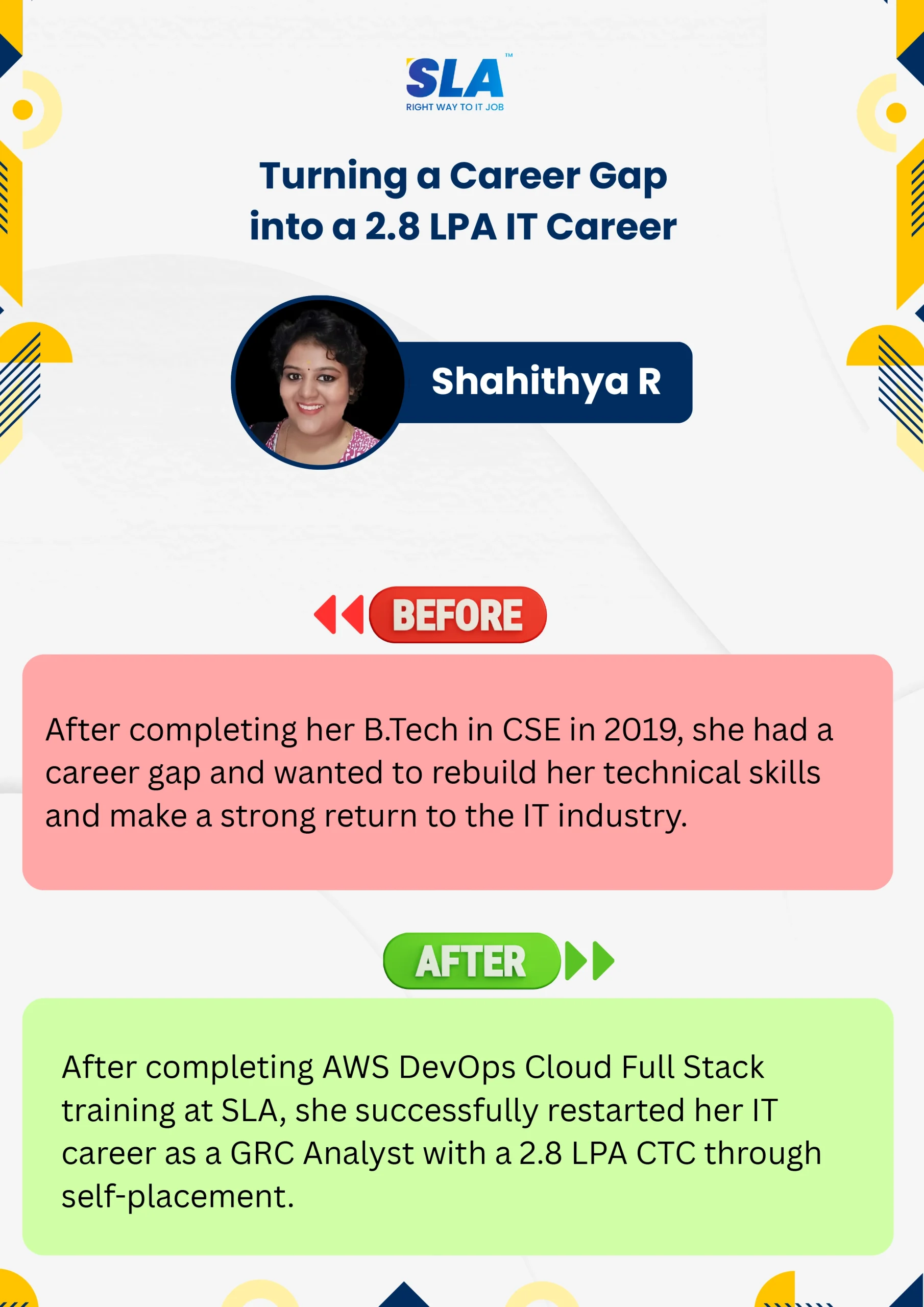
Life Changing Stories

Explore Our Students' Inspiring Leap Stories!

See More Success Stories

Google Reviews

Rating
4.8
1,053 Google reviews

MATHAN KUMAR G EEE

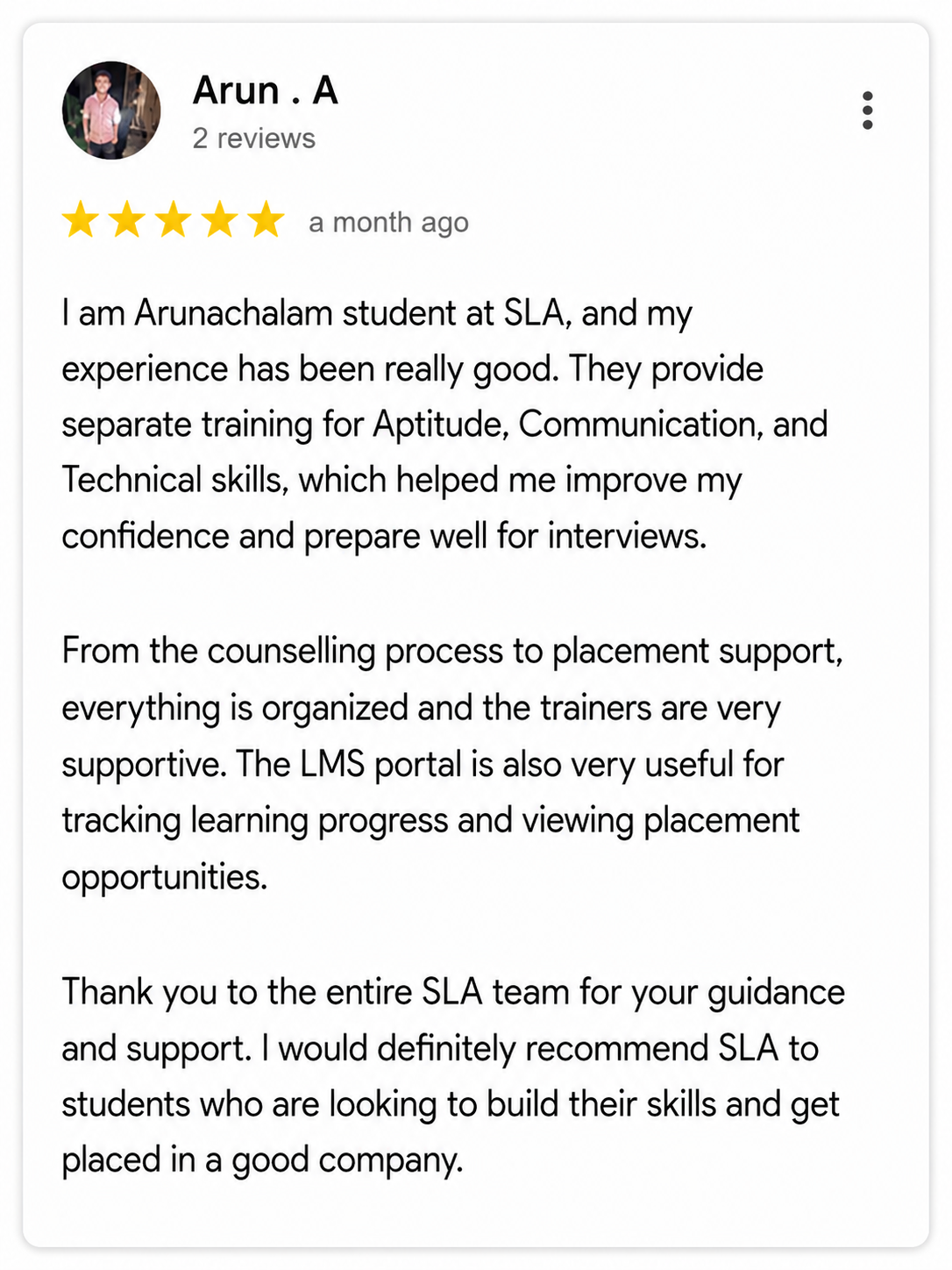
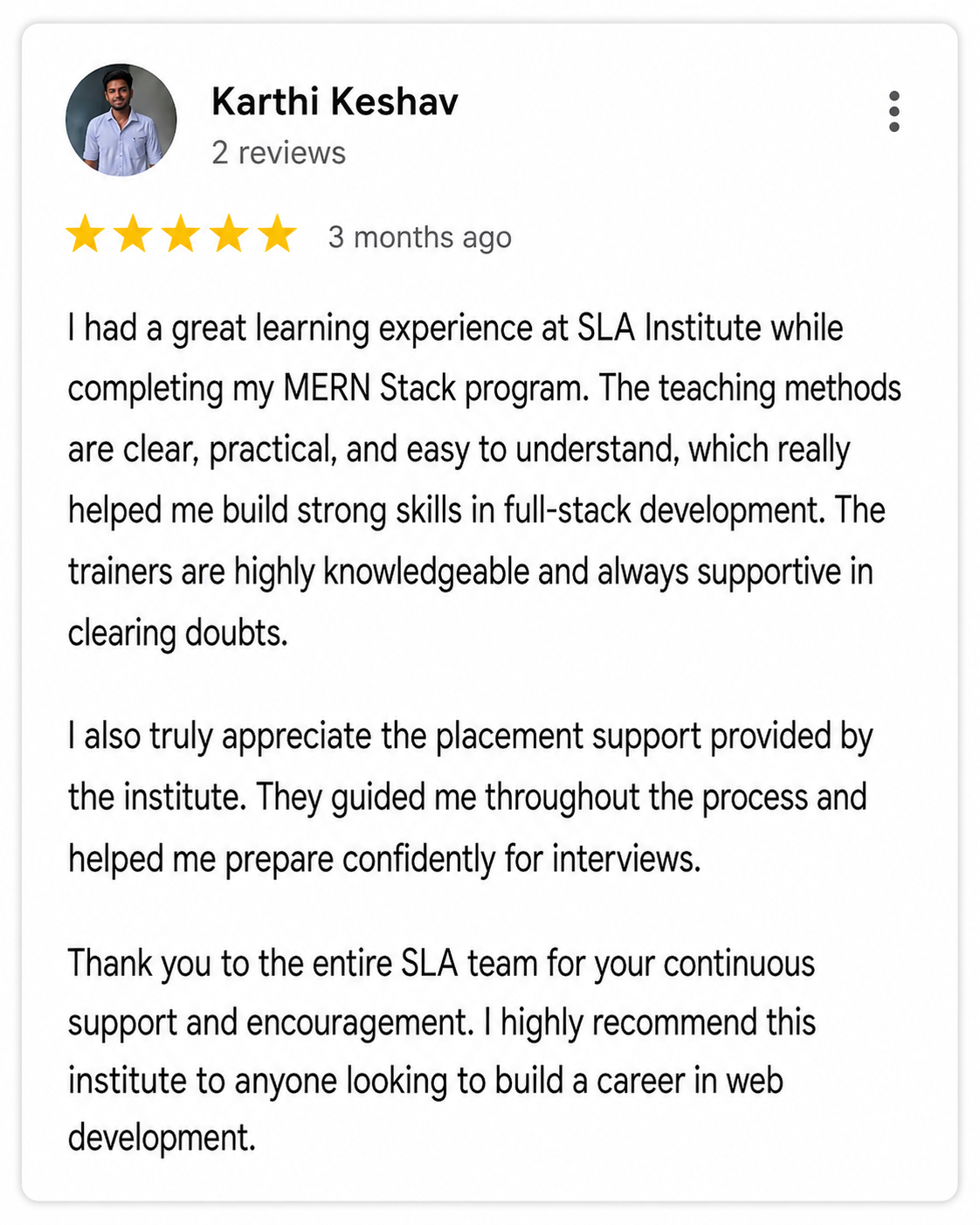
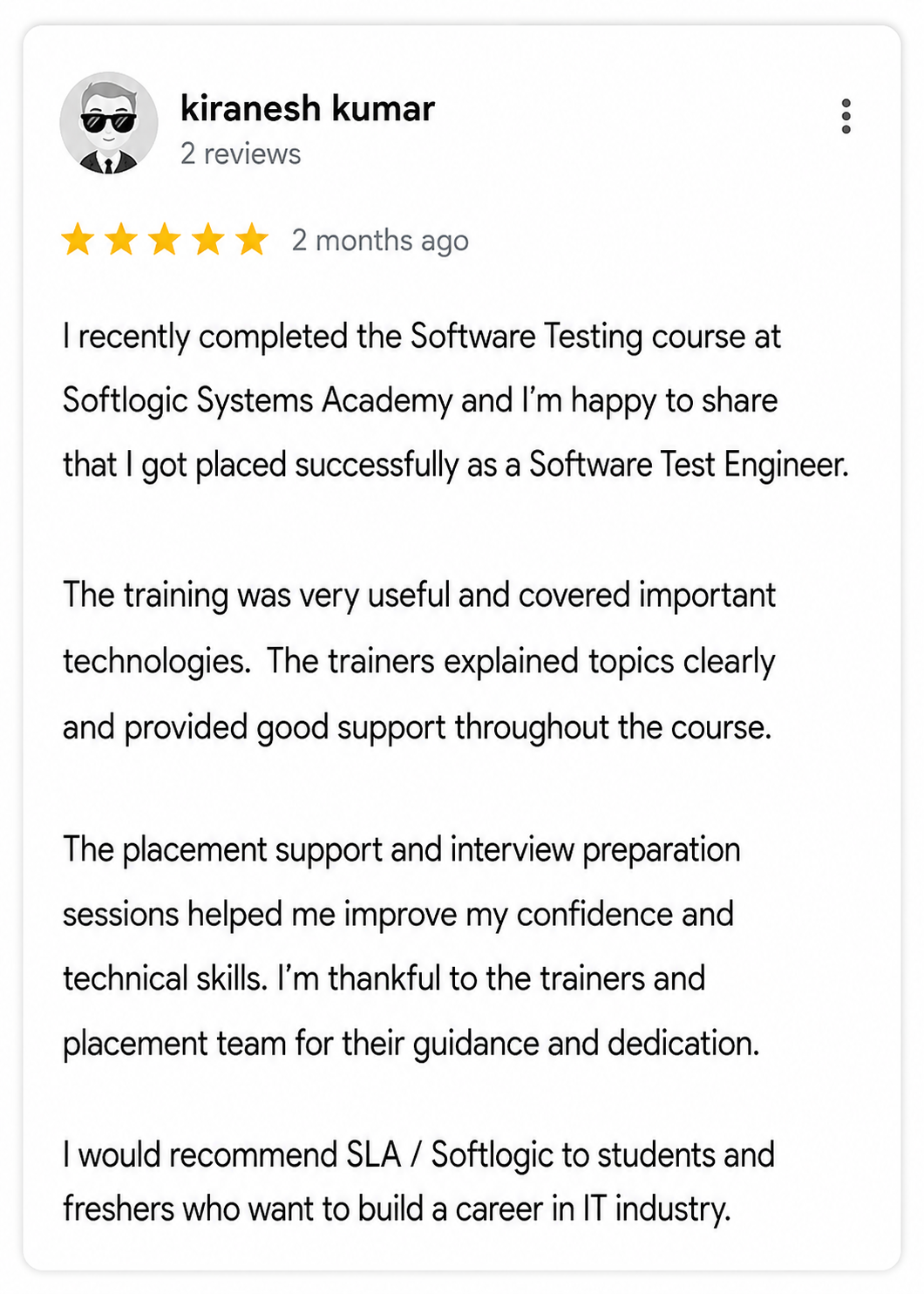
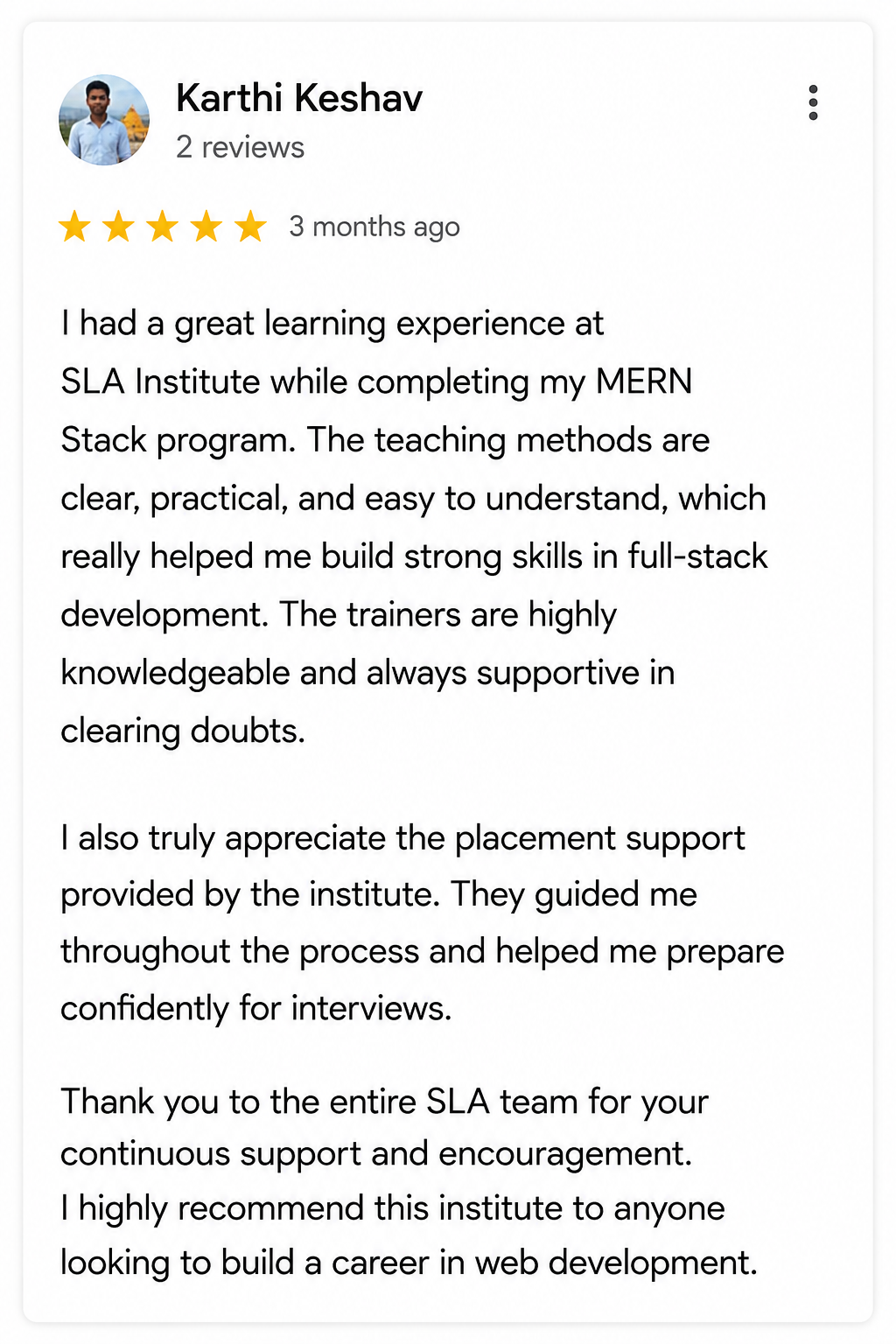
SLA Institute provides a structured learning environment for data analytics. The syllabus is relevant, and trainers are knowledgeable. Some sessions were very useful practically, while…
Click here for Full Review

Nithish Sahoo

I had an excellent experience taking this DevOps course. The curriculum is well-structured and covers both fundamental and advanced DevOps concepts in a clear manner.…
Click here for Full Review

SARAN M

SLA Institute provides training in communication and aptitude along with strong technical skills. The trainers explain concepts clearly with a practical approach, which helps build…
Click here for Full Review

 Surya

 Special thanks to Vishal Sir, the Placement Officer, for his interview guidance, resume support, and continuous motivation throughout the placement process. I would also like…
Click here for Full Review

Shaaru Menan

I had a 3 year career break. Joined SLA on Java Full Stack course and completed it.Did projects with the help of my Mentor. They…
Click here for Full Review

NalluKumar Ravichandran

Hi, I recently completed the DOT NET Full Stack Development course at SLA, and I had a great learning experience. The teaching style and student…
Click here for Full Review

Discover What Our Students Have To Say

See More Reviews

Listen to Our Students' Video Testimonials

Our counselors will share the Syllabus PDF with you via Email / Whatsapp

Get Your Instant Job & Placement Eligibility
Report in Just 30 Seconds!
Below 30% - not Eligible (Needs Preparation)
30% – 70% - Partially Eligible (Needs Guidance)
Above 70% - Fully Eligible (Ready to Start)

We are excited to get started with you

Give us your information and we will arange for a free call (at your convenience) with one of our counsellors. You can get all your queries answered before deciding to join SLA and move your career forward.