
Join Our 100% Job-Guaranteed Java Course in OMR. We Provide Quality Java training with an affordable Cost in OMR. Our Java Syllabus Covers the Core Java, Advanced Java (J2EE), JDBC, Servlets, JSP, Spring, Hibernate, and more. At Softlogic Systems, you’ll earn globally recognized certifications, build real-time projects, and receive complete placement assistance to launch a successful career in your chosen field.
Java Training In Omr
DURATION
2 Month
EMI
0% Interest
Mode
Live Online / Offline
Let's take the first step to becoming an expert in Java
100% Placement
Assurance
Get Certified
JOB PLACEMENT ELIGIBILITY TEST
Your Placement Eligibility Report
Want more details about Java Course?
Course Schedules
Course Syllabus
Course Fees
or any other questions...
Fees, Duration & Batch Timings for Java Course
Hands On Training
3-5 Real Time Projects
60-100 Practical Assignments
3+ Assessments / Mock Interviews
June 2026
Week days
(Mon-Fri)
Online/Offline
2 Hours Real Time Interactive Technical Training
1 Hour Aptitude
1 Hour Communication & Soft Skills
(Suitable for Fresh Jobseekers / Non IT to IT transition)
June 2026
Week ends
(Sat-Sun)
Online/Offline
4 Hours Real Time Interactive Technical Training
(Suitable for working IT Professionals)
Save up to 20% in your Course Fee on our Job Seeker Course Series
Syllabus of Java Course
Introduction
- Why Java
- Paradigms
- Diff B/W Java & Other (C,C++)
- Java History
- Java Features
- Java programming format
- Java Statements
- Java Data Types
OOPS (Object Oriented Programming & Systems)
- Introduction
- Object
- Constructors
- This Key Word
- Inheritance
- Super Key Word
- Polymorphism (Over Loading & Over Riding)
- Abstraction
- Interface
- Encapsulation
- Introduction to all predefined packages
- User Defined Packages
- Access Specifiers
STRING Manipulation
- String
- String Buffer
Array
- What is Array
- Single Dimensional Array
- Multi Dimensional Array
- Sorting of Arrays
Exception Handling
- Introduction
- Pre Defined Exceptions
- Try-Catch-Finally
- Throws, throw
- User Defined Exception examples
I/O Streams
- Introduction
- Byte-oriented streams
- Character – oriented streams
- File
Multithreading
- Introduction
- Thread Creations
- Thread Life Cycle
- Life Cycle Methods
- Synchronization
- Wait() notify() notify all() methods
Wrapper Classes
- Introduction
- Byte, Short, Integer, Long, Float, Double, Character
- Boolean classes
Inner Classes
- Introduction
- Member Inner Class
- Static Inner Class
- Local Inner Class
- Anonymous Inner Class
Collection Frame Work
- Introduction
- Util Package interfaces, List, Set, Map
- List Interface 7 Its Classes
- Set Interface & Its Classes
- Map Interface & Is Classes
AWT
- Introduction
- Components
- Event-Delegation-Model
- Listeners
- Layouts
- Individual Components Lable, Button, Check Box, Radio Button,
- Choice, List, Menu, Text Field, Text Area
SWING (JFC)
- Introduction Diff B/W AWT and SWING
- Components hierarchy
- Panes
- Individual Swings components J Label
- JButton, JTextField, JTextAres
Advanced Java Syllabus (J2EE Course Syllabus) — Introduction to Enterprise Edition
- Distributed Multitier Applications
- J2EE Containers
- Web Services Support
- Packaging Applications
- J2EE 1.4 APIs
Web Server and Application Server
- Tomcat-Introduction
- Overview, installation, Configuring Tomcat
- Jboss server-Introduction
- Overview,installation and Configuration
- Comparison
SQL
- Basics of SQL queries
- SQL Joins
JDBC
- Introduction
- JDBC Architecture
- Types of Drivers
- Statement
- Result Set
- Read Only Result Set
- Updatable Result Set
- Forward Only Result Set
- Scrollable Result Set
- Prepared Statement
Servlets
- Introduction
- Web application Architecture
- HTTP Protocol & HTTP Methods
- Web Server & Web Container
- Servlet Interface
- HTTPServlet
- GenericServlet
- Servlet Life Cycle
- Servlet Config
- Servlet Context
- Servlet Communication<.li>
Servlet-Browser Communication
- sendError
- setHeader
- sendRedirect
Web-Component Communication
- Forward
- Include
Servlet-Applet Communication
- Session Tracking Mechanisms
- Http Session
- Cookies
- URL-Rewriting
- Hidden-Form Fields
- Filters & Wrappers
- Listeners
- Web-Security
JSP
- Introduction
- Jsp LifeCycle
- Jsp Implicit Objects & Scopes
- Jsp Directives
- page
- include
- taglib
Jsp Scripting Elements
- declaratives
- scriptlets
- expressions
JSP Actions
Standard Actions
- useBean tag
- setProperty tag
- getProperty tag
- include tag
- forward tag
- param tag
- plug-in tag
- params tag
- fallback tag
- directives tag
- scriptlet tag
- expression tag
Objectives of Java Training
The Java training in OMR has a wide range of topics covered in its syllabus. These topics are up-to-date, thereby keeping students on par with the current trends. These syllabuses begin with an introduction to Java and go all the way to Spring Boot, thus covering a wide range of topics. Here are some of the skills that can be acquired at out Java training institute in OMR Chennai:
- Candidates will learn about introduction to Java at first, which will include topics like – What is Java? And features of Java?
- Candidates will also learn about data types, variables, and typecasting.
- Candidates will also be learning about various Java keywords, white space, identifiers, literals, comments, operators, functions, etc.
- Candidates will also learn about some advanced topics, such as arrays, OOPs, string manipulation, enumerations, annotations, generics, lambda expressions, modules, multithreading, MySQL, AWT, SWING (GUI), and many more.
Why Softlogic Systems is the Best Choice for Java Training – Learn, Practice, and Get Placed!
Online & Offline Training Options
Learn from 100+ Real-Time Developers
Hands-on Projects & Codeathons
0% EMI Fee Options
Resume & Interview Support
Placement with Top IT Firms
1000+ Hiring Partners
No Backdoor Jobs
Highlights of Java Course
What is Java?
Java, an object-oriented programming language created by Sun Microsystems in 1995 and later acquired by Oracle Corporation, is celebrated for its platform independence, powerfulness, security measures, multi-threading support, rich API, and broad applicability across domains such as web and mobile development, enterprise software, and scientific computing.
What are the reasons for learning Java?
- Platform Independence: Java’s “write once, run anywhere” principle enables programs to execute on any device or operating system equipped with a Java Virtual Machine (JVM), offering great portability and adaptability.
- Strong Community and resources: With a vibrant and extensive developer community, Java offers abundant resources, frameworks, libraries, and assistance for learning and growth.
- Job Opportunities: Java stands out in the job market, presenting numerous career opportunities across diverse industries and sectors due to its high demand.
- Object oriented Programming(OOP): Mastering Java demands a deep understanding and application of Object-Oriented Programming (OOP) principles, which serve as foundational concepts in contemporary programming across various platforms and languages.
What are the prerequisites for learning the Java course in OMR?
- Having a grasp of fundamental programming concepts including variables, data types, loops, conditional statements, and functions/methods is advantageous.
- A solid understanding of Object-Oriented Programming (OOP) principles like encapsulation, inheritance, polymorphism, and abstraction is crucial given Java’s object-oriented nature.
- Familiarity with basic algorithms and data structures such as arrays, linked lists, stacks, queues, trees, and graphs aids in comprehending and implementing Java programs efficiently.
- A foundational understanding of basic mathematical concepts such as arithmetic, algebra, and logic can be beneficial for certain aspects of Java programming, particularly problem-solving and algorithm design.
- Basic proficiency with command-line interfaces (CLI) and text editors for writing and executing Java code is recommended for a smoother learning experience.
What are the course fees and duration?
The Java Training in OMR fees depend on the program level (basic, intermediate, or advanced) and the course format (online or in-person).On average, the Java training in OMR fees come in the range of 25,000-45,000 INR for 3 months, inclusive of international certification. For some of the most precise and up-to-date details on fees, duration, and Java certification courses in OMR, kindly contact our Best Software training institute in OMR Chennai directly.
What are some of the jobs related to Java?
The following are some of the jobs related to Java:
- Java Developer
- Software Engineer
- Web Developer
- Android Developer
- Enterprise Java Developer
What is the salary range for the position of Java Developer?
As per data from AmbitionBox, the Java Developers freshers salary is approximately ₹3.7 lakhs annually. For mid-career developers with 2-3 years of experience, the average annual salary is around ₹4.7 – 5.9 lakhs. An experienced Java Developer with more than 4 years of experience can anticipate an average yearly salary of ₹7.7 lakhs.
List a few real-time Java applications.
Here are several real-time Java applications:
- Financial Trading Systems
- Embedded Systems
- Automotive Infotainment Systems
- Avionics Systems
- Medical Devices
Boost Your Skills with Our Java Training Experts
Our Mentors are from Top Companies like:
- Our instructors bring over a decade of practical experience in providing Java Training in Chennai.
- They possess firsthand project experience spanning various industries, ensuring that you gain practical skills relevant to real-world scenarios.
- Our trainers are demonstrating a successful track record, they annually mentor and guide over 2000 students.
- Our trainers consistently deliver high-quality education, they ensure that you receive training aligned with industry standards.
- With expertise in both theoretical concepts and practical applications, our trainers effectively bridge the gap between theory and real-world scenarios.
- Leveraging strong connections with HR professionals in multinational corporations, our trainers provide valuable insights into industry trends, requirements, and exclusive job opportunities.
- Our trainers possess a comprehensive understanding of essential Java concepts, including Exception Handling, Threads, JSP, Operators, XML handling, Loops, Collections, Database Connectivity, and Servlets.
- Equipped to impart comprehensive knowledge, our trainers guide learners through hands-on training in these key areas of Java development.
- Excelling in communication skills, our trainers engage students by providing relevant examples in each Java class and Java Project training, ensuring an interactive and understandable learning experience.
- Dedicated to helping students achieve their goals, our trainers prepare them to approach interviews with confidence.
What Modes of Training are available for Java Course?
Offline / Classroom Training
- Direct Interaction with the Trainer
- Clarify doubts then and there
- Airconditioned Premium Classrooms and Lab with all amenities
- Codeathon Practices
- Direct Aptitude Training
- Live Interview Skills Training
- Direct Panel Mock Interviews
- Campus Drives
- 100% Placement Support
Online Training
- No Recorded Sessions
- Live Virtual Interaction with the Trainer
- Clarify doubts then and there virtually
- Live Virtual Interview Skills Training
- Live Virtual Aptitude Training
- Online Panel Mock Interviews
- 100% Placement Support
Corporate Training
- Industry endorsed Skilled Faculties
- Flexible Pricing Options
- Customized Syllabus
- 12X6 Assistance and Support
Certifications
Improve your abilities to get access to rewarding possibilities
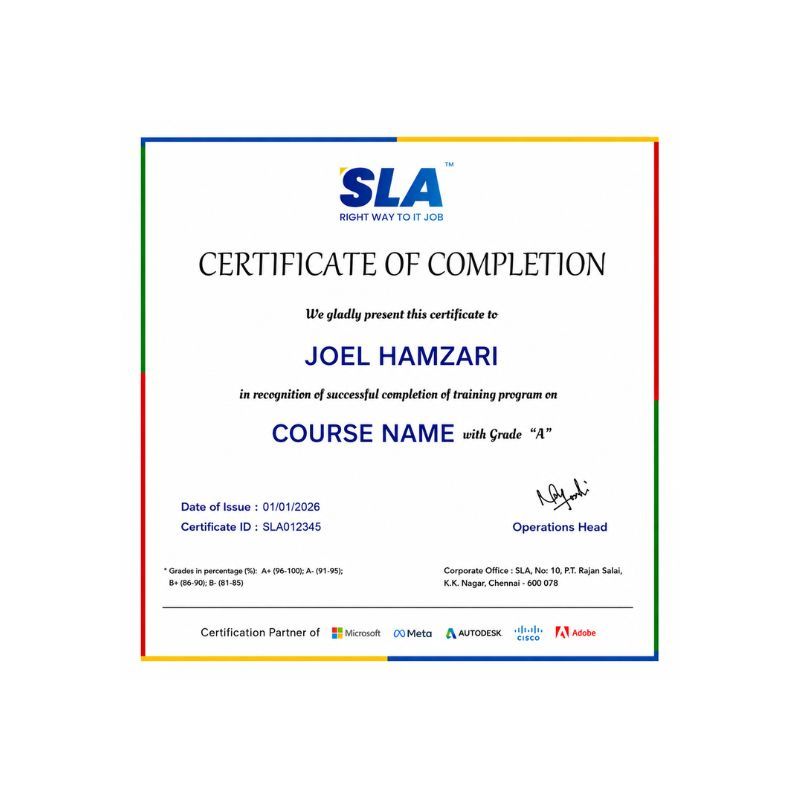
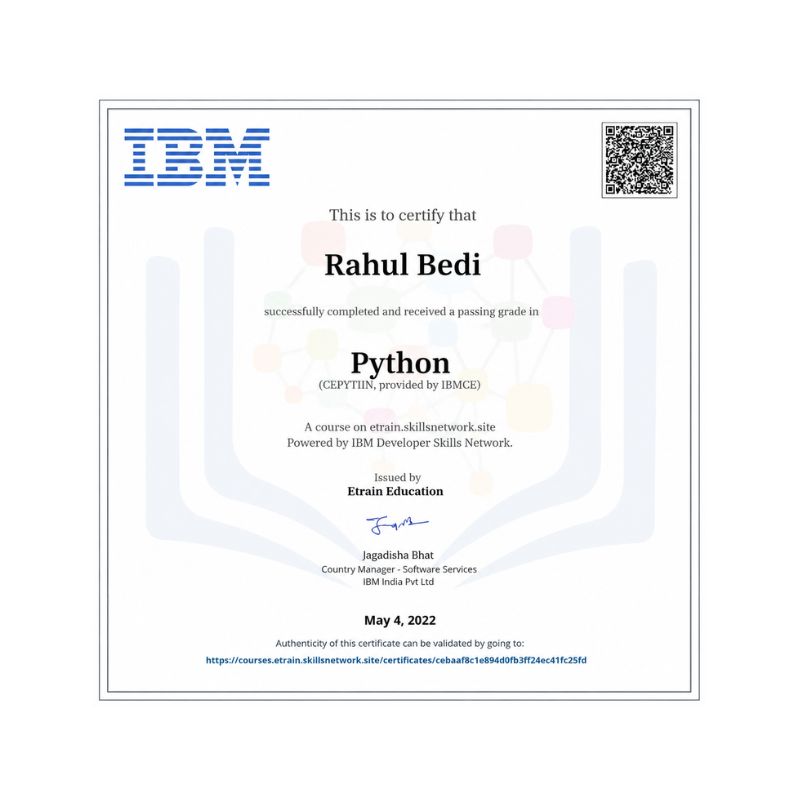
Earn Your Certificate of Completion
Take Your Career to the Next Level with Certifications
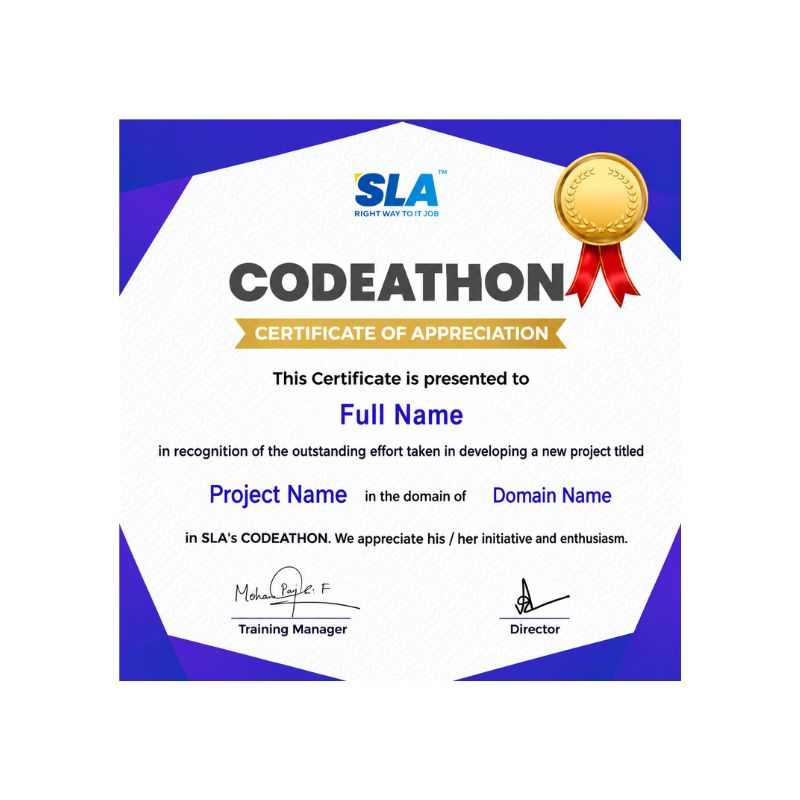
Stand Out from the Crowd with Codethon Certificate
Hands-on Project Practices in Java Course
Air Traffic Control Systems
Smart Grids and Smart Metering Systems
Surveillance and Security Systems
Traffic Management Systems
Energy Management Systems
Industrial Control Systems
Medical Devices
Gaming and Simulation
Telecommunications Systems
The SLA Way to Get Placed in Top IT Companies
Enrollment
Technology Training
Realtime Projects
Placement Training
Interview Skills
Panel Mock
Interview
Unlimited
Interviews
Interview
Feedback
100%
IT Career
Placement Support for a Java Job
Genuine Placements. No Backdoor Jobs at Softlogic Systems.
Aptitude Training
from Day 1
Interview Skills
from Day 1
Softskills Training
from Day 1
Build Your Resume
Build your LinkedIn Profile
Build your GitHub
digital portfolio
Panel Mock Interview
Unlimited Interviews until you get placed
Life Long Placement Support at no cost
FAQs
Explain the distinctions among JDK, JRE, and JVM.
The JDK (Java Development Kit) facilitates Java application development, while the JRE (Java Runtime Environment) is necessary for executing Java applications and includes the JVM (Java Virtual Machine) and essential libraries. The JVM serves as a virtual machine responsible for interpreting and executing Java bytecode.
Differentiate between abstract classes and interfaces in Java.
Abstract classes can contain both abstract and concrete methods, whereas interfaces exclusively feature abstract methods. While classes can implement multiple interfaces, they can only extend one abstract class. Additionally, abstract classes can have constructors, whereas interfaces cannot.
Elucidate the disparity between equals() and == in Java.
The == operator compares object references, focusing on memory addresses, while the equals() method compares object contents, emphasizing values. Typically, equals() compares object references by default but can be overridden to provide customized comparison logic.
Compare ArrayList and LinkedList implementations in Java.
ArrayList functions as a resizable array, offering swift access to elements via index but slower insertion and deletion operations. Conversely, LinkedList operates as a doubly linked list, facilitating rapid insertion and deletion operations but slower access to elements by index.
Clarify the purpose of the “final” keyword in Java.
The “final” keyword serves multiple roles in Java, including declaring constants, ensuring method or variable immutability, and preventing method overriding or class inheritance. When a variable is marked as final, its value remains constant after initialization, and final methods cannot be overridden by subclasses.
What are some of the steps taken by SLA to improve the learning experience?
SLA offers some great measures to improve the learning experience like- guest speakers, study materials and practical hands-on practice of the tools and softwares, thereby covering both theoretical and practical areas of the knowledge.
How does SLA address student grievances?
SLA has a separate designated HR department that exists to resolve issues and grievances with students.
Is Java difficult to learn?
The difficulty of learning Java depends on many factors like – readiness of the student, their prior programming knowledge etc. but most students generally find Java easy to learn compared to many other programming languages. With experienced trainers and a great syllabus, SLA will make your Java learning journey very easy.
How does SLA prepare its students for interviews?
SLA has a specially designated communication’s trainer who helps students improve their skills in communications and English language which will be useful in times of their interviews.
Does SLA accept EMI options?
Yes, SLA does understand the financial situations of students so they indeed support EMI with 0% interest for its students.
Additional Information for
the Java Course
Diverse Ecosystem
Java has a broad and mature ecosystem encompassing a lot of libraries, frameworks, tools, and resources. This powerful ecosystem evolves continually, adapting to emerging trends and technologies, thus ensuring Java’s continued relevance for diverse development requirements.
Wide Enterprise Adoption
Java has long served as the primary choice for constructing enterprise-grade applications, owing to its stability, scalability, and powerful security features. Numerous large corporations and organizations rely on Java for their critical systems, resulting in a consistent demand for Java developers and expertise.
Sustained Innovation
Java undergoes continuous evolution through frequent releases of new versions, introducing enhancements, optimizations, and features to the language and platform. Recent releases, exemplified by Java 17, underscore Oracle’s commitment to advancing and innovating the Java ecosystem.
Platform Free
Java’s fundamental principle of “write once, run anywhere” remains pertinent in today’s landscape of diverse platforms. With the adoption of cloud computing, IoT, and mobile development, Java’s platform independence makes it well-suited for crafting applications capable of doing operation across varied devices and environments.
Thriving Community Engagement
Java boasts a vibrant and expansive community of developers, enthusiasts, and contributors actively driving the language’s evolution and enhancement. This engaged community ensures a wealth of resources, support channels, and collaboration opportunities for Java practitioners.
Integration with Modern Paradigms
Java continues to align with contemporary software development models by integrating with new technologies such as cloud computing, microservices architecture, containerization, and machine learning. Frameworks like Spring Boot and Quarkus stand out as preferred choices for developing cloud-native and microservices-centric applications using Java.
Powerful Demand in the Employment Market
Java remains among the most sought-after programming languages in the job market, offering a wide array of career prospects for Java developers spanning diverse industries and sectors.