
Softlogic is one of the Top Training institutes for IoT. Learn how to use IoT, from beginner basics to advanced techniques. Our IoT syllabus covers the IoT architecture, sensors and actuators, microcontroller programming, communication protocols, cloud integration, and IoT security. We offer an IoT Course with Placement Assistance, Mock interviews, Resume building, and certification.
IOT Training For Freshers
4.80
(784)
DURATION

2 Months
EMI
0% Interest
Mode

Live Online / Offline

Let's take the first step to becoming an expert in IoT
Click Here to Get Started
Lifelong Placement
Assistance
Get Certified
JOB PLACEMENT ELIGIBILITY TEST
×
Your Placement Eligibility Report
Want more details about IoT?
Fill out the form, and our counsellors will get in touch with you at your preferred time. You can have all your queries answered. Once you decide that SLA is the perfect fit for your training needs, our counselors will guide you through the process every step of the way.

Course Schedules

Course Syllabus

Course Fees

or any other questions...
Fees, Duration & Batch Timings for IoT
Hands On Training
3-5 Real Time Projects
60-100 Practical Assignments
3+ Assessments / Mock Interviews
July 2026
Week days
(Mon-Fri)
Online/Offline
2 Hours Real Time Interactive Technical Training
1 Hour Aptitude
1 Hour Communication & Soft Skills
(Suitable for Fresh Jobseekers / Non IT to IT transition)
Course Fee
July 2026
Week ends
(Sat-Sun)
Online/Offline
4 Hours Real Time Interactive Technical Training
(Suitable for working IT Professionals)
Course Fee
Save up to 20% in your Course Fee on our Job Seeker Course Series
Learn More
Syllabus of IoT
Download Syllabus
Module 1 – IOT Introduction
- Concepts and Definitions of The Internet of Things (IOT).
- History of IOT
- Requirements, Functionalists and structure of IOT.
- IOT enabling technologies.
- IOT Architecture.
- Major component of IOT(Hardware & Software).
- IOT communication and networking protocols, Role of wired and wireless communication.
- IOT services and applications.
- IOT Standards , Connectivity
Module 2 – IOT Case Studies
- Project Case Study
- Project Requirement (hardware & software )
- How to Design IOT Application (Web,Mobile,Device)
- Projects on every technology (At least 4 Project)
- Data generator
Module 3 – IOT Data Acquisition & Platforms
- MicroControllers(Arduino uno/mega2560,Rasberry-Pi,ARM), Real-time systems and embedded software
- OS and Drivers (End Device Program)
- Hardware & Software Requirements.
Module 4 – IOT Data Communication
- How to transfer data by Wireless / Wired connectivity.
- Ipv4/Ipv6, Ethernet/GigE.
- MIPI, M-PHY, UniPro, SPMI, BIF, SuperSpeed USB Inter-Chip (SSIC), Mobile PCIe (M-PCIe) and SPI
- GSM , 2g ,3g ,4g & 5g
- IEEE 802.15.4, IEEE 802.15.4e, 802.11ah
- Relay Access Point (AP)
- Grouping of station
- Target Wake Time (TWT)
Module 5 – IOT Data Storage & Retrieval
- Overview and Role of Storage in Cloud / Server /Inhouse Storage.
- Databases Connectivity with IOT and uses .
- Case Study over Mysql / NoSql / NewSql .
- Case Study over Cloud Services And Administration.
- Case Study Of Big Data & Hadoop Platforms.
Module 6 – IOT Data Analytics & Visualization
- Analysis Of data using python Module.
- Visualization and interpretation of Data.
- Data Cleaning in IOT
Module 7 – IOT Security
- Attack, Defense, and Network Robustness of Internet of Things
- Malware Propagation and Control in Internet of Things
- Privacy Preservation Data Dissemination
- Trust and Trust Models for the IoT
- Authentication in IoT
- Computational Security for the IoT
- Security Protocols for IoT Access Networks
- Security Testing
Module 8
IOT Product Development & Testing with Project
Conclusion
Begin your career in the IoT device development field by enrolling in our IoT Training Institute. We train the students from scratch with the best IoT Curse Syllabus.
Objectives of IoT
The IoT Training will cover all the topics ranging from fundamental to advanced concepts, which will make it easy for students to grasp IoT. The IoT Course Curriculum is composed of some of the most useful and rare concepts that will surely give students a complete understanding of IoT as well. So, some of those curriculum are discussed below as objectives:
- To make students well-versed with fundamental IoT concepts like – IOT enabling technologies, IOT Architecture, Major components of IOT(Hardware & Software) etc.
- To make students more aware of IoT courses like – Data Acquisitions & Platforms, IoT Data Communication, IoT Storage and Retrieval etc.
- To make students knowledgeable in advanced IoT concepts like – IoT Security, Privacy Preserving Data Dissemination, Trust and Trust Models for the IoT, Authentication in IoT etc.
Request a Free Callback
Why Softlogic Systems is the Best Choice for IoT – Learn, Practice, and Get Placed!
Online & Offline Training Options
Learn at your convenience with flexible classroom and live online training.

Learn from 100+ Real-Time Developers
Get trained by industry professionals with years of hands-on experience.
Hands-on Projects & Codeathons
Practice with real-time projects and coding challenges to build confidence.
0% EMI Fee Options
Pay your course fees flexibly with easy EMI plans at zero interest.

Resume & Interview Support
Get expert help with resume building, mock interviews, and soft skills.

Placement with Top IT Firms
Access placement opportunities with leading MNCs and IT companies.

1000+ Hiring Partners
Benefit from Softlogic’s strong recruiter network for faster job placement.

No Backdoor Jobs
We ensure only genuine placement opportunities with trusted companies.
Request a Free Callback
Highlights of IoT
What is IoT?
The Internet of Things (IoT) connects devices through the internet, allowing them to share data and automate processes. By using sensors and software, these devices can monitor conditions, enhance efficiency, and provide insights. IoT spans applications from smart homes and healthcare to industrial systems and smart cities, integrating physical and digital realms.
What is IoT Full Stack?
IoT Full Stack covers the entire spectrum of technologies needed for Internet of Things solutions, including hardware like sensors and actuators, connectivity methods such as Wi-Fi and Bluetooth, data management tools, software development for device firmware and applications, backend infrastructure, user interfaces, security, and system integration.
What are the reasons for learning IoT?
The following are the reasons for learning IoT:
- Growing Industry: IoT is expanding across fields like healthcare, manufacturing, transportation, and smart cities, creating a strong demand for skilled experts.
- Innovation Potential: IoT fosters innovation by enabling new applications and solutions, from intelligent home devices to sophisticated industrial systems.
- Career Prospects: Mastery of IoT can unlock career paths in emerging domains, including roles in designing, developing, and managing IoT solutions.
- Increased Efficiency: IoT improves efficiency and automation by linking devices and systems, optimizing operational processes and minimizing manual tasks.
What are the prerequisites for learning IoT?
The following are the prerequisites for learning IoT, but they are not mandatory:
- Fundamental Programming Skills: Proficiency in programming languages such as Python, C, or JavaScript is crucial for developing software and firmware for IoT devices.
- Basic Electronics Knowledge: An understanding of electronics principles, including circuits, sensors, and actuators, is important for working with IoT hardware.
- Networking Basics: Familiarity with networking concepts, such as IP addressing, communication protocols (e.g., TCP/IP, MQTT), and wireless technologies (Wi-Fi, Bluetooth), is key to comprehending how IoT devices connect and communicate.
- Data Management Skills: Basic knowledge of databases and data management practices is needed for handling and processing the data generated by IoT devices.
What are the course fees and duration?
Our IoT Course Fees may vary depending on the specific course program you choose (basic / intermediate / full stack), course duration, and course format (remote or in-person). On an average the IoT Course Fees range from 25k to 30k, for a duration of 2 months total with international certification.
What are some of the jobs related to IoT?
The following are the jobs related to IoT:
- IoT Solutions Architect
- IoT Data Analyst
- IoT Security Specialist
- Embedded Systems Engineer
- IoT Product Manager
List a few real time IoT applications.
The following are the real-time IoT applications:
- Smart Home Systems
- Industrial IoT
- Healthcare Monitoring
- Smart Cities
- Agriculture and Farming
- Fleet Management
Boost Your Skills with Our IoT Experts
Our Mentors are from Top Companies like:
- Our trainers bring over a decade of professional experience in the Internet of Things (IoT) field.
- They excel in designing and implementing advanced IoT systems and enhancing operational efficiency.
- With a strong track record of developing educational materials tailored for diverse student backgrounds in IoT Training, they are adept at delivering engaging and effective instruction.
- Their teaching and communication skills are exceptional, enabling them to clearly convey complex concepts and boost student performance.
- They provide valuable guidance and support, ensuring that students grasp intricate topics and make significant progress.
- Proficient in addressing student inquiries and offering specialized advice, our trainers continuously update their knowledge of the latest IoT tools and trends.
- They are committed to preparing students thoroughly for IoT interviews at all levels by creating relevant projects, assignments, and interview questions.
- Their hands-on teaching approach enhances student understanding of IoT concepts, and they build strong, supportive relationships with students to improve learning outcomes.
- Additionally, our trainers assist students in crafting industry-standard resumes, ensuring they are well-prepared for the job market.
Request a Free Callback
What Modes of Training are available for IoT?
Offline / Classroom Training

A Personalized Learning Experience with Direct Trainer Engagement!
- Direct Interaction with the Trainer
- Clarify doubts then and there
- Airconditioned Premium Classrooms and Lab with all amenities
- Codeathon Practices
- Direct Aptitude Training
- Live Interview Skills Training
- Direct Panel Mock Interviews
- Campus Drives
- 100% Placement Support
Online Training

Instructor Led Live Training! Learn at the comfort of your home
- No Recorded Sessions
- Live Virtual Interaction with the Trainer
- Clarify doubts then and there virtually
- Live Virtual Interview Skills Training
- Live Virtual Aptitude Training
- Online Panel Mock Interviews
- 100% Placement Support
Corporate Training

Blended Delivery model (both Online and Offline as per Clients’ requirement)
- Industry endorsed Skilled Faculties
- Flexible Pricing Options
- Customized Syllabus
- 12X6 Assistance and Support
GET Free Consultation
Certifications
Take your career to new heights with Softlogic's software training certifications.
Improve your abilities to get access to rewarding possibilities
Improve your abilities to get access to rewarding possibilities

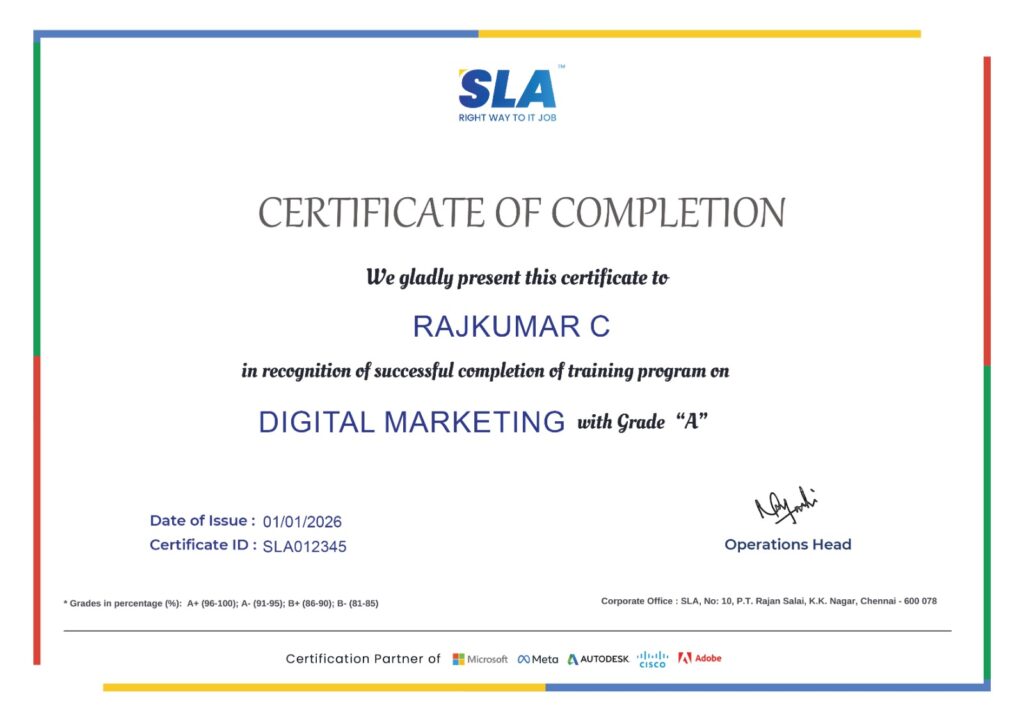
Earn Your Certificate of Completion
Validate your achievements with Softlogic's Certificate of Completion, verifying successful fulfillment of all essential components.
Take Your Career to the Next Level with Certifications
Get a certifications through our training programs to gain a competitive edge in the industry.
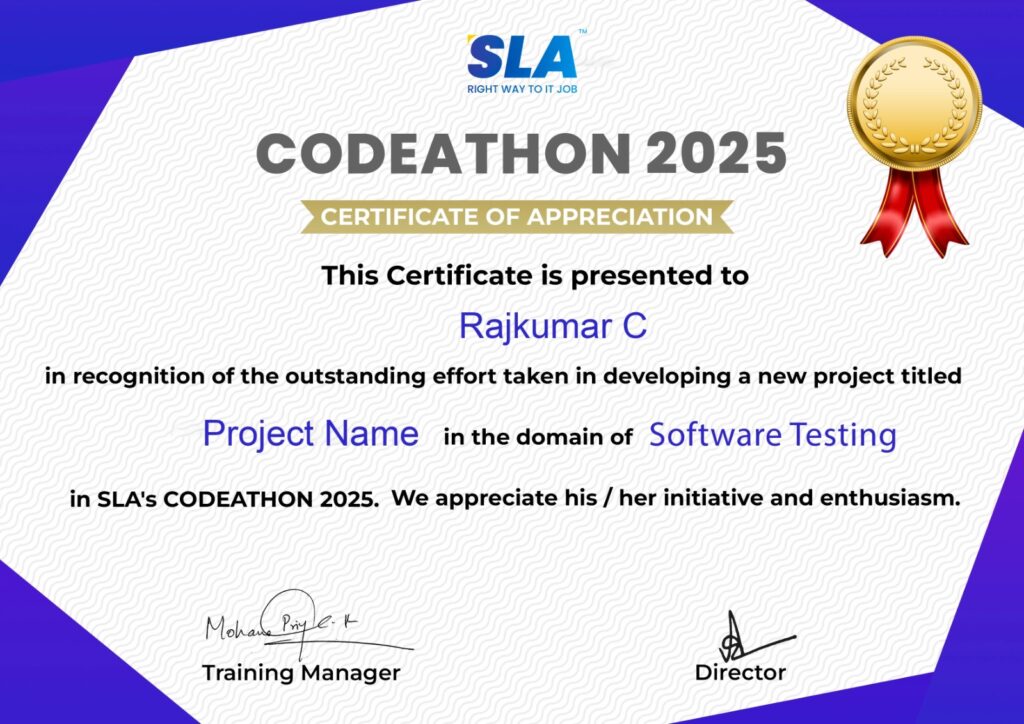
Stand Out from the Crowd with Codethon Certificate
Verify the authenticity of your real-time projects with Softlogic's Codethon certificate.
Hands-on Project Practices in IoT
Connected Vehicle System
Waste Management System
Energy Usage Monitoring System
Parking Space Management System
Security Surveillance System
Wearable Health Tracker
Agricultural Monitoring System
Weather Monitoring Station
Home Automation System
The SLA Way to Get Placed in Top IT Companies
Enrollment

Technology Training
Coding Practices
Realtime Projects
Realtime Projects
Placement Training
Aptitude Training
Interview Skills
Interview Skills
Panel Mock
Interview

Unlimited
Interviews

Interview
Feedback

100%
IT Career
Placement Support for a IoT Job
Genuine Placements. No Backdoor Jobs at Softlogic Systems.
Aptitude Training
from Day 1
Interview Skills
from Day 1

Softskills Training
from Day 1
Build Your Resume

Build your LinkedIn Profile

Build your GitHub
digital portfolio

Panel Mock Interview
Unlimited Interviews until you get placed

Life Long Placement Support at no cost
Request a Free Callback
FAQs
What are the primary communication protocols used in IoT, and what distinguishes them?
Key IoT communication protocols include MQTT, CoAP, and HTTP. MQTT is optimized for low-bandwidth and high-latency scenarios, while CoAP is tailored for resource-constrained environments and uses UDP. HTTP is a versatile protocol for web interactions but may be more resource-intensive for limited devices.
How do IoT devices protect data security and privacy?
IoT devices ensure data security through encryption, authentication, and secure communication protocols. Techniques like TLS/SSL are used for encrypting data during transmission, AES for encrypting stored data, and strong authentication methods to safeguard data privacy.
What types of sensors are commonly used in IoT applications, and what do they measure?
IoT applications commonly use sensors such as temperature sensors (for heat measurement), humidity sensors (for moisture levels), motion sensors (to detect movement), and gas sensors (for specific gases). These sensors gather critical environmental data for various IoT applications.
How is the data collected from IoT devices typically processed and analyzed?
Data from IoT devices is generally processed on cloud platforms or through edge computing. Cloud platforms are used for large-scale data storage and analytics, while edge computing allows for real-time data processing close to the source, reducing latency.
What is edge computing, and how does it benefit IoT systems?
Edge computing refers to processing data near its source rather than relying solely on centralized cloud servers. This approach reduces latency, lowers bandwidth usage, and improves the real-time functionality of IoT systems by enabling quicker decision-making locally.
How do IoT devices manage energy consumption and extend battery life?
To manage energy use, IoT devices employ energy-efficient components, low-power communication methods, and power-saving strategies. Techniques such as duty cycling (temporarily turning off parts of the device) and optimizing communication schedules help prolong battery life.
What challenges are associated with scaling IoT solutions, and how can they be addressed?
Scaling IoT solutions involves challenges such as managing extensive data volumes, ensuring network scalability, and maintaining security. These can be addressed by leveraging scalable cloud services, adopting efficient data processing techniques, and implementing robust security measures.
How do IoT systems integrate with existing IT infrastructure?
IoT systems integrate with current IT infrastructure through APIs, middleware, and data integration platforms. These tools facilitate communication between IoT devices and existing software, databases, and enterprise systems, enabling seamless data flow and interoperability.
Where is the corporate office of Softlogic Systems located?
The corporate office of the Softlogic Systems is located at the institute’s K.K.Nagar branch.
What payment methods does Softlogic accept?
Softlogic accepts a wide range of payment methods, including:
- Cash
- Debit cards
- Credit cards (MasterCard, Visa, Maestro)
- Net banking
- UPI
- Including EMI.
Additional Information for
the IoT
Scopes available in the future for learning IoT
The following are the scopes available in the future for learning IoT Course:
- Advanced Data Analytics: With the increasing volume of data generated by IoT devices, advanced analytics will become essential. Mastering how to analyze this data with AI and machine learning will be crucial for gaining valuable insights and making informed decisions.
- Edge Computing: As IoT devices produce vast amounts of data, processing this data locally at the edge rather than in centralized cloud servers will gain importance. Understanding edge computing technologies and their role in IoT will be vital.
- Cybersecurity: Ensuring the security of IoT devices and networks is critical due to the sensitive nature of the data they manage. Expertise in protecting IoT systems from cyber threats, including encryption, authentication, and secure communication, will be increasingly sought after.
- Smart Cities: IoT applications in smart cities will grow, addressing areas such as traffic management, waste reduction, energy efficiency, and public safety. Knowledge in these areas will be key for developing innovative urban solutions.
- Healthcare and Remote Monitoring: IoT’s role in healthcare, including remote monitoring, wearable health devices, and telemedicine, will expand. Expertise in managing health data, understanding regulatory requirements, and integrating with medical systems will be important.
- Industrial IoT (IIoT): In industrial environments, IoT will be utilized for predictive maintenance, process improvement, and automation. Learning about industrial protocols, sensor integration, and smart manufacturing solutions will be crucial.
- Agriculture and Farming: IoT applications in agriculture, such as precision farming, crop monitoring, and livestock management, will continue to develop. Knowledge of agricultural sensors, data analytics, and automation in farming will be beneficial.
- Consumer Electronics: The market for smart home devices and connected consumer electronics is growing. Skills in designing and developing innovative IoT products, including smart appliances and fitness trackers, will be valuable.
Related Blogs
Common Challenges of the Internet of Things and Solutions to Overcome
Published On: November 23, 2024
Introduction IoT plays a significant role in many industries, improving efficiency, data-driven decision-making, cost savings,…
IoT Project Ideas
Published On: October 14, 2024
Introduction Working on IoT Project Ideas is an effective way for learners to discover how…
IoT Engineer Salary for Freshers and Experienced
Published On: September 26, 2024
Introduction The Internet of Things (IoT) is the pulse of innovation, effortlessly linking hundreds of…
IoT Tutorial for Beginners and Professionals
Published On: September 19, 2024
Introduction Entering the world of Internet of Things can be like walking into a world…
IoT Interview Questions and Answers
Published On: January 25, 2022
Introduction The core objective of IoT is to facilitate the development of intelligent, automated systems…
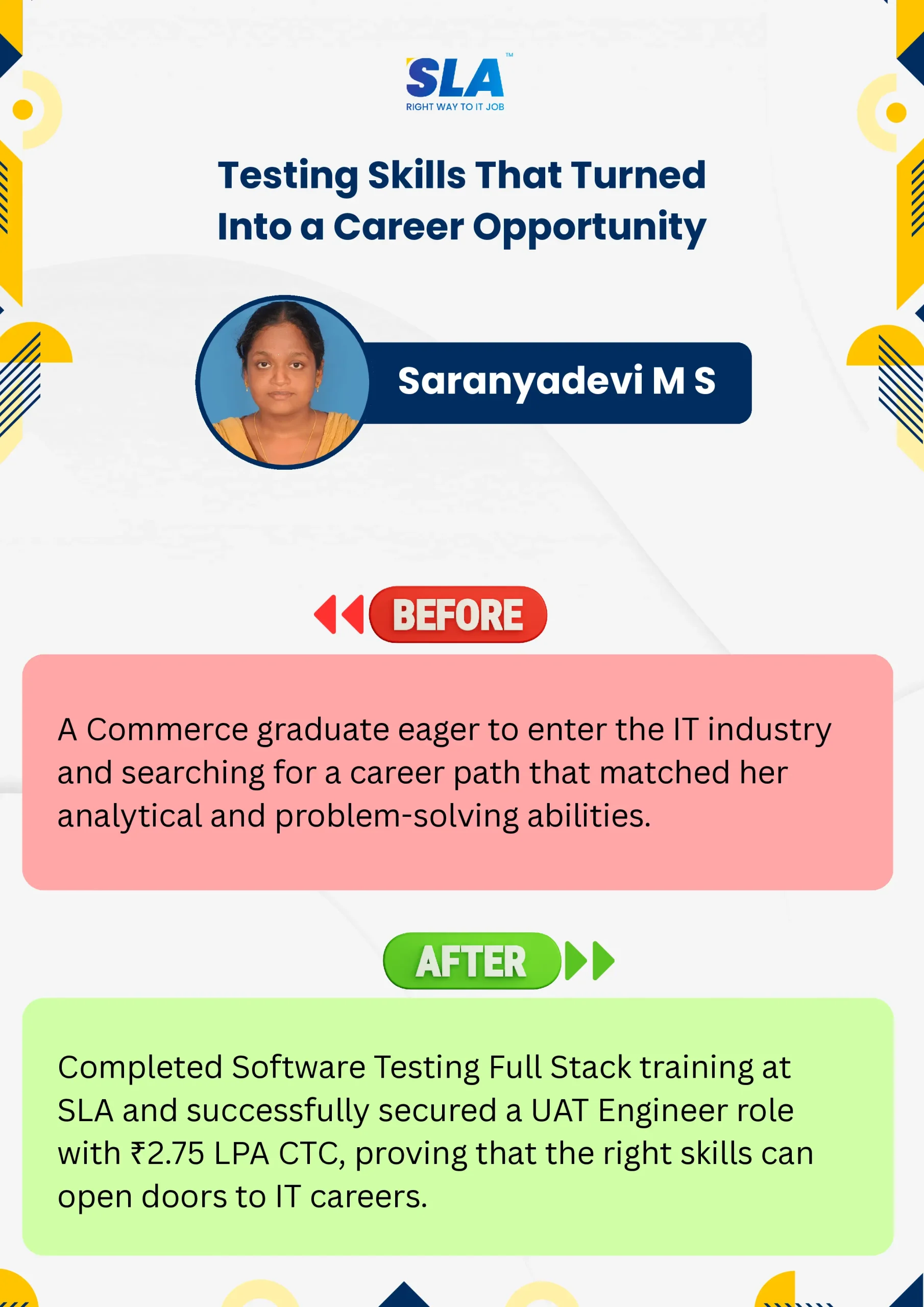
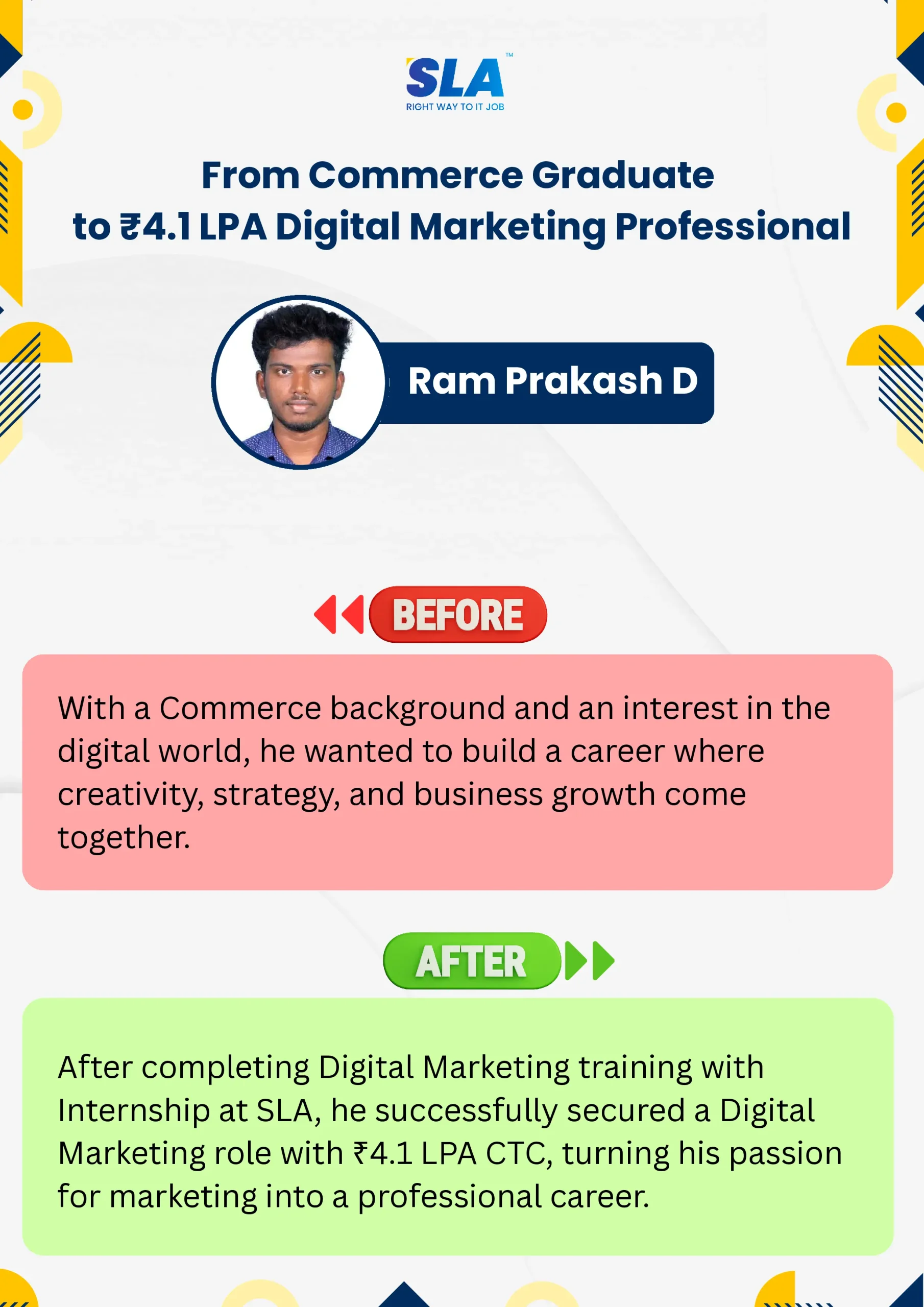
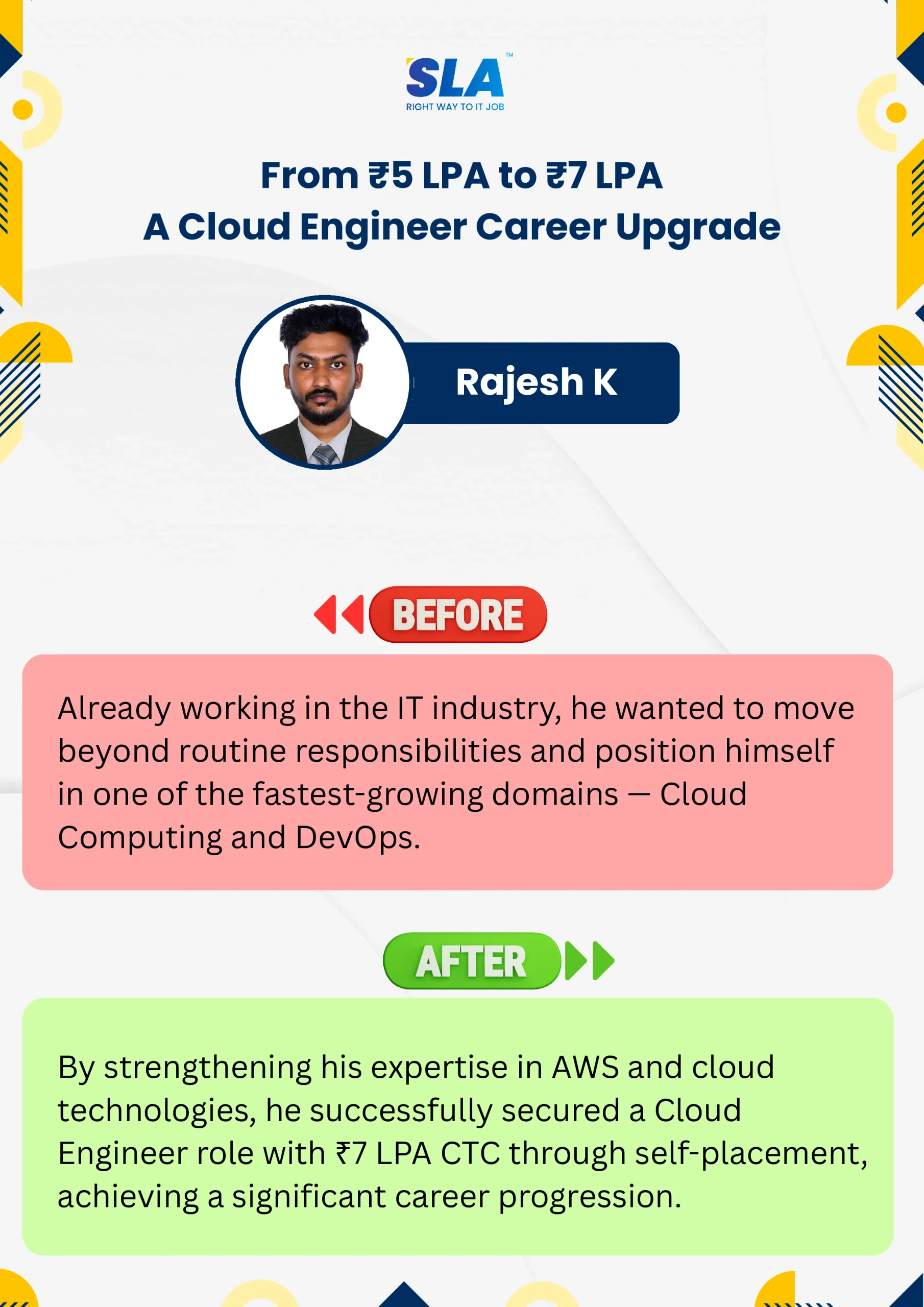
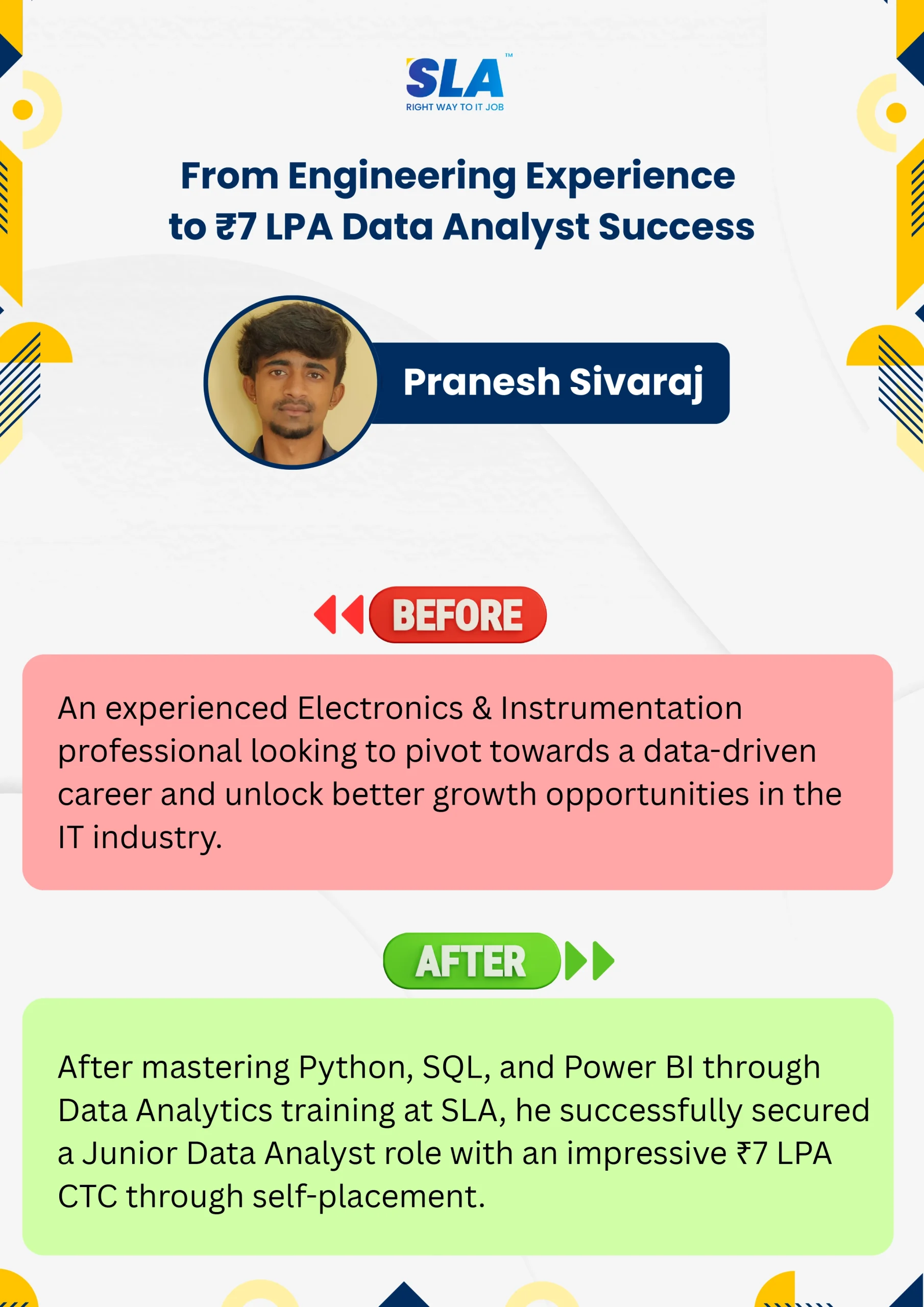
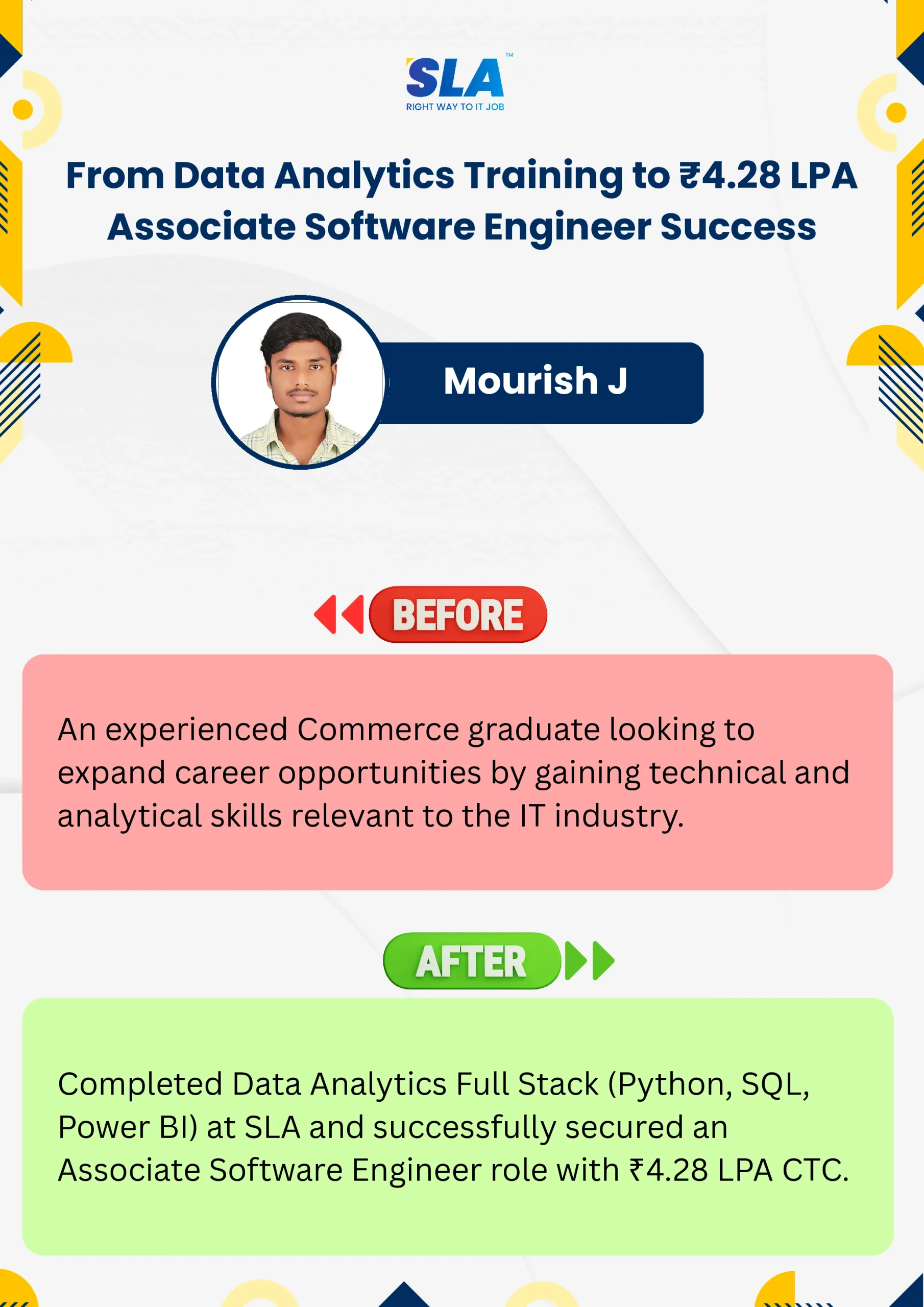
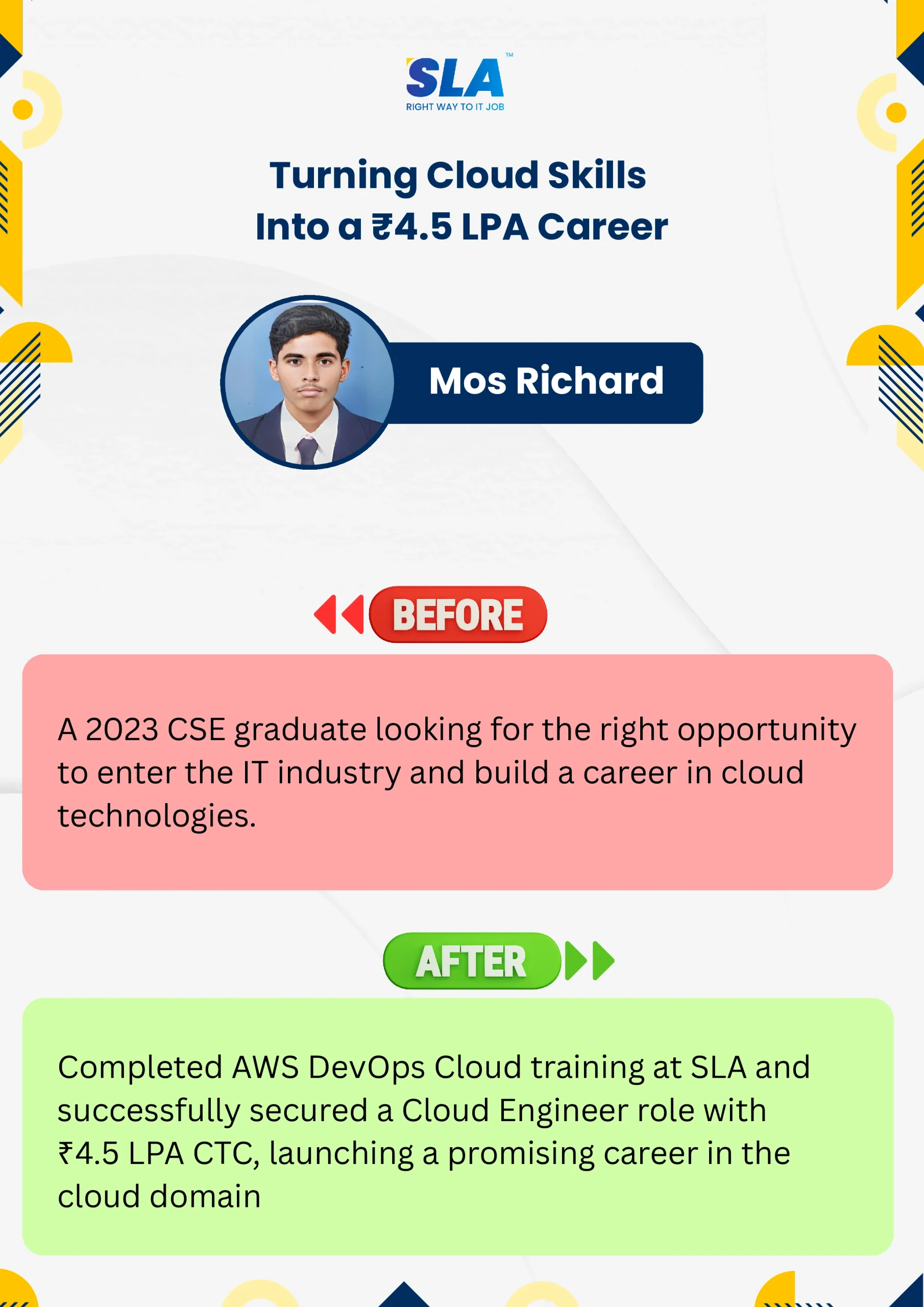
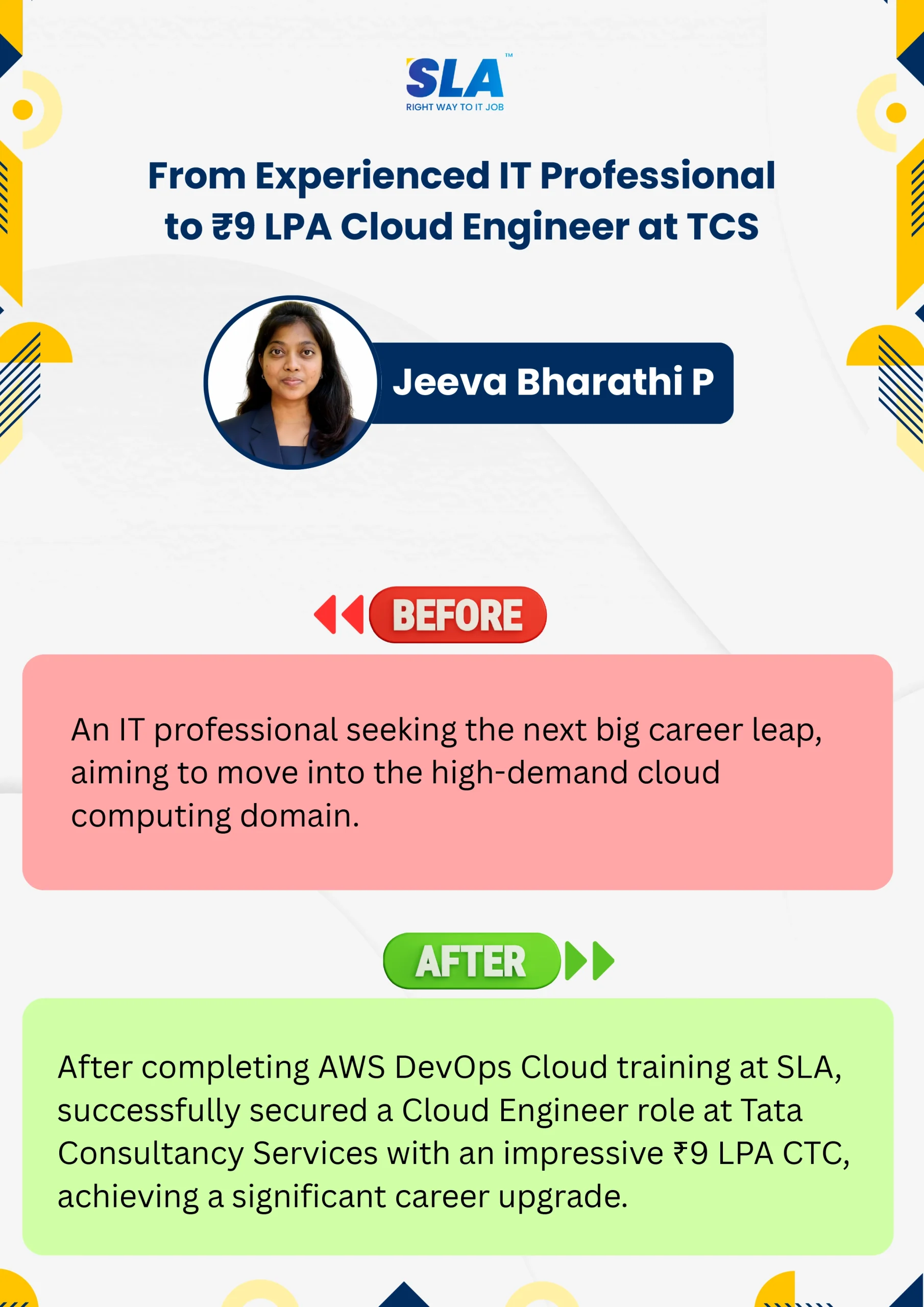
Google Reviews

Rating
4.8
1,053 Google reviews

Surya
Special thanks to Vishal Sir, the Placement Officer, for his interview guidance, resume support, and continuous motivation throughout the placement process. I would also like…

Click here for Full Review

NalluKumar Ravichandran
Hi, I recently completed the DOT NET Full Stack Development course at SLA, and I had a great learning experience. The teaching style and student…
Click here for Full Review

Shaaru Menan
I had a 3 year career break. Joined SLA on Java Full Stack course and completed it.Did projects with the help of my Mentor. They…
Click here for Full Review

Nithish Sahoo
I had an excellent experience taking this DevOps course. The curriculum is well-structured and covers both fundamental and advanced DevOps concepts in a clear manner.…
Click here for Full Review

MATHAN KUMAR G EEE
SLA Institute provides a structured learning environment for data analytics. The syllabus is relevant, and trainers are knowledgeable. Some sessions were very useful practically, while…
Click here for Full Review

SARAN M
SLA Institute provides training in communication and aptitude along with strong technical skills. The trainers explain concepts clearly with a practical approach, which helps build…
Click here for Full Review