Softlogic is one of the Top Training institutes for MVC. Learn how to use MVC, from beginner basics to advanced techniques. Our MVC syllabus covers the MVC fundamentals, controllers, views, models, routing, data binding, authentication, and deployment. We offer an MVC Course with Placement Assistance, Mock interviews, Resume building, and certification.
MVC Course For Beginners
4.70
(3672)
DURATION

1 Months
EMI
0% Interest
Mode

Live Online / Offline

Let's take the first step to becoming an expert in MVC
Click Here to Get Started
Lifelong Placement
Assistance
Get Certified
JOB PLACEMENT ELIGIBILITY TEST
×
Your Placement Eligibility Report
Want more details about MVC?
Fill out the form, and our counsellors will get in touch with you at your preferred time. You can have all your queries answered. Once you decide that SLA is the perfect fit for your training needs, our counselors will guide you through the process every step of the way.

Course Schedules

Course Syllabus

Course Fees

or any other questions...
Fees, Duration & Batch Timings for MVC
Hands On Training
3-5 Real Time Projects
60-100 Practical Assignments
3+ Assessments / Mock Interviews
July 2026
Week days
(Mon-Fri)
Online/Offline
2 Hours Real Time Interactive Technical Training
1 Hour Aptitude
1 Hour Communication & Soft Skills
(Suitable for Fresh Jobseekers / Non IT to IT transition)
Course Fee
July 2026
Week ends
(Sat-Sun)
Online/Offline
4 Hours Real Time Interactive Technical Training
(Suitable for working IT Professionals)
Course Fee
Save up to 20% in your Course Fee on our Job Seeker Course Series
Learn More
Syllabus of MVC
Download Syllabus
Overview of the ASP.NET MVC
- Introduction of ASP.NET MVC
- Role of Model, View, and Controller
- How ASP.NET MVC Works
- Benefits of using ASP.NET MVC
- Comparison of ASP.NET VS ASP.NET MVC
- Summary
Getting Started with MVC and its Action Result type
- Understanding the structure of an ASP.NET MVC project
- Creating views
- Defining controllers
- Defining a data model
- Overview of coding standards follows during programming
- Types of Action Result in MVC
- Summary
Creating an application in MVC using Razor View Engine
- Creating strongly-typed views
- Understanding URLs and action methods
- TempData, view Bag and View Data with example
- Data Annotations
- Validation in MVC
- Razor Basics and Implementation of Razor view
- Accessing Model Data in Razor views
- Defining and using HTML Helpers
- Defining and Designing a layout Page
- Defining and using partial views
Using AJAX and jQuery with ASP.NET MVC
- Overview of AJAX
- Using AJAX Action Links
- Overview of jQuery
- jQuery Techniques
- Using post and get methods in jquery
- Using AJAX and Jquery in MVC with Example
Overview of Entity Framework and its approaches
- Over View of Entity Framework
- Code First Approach with example
- Model First Approach with example
- Database First Approach with example
Working with ASP.NET MVC Applications using EF Approaches Code First, Model First, Database first
- NET application architecture best practices
- Implementing a Repository and Entity Framework Data Model
- Define Dependency Injection
- Using Dependency Injection
- Accessing a Repository in controller
Import and Export Excel file in MVC
- Basics of I/O classes in MVC
- Basics of input and output streams.
- Create the excel document with records and create the view to upload/import the excel
- How to import an excel from view to the database
- Export the Data from Database to excel
- Summary
Convert web grid into PDF file in MVC
- Create the view using web grid
- How to convert the webgrid into pdf
- Summary
Sending Emails
- Designing email panel
- How to send an email to various users
- Sending auto emails
- Summary
Integration of WCF service with MVC
- Basics of WCF service creation
- WCF and its types of contracts
- How to consume the WCF service with MVC
- Summary
Creating a sample MVC Application using AJAX and JQUERY, WCF service and Repository in MVC
- Design, Develop and Build the MVC Application using all the functionalities (Jquery, wcf, repository, ajaxcalls etc.,)..
Objectives of MVC
The core objectives of our MVC course are as follows:
- Learn the MVC framework so that you can create web applications.
- In MVC apps, use authorization and authentication.
- Create RESTful APIs using MVC and ASP.Net
- Make user interfaces that are dynamic and responsive.
- Enhance the functionality of the program.
- Recognize the security recommended practices for web applications.
- Install MVC software in operational settings.
Request a Free Callback
Why Softlogic Systems is the Best Choice for MVC – Learn, Practice, and Get Placed!
Online & Offline Training Options
Learn at your convenience with flexible classroom and live online training.

Learn from 100+ Real-Time Developers
Get trained by industry professionals with years of hands-on experience.
Hands-on Projects & Codeathons
Practice with real-time projects and coding challenges to build confidence.
0% EMI Fee Options
Pay your course fees flexibly with easy EMI plans at zero interest.
Resume & Interview Support
Get expert help with resume building, mock interviews, and soft skills.

Placement with Top IT Firms
Access placement opportunities with leading MNCs and IT companies.

1000+ Hiring Partners
Benefit from Softlogic’s strong recruiter network for faster job placement.

No Backdoor Jobs
We ensure only genuine placement opportunities with trusted companies.
Request a Free Callback
Highlights of MVC
What is MVC training?
A popular software design pattern for creating user interfaces, model-view-controller (MVC) splits the associated computer logic into three interrelated parts. It highlights the division of the business logic and display of the software.
What are the reasons for learning MVC?
Learning the MVC could be beneficial and satisfying for a variety of reasons:
- Quicker development process: MVC separates the code into three layers as model, view, and controller.
- Extensive applications: A sizable development team can collaborate effectively on the same application thanks to this division.
- Asynchronous methodologies: Desktop widgets, site-specific browsers, and PDF files can all be integrated with MVC applications.
- Numerous perspectives: The MVC pattern returns data in its unformatted state. By keeping data and business logic apart, it minimizes code duplication.
- Platform that is SEO-friendly: Building web pages and applications with SEO friendliness can be facilitated by the MVC design.
What are the prerequisites for learning MVC?
While there aren’t any particular requirements to understand MVC, it helps to have the following:
- Fundamental Understanding of Programming
- Styles: HTML, CSS, JavaScript
- Computer programming using objects
- Fundamentals of Web Development
- Foundations of Databases
Our MVC Course is suitable for:
- Students
- Professionals seeking a career change
- IT professionals aiming to enhance their skills
- Enthusiastic programmers
- Job Seekers
What are the course fees and duration?
Our MVC training is offered around ₹18,000 with potential variations based on the course level (basic, intermediate, or advanced) and format (online or in person). Generally, the training spans approximately 1 month and includes certification upon completion. For accurate details concerning fees, duration, and certification, we suggest reaching out to our training center directly.
What are some job roles related to MVC?
MVC frameworks are used extensively in the online and software development industries. Several employment roles require experience with MVC frameworks, such as:
- Web Developer
- Full Stack Developer
- Software Engineer
- System Analyst
- Mobile App Developer
- Quality Assurance Engineer
- Application Architect
What is the salary range for an MVC engineer?
Professional ASP.NET and MVC web framework developers will be in greater demand. The starting salary for entry-level MVS workers is ₹3,50,000 annually, while the majority of experienced experts get up to ₹20,00,000 annually. In India, the average pay for an ASP.NET MVC developer is ₹8.5 LPA.
List a few MVC real-time applications.
Numerous industries employ real-time apps with MVC to provide users with engaging experiences and real-time functionalities. These are a few examples,
- Online Games for Multiple Players
- Monitoring the Stock Market in Real Time
- Applications for Real-Time GPS Tracking
- Collaborative editing
- Alerts and notifications in real time
- Applications for Real-Time Chat
Boost Your Skills with Our MVC Experts
Our Mentors are from Top Companies like:
- Our MVC trainers are highly skilled and knowledgeable experts who possess extensive understanding and expertise in all the fundamental ideas of the Model-View-Controller (MVC) methodology.
- They have extensive knowledge of all MVC frameworks, including ASP.NET MVC, ZendMVC, Backbone.Js, Angular JS, and RubyOnRails.
- The instructors are well knowledgeable about the various software architectures that are most suited for developing MVC apps.
- During the project’s implementation, they demonstrate a thorough understanding of the notions of security, scalability, testability, and portability.
- Our instructors have a great deal of expertise in creating, troubleshooting, and maintaining intricate MVC applications, as well as creating unique solutions for various customers.
- To successfully teach the students and convey the lifecycle of MVC application development, they employ a project-based method.
Request a Free Callback
What Modes of Training are available for MVC?
Offline / Classroom Training

A Personalized Learning Experience with Direct Trainer Engagement!
- Direct Interaction with the Trainer
- Clarify doubts then and there
- Airconditioned Premium Classrooms and Lab with all amenities
- Codeathon Practices
- Direct Aptitude Training
- Live Interview Skills Training
- Direct Panel Mock Interviews
- Campus Drives
- 100% Placement Support
Online Training

Instructor Led Live Training! Learn at the comfort of your home
- No Recorded Sessions
- Live Virtual Interaction with the Trainer
- Clarify doubts then and there virtually
- Live Virtual Interview Skills Training
- Live Virtual Aptitude Training
- Online Panel Mock Interviews
- 100% Placement Support
Corporate Training

Blended Delivery model (both Online and Offline as per Clients’ requirement)
- Industry endorsed Skilled Faculties
- Flexible Pricing Options
- Customized Syllabus
- 12X6 Assistance and Support
GET Free Consultation
Certifications
Take your career to new heights with Softlogic's software training certifications.
Improve your abilities to get access to rewarding possibilities
Improve your abilities to get access to rewarding possibilities

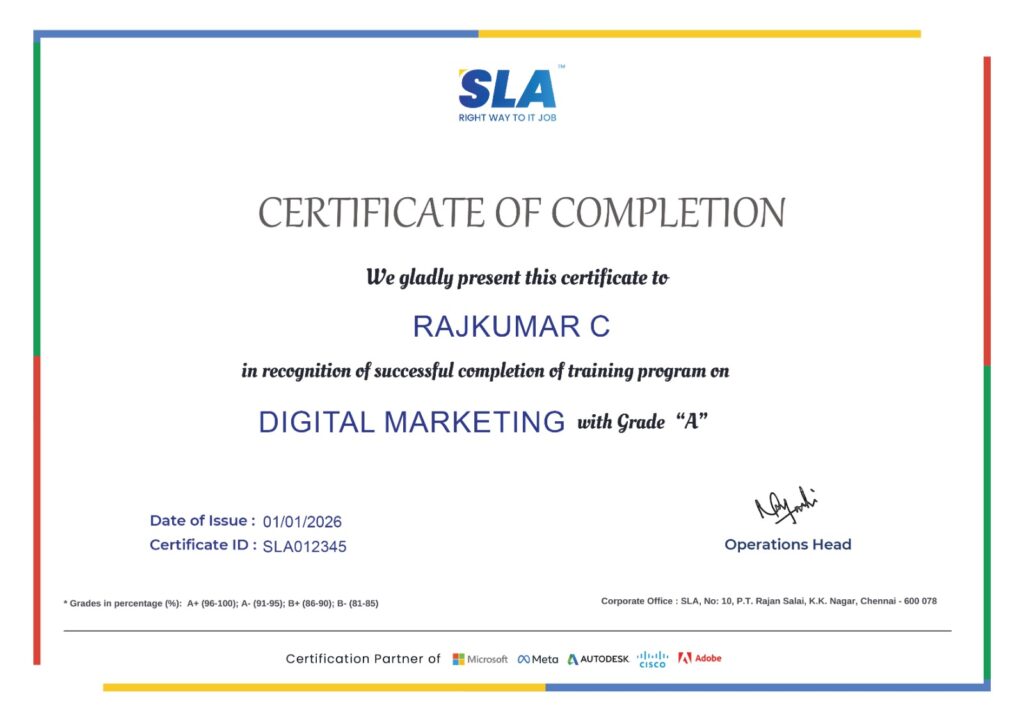
Earn Your Certificate of Completion
Validate your achievements with Softlogic's Certificate of Completion, verifying successful fulfillment of all essential components.
Take Your Career to the Next Level with Certifications
Get a certifications through our training programs to gain a competitive edge in the industry.
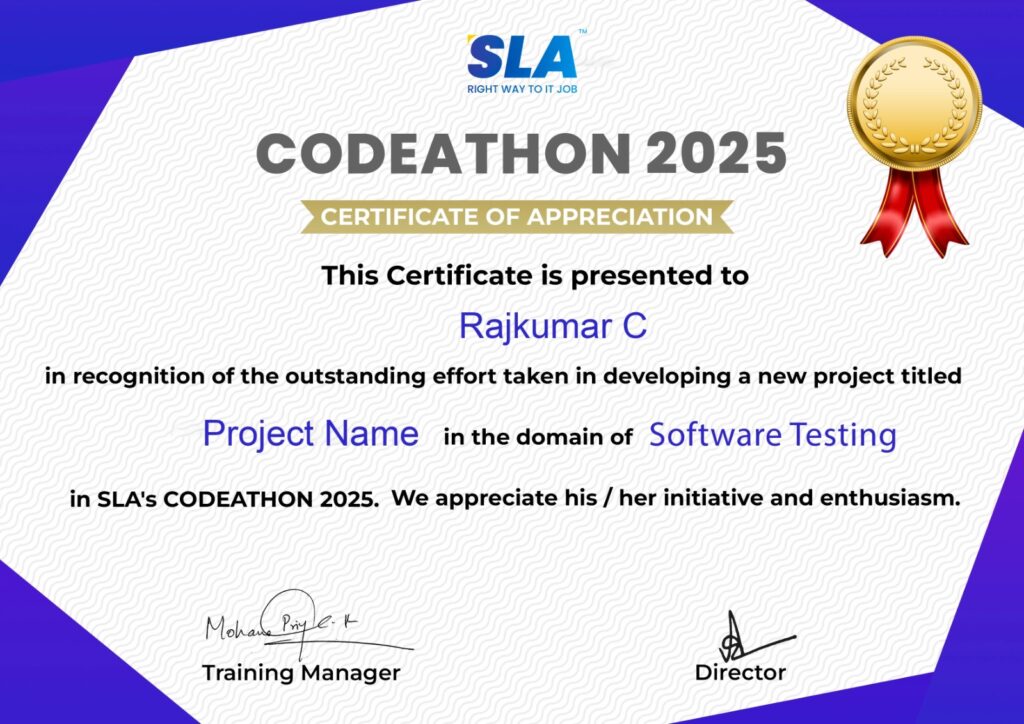
Stand Out from the Crowd with Codethon Certificate
Verify the authenticity of your real-time projects with Softlogic's Codethon certificate.
Hands-on Project Practices in MVC
Property Management System
Website for Classified Ads
Document Management System
Feedback and Survey System
Recruiting Portal
Help Desk for Ticketing System
Donation Management System in ASP.NET MVC
Auction Platform
Task Management for ASP.NET MVC
The SLA Way to Get Placed in Top IT Companies
Enrollment

Technology Training
Coding Practices
Realtime Projects
Realtime Projects
Placement Training
Aptitude Training
Interview Skills
Interview Skills
Panel Mock
Interview

Unlimited
Interviews

Interview
Feedback
100%
IT Career
Placement Support for a MVC Job
Genuine Placements. No Backdoor Jobs at Softlogic Systems.

Aptitude Training
from Day 1
Interview Skills
from Day 1

Softskills Training
from Day 1
Build Your Resume

Build your LinkedIn Profile

Build your GitHub
digital portfolio
Panel Mock Interview
Unlimited Interviews until you get placed

Life Long Placement Support at no cost
Request a Free Callback
FAQs
What is in the MVC framework?
Models, Views, and Controllers are the three interconnected components that make up the application’s logic, and this is how the MVC paradigm operates. Every component is in charge of a distinct application-related task. Views show the user interface of the application, controllers manage user input, and models handle data and business logic.
What advantages does MVC offer?
Many benefits are offered by the MVC architecture, including enhanced scalability, better control over code separation of concerns (SoC), and enhanced maintainability. Additionally, by separating data access, display, and business logics from one another, it aids in the development of unified applications.
When is MVC the best option?
Model, View, and Controller are an application’s three primary components that are divided together using MVC. In relation to the View and Controller, this level is regarded as the lowest. It specifies where all of the application’s data objects are stored and essentially conveys the data to the user.
When should MVC be applied?
- When there is a one-directional flow of activities on our screen and every user interaction influences the model, we can use MVC.
- When our screen is sufficiently simple, we can use MVC.
Why is MVC superior to web forms?
Because of its lightweight design, complete control over markup, and multitude of capabilities, Asp.Net MVC facilitates quick and flexible development. Therefore, using the most recent web standards while creating an interactive web application is ideal.
Does web development benefit from MVC?
Web applications’ code structure and modularity are greatly enhanced by the MVC design. The division of an application’s components into discrete portions allows developers to concentrate on particular tasks without interfering with other areas of the codebase.
Is this MVC course hands-on-based?
Yes, you will gain valuable practical experience in this course by creating a complete, working MVC web application from scratch. Working on both frontend and backend programming, you will put the theoretical ideas you’ve learned throughout the course into practice through hands-on exercises and real-world scenarios.
How long does it take for the MVC course?
It will take about 45 to 60 hours to finish the course. This estimate accounts for lectures, practical exercises, and projects; however, real-time may differ based on student understanding and pace.
What certification will I receive after finishing the course?
You will receive internationally recognized SLA course completion certificates for the MVC course upon conclusion of the training, in addition to prestigious IBM credentials and Codeathon certificates attesting to your proficiency with real-world projects.
What are the possible payment methods at SLA?
We take cash, credit cards (Visa, Maestro, Mastercard), Netbanking, and other major payment options for MVC training at SLA.
Additional Information for
the MVC
Future Prospects
Demand and Future Scope of.NET MVC Technology. There is a great demand for.NET developers since the majority of Indian firms create software using the.NET platform. On the other hand, we think and sense that NET is growing in popularity for full-stack development and mobile apps.
MVC Certification Value
To produce scalable and flexible applications, MVC is currently one of the most widely utilized industry-standard web development frameworks. It’s also employed in the creation of mobile apps. So it is beneficial to have MVC certification for obtaining a promising career in web development.
Continuous Learning
While MVC is still a good option, more complicated projects can benefit from looking into MVP, MVVM, or MVI as alternatives. These patterns provide benefits for managing massive data volumes and testability and maintainability.
Related Blogs
MVC Project Ideas
Published On: October 21, 2024
The Model–View–Controller (MVC) architecture is widely used for building scalable, organized, and maintainable web applications.…
MVC Developer Salary For Freshers and Experienced
Published On: October 4, 2024
Introduction In the evolving world of software development, MVC Developers play a vital role in…
MVC Tutorial for Beginners
Published On: September 28, 2024
Introduction Getting started with web development can be overwhelming: so many frameworks, confusing concepts, and…
MVC Interview Questions and Answers
Published On: June 10, 2024
Introduction Learning the Model-View-Controller (MVC) design pattern is a must for building scalable, maintainable, and…
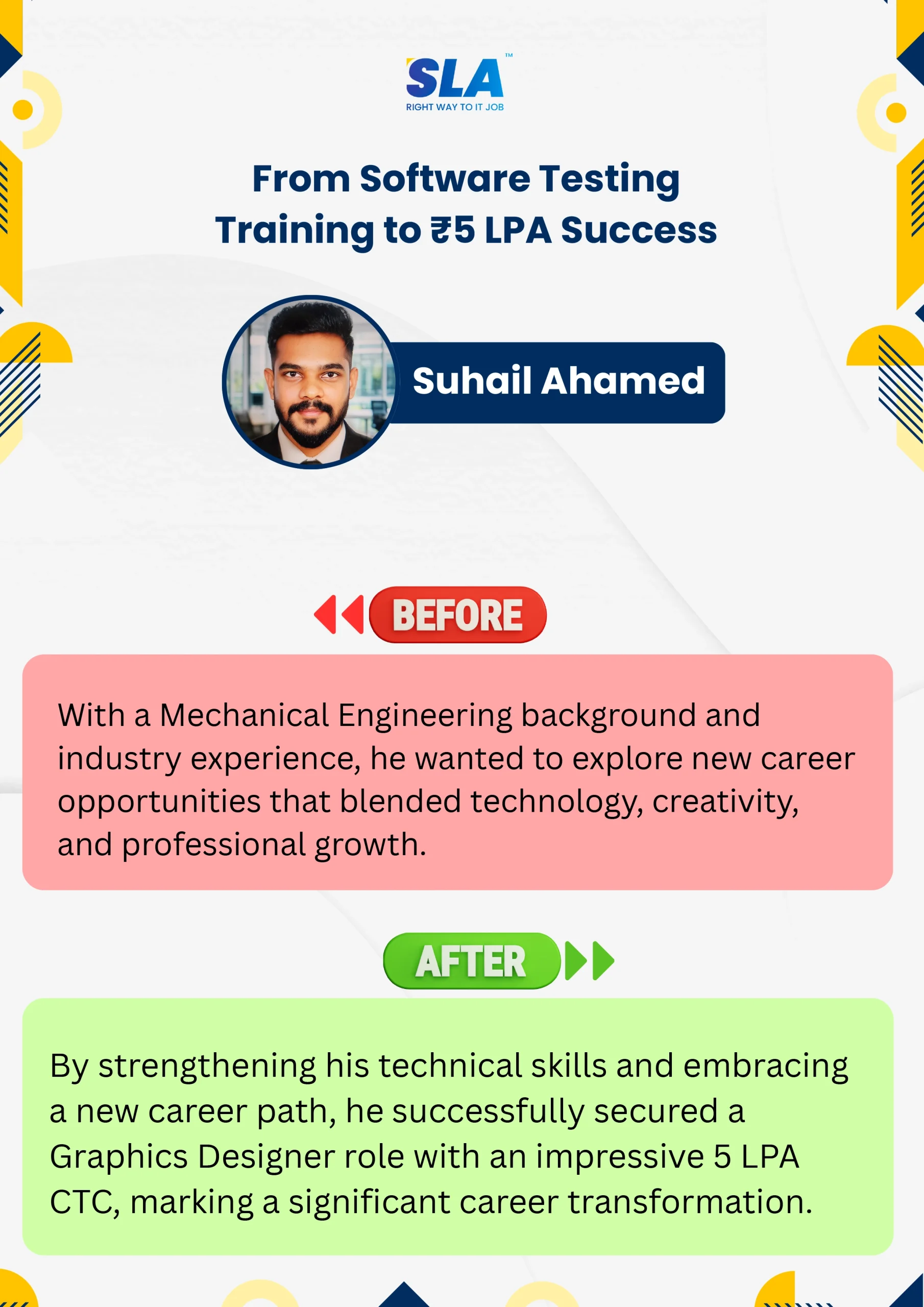
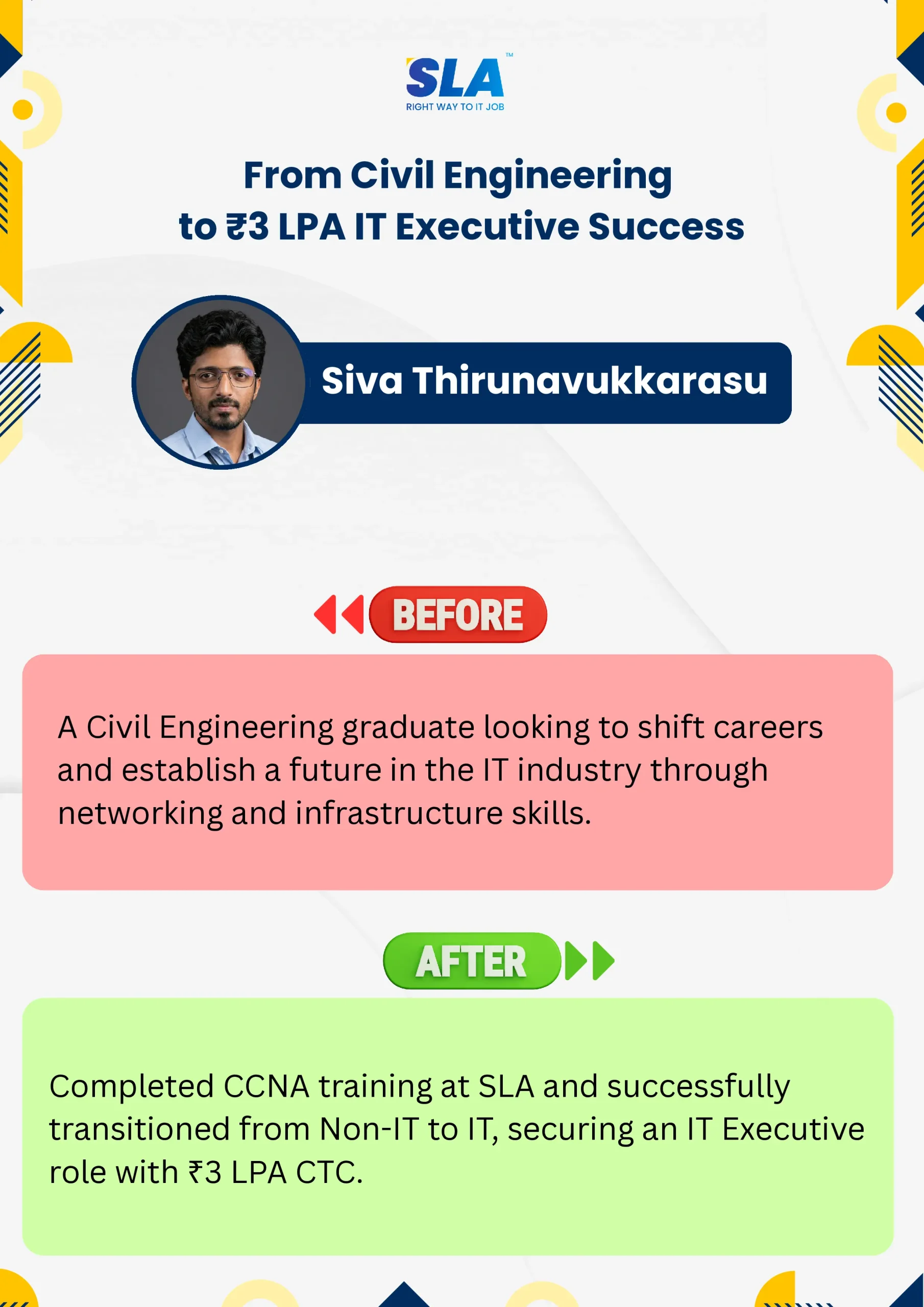
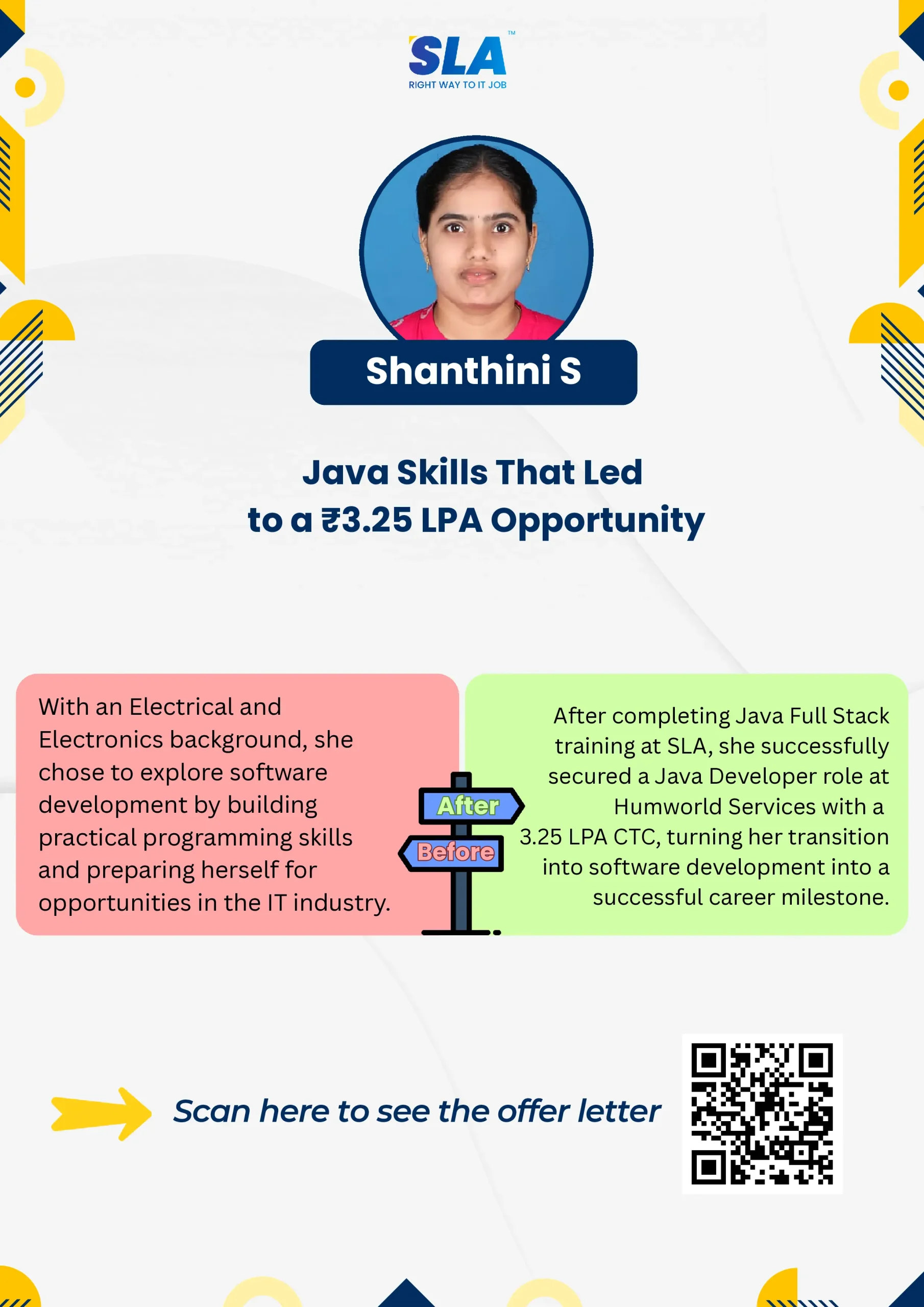
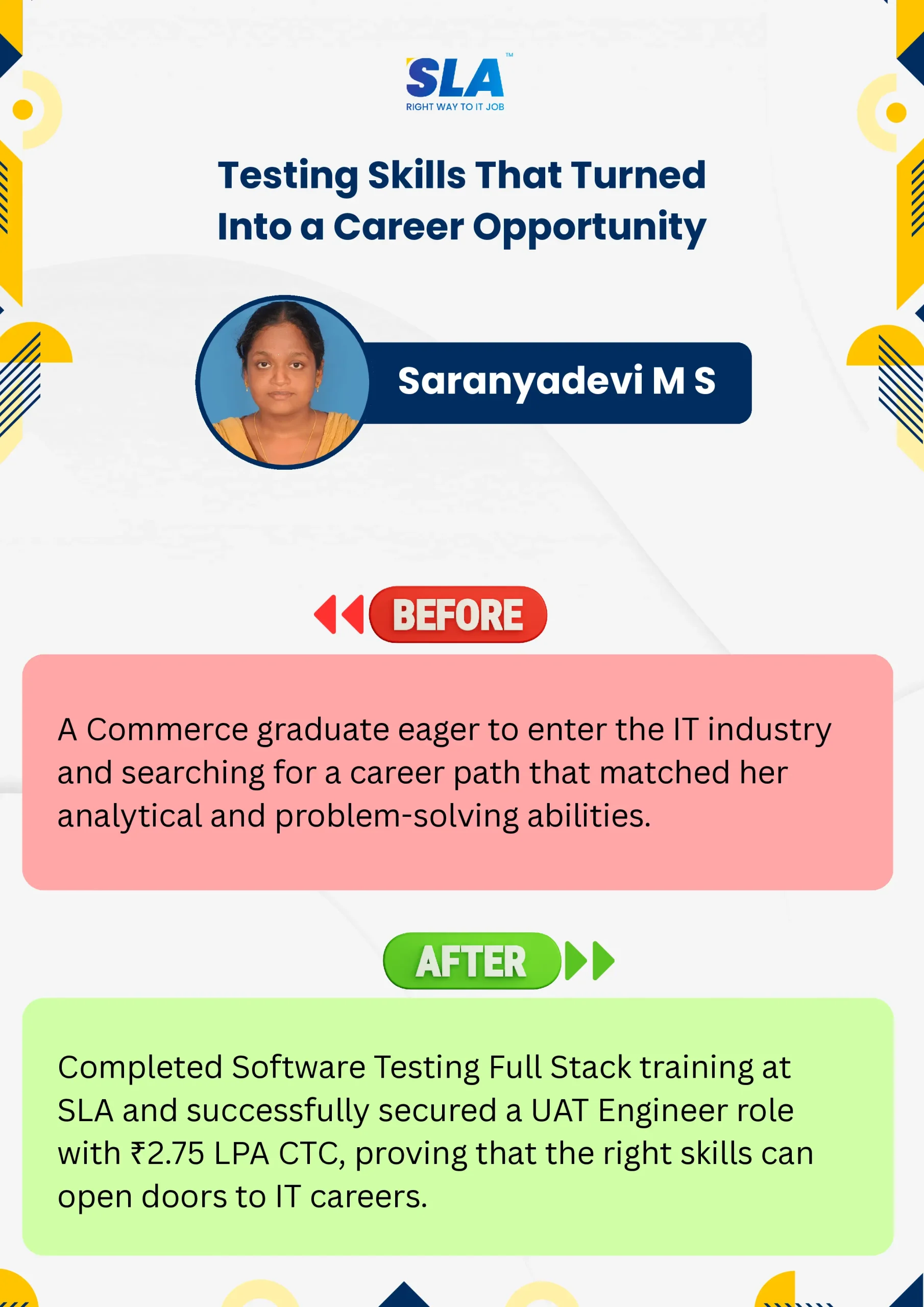
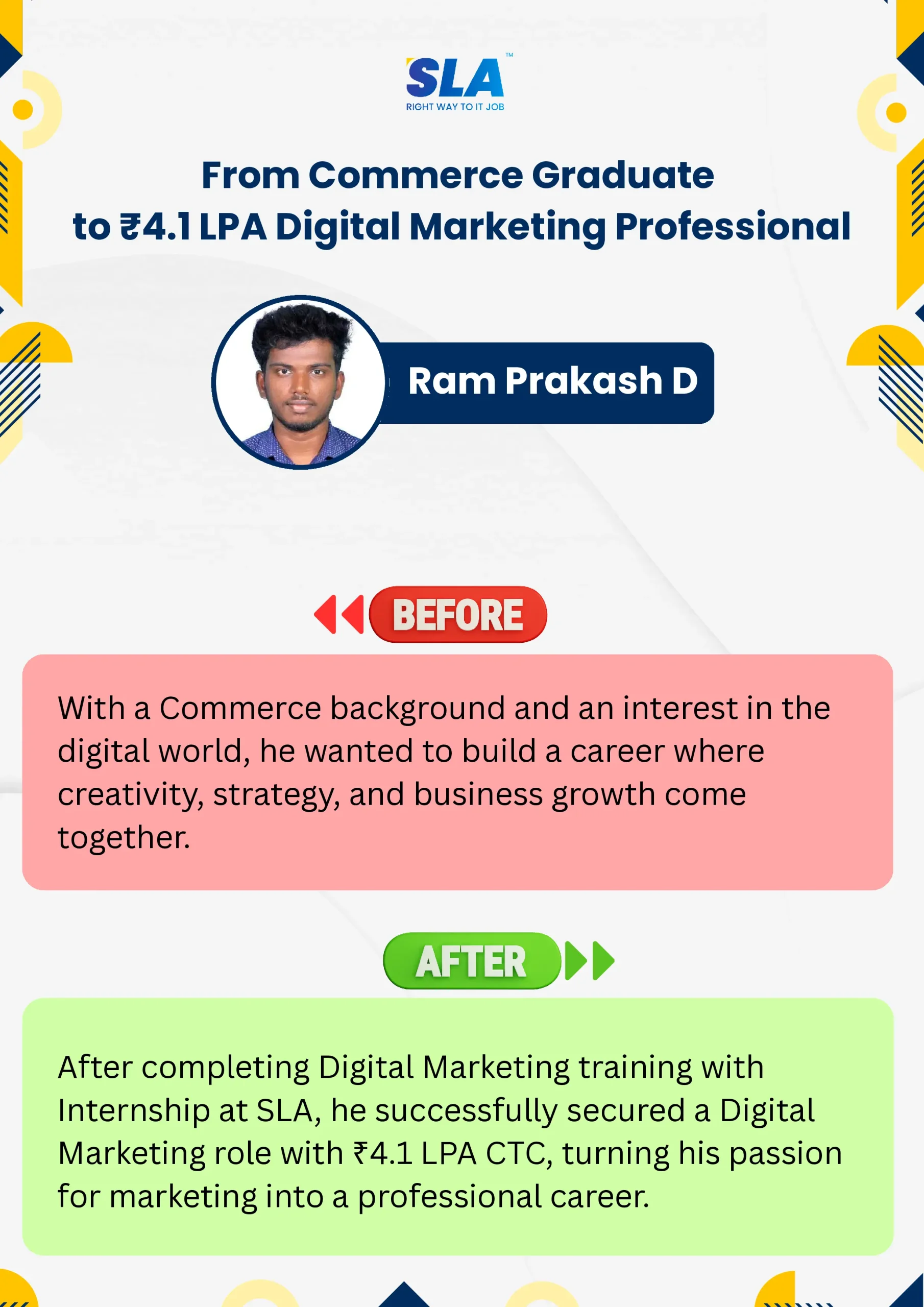
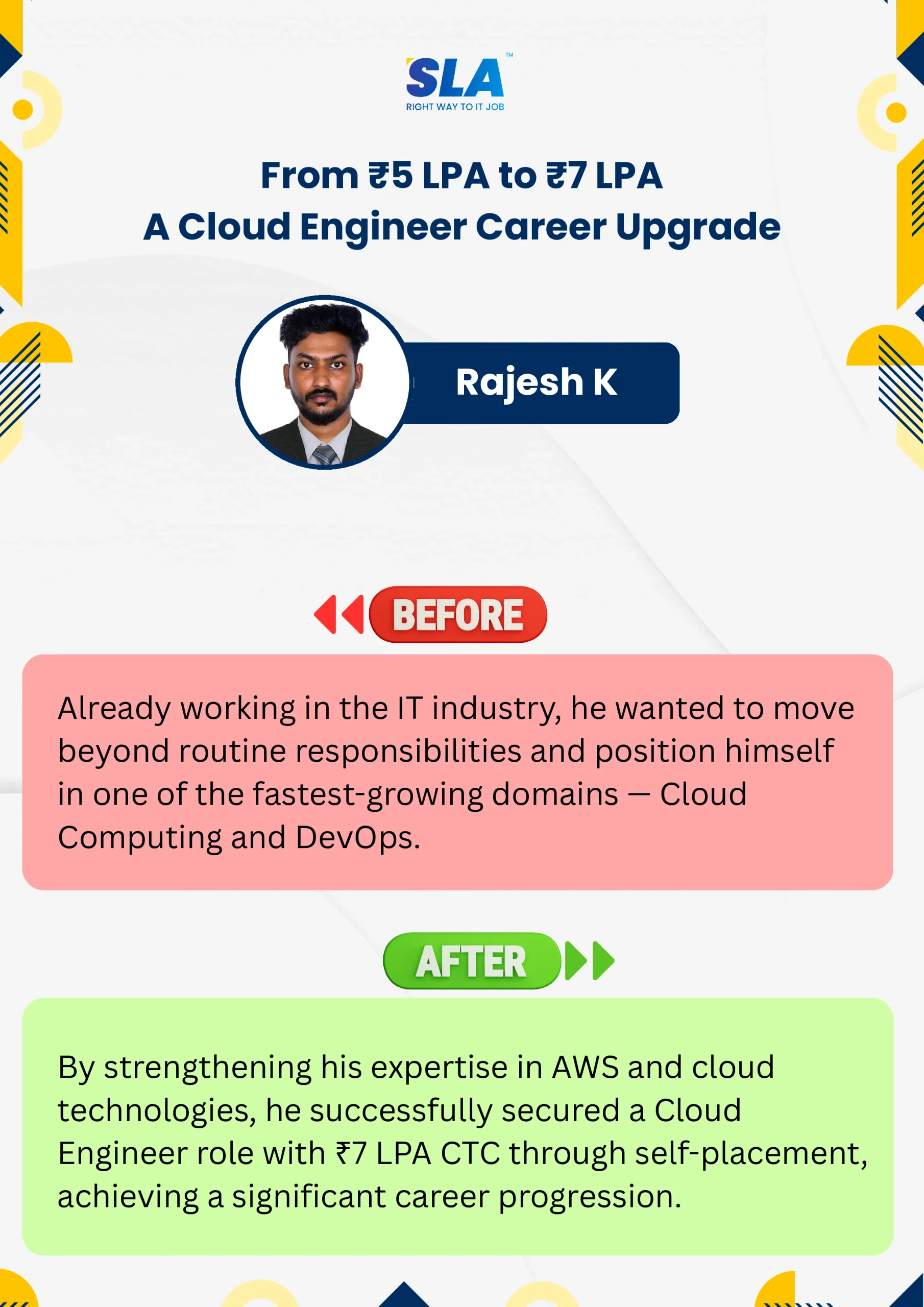

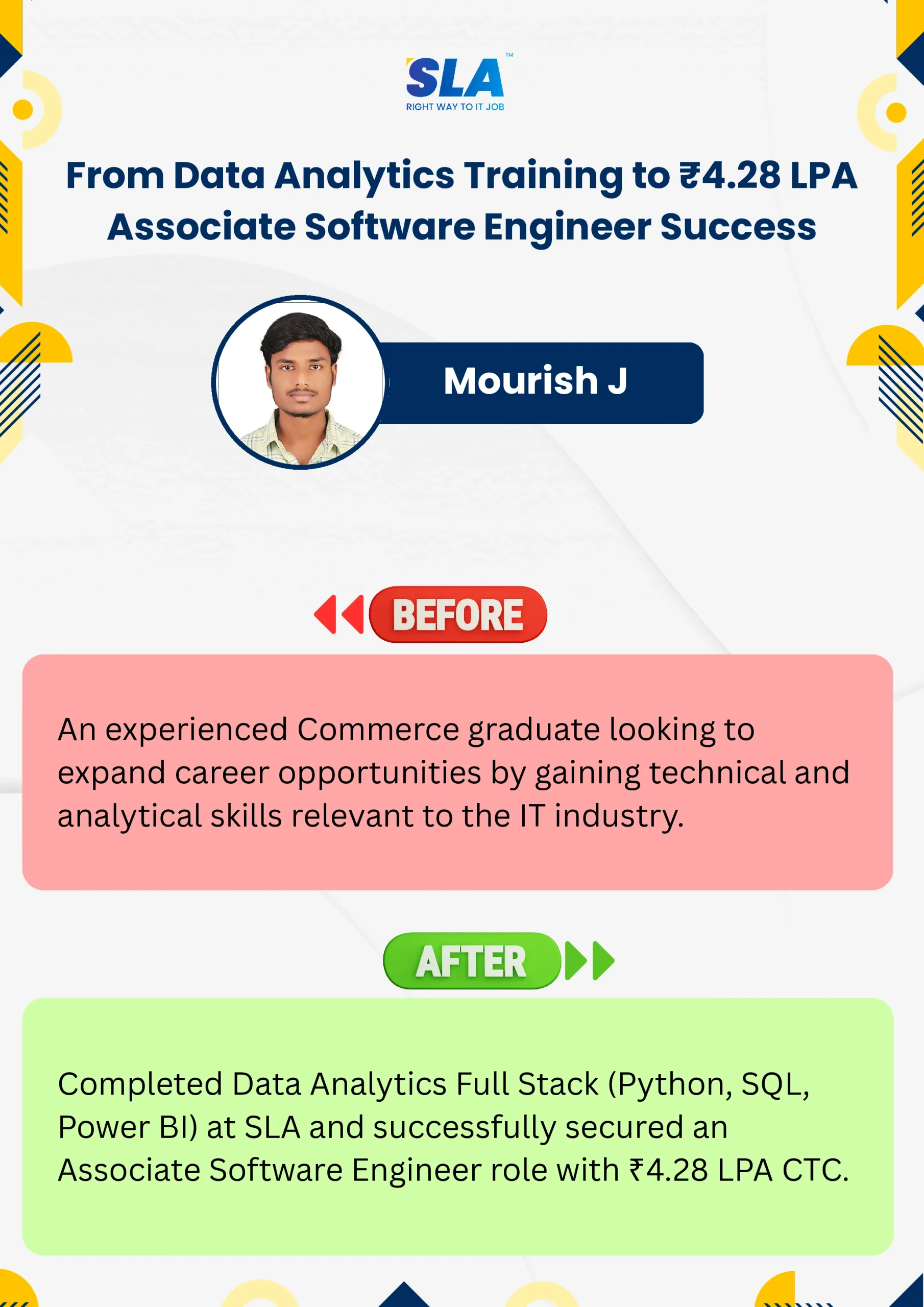
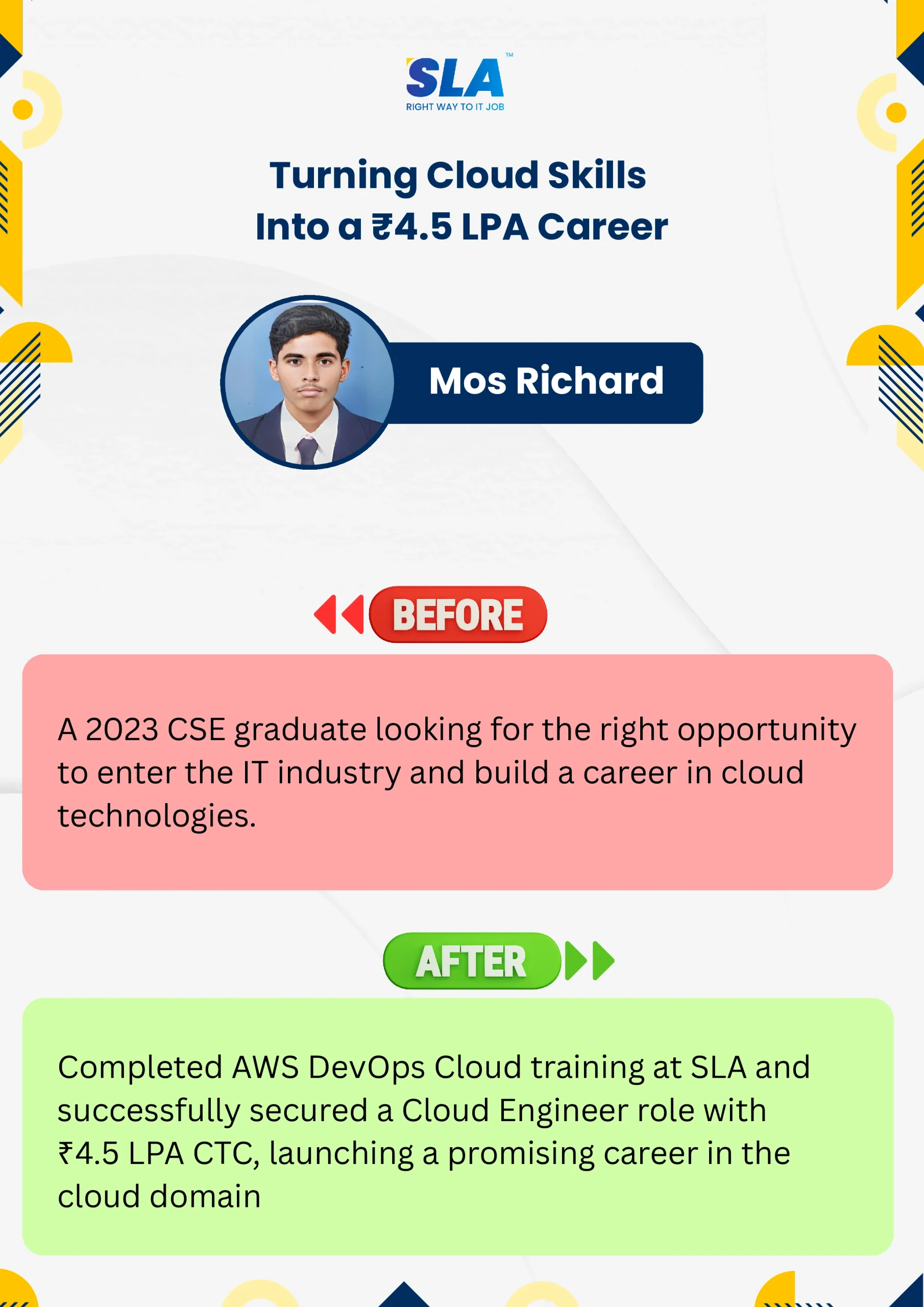
Google Reviews

Rating
4.8
1,053 Google reviews

Surya
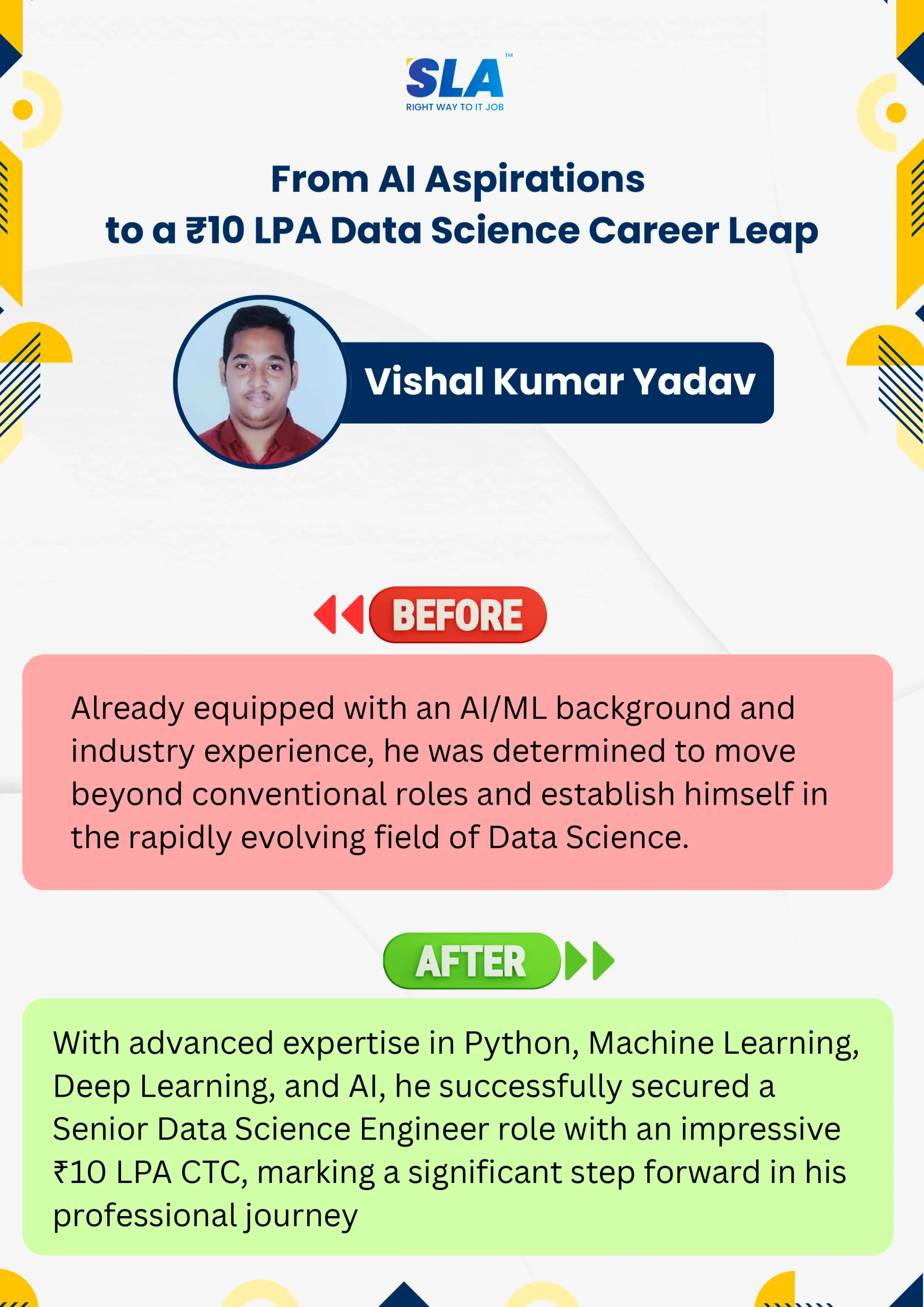
Special thanks to Vishal Sir, the Placement Officer, for his interview guidance, resume support, and continuous motivation throughout the placement process. I would also like…

Click here for Full Review

NalluKumar Ravichandran
Hi, I recently completed the DOT NET Full Stack Development course at SLA, and I had a great learning experience. The teaching style and student…
Click here for Full Review

Shaaru Menan
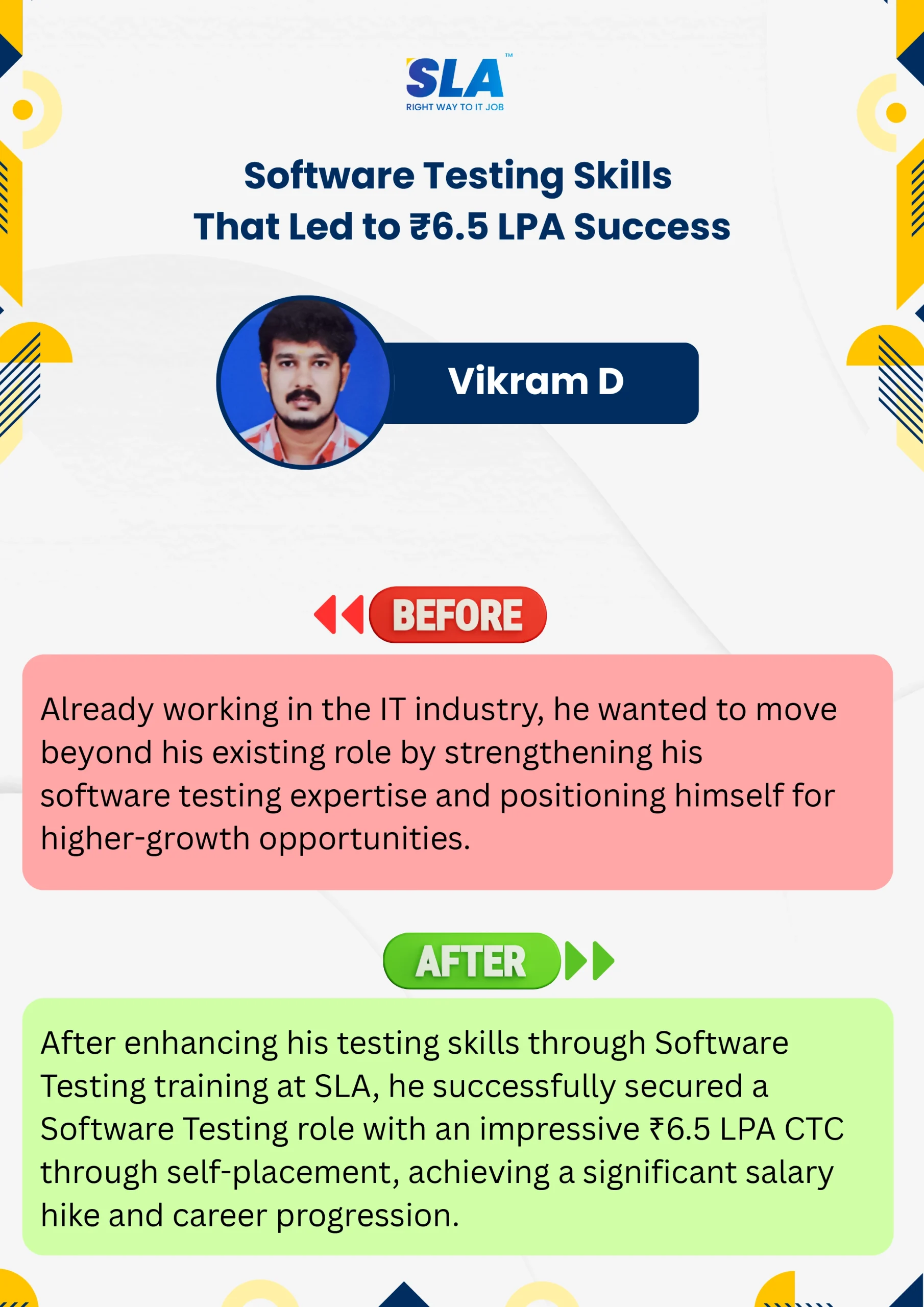
I had a 3 year career break. Joined SLA on Java Full Stack course and completed it.Did projects with the help of my Mentor. They…
Click here for Full Review

Nithish Sahoo
I had an excellent experience taking this DevOps course. The curriculum is well-structured and covers both fundamental and advanced DevOps concepts in a clear manner.…
Click here for Full Review

MATHAN KUMAR G EEE
SLA Institute provides a structured learning environment for data analytics. The syllabus is relevant, and trainers are knowledgeable. Some sessions were very useful practically, while…
Click here for Full Review

SARAN M
SLA Institute provides training in communication and aptitude along with strong technical skills. The trainers explain concepts clearly with a practical approach, which helps build…
Click here for Full Review