
Our Ansible Online Training programs are designed for students, freshers, and working professionals who want to upskill and stay relevant. We offer Ansible Online Courses that are practical, interactive, and aligned with the latest industry demands. Our Ansible Syllabus Covers the core Ansible concepts, including inventory management, playbooks, modules, roles, variables, conditionals, and error handling. Enroll now and learn from industry experts with flexible timings and get Job support.
Ansible Online Training
DURATION
2 Months
EMI
0% Interest
Mode
Live Online / Offline
Let's take the first step to becoming an expert in Ansible Online Course
Lifelong Placement
Assistance
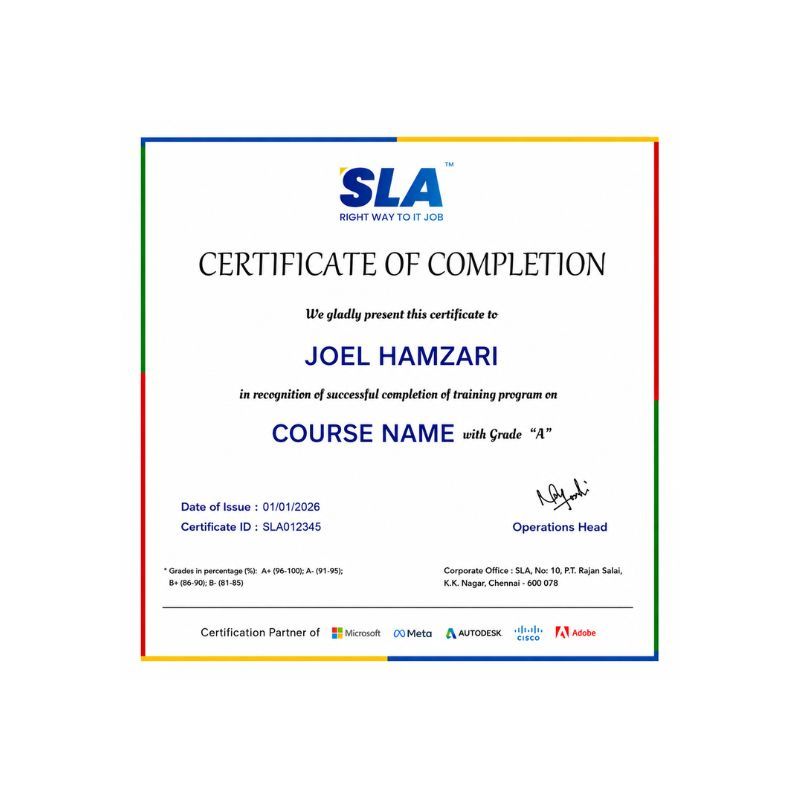
Get Certified
JOB PLACEMENT ELIGIBILITY TEST
Your Placement Eligibility Report
Want more details about Ansible Online Course?
Course Schedules
Course Syllabus
Course Fees
or any other questions...
Fees, Duration & Batch Timings for Ansible Online Course
Hands On Training
3-5 Real Time Projects
60-100 Practical Assignments
3+ Assessments / Mock Interviews
July 2026
Week days
(Mon-Fri)
Online/Offline
2 Hours Real Time Interactive Technical Training
1 Hour Aptitude
1 Hour Communication & Soft Skills
(Suitable for Fresh Jobseekers / Non IT to IT transition)
July 2026
Week ends
(Sat-Sun)
Online/Offline
4 Hours Real Time Interactive Technical Training
(Suitable for working IT Professionals)
Save up to 20% in your Course Fee on our Job Seeker Course Series
Syllabus of Ansible Online Course
Introduction to Ansible
- What is Configuration Management?
- Automation of manual work on IT orchestration
- What is Continuous Integration?
- What is DevOps?
- How CM is important for DevOps
- Overview of Ansible
- What issues Solving by Ansible?
- Strengths of Ansible
- Concept and terminology on Ansible
- Architecture of Ansible
- Different from Chef and Puppet
Getting start with Ansible
- Infrastructure Management
- Some prerequisites
- Set up on Windows / Linux
- Create basic inventory file
- Run Ansible Ad-Hoc command
- Testing with Vagrant
- Connect to your target nodes with SSH
Inventory
- Basic inventory example
- Hosts and groups
- Inventory file for Multiple Servers
- Configure groups of servers or individual servers
- Manage users and groups
- Manage packages
- Manage files and directories
Ansible Playbooks
- Overview of Playbooks
- Power Plays
- Handlers
- Variables
- Loops
- Asynchronous Actions
- Error Handler
- Manage Ansible code using git
- Task
- Module
- Running Playbook
Docker containers with Ansible
- Introduction to Docker
- Docker application lifecycle
- Create Docker image with Ansible
- Synergy of containerization and automation
- Staring MySQL containers
- Data storage containers
Highly available infrastructure with Ansible
- Spec up our inventory and host groups
- Using roles
- Configure our database backend
- Configure our web server front-end
- Configure a replicated filesystem
- Configure centralized logging
Deployments with Ansible
- Deploying Application to local Vagrant environment
- Promote code to higher environment
- Alternative to Ansible compares
Objectives of Ansible Online Course
Our Ansible Online Training has the most up-to-date syllabus for any IT institute. The syllabus is curated by top professionals from the IT industry while bearing in mind the current trends and industry standards in the IT sector. The syllabus also has topics that cover both fundamentals and advanced topics, so it is safe to say that the syllabus and its topics appeals to all. Some of the topic are discussed below:
- The syllabus begins with fundamental topics like, What is Configuration Management?, Automation of manual work on IT orchestration, What is Continuous Integration? Etc.
- The syllabus then moves a bit deeper into Ansible through topics like – Inventory, Ansible Playbooks etc.
- The syllabus then moves onto advanced topics like Spec up our inventory and host groups, Deployments with Ansible etc.
Why Softlogic Systems is the Best Choice for Ansible Online Course – Learn, Practice, and Get Placed!
Online & Offline Training Options
Learn from 100+ Real-Time Developers
Hands-on Projects & Codeathons
0% EMI Fee Options
Resume & Interview Support
Placement with Top IT Firms
1000+ Hiring Partners
No Backdoor Jobs
Highlights of Ansible Online Course
What is Ansible?
Ansible is a free automation tool for managing computers, applications, and infrastructure. It automates tasks like software setup, configuration, and deployment. It uses YAML, a simple language, making it easy for developers and admins to use. Ansible helps orchestrate workflows, handle big-scale infrastructure, and maintain system consistency effectively.
What are the reasons for learning Ansible?
The following are the reasons for learning Ansible:
- Automation: Ansible helps do repetitive jobs like setting up software, managing configurations, and deploying applications, which saves time and energy.
- Efficiency: By automating these tasks, Ansible makes things run smoother and cuts down on mistakes, so you get better and more dependable outcomes.
- Scalability: Whether it’s a small business or a big company, Ansible works well for managing lots of computers and systems, making it a good fit for any size organization.
What are the prerequisites for learning Ansible Online Training?
SLA does not demand any prerequisites for any courses as all the courses cover topics from fundamental to advanced level. However having a basic knowledge on these below topics can be beneficial in learning the Ansible easily:
- Familiarity with Linux/Unix systems: It’s helpful to know how to use basic commands and do simple tasks on a Linux/Unix computer.
- Understanding YAML: Ansible uses YAML to write playbooks, which are like recipes for automation, so knowing a bit about YAML’s structure can be useful.
- Basic knowledge of IT infrastructure: Knowing some basics about how networks, servers, and IT systems work will help you understand how Ansible manages these things.
Our Ansible Course is suitable for:
- Students
- Job Seekers
- Freshers
- IT professionals aiming to enhance their skills
- Professionals seeking career change
- Enthusiastic programmers
What are the course fees and duration?
The Ansible course fees depend on the program level (basic, intermediate, or advanced) and the course format (online or in-person).On average, the Ansible course fees come in the range of ₹25,000 to ₹30,000 INR for 2 months, inclusive of international certification. For some of the most precise and up-to-date details on fees, duration, and certified Ansible certification, kindly contact our Best Placement Training Institute in Chennai directly.
What are some of the jobs related to Ansible?
The following are the jobs related to Ansible:
- DevOps Engineer
- Systems Administrator
- Site Reliability Engineer
- Automation Engineer
What is the salary range for the position of DevOps Engineer?
The DevOps Engineer freshers salary typically with around less than a year of experience earn approximately ₹2-3 lakhs annually. For a mid-career DevOps Engineer with around 3 years of experience, the average annual salary is around ₹5-6 lakhs. An experienced DevOps Engineer with more than 5 years of experience can anticipate an average yearly salary of around ₹11-12 lakhs. Visit SLA for more courses.
List a few real time Ansible applications.
Here are several real time Ansible applications:
- Server Provisioning and Configuration
- Web Application Deployment
- Infrastructure as Code (IaC)
- Configuration Management
Boost Your Skills with Our Ansible Online Course Experts
Our Mentors are from Top Companies like:
The following are our trainer’s profile for the Ansible Online Training:
- Our instructors bring over 7+ years of training experience, backed by esteemed backgrounds and deep subject knowledge in their respective fields.
- Softlogic Institute’s mentors are industry professionals specializing in Ansible, actively involved in multiple projects within leading IT firms.
- Our teaching approach emphasizes practical, interactive sessions using real-world examples to align with industry standards.
- The Ansible training curriculum is meticulously curated by experienced trainers to cover essential concepts like control nodes, plugins, AAP, inventory, and modules.
- Being active IT professionals, our trainers stay updated on current trends, future advancements, and emerging innovations in Ansible, ensuring effective guidance for students.
- Our online training sessions prioritize live and interactive instruction over pre-recorded videos, ensuring comprehensive learning experiences for students.
- Following each concept, our trainers conduct mock tests and project-based tasks to identify skill gaps and challenges, addressing students’ specific needs effectively.
- In addition to technical skills, our trainers also provide support for overall development, including interview preparation, aptitude enhancement, and communication skills.
- Our trainers hail from various reputable IT companies and facilitate opportunities for students to secure placements through Internal Hiring Processes or Employee Referrals.
What Modes of Training are available for Ansible Online Course?
Offline / Classroom Training
- Direct Interaction with the Trainer
- Clarify doubts then and there
- Airconditioned Premium Classrooms and Lab with all amenities
- Codeathon Practices
- Direct Aptitude Training
- Live Interview Skills Training
- Direct Panel Mock Interviews
- Campus Drives
- 100% Placement Support
Online Training
- No Recorded Sessions
- Live Virtual Interaction with the Trainer
- Clarify doubts then and there virtually
- Live Virtual Interview Skills Training
- Live Virtual Aptitude Training
- Online Panel Mock Interviews
- 100% Placement Support
Corporate Training
- Industry endorsed Skilled Faculties
- Flexible Pricing Options
- Customized Syllabus
- 12X6 Assistance and Support
Certifications
Improve your abilities to get access to rewarding possibilities
Earn Your Certificate of Completion
Take Your Career to the Next Level with Certifications
Stand Out from the Crowd with Codethon Certificate
Hands-on Project Practices in Ansible Online Course
Serverless Application Deployment
Multi-Cloud Deployment
Containerized Microservices Deployment
Auto-Scaling Infrastructure
Security Enhancement
Compliance Automation
Disaster Recovery Automation
High Availability Configuration
Log Management Setup
The SLA Way to Get Placed in Top IT Companies
Enrollment
Technology Training
Realtime Projects
Placement Training
Interview Skills
Panel Mock
Interview
Unlimited
Interviews
Interview
Feedback
100%
IT Career
Placement Support for a Ansible Online Course Job
Genuine Placements. No Backdoor Jobs at Softlogic Systems.
Aptitude Training
from Day 1
Interview Skills
from Day 1
Softskills Training
from Day 1
Build Your Resume
Build your LinkedIn Profile
Build your GitHub
digital portfolio
Panel Mock Interview
Unlimited Interviews until you get placed
Life Long Placement Support at no cost
FAQs
How many branches does SLA have?
SLA has two branches, one is in K.K. Nagar, and another is in Navalur, OMR
What is the unique characteristic about SLA’s OMR branch?
SLA’s OMR branch is located right in the middle of OMR’s IT hub of companies, so this gives students of the OMR branch a great deal of opportunities in internships and placements.
What is the EMI policy in SLA?
SLA has EMI options with 0% interest.
What is SLA’s trainer profile?
SLA’s trainers have massive experience in the fields of teaching and IT.
Does SLA accept UPI?
Yes, SLA accepts UPI and all other types of payments including cash, cheque and cards.
Can Ansible manage Windows-based systems?
While Ansible is mainly designed for Unix-like systems, it can handle Windows hosts using the WinRM protocol. Just ensure WinRM is enabled on Windows hosts and set up Ansible accordingly.
How does Ansible handle secrets and sensitive data?
Ansible offers various methods for managing sensitive information. These include Ansible Vault for encrypting data in playbooks, using environment variables to securely pass secrets, and integrating with external secret management tools via custom plugins.
What is the difference between Ansible Tower and Ansible AWX?
Both Ansible Tower and AWX are platforms for centralizing and automating Ansible tasks. However, Tower is the commercially supported version with extra features and assistance, while AWX is the open-source basis from which Tower is derived.
Can Ansible be used for application deployment in containerized environments?
Yes, Ansible is suitable for automating the deployment and upkeep of containerized applications. It can provision Docker containers, work with container orchestration platforms like Kubernetes, and handle tasks such as scaling and networking.
How does Ansible compare to other configuration management tools like Puppet and Chef?
Ansible stands out from Puppet and Chef due to its agentless design, simplicity, and ease of use. Unlike Puppet and Chef, Ansible doesn’t need agents on managed nodes and employs YAML-based playbooks for configuration, making it more straightforward for many users.
Additional Information for
the Ansible Online Course
Current Trends in Ansible
- Integration with Kubernetes and Docker: Ansible’s close collaboration with Kubernetes and Docker is crucial as containerization grows. It’s now the top choice for automating the setup and management of container-based apps.
- Infrastructure as Code (IaC): Ansible is pivotal in IaC, enabling firms to control infrastructure through code. With DevOps practices rising, there’s a growing demand for automating infrastructure management with Ansible.
- Hybrid Cloud Management: Ansible’s adaptability suits hybrid cloud setups, ensuring consistency and efficiency across different environments.
- Shift towards GitOps: GitOps, relying on Git for managing infrastructure, is gaining traction. Ansible’s Git integration makes it vital for implementing GitOps workflows.
- Focus on Security Automation: Ansible’s role in automating security tasks like vulnerability scans and incident response is increasingly vital in today’s complex IT landscape.