Upgrade your career with the Data Warehousing Training in Chennai at Softlogic Systems. Our Data Warehousing Syllabus covers the data warehousing fundamentals, ETL processes, dimensional modeling, OLAP, data integration, and reporting. Our Data Warehousing course in Chennai comes with placement support, flexible schedules, real-time projects, and certification to help you successfully launch your career. Our placement team connects you with top IT companies for a smooth career transition.
Datawarehousing Training In Chennai
DURATION
2 Months
EMI
0% Interest
Mode
Live Online / Offline
Let's take the first step to becoming an expert in Data Warehousing
100% Placement
Assurance
Get Certified
JOB PLACEMENT ELIGIBILITY TEST
Your Placement Eligibility Report
Want more details about Data Warehousing Course?
Course Schedules
Course Syllabus
Course Fees
or any other questions...
Fees, Duration & Batch Timings for Data Warehousing Course
Hands On Training
3-5 Real Time Projects
60-100 Practical Assignments
3+ Assessments / Mock Interviews
July 2026
Week days
(Mon-Fri)
Online/Offline
2 Hours Real Time Interactive Technical Training
1 Hour Aptitude
1 Hour Communication & Soft Skills
(Suitable for Fresh Jobseekers / Non IT to IT transition)
July 2026
Week ends
(Sat-Sun)
Online/Offline
4 Hours Real Time Interactive Technical Training
(Suitable for working IT Professionals)
Save up to 20% in your Course Fee on our Job Seeker Course Series
Syllabus of Data Warehousing Course
Introduction to Data warehousing
- Who needs Data warehouse
- Why Data warehouse is required
Types of Systems
- OLTP
- DSS
Maintenance of Data warehouse
- Datawarehouslng Life cycle
- Data warehousing Testing Ute Cycle
- Source
Data warehousing Architecture
- Integration Layer
- Staging Area
- Targets
- Analysis & Reporting
- HPQS
- Introduction
Data Modelling
- Different Phases of ModellIng
- What Is a Dimension
Multi Dimensional Modelling
- What are Facts
- Multi Dimensional Model
- Hierarchies
- OLAP
- MOLAP
- ROLAP
- HOLAP
- Cubes and its Functions
- Star Schema
- Fact Table
- Dimensional Tables
- Snow flake Schema
- Fact less Fact Table
- Confirmed Dimensions
Data Modelling Tools
- Forward Engineering
- Reverse Engineering
- Update Model, Alter database
- Complete compare
Objectives of Data Warehousing Training
Our data warehouse training in Chennai aims to equip learners with an understanding of data mining and data warehouse concepts. It provides a detailed explanation of the concepts, structures, applications, design, and implementation of data mining and data warehouse concepts. After finishing our data warehouse certification training at SLA, students will:
- Learn about the mathematical underpinnings of data mining software.
- Recognize and employ traditional models and techniques in data mining and data warehouses.
- Describe the kinds of patterns that association rule mining, clustering, and classification can find.
- Learn how to use data mining techniques in a variety of contexts, including social, scientific, and environmental.
- Gain expertise in choosing the right data mining algorithm to solve real-world issues.
Why Softlogic Systems is the Best Choice for Data Warehousing Training – Learn, Practice, and Get Placed!
Online & Offline Training Options
Learn from 100+ Real-Time Developers
Hands-on Projects & Codeathons
0% EMI Fee Options
Resume & Interview Support
Placement with Top IT Firms
1000+ Hiring Partners
No Backdoor Jobs
Highlights of Data Warehousing Course
What is Data Warehousing?
A data warehouse is a specific kind of data management solution crafted to facilitate and bolster activities related to business intelligence (BI), with a primary focus on analytics. These warehouses are dedicated to executing queries and conducting analyses, frequently housing extensive volumes of historical data.
What are the reasons to learn Data Warehousing?
There are several compelling reasons to learn about Data Warehousing:
- Business Insights: Learn data warehousing for valuable business insights.
- Analytics Skills: Acquire skills for effective data analysis.
- Career Opportunities: Unlock diverse job prospects.
- Data Management: Master efficient data organization.
- Historical Analysis: Understand long-term trends through historical data.
- Decision-Making: Enhance decisions with quick access to data.
What are the prerequisites to learn Data Warehousing?
There are no strict prerequisites for enrolling in our Data Warehousing Training, but a basic grasp of data management and IT principles could be beneficial.
Our Data Warehousing Course is ideal for individuals of all backgrounds including:
- Students
- Professionals aiming to shift into a fulfilling career in data warehousing.
- IT specialists looking to elevate their data warehousing proficiency.
- Enthusiasts intrigued by the complexities of data warehousing systems.
- Job seekers wanting to enhance their prospects in the technology industry
What are the course fees and duration?
The fees for our Data Warehousing Training and Certification may vary depending on the program level (basic, intermediate, or advanced) and the course format (online or in-person). On average, Data Warehouse Architect Course Fees is Affordable and lasts for 2 Months including international certification. For precise and up-to-date information on fees, duration, and certification, please contact our Data Warehousing and Business Intelligence Course directly.
What are the Jobs related to Data Warehousing?
Specific careers roles related to Data Warehousing include the following:
- Data Warehouse Developer
- Business Intelligence Analyst
- Data Engineer
- Data Warehouse Architect
- ETL Developer
- Data Warehouse Manager
- Business Intelligence Manager
List a few Data Warehousing real-time applications?
Here are a few data warehousing applications that are widely used in real-time:
- Retail: Walmart optimizes stock using real-time data warehousing.
- Finance: JPMorgan detects fraud instantly with data warehousing.
- E-commerce: Amazon personalized recommendations using real-time data.
- Supply Chain: Amazon avoids shortages through real-time inventory data.
- Healthcare: Mayo Clinic aids diagnoses with real-time patient data.
What is the salary range for a data warehouse professional?
The data is based on a large number of most recent salaries when it has very high confidence. The data warehouse developer’s salary in India spans from ₹3.0 Lakhs to ₹19.5 Lakhs, with an average yearly salary of ₹7.3 lakhs for experienced data warehouse professionals.
Boost Your Skills with Our Data Warehousing Training Experts
Our Mentors are from Top Companies like:
- Our trainers are highly skilled and have 10+ years of extensive experience working with the software and offering certified data warehousing training.
- They keep up with the latest trends in data warehousing technologies and know the best practices for successful implementations.
- They are well-versed in database design, data modeling, ETL operations, data analysis, and reporting.
- They have expertise in building data integration pipelines, optimizing data loading performance, and creating data-driven business solutions.
- They are also capable of designing and developing data warehouses, developing data structures for data mining, cleansing and deduplicating data, and performing data transformations.
- They can implement data security and monitor data performance while ensuring data integrity.
- They have had success training professionals in the extraction, transformation, and loading (ETL) processes of data warehousing, as well as teaching query optimization and data warehousing best practices.
- They understand the various challenges businesses would encounter in setting up a data warehouse and can provide advice on designing a well-structured system.
- They understand the importance of quality data for making accurate and strategic decisions and can teach the skills required to design and develop successful data warehouses.
- They have the skills to effectively train groups of any size and the ability to work with teams of students or individually.
- The trainers are committed to ensuring they deliver the highest quality course material so that students gain a deep understanding of data warehousing and how to apply their knowledge on the job.
What Modes of Training are available for Data Warehousing Course?
Offline / Classroom Training
- Direct Interaction with the Trainer
- Clarify doubts then and there
- Airconditioned Premium Classrooms and Lab with all amenities
- Codeathon Practices
- Direct Aptitude Training
- Live Interview Skills Training
- Direct Panel Mock Interviews
- Campus Drives
- 100% Placement Support
Online Training
- No Recorded Sessions
- Live Virtual Interaction with the Trainer
- Clarify doubts then and there virtually
- Live Virtual Interview Skills Training
- Live Virtual Aptitude Training
- Online Panel Mock Interviews
- 100% Placement Support
Corporate Training
- Industry endorsed Skilled Faculties
- Flexible Pricing Options
- Customized Syllabus
- 12X6 Assistance and Support
Certifications
Improve your abilities to get access to rewarding possibilities
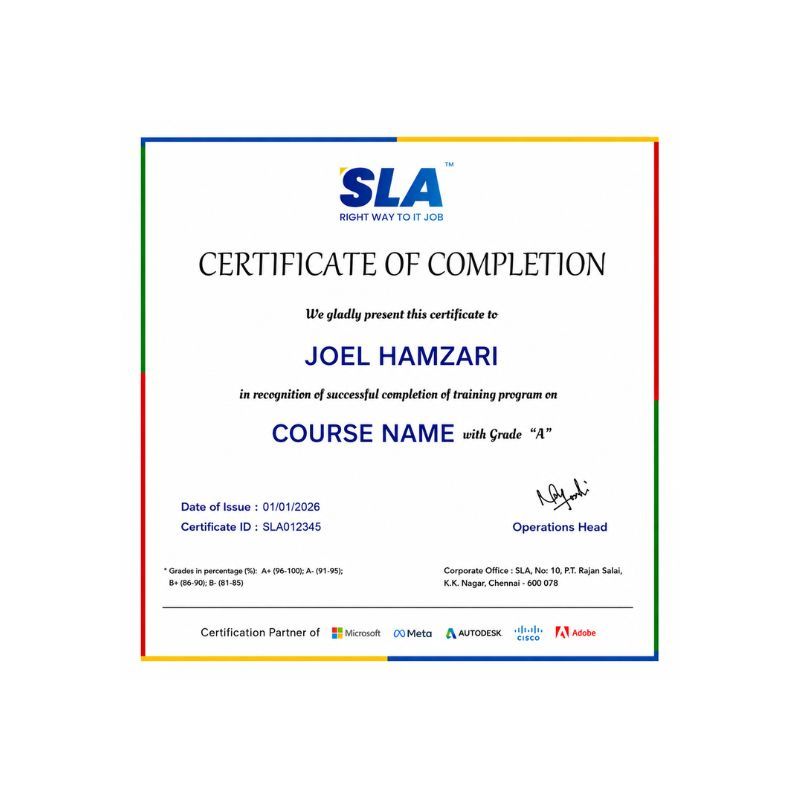
Earn Your Certificate of Completion
Take Your Career to the Next Level with Certifications
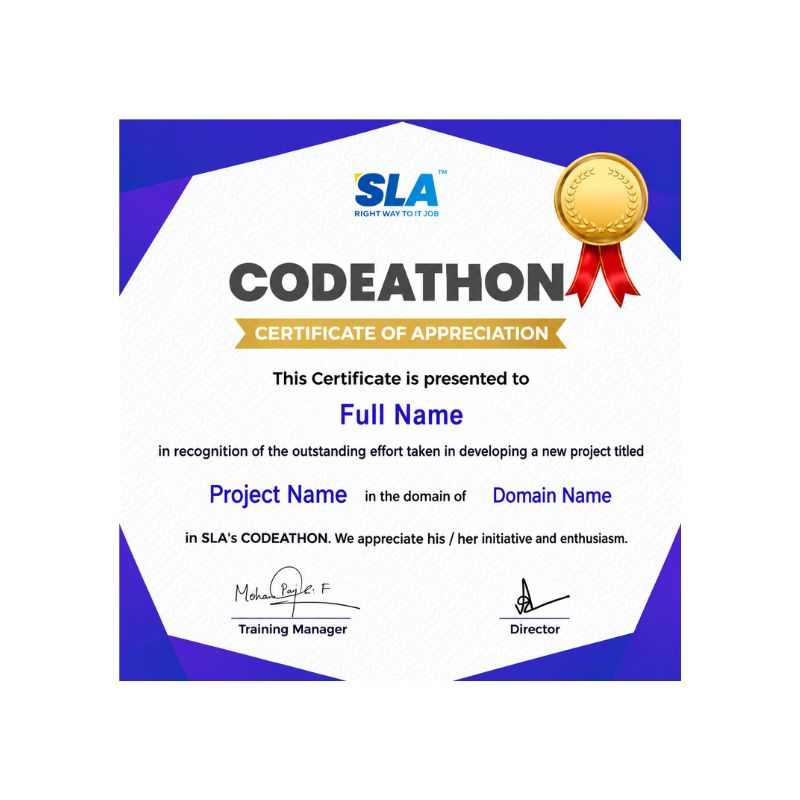
Stand Out from the Crowd with Codethon Certificate
Hands-on Project Practices in Data Warehousing Course
Network Performance Analytics
Web Analytics
Data Warehouse Scalability
Cloud Data Warehousing
Sales Analytics
Operational Analytics
Financial Reporting
Transportation Analytics
Telecom Network Performance
The SLA Way to Get Placed in Top IT Companies
Enrollment
Technology Training
Realtime Projects
Placement Training
Interview Skills
Panel Mock
Interview
Unlimited
Interviews
Interview
Feedback
100%
IT Career
Placement Support for a Data Warehousing Job
Genuine Placements. No Backdoor Jobs at Softlogic Systems.
Aptitude Training
from Day 1
Interview Skills
from Day 1
Softskills Training
from Day 1
Build Your Resume
Build your LinkedIn Profile
Build your GitHub
digital portfolio
Panel Mock Interview
Unlimited Interviews until you get placed
Life Long Placement Support at no cost
FAQs
How will I get hands-on experience while learning Data Warehousing?
The Data Warehousing training at SoftLogic provides a practical approach to learning. You will learn by doing various exercises, projects, and case studies so that you can gain experience in real-world scenarios.
How is Data Warehousing different from traditional databases?
Data Warehousing is focused on data for analytical purposes and is optimized for data retrieval and analysis. Users can input large amounts of data into the system and can access fast and precise insights from the resultant information. This is different from traditional databases which are mainly focused on transaction processing and data resource management.
What are the different warehouses I can use for Data Warehousing?
There are several warehouses that can be used for data warehousing including traditional relational databases, cloud-basedservices, or specialized data warehouses such as Oracle, Microsoft SQL Server, Amazon Redshift, IBM DB2, and so on.
What are the skill sets necessary to be successful in Data Warehousing?
To succeed in data warehousing one needs to have SQL proficiency, basic knowledge of ETL techniques, database design, OLTP and OLAP systems, programming skills in Python or R and data modeling experience.
Is it hard to learn Data Warehouse?
The duration to acquire data warehousing knowledge can vary. Individuals with IT development experience might grasp it in as little as a week, whereas those less familiar with technology might need up to several months to learn data warehousing.
What is the added advantage studying Data Warehousing at SoftLogic?
At SoftLogic, learners will be guided by experienced instructors with industry experience. You will have access to state-of-the-art labs, real-time projects,IBM-accredited certification, and will receive support in terms of placements and project assistance post-course completion.
What is the difference between Data Warehousing and Business Intelligence?
Data Warehousing involves the process of organizing data into a structured environment to facilitate querying, analysis and decision making. Business Intelligence uses the data stored in the Data Warehouse to generate insights to aid in strategic decision making.
Is Data Warehousing an expensive process?
No, Data Warehousing costs have decreased significantly in the past few years especially with the advent of cloud technology. The overall cost for setting up the warehouse can vary depending on the size and complexity of the system.
Does the course cover all aspects of Data Warehousing?
Yes, the course covers all the essential topics associated with data warehousing including database design, ETL techniques, OLAP and OLTP systems, data modeling and more.
What is the best way to learn Data Warehousing?
The best way to learn Data Warehousing is through an interactive and practical approach to learning, and this is the approach taken by SoftLogic in its courses. Learners are encouraged to put their learning into practice by working on projects, case studies and exercises.
Additional Information for
the Data Warehousing Course
SCOPE OF DATA WAREHOUSES ?
A data mart serves the same role as a data warehouse, but it is intentionally limited in scope. It may serve one particular department or line of business. The advantage of a data mart versus a data warehouse is that it can be created much faster due to its limited coverage. However, data marts also create problems with inconsistency. It takes tight discipline to keep data and calculation definitions consistent across data marts. This problem has been widely recognized, so data marts exist in two styles. Independent data marts are those which are fed directly from source data. They can turn into islands of inconsistent information. Dependent data marts are fed from an existing data warehouse. Dependent data marts can avoid the problems of inconsistency, but they require that an enterprise-level data warehouse already exist.
KEY CHARACTERISTICS OF A DATA WAREHOUSE
The key characteristics of a data warehouse are as follows:
- Data is structured for simplicity of access and high-speed query performance.
- End users are time-sensitive and desire speed-of-thought response times.
- Large amounts of historical data are used.
- Queries often retrieve large amounts of data, perhaps many thousands of rows.
- Both predefined and ad hoc queries are common.
- The data load involves multiple sources and transformations.