
Softlogic Systems SQL for Data Analyst Course Syllabus is specifically designed for College Students, Freshers, and Job Seekers. Our SQL for Data Analyst syllabus covers database fundamentals, writing SQL queries, filtering and sorting data, joins, subqueries, aggregations, and working with real-world datasets. Our SQL for Data Analyst Course Content helps you learn SQL for Data Analyst step by Step with real-time projects and Interview Preparations.
SQL Syllabus for Data Analyst
4.70
(1987)
DURATION

4 Months
JOB READY

Syllabus
CERTIFIED

Courses

Let's take the first step to becoming an expert in SQL Syllabus for Data Analyst
Click Here to Get Started
Lifelong Placement
Support
Get Certified
Check Your Job Eligibility
×
Your Placement Eligibility Report
Syllabus for The SQL Syllabus for Data Analyst Course
Download Syllabus
Module 1: Introduction to Databases and SQL
- Understanding Databases and RDBMS Concepts
- Introduction to SQL and Its Importance in Data Analysis
- Overview of Tables, Rows, Columns, and Data Types
- Setting Up SQL Environment (MySQL/PostgreSQL/SQL Server)
- Using SQL Interfaces and Tools
Module 2: SQL Basics for Data Analysts
- Writing Basic SQL Queries (SELECT, FROM, WHERE)
- Sorting Data (ORDER BY, ASC/DESC)
- Filtering with Operators (IN, BETWEEN, LIKE, NULL)
- Using Aliases and Expressions
- Limiting Results with LIMIT and OFFSET
Module 3: Data Aggregation and Grouping
- Aggregate Functions (SUM, AVG, COUNT, MAX, MIN)
- GROUP BY and HAVING Clauses
- Combining Aggregations with Conditions
- Nested Aggregations and Use Cases in Reporting
Module 4: Working with Joins
- Types of Joins: INNER, LEFT, RIGHT, FULL OUTER
- Understanding JOIN Conditions
- Joining Multiple Tables
- Real-Time Scenarios for Data Merging
- Handling NULLs in Joins
Module 5: Subqueries and Nested Queries
- Introduction to Subqueries (Single & Multi-row)
- Using Subqueries in WHERE, FROM, and SELECT
- Correlated vs. Non-Correlated Subqueries
- Real-Time Use Cases in Data Analysis
Module 6: Data Transformation and Manipulation
- CASE Statements and Conditional Logic
- Using COALESCE, NULLIF, and IFNULL Functions
- Data Type Conversions and Formatting
- String Functions and Date Functions for Data Cleaning
- Creating and Modifying Views
Module 7: Advanced SQL for Analytics
- Common Table Expressions (CTEs)
- Window Functions (RANK, DENSE_RANK, ROW_NUMBER, LEAD, LAG)
- Using PARTITION BY and ORDER BY with Window Functions
- Pivoting and Unpivoting Data
- Performance Tuning Basics (Indexes, Execution Plans)
Module 8: Data Integrity and Governance
- Understanding Primary Keys, Foreign Keys, and Constraints
- Transaction Control: COMMIT, ROLLBACK, SAVEPOINT
- Ensuring Data Quality and Consistency
- Introduction to Normalization and Denormalization
The SLA way to Become
a SQL Syllabus for Data Analyst Expert

Enrollment

Technology Training
Coding Practices
Realtime Projects
Realtime Projects

Placement Training
Aptitude Training
Interview Skills
Interview Skills

Panel Mock
Interview

Unlimited
Interviews

Interview
Feedback

100%
IT Career
FAQ
What are the core skills required to become a Data Analyst?
A Data Analyst needs a mix of analytical skills. Key tools include SQL for database queries, Excel for analysis, and Power BI or Tableau for visualization. Python is used for data analysis. Strong business understanding and communication skills are also important to explain insights.
What distinguishes a Data Analyst from a Data Scientist?
A Data Analyst focuses on studying past data to understand and improve business performance. A Data Scientist goes further by using machine learning and predictive models to forecast trends and build advanced data solutions.
What is the data analysis process?
The data analysis process includes four steps:
- Data collection from different sources.
- Data cleaning to remove errors and missing values.
- Data analysis using tools and techniques.
- Data visualization to present insights using reports and dashboards.
How do Data Analysts handle missing data?
Missing data is handled in various ways. Analysts may fill missing values using the average, estimate values using statistical methods, or mark them as “unknown” to avoid incorrect analysis results.
What are common challenges in Data Analysis?
Data Analysts often face challenges such as:
- Poor quality or messy data.
- Data is stored in different systems.
- Outliers affecting results.
- Difficulty in explaining insights to non-technical teams.
What is A/B testing?
A/B testing is a method where two versions of a webpage, email, or ad are compared to see which performs better. It helps improve conversion rates and marketing performance using user data.
What is correlation vs causation?
Correlation means two things are related and move together. Causation means one directly causes the other. Data Analysts must be careful not to assume that correlation always means cause and effect.
What is data cleaning?
Data cleaning is the process of fixing incorrect, missing, or duplicate data before analysis. It is one of the most important steps because clean data leads to accurate and reliable results.
Can you become a Data Analyst without a degree?
Having a Computer Science degree is beneficial but not essential. Many professionals come from backgrounds like business or commerce. Strong analytical and practical training matters more than formal education.
How can beginners start a Data Analyst career?
Beginners can start by learning SQL and Excel, then move to Power BI or Tableau. Building projects using real datasets and creating dashboards helps get job-ready skills and improve career opportunities.
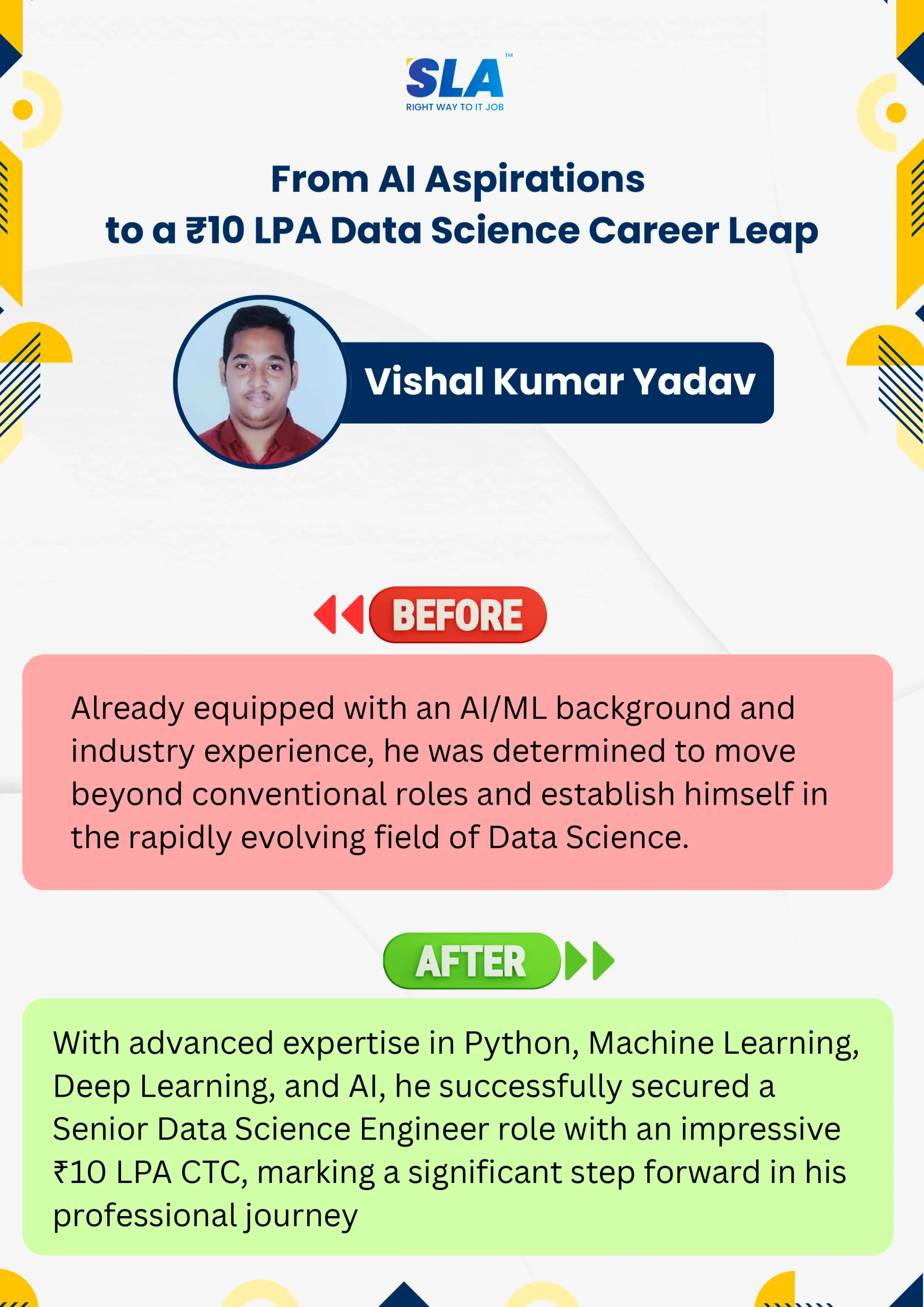
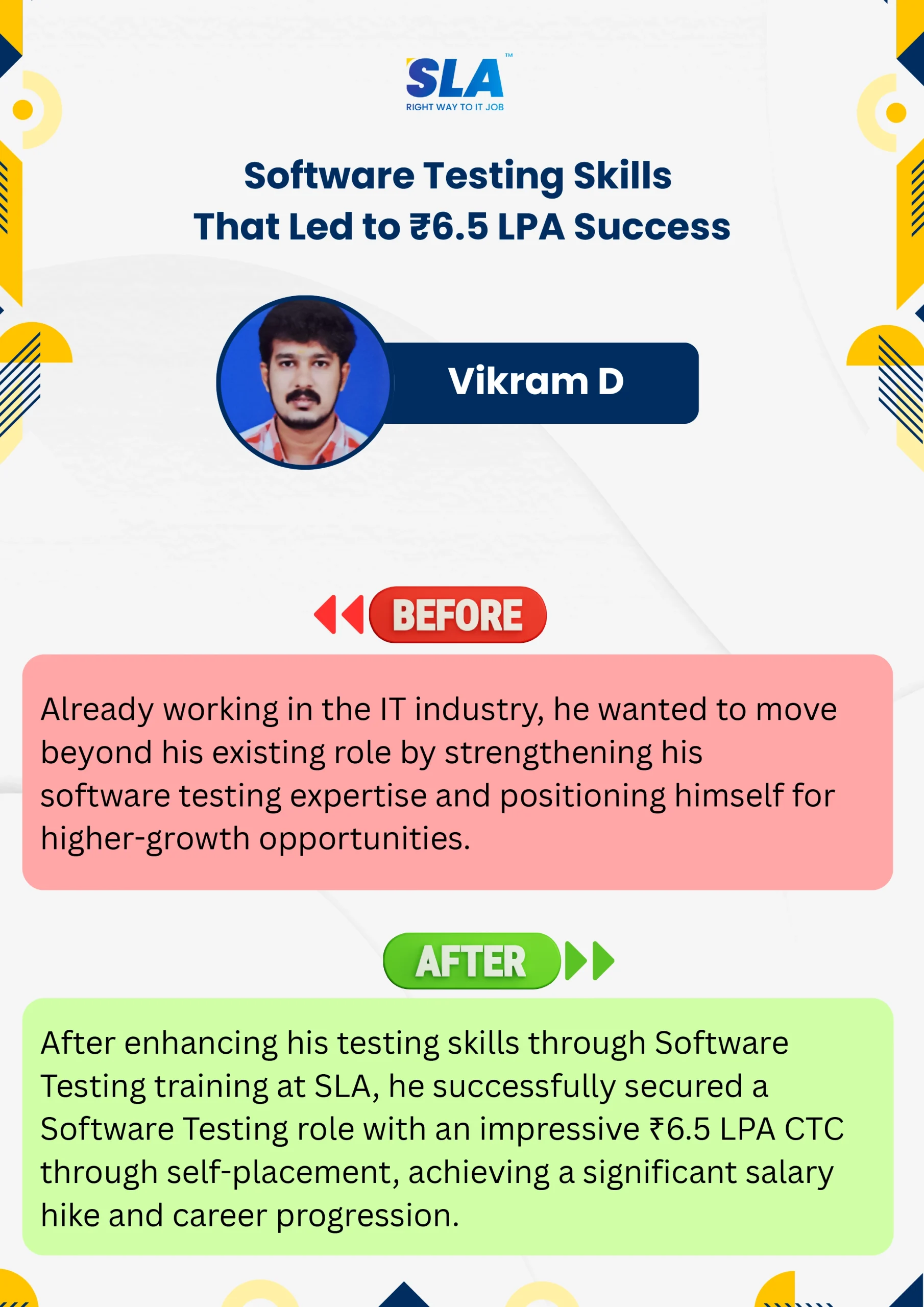
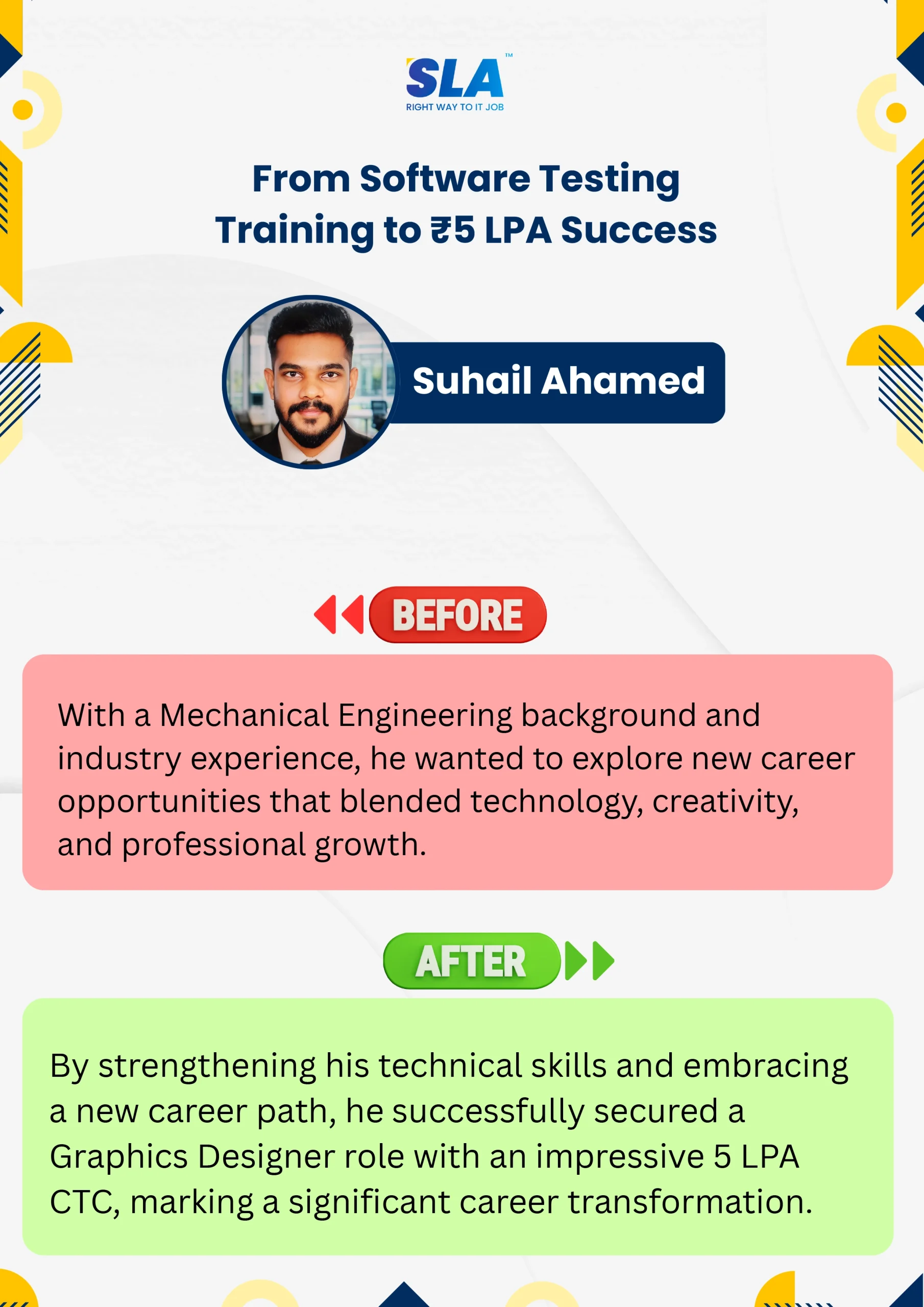
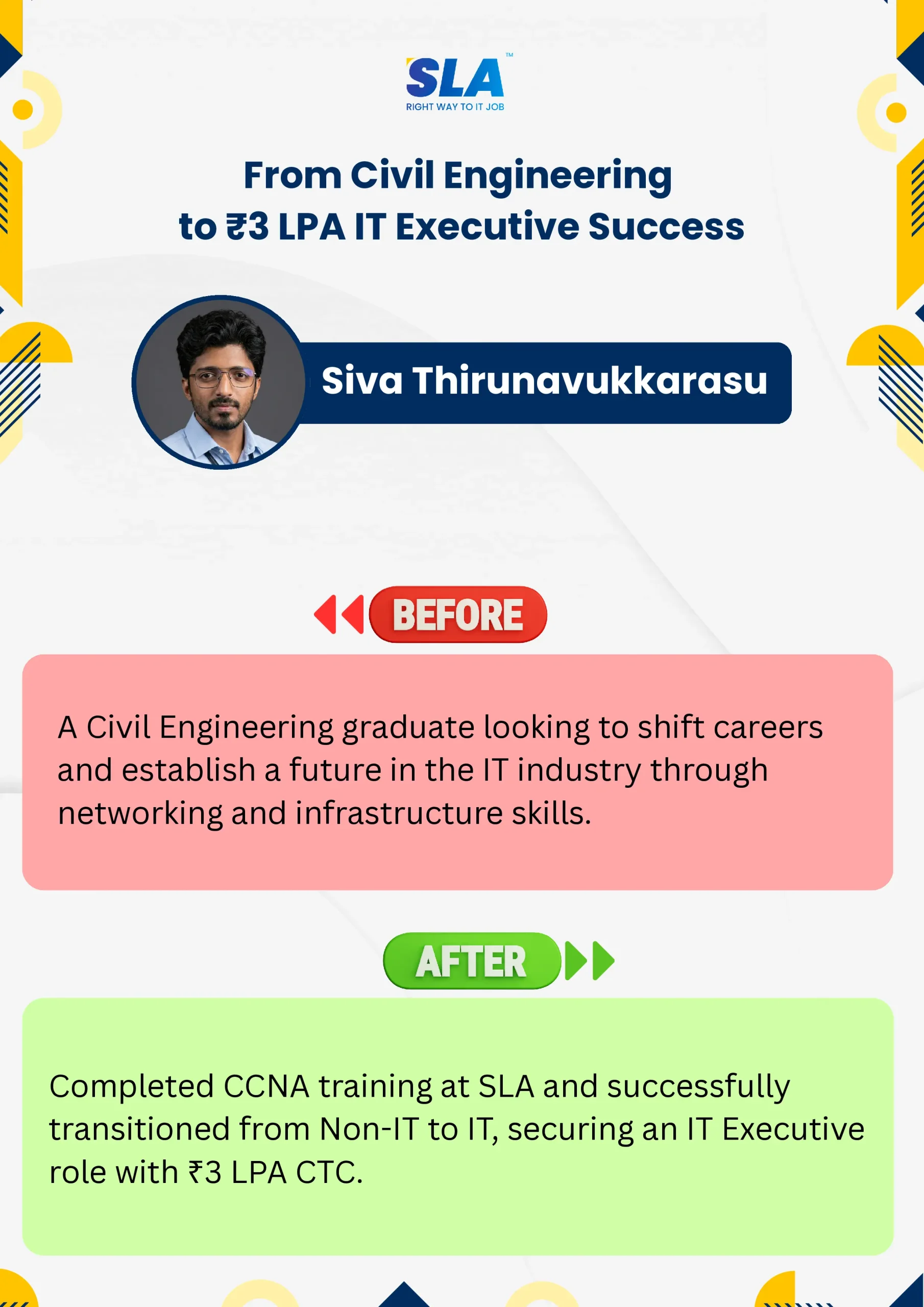
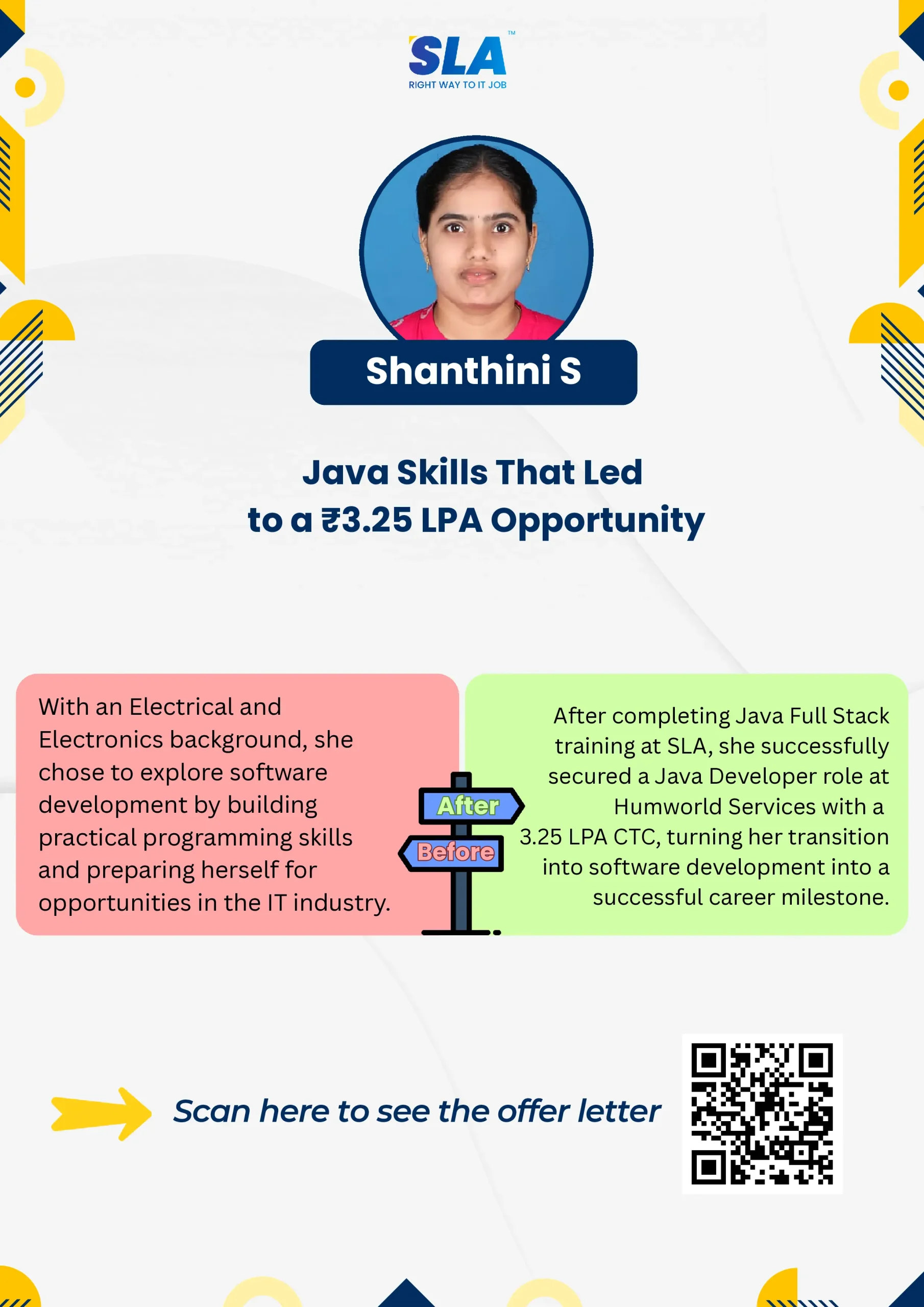
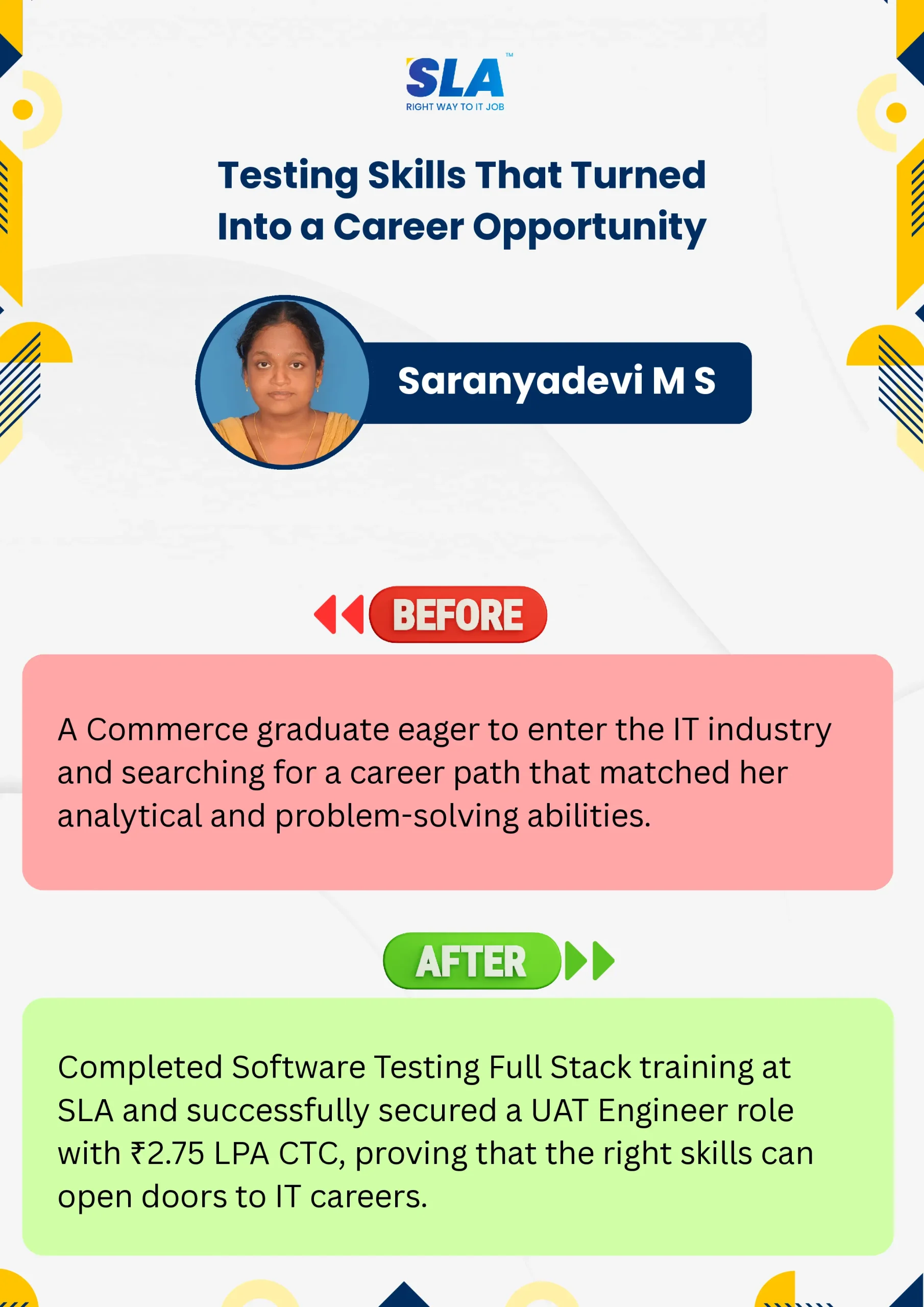
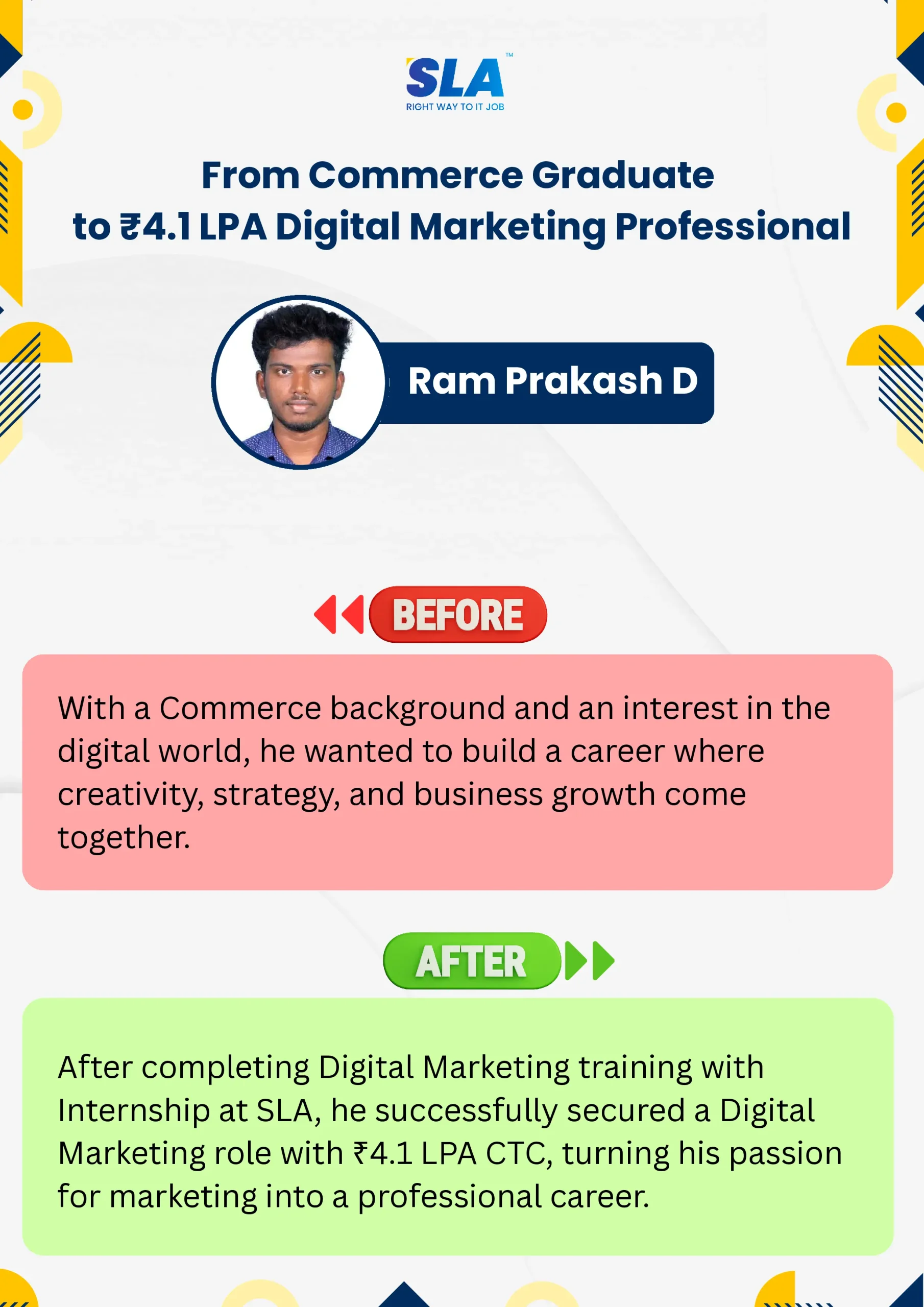
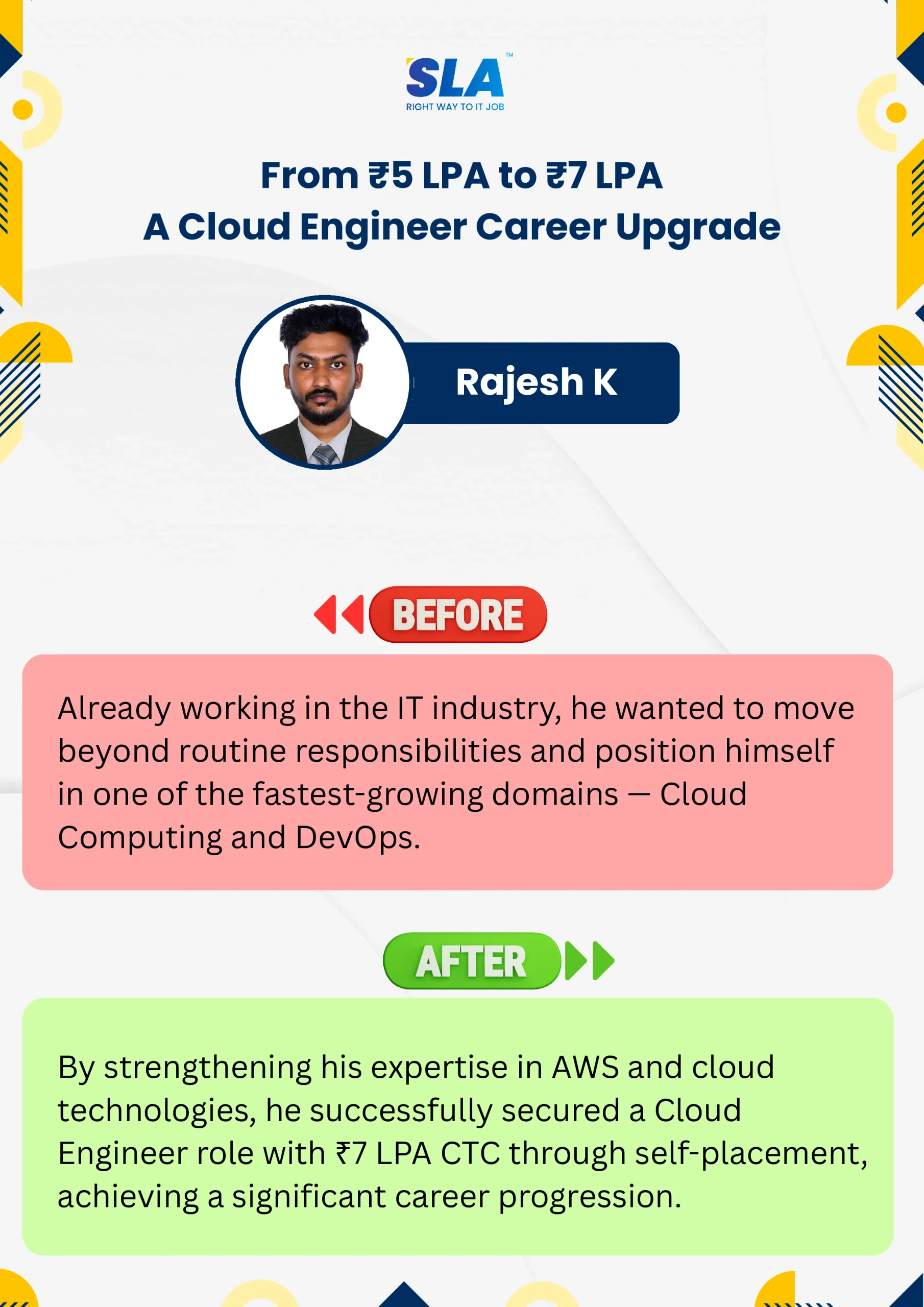
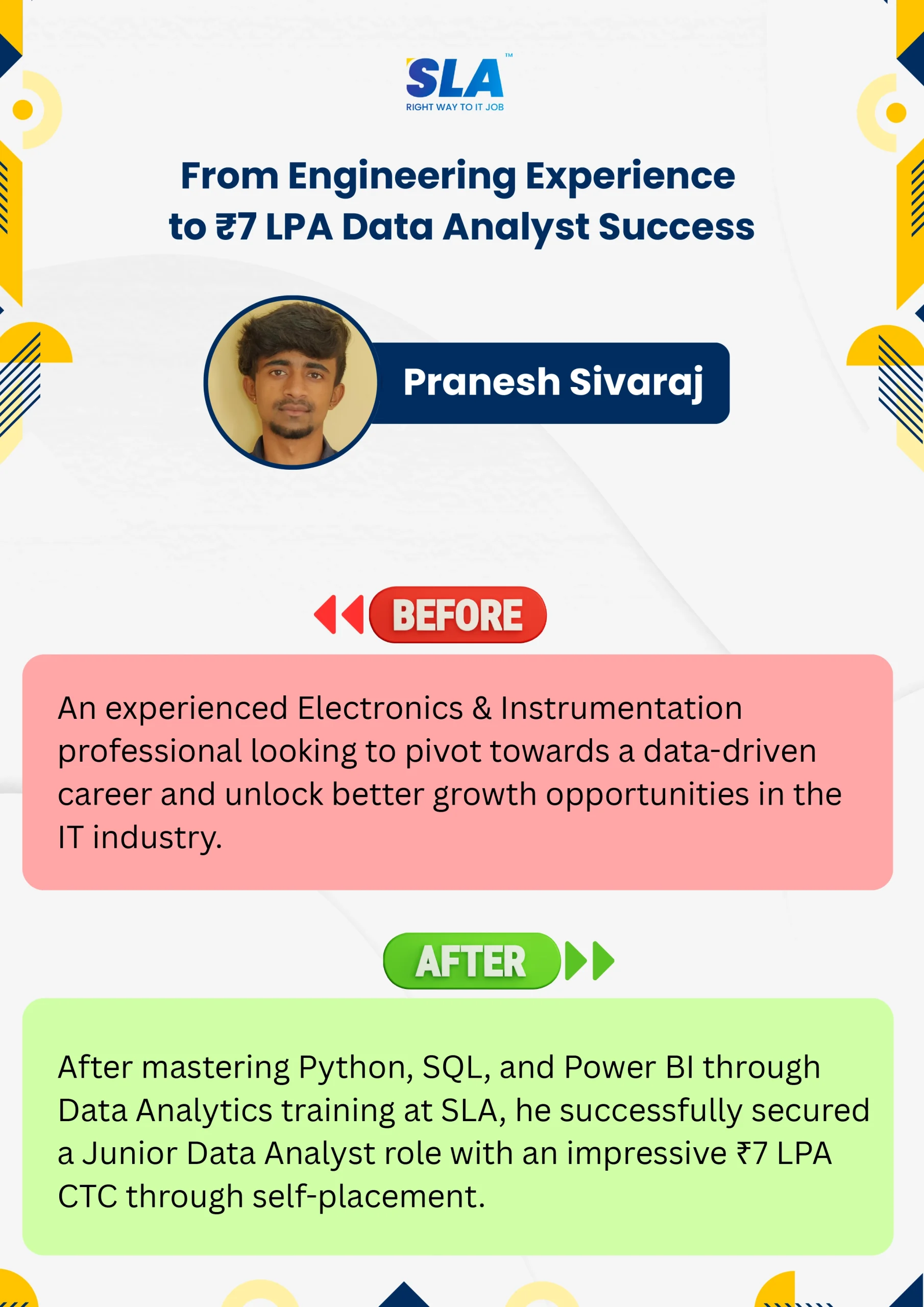
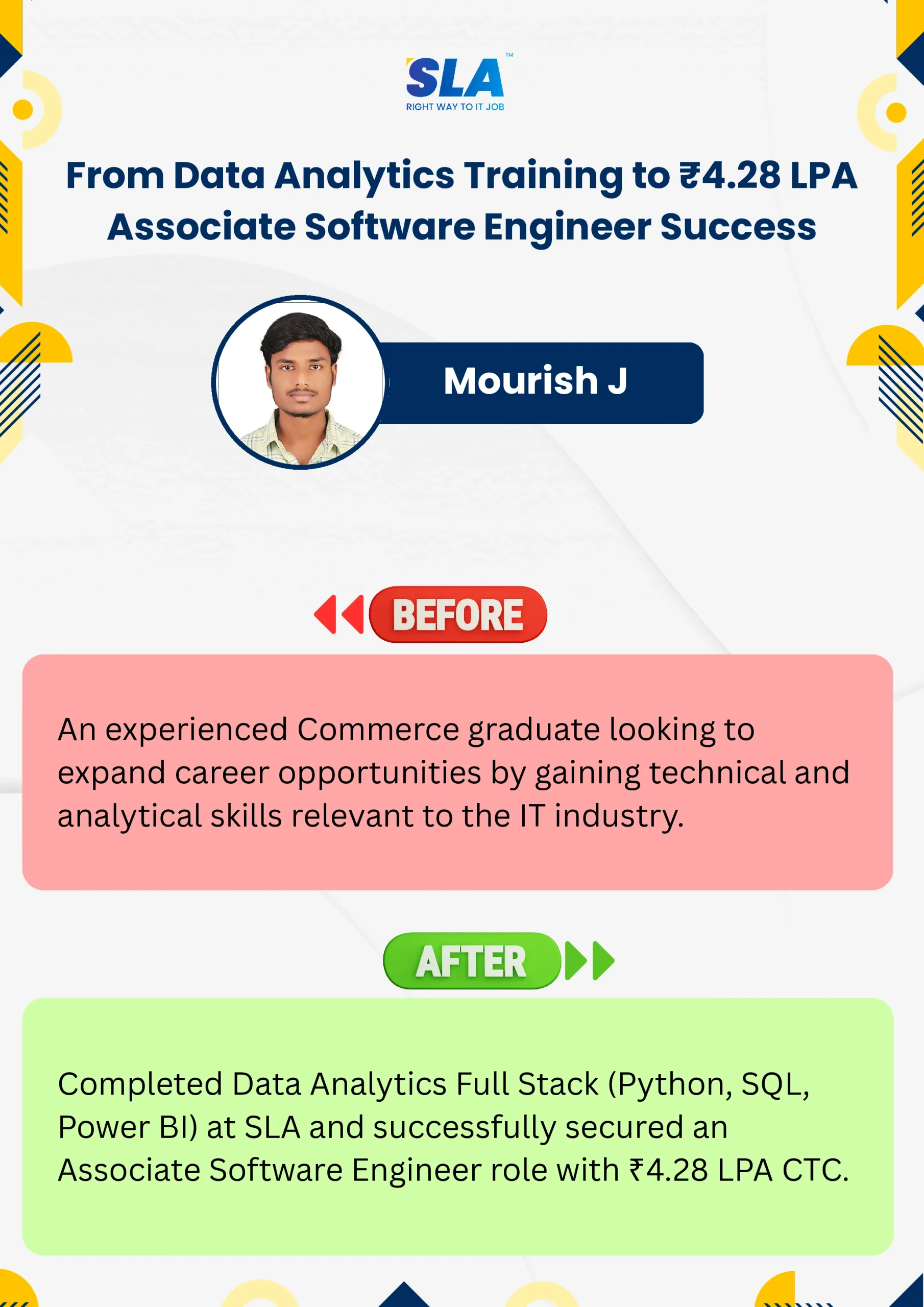
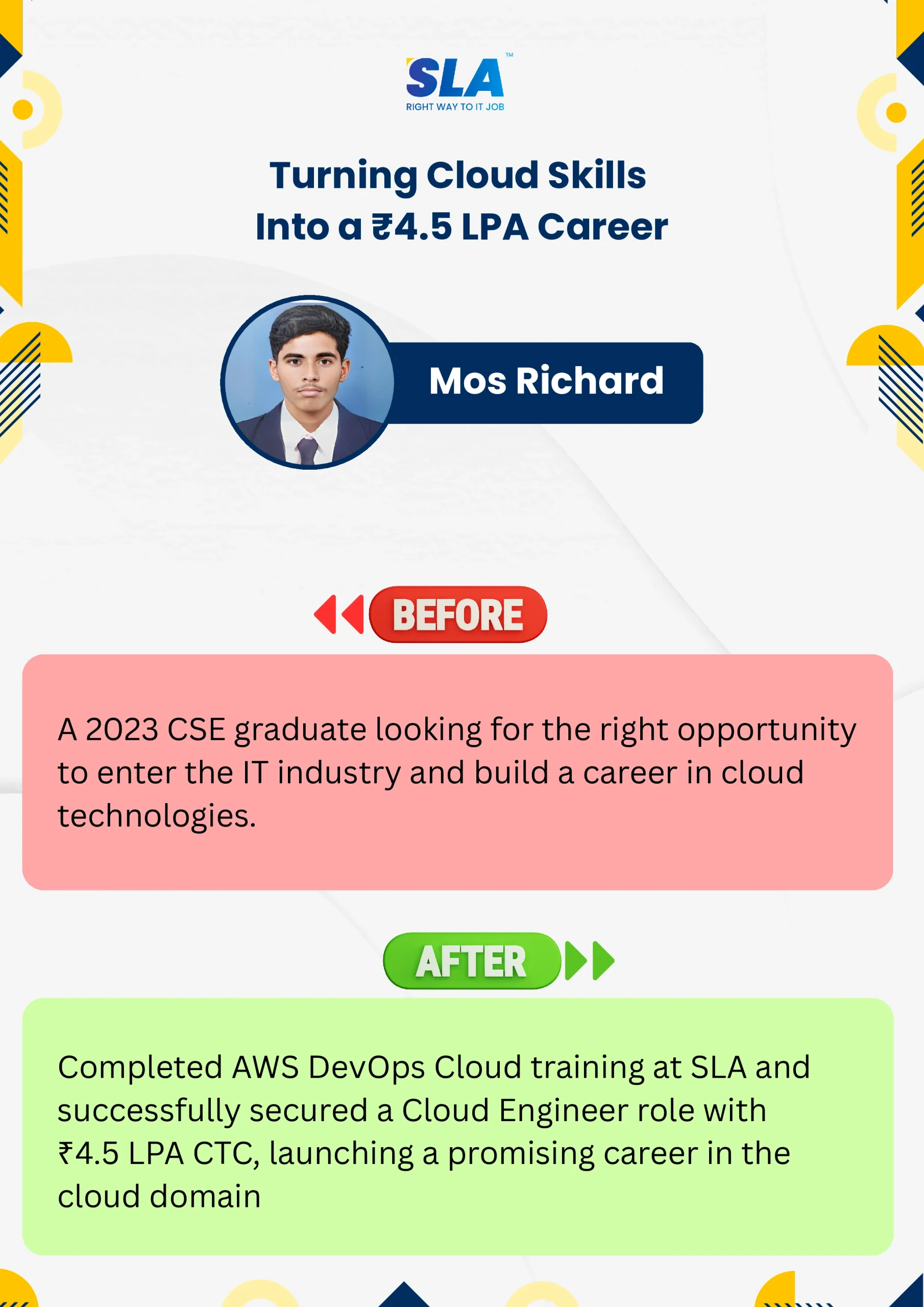
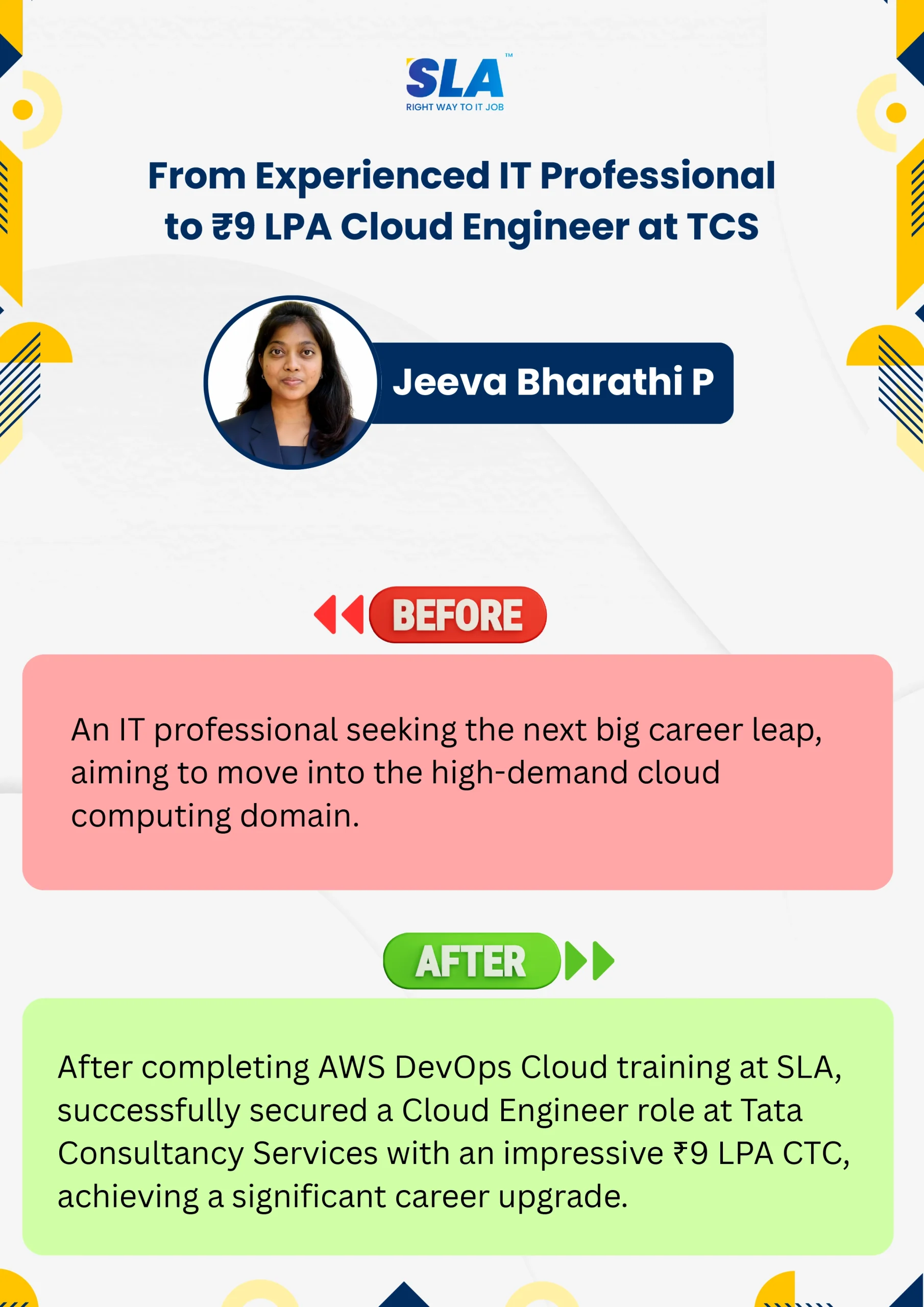
Google Reviews

Rating
4.8
1,053 Google reviews

Shaaru Menan
I had a 3 year career break. Joined SLA on Java Full Stack course and completed it.Did projects with the help of my Mentor. They…

Click here for Full Review

SARAN M
SLA Institute provides training in communication and aptitude along with strong technical skills. The trainers explain concepts clearly with a practical approach, which helps build…
Click here for Full Review

NalluKumar Ravichandran
Hi, I recently completed the DOT NET Full Stack Development course at SLA, and I had a great learning experience. The teaching style and student…
Click here for Full Review

Nithish Sahoo
I had an excellent experience taking this DevOps course. The curriculum is well-structured and covers both fundamental and advanced DevOps concepts in a clear manner.…
Click here for Full Review

MATHAN KUMAR G EEE
SLA Institute provides a structured learning environment for data analytics. The syllabus is relevant, and trainers are knowledgeable. Some sessions were very useful practically, while…
Click here for Full Review

Surya
Special thanks to Vishal Sir, the Placement Officer, for his interview guidance, resume support, and continuous motivation throughout the placement process. I would also like…
Click here for Full Review