
The Python course is designed for beginners, those new to coding, and aspiring developers seeking to improve their skills in the IT domain. It is a combination of coding fundamentals, data analysis, web development using Pandas and Django, with real-time projects, and expert mentors. The Python course in Bangalore is designed to be easy for beginners to understand. It is also focused on gaining all the necessary information to land a job in the IT domain. It is designed for individuals looking for a job in the field. It ensures a clear roadmap towards developing a successful career in Python.
Python Training In Bangalore
4.50
(2189)
DURATION

3 Months
EMI

0% Interest
Mode

Live Online / Offline

Let's take the first step to becoming an expert in Python
Click Here to Get Started
100% Placement
Assurance
Get Certified
JOB PLACEMENT ELIGIBILITY TEST
×
Your Placement Eligibility Report
Want more details about Python Course?
Fill out the form, and our counsellors will get in touch with you at your preferred time. You can have all your queries answered. Once you decide that SLA is the perfect fit for your training needs, our counselors will guide you through the process every step of the way.

Course Schedules

Course Syllabus

Course Fees

or any other questions...
Fees, Duration & Batch Timings for Python Course
Hands On Training
3-5 Real Time Projects
60-100 Practical Assignments
3+ Assessments / Mock Interviews
June 2026
Week days
(Mon-Fri)
Online/Offline
2 Hours Real Time Interactive Technical Training
1 Hour Aptitude
1 Hour Communication & Soft Skills
(Suitable for Fresh Jobseekers / Non IT to IT transition)
Course Fee
June 2026
Week ends
(Sat-Sun)
Online/Offline
4 Hours Real Time Interactive Technical Training
(Suitable for working IT Professionals)
Course Fee
Save up to 20% in your Course Fee on our Job Seeker Course Series
Learn More
Objectives of Python Training
Python training is here to help you learn programming step by step. Students start with the basics. Then move on to more complex topics. The course begins with Python topics and then goes into deeper programming concepts. Finally, it covers tools and real-life applications used in the industry today. This learning approach helps students build confidence and practical knowledge for a tech career.
Beginner-Level Python Concepts
Students start with Python basics like writing code, variables, data types, loops, functions, and conditional statements. This helps build a foundation in Python coding.
Intermediate Programming Skills
Learn more about Python, including object-oriented programming, file handling, exception handling, modules, and database connectivity. This improves problem-solving and development skills.
Advanced Python and Real-Time Applications
Then you will learn concepts. These include web development with Django, data analysis using Pandas, automation, APIs, and real-life project development. This will give more industry experience.
Why Softlogic Systems is the Best Choice for Python Training – Learn, Practice, and Get Placed!
Online & Offline Training Options
Learn at your convenience with flexible classroom and live online training.

Learn from 100+ Real-Time Developers
Get trained by industry professionals with years of hands-on experience.
Hands-on Projects & Codeathons
Practice with real-time projects and coding challenges to build confidence.
0% EMI Fee Options
Pay your course fees flexibly with easy EMI plans at zero interest.

Resume & Interview Support
Get expert help with resume building, mock interviews, and soft skills.

Placement with Top IT Firms
Access placement opportunities with leading MNCs and IT companies.

1000+ Hiring Partners
Benefit from Softlogic’s strong recruiter network for faster job placement.

No Backdoor Jobs
We ensure only genuine placement opportunities with trusted companies.
Want to Speak to a Trainer about Python?Request a Free Callback
Highlights of Python Course
Is this course suitable for beginners?
Yes, the Python course is good for beginners. The Python course starts with the basics and is made for beginners who do not know Python.
What are the main topics covered in the Python course?
The Python course covers the basics of Python, object-oriented programming, working with files, databases, Django, Pandas, automation, and real-time projects.
Does the Python course include training?
Yes, the Python course includes training. People who learn the Python course get hands-on experience through coding exercises, live projects, and practical assignments in this course.
Will I receive certification after the Python course?
Yes, students will receive certification after completion. The certification is provided after they finish the Python training program.
Is placement support available for Python students?
Many training institutes help Python students with placement interview preparation and career guidance for people who have learned the Python course.
Are real-time projects included in the Python training?
Yes, real-time projects are included in the Python training. Students who take the Python course work on real-time projects to gain exposure and industry experience with the Python course.
What career opportunities are available after learning Python?
After you complete the Python course, you can apply for jobs, such as Python Developer, Web Developer, Data Analyst, Automation Tester, and Software Engineer who uses Python.
Why should I choose Python for my career?
Students should choose the Python course for their career because Python course is one of the most popular programming languages used in web development, data science, automation, artificial intelligence, and software development, and it offers strong career opportunities across industries that use Python.
Boost Your Skills with Our Python Training Experts
Our Mentors are from Top Companies like:
Want to Speak to a Trainer about Python?Request a Free Callback
What Modes of Training are available for Python Course?
Offline / Classroom Training

A Personalized Learning Experience with Direct Trainer Engagement!
- Direct Interaction with the Trainer
- Clarify doubts then and there
- Airconditioned Premium Classrooms and Lab with all amenities
- Codeathon Practices
- Direct Aptitude Training
- Live Interview Skills Training
- Direct Panel Mock Interviews
- Campus Drives
- 100% Placement Support
Online Training

Instructor Led Live Training! Learn at the comfort of your home
- No Recorded Sessions
- Live Virtual Interaction with the Trainer
- Clarify doubts then and there virtually
- Live Virtual Interview Skills Training
- Live Virtual Aptitude Training
- Online Panel Mock Interviews
- 100% Placement Support
Corporate Training

Blended Delivery model (both Online and Offline as per Clients’ requirement)
- Industry endorsed Skilled Faculties
- Flexible Pricing Options
- Customized Syllabus
- 12X6 Assistance and Support
Want to Master your Skills in Python?GET Free Consultation
Certifications
Take your career to new heights with Softlogic's software training certifications.
Improve your abilities to get access to rewarding possibilities
Improve your abilities to get access to rewarding possibilities
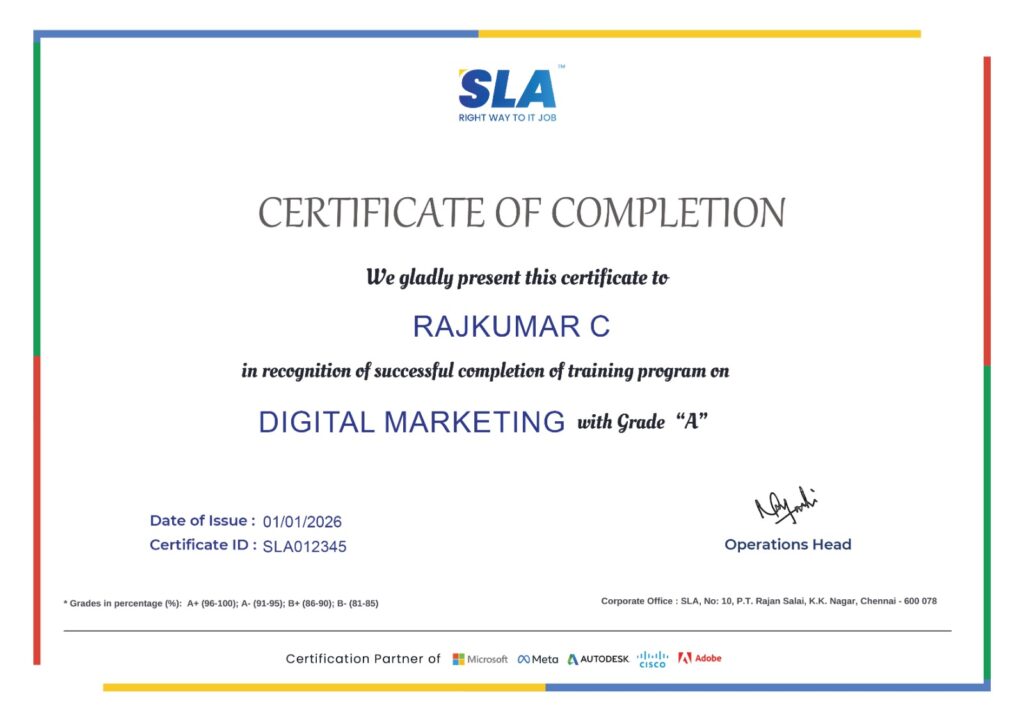
Earn Your Certificate of Completion
Validate your achievements with Softlogic's Certificate of Completion, verifying successful fulfillment of all essential components.
Take Your Career to the Next Level with Certifications
Get a certifications through our training programs to gain a competitive edge in the industry.
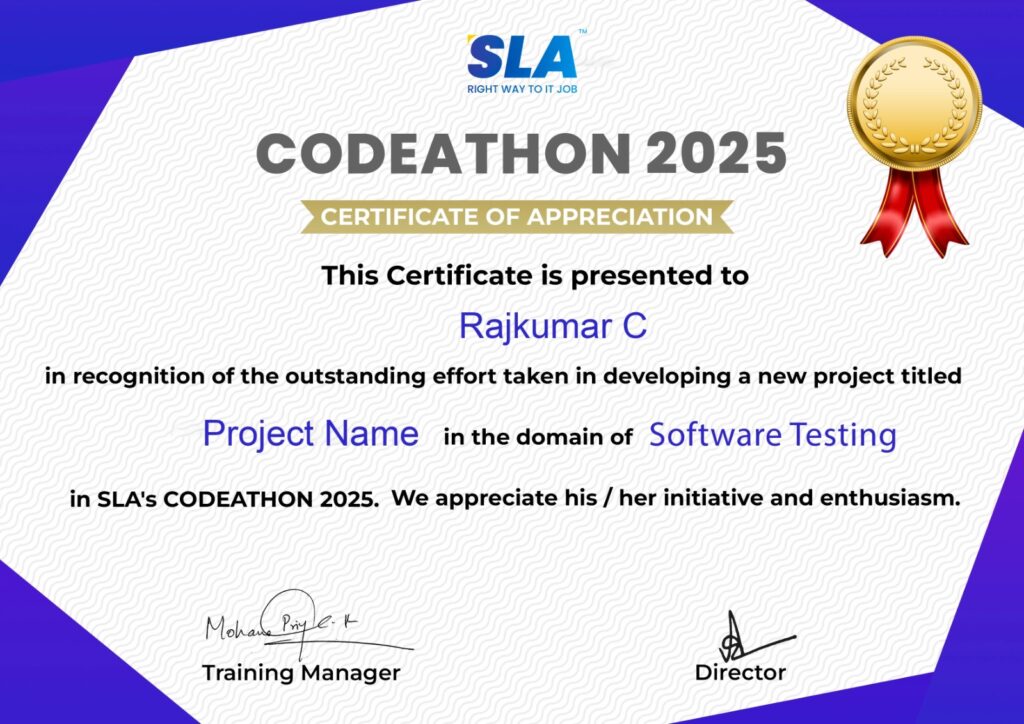
Stand Out from the Crowd with Codethon Certificate
Verify the authenticity of your real-time projects with Softlogic's Codethon certificate.
Hands-on Project Practices in Python Course
Smart Expense Tracker System
Weather Forecast Application
Resume Screening System
Stock Price Prediction System
E-commerce Web Application
Voice Assistant Application
AI Image Generator
Face Recognition Attendance System
AI Chatbot Development
The SLA Way to Get Placed in Top IT Companies
Enrollment

Technology Training
Coding Practices
Realtime Projects
Realtime Projects
Placement Training
Aptitude Training
Interview Skills
Interview Skills
Panel Mock
Interview

Unlimited
Interviews

Interview
Feedback
100%
IT Career
Google Reviews

Rating
4.8
1,053 Google reviews

Surya
Special thanks to Vishal Sir, the Placement Officer, for his interview guidance, resume support, and continuous motivation throughout the placement process. I would also like…

Click here for Full Review

Shaaru Menan
I had a 3 year career break. Joined SLA on Java Full Stack course and completed it.Did projects with the help of my Mentor. They…
Click here for Full Review

SARAN M
SLA Institute provides training in communication and aptitude along with strong technical skills. The trainers explain concepts clearly with a practical approach, which helps build…
Click here for Full Review

NalluKumar Ravichandran
Hi, I recently completed the DOT NET Full Stack Development course at SLA, and I had a great learning experience. The teaching style and student…
Click here for Full Review

MATHAN KUMAR G EEE
SLA Institute provides a structured learning environment for data analytics. The syllabus is relevant, and trainers are knowledgeable. Some sessions were very useful practically, while…
Click here for Full Review

Nithish Sahoo
I had an excellent experience taking this DevOps course. The curriculum is well-structured and covers both fundamental and advanced DevOps concepts in a clear manner.…
Click here for Full Review
Discover What Our Students Have To Say
See More ReviewsPlacement Support for a Python Job
Genuine Placements. No Backdoor Jobs at Softlogic Systems.
Aptitude Training
from Day 1
Interview Skills
from Day 1

Softskills Training
from Day 1
Build Your Resume

Build your LinkedIn Profile

Build your GitHub
digital portfolio

Panel Mock Interview
Unlimited Interviews until you get placed

Life Long Placement Support at no cost
Unlock Career Opportunities with our Placement TrainingRequest a Free Callback
FAQs
What is Python?
Python is a programming language that people like to use because it is simple and easy to understand. It is used for making websites, automating tasks, working with data, making intelligence, and creating software.
Why is Python Easy to Learn?
Python is easy to learn because it uses words that are similar to English, which makes it simple for new learners to understand how to code. The way Python is structured also helps people learn programming concepts quickly.
What are the core features of Python?
Python has a way of writing code that takes care of memory on its own, it has a big library of things you can use, it is open-source, and it can run on many different types of computers.
What are the Main Applications of Python?
People use Python for creating websites, machine learning, intelligence working with data, automating tasks, and creating software applications.
What is a Variable in Python?
A variable in Python is something that stores information or values in a program. Python figures out what kind of information it is when it runs the program.
What types of built-in data types does Python provide?
Python has built-in types of data such as whole numbers, decimal numbers, words, true or false values, lists, tuples, dictionaries, and sets.
Can you explain the difference between a list and a tuple?
The difference between a list and a tuple in Python is that a list can be changed after it is made. A tuple remains unchanged once it is defined.
What is PEP 8 in Python?
PEP 8 is a set of rules for writing Python code that helps developers write coding easy to read and consistent.
What Does pass Mean in Python?
The pass statement in Python is like a placeholder that says “do nothing” when there is no action needed in a part of the code.
How is Memory Managed in Python?
Python takes care of memory on its own with a system that gets rid of things it no longer needs and frees up memory, so you do not have to worry about it.
Additional Information for
the Python Course
Additional Information for the Python Course
Scope of Python in the future job market
- Artificial Intelligence: Python is used more in AI development. It supports libraries such as TensorFlow and PyTorch. These libraries help build applications and AI systems.
- Machine Learning: Python works with machine learning models. These models are used for automation. Predicting outcomes. Many people prefer Python for ML development.
- Data Science: Python is popular in data science. It helps analyze and process datasets. Tools like Pandas and NumPy make it easy.
- Web Development: Django and Flask are frameworks that help developers. They create web applications that are secure and scalable.
- Automation: Python is often used to automate tasks. It helps with software testing and business processes. This makes work more efficient.
- Cybersecurity: Python is helpful in cybersecurity. It is used for hacking and security testing. This makes Python valuable in this field.
- Cloud Computing: Python is used in cloud management. It helps with server automation and DevOps practices. This is useful in IT environments.
- Software Development: Python supports the development of desktop applications. It also supports APIs and big software solutions.
- Game Development: Python can be used to create games. It is also used for prototypes and interactive gaming applications. Libraries like Pygame help with this.
- Career Opportunities: Python skills are needed in various industries. These include healthcare, banking, IT, and e-commerce. Having Python skills can lead to career growth. Python is a skill to have.
Additional Information for the Data Science Course
Scopes available in the future for learning Data Science
- AI Agent and Generative AI Integration: Modern data science is going beyond just processing data. It is moving towards systems that can analyze data, adapt to changes, and solve real-world business problems. These systems use Generative AI and AI agents to achieve their goals.
- Machine Learning and MLOps: Companies need professionals. They should build, deploy, and manage Machine Learning models. This is for real-time business environments.
- Data Engineering and Cloud Computing: To handle large-scale data, skills in Big Data and cloud platforms are essential. Cloud platforms like AWS, Azure, and GCP are in demand.
- AI-Powered Data Analysis: AI tools and copilots help automate data analysis. They also help with reporting and visualization. This makes data jobs more efficient. Even beginners can do them.
- Healthcare Data Science: The healthcare industry uses data science for various purposes. These include predicting diseases, analyzing patients, conducting research, and creating smart healthcare solutions.
- Fintech and Banking Analytics: Financial organizations use data science. It helps with fraud detection, customer insights, and digital payments. They also use it for risk management.
- Internet of Things (IoT) Analytics: IoT analytics helps businesses collect data from smart devices. It also helps them analyze this data for automation and real-time monitoring.
- Cybersecurity Analytics: Data science is used to identify cyber threats. It also helps to improve security systems and detect online activities.
- Business Intelligence and Data Visualization: Companies need professionals who can create dashboards. They also need people who can create business reports using tools like Tableau and Power BI.
- E-Commerce and Customer Analytics: E-commerce platforms use data science. They use it to understand customer behavior, improve product recommendations, and increase business growth.