
Our Oracle DBA Online Training programs are designed for students, freshers, and working professionals who want to upskill and stay relevant. We offer Oracle DBA Online Courses that are practical, interactive, and aligned with the latest industry demands. Our Oracle DBA syllabus covers the Oracle architecture, installation & configuration, user management, backup & recovery, performance tuning, security, and high availability solutions. Enroll now and learn from industry experts with flexible timings and get Job support.
Oracle DBA Online Training
DURATION
2 Months
EMI
0% Interest
Mode
Live Online / Offline
Let's take the first step to becoming an expert in Oracle DBA
Lifelong Placement
Assistance
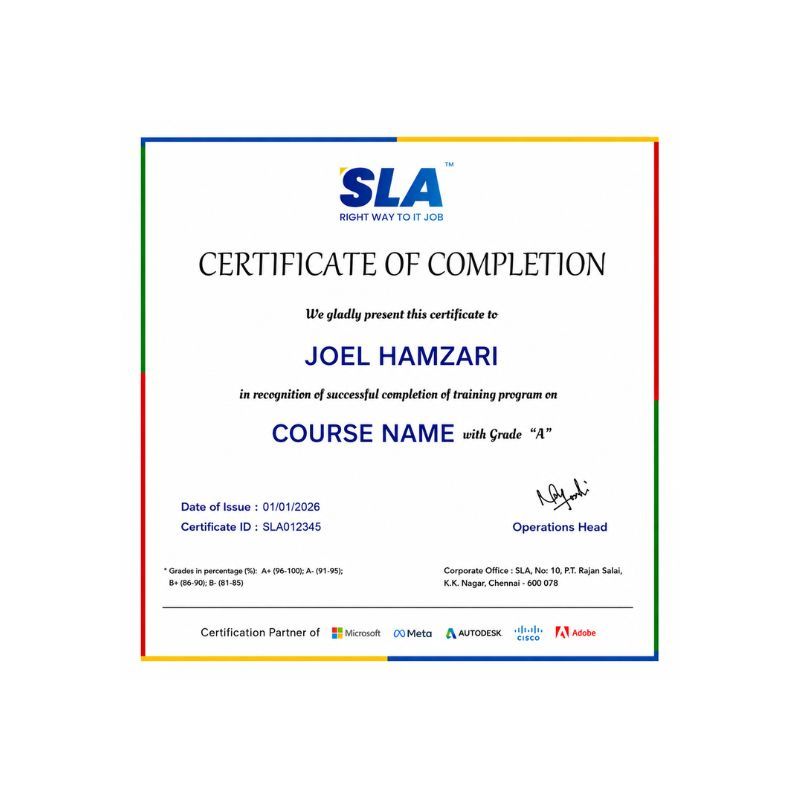
Get Certified
JOB PLACEMENT ELIGIBILITY TEST
Your Placement Eligibility Report
Want more details about Oracle DBA?
Course Schedules
Course Syllabus
Course Fees
or any other questions...
Fees, Duration & Batch Timings for Oracle DBA
Hands On Training
3-5 Real Time Projects
60-100 Practical Assignments
3+ Assessments / Mock Interviews
July 2026
Week days
(Mon-Fri)
Online/Offline
2 Hours Real Time Interactive Technical Training
1 Hour Aptitude
1 Hour Communication & Soft Skills
(Suitable for Fresh Jobseekers / Non IT to IT transition)
July 2026
Week ends
(Sat-Sun)
Online/Offline
4 Hours Real Time Interactive Technical Training
(Suitable for working IT Professionals)
Save up to 20% in your Course Fee on our Job Seeker Course Series
Syllabus of Oracle DBA
Introduction
- Describe course objectives
- Explore the Oracle 10g database architecture
Installing the Oracle Database Software
- Explain core DBA tasks and tools
- Plan an Oracle installation
- Use optimal flexible architecture
- Install software with the Oracle Universal Installer
Creating an Oracle Database
- Create a database with the Database Configuration Assistant (DBCA)
- Create a database design template with the DBCA
- Generate database creation scripts with the DBCA
Managing the Oracle Instance
- Start and stop the Oracle database and components
- Use Enterprise Manager (EM)
- Access a database with SQL*Plus and iSQL*Plus
- Modify database initialization parameters
- Understand the stages of database startup
- View the Alert log
- Use the Data Dictionary
Managing Undo Data
- Explain DML and undo data generation
- Monitor and administer undo
- Describe the difference between undo and redo data
Configure undo retention
- Guarantee undo retention
- Use the undo advisor
Implementing Oracle Database Security
- Describe DBA responsibilities for security
- Apply the principal of least privilege
- Enable standard database auditing
- Specify audit options
- Review audit information
- Maintain the audit trail
Performing Database Backups
- Create consistent database backups
- Back your database up without shutting it down
- Create incremental backups
- Automate database backups
- Monitor the flash recovery area
Performing Database Recovery
- Recover from loss of a control file
- Recover from loss of a redo log file
- Perform complete recovery following the loss of a data file
Recovering from Non-critical Losses
- Recovery of Non-Critical Files
- Creating New Temporary Tablespace
- Recreating Redo Log Files, Index Tablespaces, and Indexes
- Read-Only Tablespace Recovery
- Authentication Methods for Database Administrators
- Loss of Password Authentication File
- Creating a new temporary tablespace
- Altering the default temporary tablespace for a database
Flashback
- Flashback Database Architecture
- Configuring and Monitoring Flashback Database
- Backing Up the Flash Recovery Area
- Using V$FLASH_RECOVERY_AREA_USAGE
- Flashback Database Considerations
- Using the Flashback Database RMAN interface
- Using Flashback Database EM Interface
- Managing and monitoring Flashback Database operationse
Dealing with Database Corruption
- Block Corruption Symptoms: ORA-1578
- DBVERIFY Utility and the ANALYZE command
- Initialization parameter DB_BLOCK_CHECKING
- Segment Metadata Dump and Verification
- Using Flashback for Logical Corruption and using DBMS_REPAIR
- Block Media Recovery
- RMAN BMR Interface
- Dumping and Verifying Segment Metadata
Monitoring and Managing Storage
- Database Storage Structures
- Space Management Overview
- Oracle-Managed Files (OMF)
- Row Chaining and Migrating
- Proactive Tablespace Monitoring
- Managing Resumable Space Allocation
- SYSAUX Tablespace
- Monitoring table and index space usage
Automating Tasks with the Scheduler
- Scheduler Concepts
- Creating a Job Class and a Window
- Managing Jobs, Programs, Chains, Events, Schedules, priority
- Viewing and Purging Job Logs
- Creating a program and a schedule
- Creating a job that uses a program and a schedule
- Altering the program and schedule for the job and observing the behavior change of the job
- Monitoring job runs
Workshop
- Workshop Methodology, requirements, and setup
- Scenario 1: Database performance
- Scenario 2: Finding and Tuning Inefficient SQL
- Scenario 3: SGA Management – REDO
- Scenario 4: Running out of Undo Space
- Scenario 5: Missing datafile
- Scenario 6: Managing space in a tablespace – REDO
- Scenario 7: Missing TEMP data file
Managing Database Storage Structures
- Describe table data storage (in blocks)
- Define the purpose of tablespaces and data files
- Understand and utilize Oracle Managed Files (OMF)
- Create and manage tablespaces
- Obtain tablespace information
- Describe the main concepts and functionality of Automatic Storage Management (ASM)
Administering User Security
- Create and manage database user accounts
- Authenticate users
- Assign default storage areas (tablespaces)
- Grant and revoke privileges
- Create and manage roles
- Create and manage profiles
- Implement standard password security features
- Control resource usage by users
Managing Schema Objects
- Define schema objects and data types
- Create and modify tables
- Define constraints
- View the columns and contents of a table
- Create indexes, views and sequences
- Explain the use of temporary tables
- Use the Data Dictionary
- Manage data through SQL
- Monitor and resolve locking conflicts
Configuring the Oracle Network Environment
- Create additional listeners
- Create Net Service aliases
- Configure connect-time failover
- Control the Oracle Net Listener
- Test Oracle Net connectivity
- Identify when to use shared versus dedicated servers
Backup and Recovery Concepts
- Identify the types of failure that may occur in an Oracle Database
- Describe ways to tune instance recovery
- Identify the importance of checkpoints, redo log files, and archived log files
- Configure ARCHIVELOG mode
Objectives of Oracle DBA
The following are the learning outcomes of the Oracle DBA Online Course:
- Well-versed in using Oracle from start to finish
- Domain of Database Administration
- Understanding the fundamentals of database security
- Utilizing data backup and recovery services and working with schema objects
- Handling Oracle Software and Database
- The Storage Parameters and Oracle Instance
Why Softlogic Systems is the Best Choice for Oracle DBA – Learn, Practice, and Get Placed!
Online & Offline Training Options
Learn from 100+ Real-Time Developers
Hands-on Projects & Codeathons
0% EMI Fee Options
Resume & Interview Support
Placement with Top IT Firms
1000+ Hiring Partners
No Backdoor Jobs
Highlights of Oracle DBA
What is Oracle DBA?
An organization’s Oracle databases are essentially under the care of an Oracle Database Administrator (DBA). To make sure these databases function properly, they set them up, keep them updated, and safeguard them.
This covers activities that include managing security, optimizing performance, installing and configuring databases, and making emergency plans. Learn more about it in our Oracle DBA online training.
What are the reasons for learning Oracle DBA?
The following are some reasons for learning the Oracle DBA course:
- Powerful performance qualities
- Flexibility and scalability
- Extensive security measures
- Combining cloud computing technologies
- Administration and maintenance of data made simpler
- High disaster recovery availability
- Strong community engagement
What are the prerequisites for learning the Oracle DBA Online Course?
There is no hard prerequisite for learning an Oracle DBA online course at SLA. However, the following skills would be an added advantage to gaining 100% hands-on expertise.
- Basic familiarity with Oracle Database Software installation
- Functional familiarity with computer networks and database systems
Our Online Oracle DBA Course is suitable for:
- Students/Freshers who have an interest in gaining database skills
- Working professionals seeking a career transformation
- Any Job seeker
What are the course fees and duration?
Our Oracle DBA online training costs could differ based on the course level and program mode. The approximate Oracle DBA online course fee is approximately between ₹25,000 and ₹35,000 for the duration of 2 months, which includes international certification. Contact our learning managers for offers, discounts, and EMI options for Oracle DBA Online Course Fees.
What are some job roles related to the Oracle DBA Online Course?
Some jobs that can be applied for after our Oracle DBA online course are:
- Database Administrator
- Database Developer
- Database Analyst
- Data Warehouse Manager
- Database Architect
What is the salary range for Oracle DBA professionals?
Oracle DBA developer salary for freshers who have less than 3 years of experience is between ₹3.2 LPA. A Oracle DBA developer’s salary for professionals with 10 years of experience is ₹21.8 lakhs per year on average.
List a few Oracle DBA real-time applications.
Here are some actual instances of Oracle DBA’s use in the real world:
- Data Security
- Database Management
- Backup and Recovery
- Performance Tuning
- Data Warehousing
- Data Migration
Boost Your Skills with Our Oracle DBA Experts
Our Mentors are from Top Companies like:
- Our Oracle DBA trainers have over 12 years of database industry experience.
- They have exceptional proficiency in the Oracle database environment and are certified Database Administrators.
- They possess practical expertise in managing Oracle databases, including troubleshooting, tuning, monitoring, and maintenance.
- They have a great deal of expertise to transfer both theoretical and practical expertise about setting up, configuring, and managing Oracle databases.
- They have demonstrated success in instructing both beginners and experienced professionals in Oracle DBA technologies.
- They are professionals at placing students in reputable IT companies and provide one-on-one tutoring for a thorough grasp of Oracle DBA features and strategies.
What Modes of Training are available for Oracle DBA?
Offline / Classroom Training
- Direct Interaction with the Trainer
- Clarify doubts then and there
- Airconditioned Premium Classrooms and Lab with all amenities
- Codeathon Practices
- Direct Aptitude Training
- Live Interview Skills Training
- Direct Panel Mock Interviews
- Campus Drives
- 100% Placement Support
Online Training
- No Recorded Sessions
- Live Virtual Interaction with the Trainer
- Clarify doubts then and there virtually
- Live Virtual Interview Skills Training
- Live Virtual Aptitude Training
- Online Panel Mock Interviews
- 100% Placement Support
Corporate Training
- Industry endorsed Skilled Faculties
- Flexible Pricing Options
- Customized Syllabus
- 12X6 Assistance and Support
Certifications
Improve your abilities to get access to rewarding possibilities
Earn Your Certificate of Completion
Take Your Career to the Next Level with Certifications
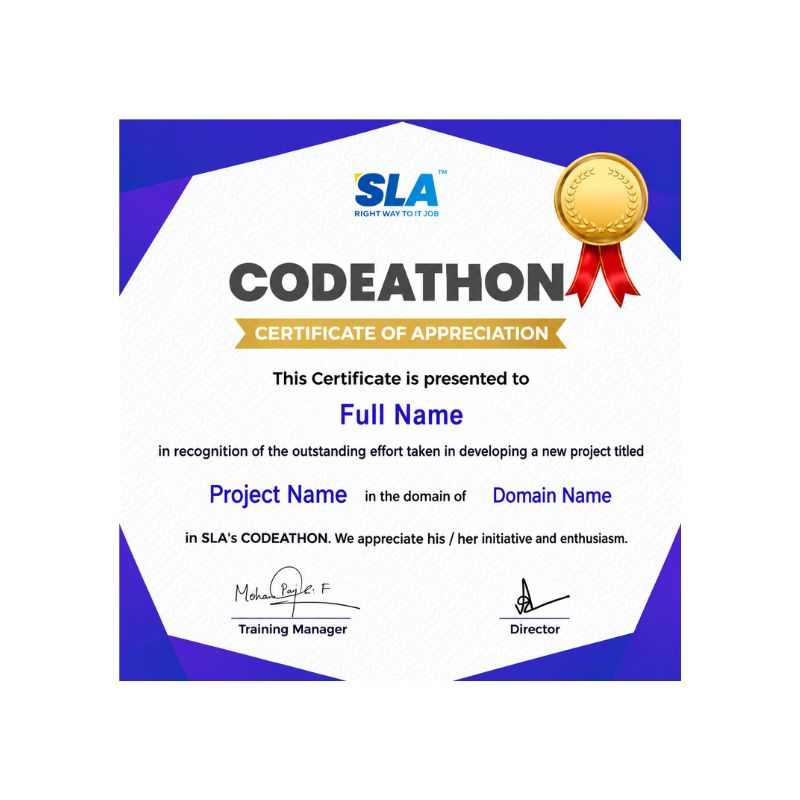
Stand Out from the Crowd with Codethon Certificate
Hands-on Project Practices in Oracle DBA
Restaurant Management
Retail Application
Art Gallery Management
Blood Donation System
Payroll Management System
Rail Transport
Library Management
Inventory Control Management
Student Database Management
The SLA Way to Get Placed in Top IT Companies
Enrollment
Technology Training
Realtime Projects
Placement Training
Interview Skills