
Softlogic is one of the Top Training institutes for Nagios. Learn how to use Nagios, from beginner basics to advanced techniques. Our Nagios Syllabus covers the Nagios installation, configuration, host & service monitoring, alert management, performance tuning, and integration with other DevOps tools. We offer a Nagios Course with Placement Assistance, Mock interviews, Resume building, and certification.
Nagios Certification Course
4.90
(3672)
DURATION

2 Months
EMI
0% Interest
Mode

Live Online / Offline

Let's take the first step to becoming an expert in Nagios
Click Here to Get Started
Lifelong Placement
Assistance
Get Certified
JOB PLACEMENT ELIGIBILITY TEST
×
Your Placement Eligibility Report
Want more details about Nagios?
Fill out the form, and our counsellors will get in touch with you at your preferred time. You can have all your queries answered. Once you decide that SLA is the perfect fit for your training needs, our counselors will guide you through the process every step of the way.

Course Schedules

Course Syllabus

Course Fees

or any other questions...
Fees, Duration & Batch Timings for Nagios
Hands On Training
3-5 Real Time Projects
60-100 Practical Assignments
3+ Assessments / Mock Interviews
July 2026
Week days
(Mon-Fri)
Online/Offline
2 Hours Real Time Interactive Technical Training
1 Hour Aptitude
1 Hour Communication & Soft Skills
(Suitable for Fresh Jobseekers / Non IT to IT transition)
Course Fee
July 2026
Week ends
(Sat-Sun)
Online/Offline
4 Hours Real Time Interactive Technical Training
(Suitable for working IT Professionals)
Course Fee
Save up to 20% in your Course Fee on our Job Seeker Course Series
Learn More
Syllabus of Nagios
Download Syllabus
Nagios Concept
- Performance reporting
- Routers and switches
- NagiosQL
- MySQL DB integration
- Distributed monitoring
- NDOUtils
- NagVis
- BPI
- NRDP/NRDS
- DNX mod gearman
- NetFlow
- High availability
Objectives of Nagios
The core objectives of our Nagios course are as follows:
- Understand the importance of continuous monitoring and the role Nagios plays in maintaining IT infrastructure.
- Learn about the features, architectural structure, and competitive advantages of Nagios Core.
- Discover the requirements for installing Nagios and install the Nagios Core Engine with success.
- Learn the Nagios file format so that you can configure and administer the system effectively.
- Learn how to monitor Windows using WMI and other agentless monitoring approaches.
- Discover how to set up and maintain Nagios for high availability and redundancy in a clustered environment.
Request a Free Callback
Why Softlogic Systems is the Best Choice for Nagios – Learn, Practice, and Get Placed!

Online & Offline Training Options
Learn at your convenience with flexible classroom and live online training.

Learn from 100+ Real-Time Developers
Get trained by industry professionals with years of hands-on experience.

Hands-on Projects & Codeathons
Practice with real-time projects and coding challenges to build confidence.
0% EMI Fee Options
Pay your course fees flexibly with easy EMI plans at zero interest.

Resume & Interview Support
Get expert help with resume building, mock interviews, and soft skills.

Placement with Top IT Firms
Access placement opportunities with leading MNCs and IT companies.

1000+ Hiring Partners
Benefit from Softlogic’s strong recruiter network for faster job placement.

No Backdoor Jobs
We ensure only genuine placement opportunities with trusted companies.
Request a Free Callback
Highlights of Nagios
What is Nagios training?
The Nagios Core course is a thorough training program created to give learners the skills needed for ongoing IT infrastructure monitoring. With the combination of theoretical knowledge and real-world skills taught in the Nagios course, learners will be able to monitor and manage IT systems with high availability and performance.
What are the reasons for learning Nagios?
Learning the Nagios could be beneficial and satisfying for a variety of reasons:
- Automatically resolve issues as soon as they are found.
- It keeps an eye on the entire infrastructure every second.
- All-inclusive network, service, and application monitoring in one central location.
- All mission-critical infrastructure components are monitored.
- Extensible and customizable architecture.
- Its database and log systems are good.
What are the prerequisites for learning Nagios?
It is advised to have the following prerequisites to effectively complete the Nagios Core course:
- A basic familiarity with networking concepts and network protocols (TCP/IP).
- Knowledge of Linux operating systems, including command-line skills
- The ability to edit files with a CLI text editor (such as vi or nano).
- Familiarity in performing fundamental system administration activities like installing packages, configuring users, and managing services.
Our Nagios course is suitable for:
- Students
- Professionals seeking a career change
- IT professionals aiming to enhance their skills
- Enthusiastic programmers
- Job Seekers
What are the course fees and duration?
Our Nagios training is offered around ₹35,000 with potential variations based on the course level (basic, intermediate, or advanced) and format (online or in person). Generally, the training spans approximately 2 months and includes certification upon completion. For accurate details concerning fees, duration, and certification, we suggest reaching out to our training center directly.
What are some job roles related to Nagios?
Of course, these are a couple of jobs related to Nagios:
- Nagios Administrator
- Network Monitoring Engineer
- Systems Monitoring Specialist
- DevOps Monitoring Engineer
- IT Infrastructure Monitoring Analyst
- Cloud Monitoring Engineer
- Nagios Support Engineer
What is the salary range for an Nagios engineer?
Nagios provides thorough service monitoring for cloud computing, storage, and the web. The majority of Nagios experts make between ₹3.8 lakhs and ₹53.5 lakhs, with an average pay of ₹20.4 lakhs. Take advantage of our Nagios training at SLA to gain a solid grasp of DevOps monitoring tools and the chance to work for MNCs.
List a few Nagios real-time applications.
These are a few typical instances of Nagios real-time monitoring.
- Network Device Monitoring
- Website Availability
- Application Response Time
- Cloud Instance Monitoring
- Security Event Monitoring
- Resource Scaling
- IoT Device Health
Boost Your Skills with Our Nagios Experts
Our Mentors are from Top Companies like:
- Our Nagios trainers are seasoned experts with a wealth of knowledge and experience in the field of monitoring and systems management.
- They are experts in subjects including cloud infrastructure, IT automation, infrastructure monitoring, server architecture, and server setup.
- To educate effective IT system monitoring and administration, the trainers offer in-depth knowledge of the Nagios monitoring system and all of its capabilities.
- To more effectively explain and reinforce the main ideas, the trainers place a lot of focus on hands-on demonstrations.
- They will help you to understand the functional and technical aspects of monitoring servers, resolving network problems, and employing alerting services.
Request a Free Callback
What Modes of Training are available for Nagios?
Offline / Classroom Training

A Personalized Learning Experience with Direct Trainer Engagement!
- Direct Interaction with the Trainer
- Clarify doubts then and there
- Airconditioned Premium Classrooms and Lab with all amenities
- Codeathon Practices
- Direct Aptitude Training
- Live Interview Skills Training
- Direct Panel Mock Interviews
- Campus Drives
- 100% Placement Support
Online Training

Instructor Led Live Training! Learn at the comfort of your home
- No Recorded Sessions
- Live Virtual Interaction with the Trainer
- Clarify doubts then and there virtually
- Live Virtual Interview Skills Training
- Live Virtual Aptitude Training
- Online Panel Mock Interviews
- 100% Placement Support
Corporate Training

Blended Delivery model (both Online and Offline as per Clients’ requirement)
- Industry endorsed Skilled Faculties
- Flexible Pricing Options
- Customized Syllabus
- 12X6 Assistance and Support
GET Free Consultation
Certifications
Take your career to new heights with Softlogic's software training certifications.
Improve your abilities to get access to rewarding possibilities
Improve your abilities to get access to rewarding possibilities

Earn Your Certificate of Completion
Validate your achievements with Softlogic's Certificate of Completion, verifying successful fulfillment of all essential components.
Take Your Career to the Next Level with Certifications
Get a certifications through our training programs to gain a competitive edge in the industry.

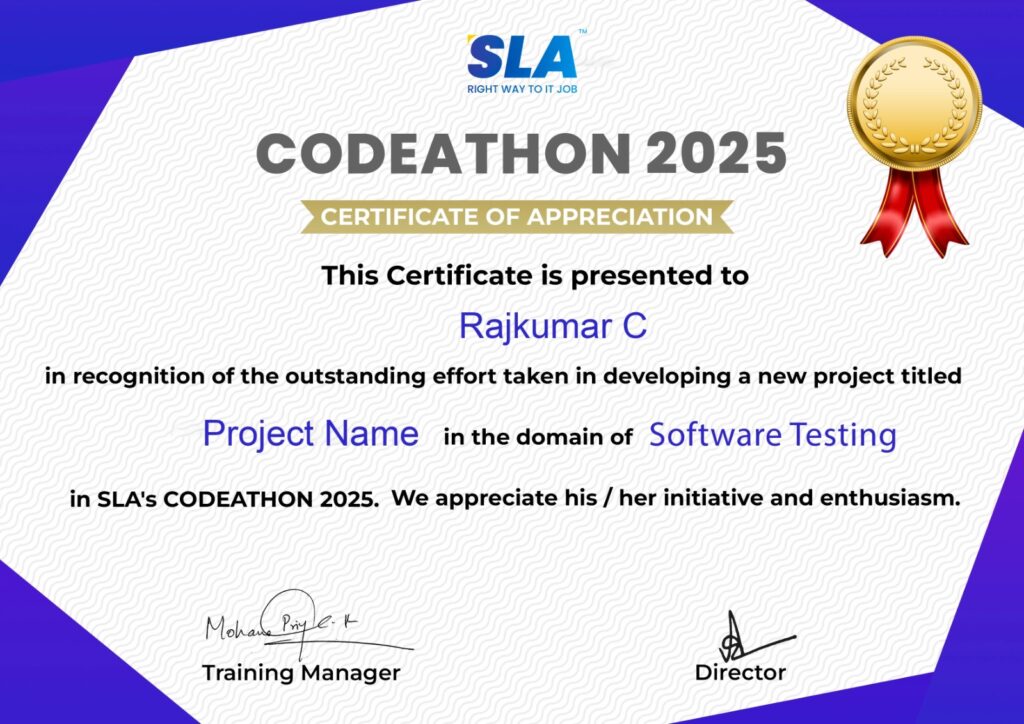
Stand Out from the Crowd with Codethon Certificate
Verify the authenticity of your real-time projects with Softlogic's Codethon certificate.

Hands-on Project Practices in Nagios
Monitoring of Cloud Infrastructure
Monitoring of Security Events
Database Monitoring
Environmental Observation
Monitoring of Virtualization
Distributed Monitoring
Network Device Observation
Monitoring of SNMP Devices
Monitoring of SSL Certificates
The SLA Way to Get Placed in Top IT Companies
Enrollment

Technology Training
Coding Practices
Realtime Projects
Realtime Projects
Placement Training
Aptitude Training
Interview Skills
Interview Skills
Panel Mock
Interview

Unlimited
Interviews

Interview
Feedback

100%
IT Career
Placement Support for a Nagios Job
Genuine Placements. No Backdoor Jobs at Softlogic Systems.

Aptitude Training
from Day 1
Interview Skills
from Day 1

Softskills Training
from Day 1
Build Your Resume

Build your LinkedIn Profile

Build your GitHub
digital portfolio

Panel Mock Interview
Unlimited Interviews until you get placed

Life Long Placement Support at no cost
Request a Free Callback
FAQs
What is Nagios?
Nagios is an event monitoring system that provides servers, switches, apps, and services with monitoring and alerting capabilities. Users receive alerts when something goes wrong and another alert once the issue has been fixed.
What advantages does Nagios offer?
Nagios is an open-source program for system, application, service, and business process monitoring. It can assist users in finding and resolving difficulties as well as averting more problems before they have an impact on clients and end users.
What is Nagios’ primary objective?
With Nagios, you can find and fix issues as well as prevent future ones before they have an impact on clients and end users. You Can: Schedule infrastructure upgrades before out-of-date systems lead to failures by using Nagios. React to problems as soon as you notice them.
Is Nagios a tool for DevOps?
Nagios is used in DevOps to continuously monitor infrastructure, thresholds, business processes, enterprise systems, apps, services, and other elements.
Is Nagios still reliable?
Nagios’s code base and architecture are by now antiquated and no longer cutting edge. Although working with Nagios Configure Files has never been easy, it is especially difficult now. Furthermore, Nagios’s handling of add-ons and plug-ins does not adhere to contemporary standards.
Is this Nagios course hands-on-based?
Yes, our Nagios certification course includes real-world, hands-on tasks.
Does the Nagios course have weekend training available?
Yes, we do provide Nagios classes on the weekends.
How long does it take for the Nagios course?
It will take about 45 to 60 hours to finish the Nagios course. This estimate accounts for lectures, practical exercises, and projects; however, real-time may differ based on student understanding and pace.
What certification will I receive after finishing the Nagios course?
You will receive internationally recognized SLA course completion certificates for the Nagios course upon conclusion of the training, in addition to prestigious IBM credentials and Codeathon certificates attesting to your proficiency with real-world projects.
What are the possible payment methods at SLA?
We take cash, credit cards (Visa, Maestro, Mastercard), Netbanking, and other major payment options for Nagios training at SLA.
Additional Information for
the Nagios
Future Prospects:
Expanding Capabilities:
- Nagios Remote Workers: We’re looking into the possibilities of using remote workers to improve the scalability and efficiency of your monitoring system to meet your expanding infrastructure.
- OAuth/SSO Integration: To simplify the authentication procedure, Single Sign-On (SSO) and OAuth should be implemented. This connection will streamline access for users within your business and improve security.
Kubernetes/Containers:
- Monitoring Modern IT Infrastructure: Extending our monitoring capabilities to Kubernetes clusters and containerized systems.
- Upgrades for SNMP: We’re improving our monitoring features to give you access to more stable and dependable SNMP-enabled network device monitoring, so you can always have data at your fingertips.
Integration of Advanced Technologies
- AI Features: Using sophisticated event correlation through the application of artificial intelligence.
- You’ll be able to anticipate and prevent problems before they affect your operations with the help of this function, which will provide you better insights into your IT infrastructure.
Simplified Configuration and AI-Powered Plugin and Wizard Creation:
With artificial intelligence (AI) tools that streamline the development and configuration of plugins and wizards, Nagios’s monitoring capabilities can virtually reach new heights.
Related Blogs
Top 7 Nagios Core Limitations and Solutions
Published On: November 27, 2024
Introduction Nagios is an open-source application for IT system monitoring. It can monitor devices running…
Nagios Project Ideas
Published On: October 21, 2024
Introduction Getting involved in Nagios Project Ideas is a great way for students and beginners…
Nagios Admin Salary for Freshers and Experienced
Published On: October 4, 2024
Introduction Nagios continues to be the benchmark for the entire IT infrastructure world with a…
Nagios Tutorial for DevOps Aspirants
Published On: September 30, 2024
Introduction Tired of the steep learning curve and overwhelming configurations when diving into monitoring tools?…
Nagios Interview Questions and Answers
Published On: June 10, 2024
Introduction Being proficient in Nagios is vital for ensuring high availability and maximum performance in…

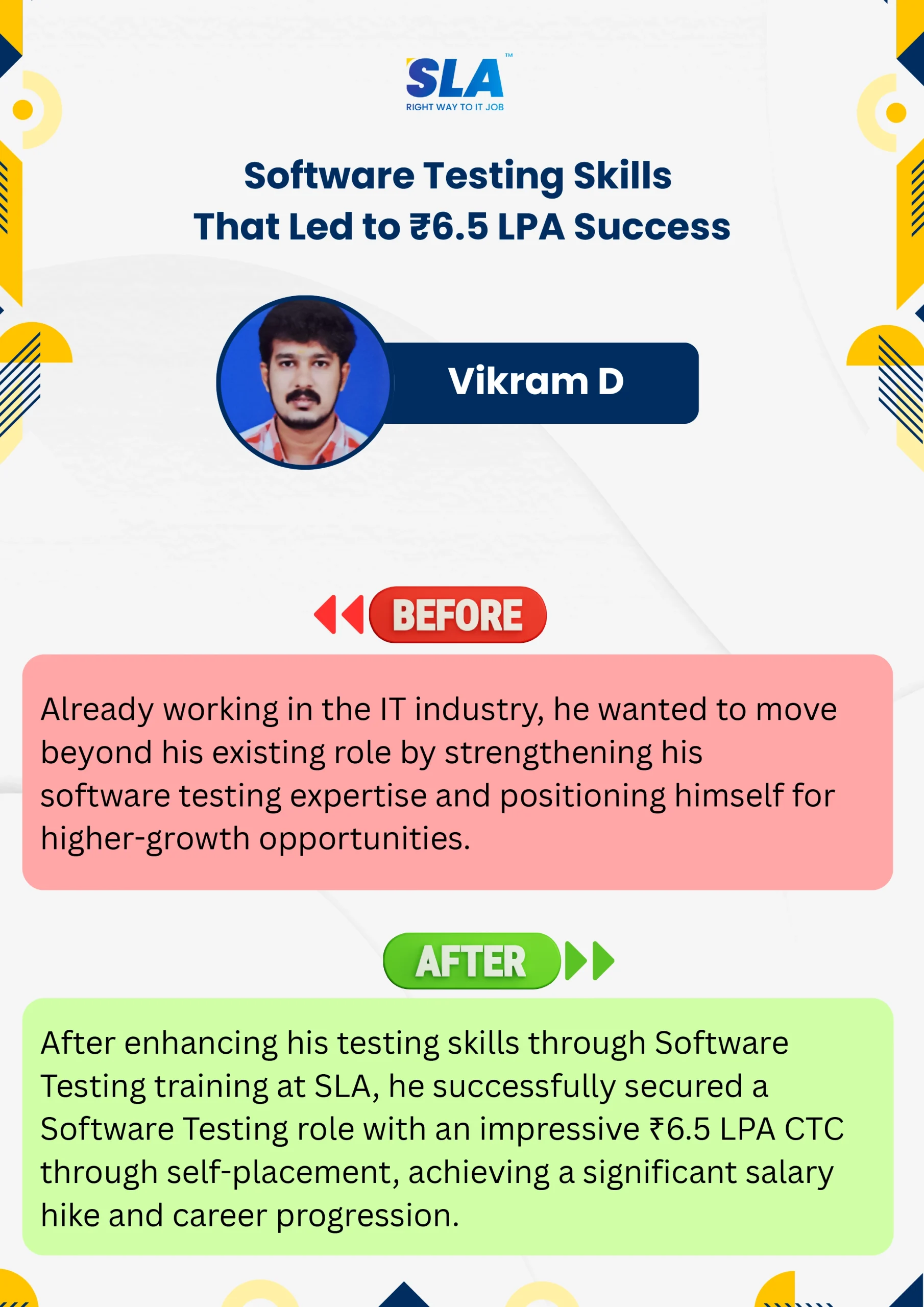


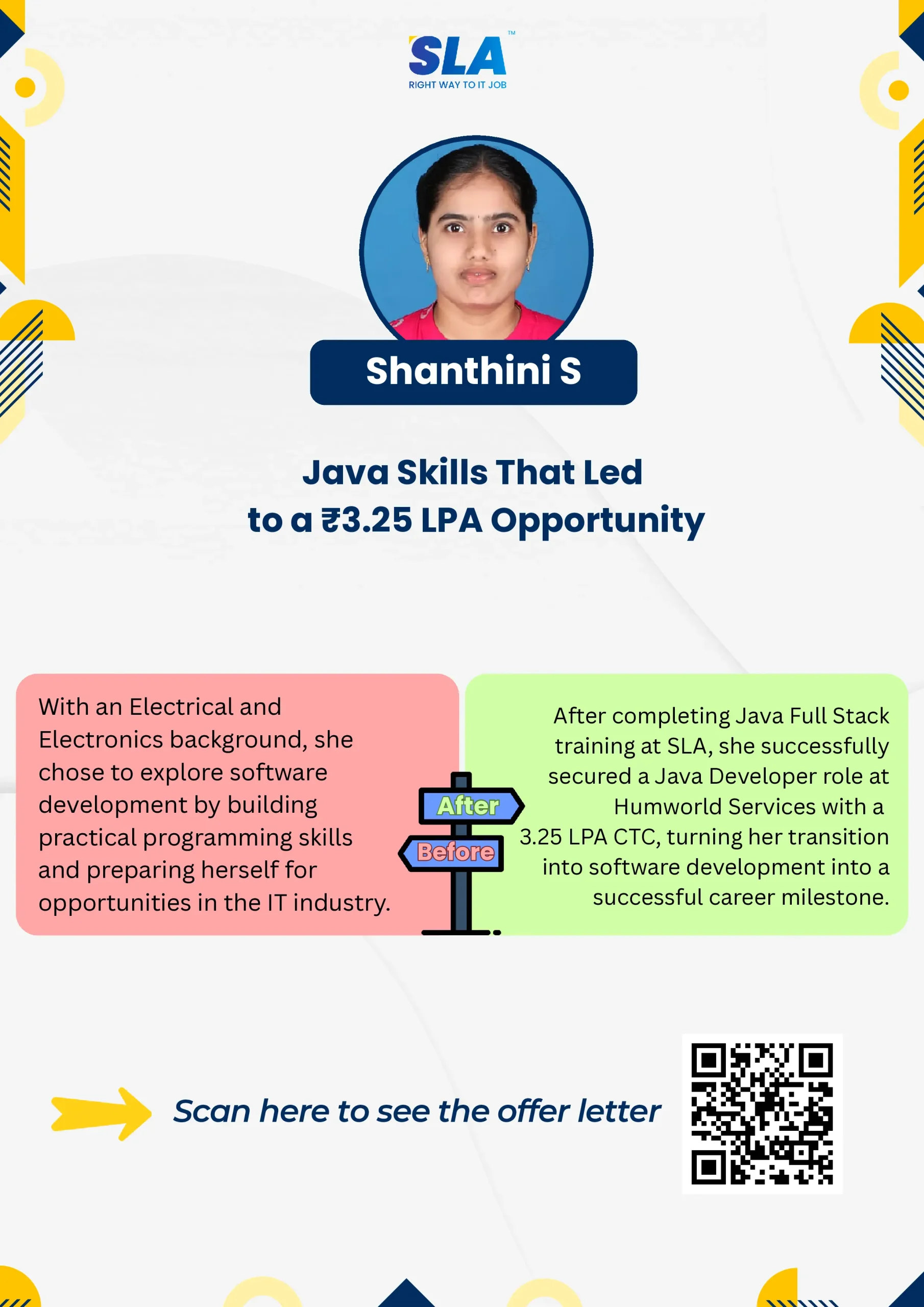




Google Reviews

Rating
4.8
1,053 Google reviews

Shaaru Menan
I had a 3 year career break. Joined SLA on Java Full Stack course and completed it.Did projects with the help of my Mentor. They…

Click here for Full Review

SARAN M
SLA Institute provides training in communication and aptitude along with strong technical skills. The trainers explain concepts clearly with a practical approach, which helps build…
Click here for Full Review

NalluKumar Ravichandran
Hi, I recently completed the DOT NET Full Stack Development course at SLA, and I had a great learning experience. The teaching style and student…
Click here for Full Review

Nithish Sahoo
I had an excellent experience taking this DevOps course. The curriculum is well-structured and covers both fundamental and advanced DevOps concepts in a clear manner.…
Click here for Full Review

MATHAN KUMAR G EEE
SLA Institute provides a structured learning environment for data analytics. The syllabus is relevant, and trainers are knowledgeable. Some sessions were very useful practically, while…
Click here for Full Review

Surya
Special thanks to Vishal Sir, the Placement Officer, for his interview guidance, resume support, and continuous motivation throughout the placement process. I would also like…
Click here for Full Review