
Build web applications with MERN Stack, a popular technology for creating interactive web pages. This MERN Stack Course in Bangalore helps you learn how to build web applications using MongoDB, Express.js, React, and Node.js. The course covers web development basics and advanced topics through sessions and real projects. You will learn how to create user interfaces, develop APIs, manage databases, and deploy web applications. With expert support and project-based learning, this course helps you build development skills for a successful web development career.
Mern Stack Course in Bangalore
4.60
(1987)
DURATION

3 Months
EMI
0% Interest
Mode

Live Online / Offline

Let's take the first step to becoming an expert in MERN
Click Here to Get Started
100% Placement
Assurance
Get Certified
JOB PLACEMENT ELIGIBILITY TEST
×
Your Placement Eligibility Report
Want more details about MERN Course?
Fill out the form, and our counsellors will get in touch with you at your preferred time. You can have all your queries answered. Once you decide that SLA is the perfect fit for your training needs, our counselors will guide you through the process every step of the way.

Course Schedules

Course Syllabus

Course Fees

or any other questions...
Fees, Duration & Batch Timings for MERN Course
Hands On Training
3-5 Real Time Projects
60-100 Practical Assignments
3+ Assessments / Mock Interviews
June 2026
Week days
(Mon-Fri)
Online/Offline
2 Hours Real Time Interactive Technical Training
1 Hour Aptitude
1 Hour Communication & Soft Skills
(Suitable for Fresh Jobseekers / Non IT to IT transition)
Course Fee
June 2026
Week ends
(Sat-Sun)
Online/Offline
4 Hours Real Time Interactive Technical Training
(Suitable for working IT Professionals)
Course Fee
Save up to 20% in your Course Fee on our Job Seeker Course Series
Learn More
Syllabus of MERN Course
Download Syllabus
HTML
- Introduction about HTML
- Building blocks
- Tags and Attributes
- Elements
- Formatting Tags
- Practical with Tags(List,Image,Link)
- Form Tag
- Input Tag
- Meta Tag
- Media Tag
- Table Tag
- Practicals
CSS
- Common CSS Selectors
- Values
- Colors
- Keyword Colors
- RGB
- HSL
- Absolute Length
- Relative Length
- Percentages
- EM
- Inline Display
- Working with BOX model
- width
- height
- margin and padding
- color & declarations with Practical
- Working With Borders
- Individual Border
- Content Box
- Radius
- Padding Box
- Border Box,
- Browser Specific Properties
- Typography
- Typeface Vs Fonts
- Font Attributes
- Adding Media
- List
- Building Forms with Tables
BOOTSTRAP
- Bootstrap Pagination
- Dropdown
- Navigation Bar
- Carousel
- Filters And Grid with Practical
JAVA SCRIPT
- Introduction
- Arrays
- Variables
- Typecasting
- Operators With Practical
- Loops
- Conditional statements
- Functions with Practical
- Classes & Objects
- Implementation of essential logical Programs using Java Script
PHP & MYSQL
- Introduction & Installation
- Input/output statements
- PHP comments
- Echo & print
- Scope of variables
- $_POST, $_GET, $_SERVER, $_SESSION
- $_COOKIES, $_REQUEST
- Server side scripting (S3) with MYSQL connections
- Predefined methods of PHP
- Error handling in PHP
- File handling in PHP
- OOPS with PHP
- AJAX with PHP
- Storing images with MYSQL
- MySQL DB connection and joins with PHP
MONGODB
- MongoDB Table creation
- Working with Queries
- Connect your UI with DB
NODE.JS
- Installation and usage of Node.js
- Node Modules
- Server Side Scripting with MongoDB / MySql Connections
- Templates
- Error Handling
- Routing, Express module
- Event Handling
- File Handling
- Http Request and Http Response
JAVASCRIPT WITH AJAX
- What is AJAX
- Asynchronous JavaScript and XML
- JavaScript and HTML DOM
- How AJAX Works
- Modern Browsers (Fetch API)
WORKING WITH JSON
- What is JSON
- Java Script Object Notation
- JSON Syntax Rules
- Converting JSON to JavaScript Objects
WEB API HANDLING
- Web API Handling
- What is web API
- Building RESTful APIs with Node.js and Express
- CRUD Operations
- Server-Side Rendering
- Authentication and Authorization
TYPESCRIPT INTRODUCTION
- What is TypeScript
- JavaScript and TypeScript
- Components of TypeScript
- Typescript usages
CREATING APPLICATION USING REACT JS
- React Life cycle
- Functional components
- Class Components
- React Hooks
- UseEffect, UseState, UseCallback
- UseContext,UseMemo,UseRef
- Server Side Node.js
- axios module
- State Management
- Redux Toolkit
- Dashboard layout
- Tables and Pagination
- Node with MYSQL / Mongo DB integration
Objectives of MERN Training
The main goal of this MERN Stack Training is to help you develop web application development skills using modern JavaScript technologies. The training provides hands-on experience in implementation, project development, and industry-standard coding.
Frontend Development with React
Learn HTML, CSS, JavaScript, React components, hooks, state management, routing, forms, and responsive web design concepts. This helps build modern and interactive user interfaces with React.
Backend Development and Database Integration
Understand Node.js, Express.js, REST API development, MongoDB operations, CRUD functionality, authentication, and server-side application development through exercises.
Advanced Full Stack Application Development
Learn JWT authentication, API integration, deployment concepts, performance optimization, cloud hosting basics, and real-time application development using industry practices.
Why Softlogic Systems is the Best Choice for MERN Training – Learn, Practice, and Get Placed!
Online & Offline Training Options
Learn at your convenience with flexible classroom and live online training.

Learn from 100+ Real-Time Developers
Get trained by industry professionals with years of hands-on experience.

Hands-on Projects & Codeathons
Practice with real-time projects and coding challenges to build confidence.
0% EMI Fee Options
Pay your course fees flexibly with easy EMI plans at zero interest.

Resume & Interview Support
Get expert help with resume building, mock interviews, and soft skills.

Placement with Top IT Firms
Access placement opportunities with leading MNCs and IT companies.

1000+ Hiring Partners
Benefit from Softlogic’s strong recruiter network for faster job placement.

No Backdoor Jobs
We ensure only genuine placement opportunities with trusted companies.
Want to Speak to a Trainer about MERN?Request a Free Callback
Highlights of MERN Course
What is the main focus of this MERN Stack course?
The course focuses on developing web applications with MongoDB, Express.js, React, and Node.js through hands-on, project-based learning. You will work on real-time projects using the MERN Stack.
What technologies are covered in the training?
The training covers:
- React.js
- Node.js
- Express.js
- MongoDB
- JavaScript
- REST APIs
- Authentication concepts
Is this course suitable for beginners?
Yes, the course starts with web development basics. Gradually advances toward advanced full-stack development concepts
Are real-time projects included?
Yes, learners work on industry-oriented projects to gain development experience and confidence.
Will learners work with databases?
Yes, the course includes MongoDB database design, CRUD operations, schema creation, and database integration.
Does the training include API development?
Yes, learners build APIs and connect frontend applications with backend services using Express.js and Node.js.
What skills can be gained from this course?
Learners develop skills in:
- Frontend development
- Backend development
- Database management
- API development
- Authentication
- Full-stack application deployment
Is placement support available?
Yes, placement support includes resume preparation, interview guidance, mock interviews, and career assistance.
Boost Your Skills with Our MERN Training Experts
Our Mentors are from Top Companies like:
- Learn from experienced trainers in full-stack web development and MERN technologies.
- Develop your skills by practicing on live projects and industrial training.
- With an annual success rate of mentoring over 2000 students, our trainers excel in mentoring you.
- Become proficient in MongoDB, Express.js, React.js, Node.js, REST APIs, and JS Development techniques.
- Gain expertise in both front-end and back-end development through coding practices.
- Gain knowledge about relevant industrial concepts with examples of live projects.
- Stay updated about current technological trends and job requirements.
- Get easy-to-understand training sessions that make development simple for Leaners.
- Build confidence in developing responsive and scalable web applications from scratch.
- Get professional advice for your project development, interview preparation, and career growth.
Want to Speak to a Trainer about MERN?Request a Free Callback
What Modes of Training are available for MERN Course?
Offline / Classroom Training

A Personalized Learning Experience with Direct Trainer Engagement!
- Direct Interaction with the Trainer
- Clarify doubts then and there
- Airconditioned Premium Classrooms and Lab with all amenities
- Codeathon Practices
- Direct Aptitude Training
- Live Interview Skills Training
- Direct Panel Mock Interviews
- Campus Drives
- 100% Placement Support
Online Training

Instructor Led Live Training! Learn at the comfort of your home
- No Recorded Sessions
- Live Virtual Interaction with the Trainer
- Clarify doubts then and there virtually
- Live Virtual Interview Skills Training
- Live Virtual Aptitude Training
- Online Panel Mock Interviews
- 100% Placement Support
Corporate Training

Blended Delivery model (both Online and Offline as per Clients’ requirement)
- Industry endorsed Skilled Faculties
- Flexible Pricing Options
- Customized Syllabus
- 12X6 Assistance and Support
Want to Master your Skills in MERN?GET Free Consultation
Certifications
Take your career to new heights with Softlogic's software training certifications.
Improve your abilities to get access to rewarding possibilities
Improve your abilities to get access to rewarding possibilities

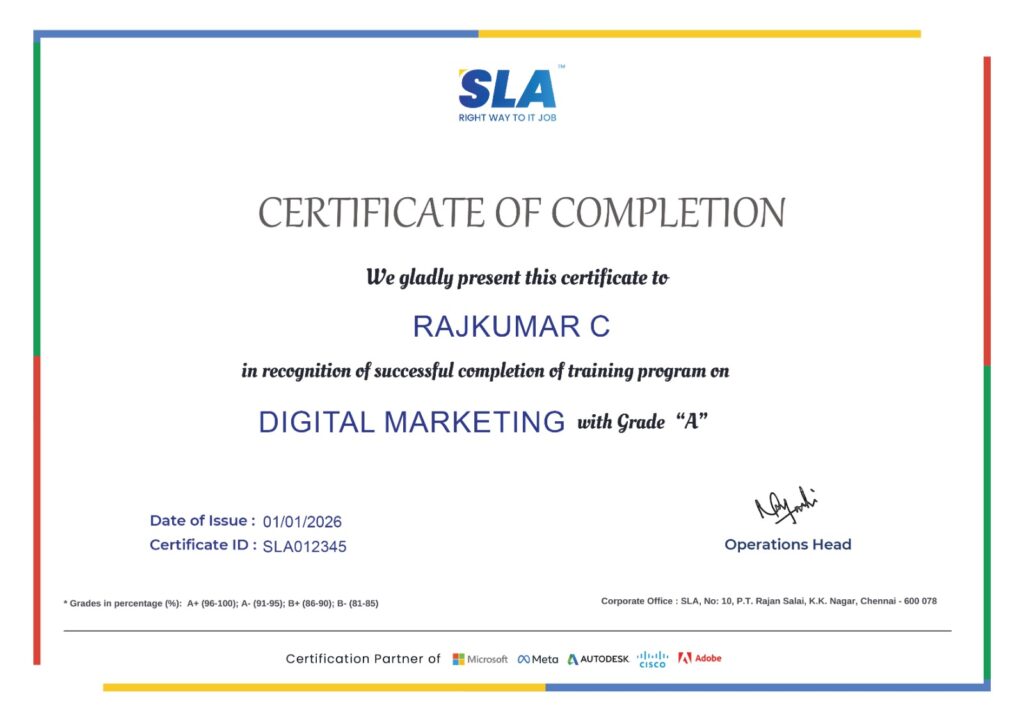
Earn Your Certificate of Completion
Validate your achievements with Softlogic's Certificate of Completion, verifying successful fulfillment of all essential components.
Take Your Career to the Next Level with Certifications
Get a certifications through our training programs to gain a competitive edge in the industry.

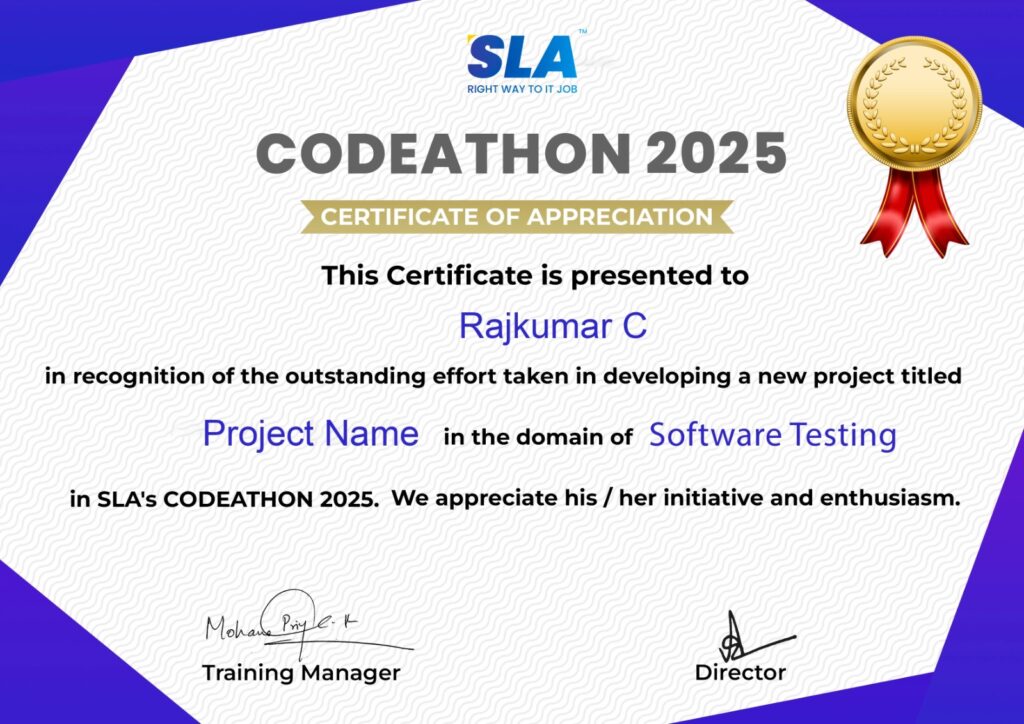
Stand Out from the Crowd with Codethon Certificate
Verify the authenticity of your real-time projects with Softlogic's Codethon certificate.
Hands-on Project Practices in MERN Course
Analytics Admin Dashboard
Online Collaboration Platform
Kanban Task Management Board
Real-Time Chat Application
Job Portal Application
Payment Gateway Integration
User Authentication System
E-Commerce Storefront
Weather Dashboard Application
Blogging Content Management System
Personal Expense Tracker
Smart To-Do Application
The SLA Way to Get Placed in Top IT Companies
Enrollment

Technology Training
Coding Practices
Realtime Projects
Realtime Projects
Placement Training
Aptitude Training
Interview Skills
Interview Skills
Panel Mock
Interview

Unlimited
Interviews

Interview
Feedback

100%
IT Career
Google Reviews

Rating
4.8
1,053 Google reviews

MATHAN KUMAR G EEE
SLA Institute provides a structured learning environment for data analytics. The syllabus is relevant, and trainers are knowledgeable. Some sessions were very useful practically, while…

Click here for Full Review

SARAN M
SLA Institute provides training in communication and aptitude along with strong technical skills. The trainers explain concepts clearly with a practical approach, which helps build…
Click here for Full Review

Shaaru Menan
I had a 3 year career break. Joined SLA on Java Full Stack course and completed it.Did projects with the help of my Mentor. They…
Click here for Full Review

Surya
Special thanks to Vishal Sir, the Placement Officer, for his interview guidance, resume support, and continuous motivation throughout the placement process. I would also like…
Click here for Full Review

NalluKumar Ravichandran
Hi, I recently completed the DOT NET Full Stack Development course at SLA, and I had a great learning experience. The teaching style and student…
Click here for Full Review

Nithish Sahoo
I had an excellent experience taking this DevOps course. The curriculum is well-structured and covers both fundamental and advanced DevOps concepts in a clear manner.…
Click here for Full Review
Discover What Our Students Have To Say
See More ReviewsPlacement Support for a MERN Job
Genuine Placements. No Backdoor Jobs at Softlogic Systems.

Aptitude Training
from Day 1
Interview Skills
from Day 1

Softskills Training
from Day 1
Build Your Resume

Build your LinkedIn Profile

Build your GitHub
digital portfolio

Panel Mock Interview
Unlimited Interviews until you get placed

Life Long Placement Support at no cost
Unlock Career Opportunities with our Placement TrainingRequest a Free Callback
FAQs
What is the MERN Stack?
MERN Stack is a full-stack web development technology that includes:
- MongoDB – Database management
- Express.js – Backend framework
- React.js – Frontend library
- Node.js – Server-side runtime
Together, these MERN Stack technologies help developers build modern and scalable web applications
How do MERN Stack components work together?
In an application, React manages the user interface, while Node.js and Express.js handle server-side operations. MongoDB stores the application data, allowing all MERN Stack components to work together smoothly.
Why is JavaScript used throughout the MERN Stack?
Using JavaScript for both frontend and backend development offers benefits:
- Faster development process
- Easy code maintenance
- Better communication between application layers
- Consistent programming language across the project with JavaScript
What is the difference between MongoDB and SQL databases?
SQL databases rely on fixed table structures for storing and organizing data. MongoDB stores data as documents, making it easier to handle changing business requirements and large-scale applications.
What is Express.js?
Express.js is a framework for Node.js that helps developers create APIs, manage application routes, process requests, and connect applications to databases efficiently.
What are Middleware functions in Express?
Middleware functions help process requests before they reach the route.
- Common uses include:
- User authentication
- Request validation
- Error handling
- Logging activities
- Data processing
Why does React use a DOM?
React utilizes a Virtual DOM to enhance the speed and responsiveness of applications. When updating the entire webpage, React updates only the elements that have changed, making applications faster and more responsive
How is authentication handled in applications?
Authentication is commonly implemented using JSON Web Tokens (JWTs). After logging in, users receive a token that helps verify their identity when accessing protected application features with MERN Stack.
What is CORS?
CORS (Cross-Origin Resource Sharing) is a security feature that allows frontend and backend applications running on domains or ports to communicate safely with each other.
How does Express handle errors centrally?
Express uses error-handling middleware to manage application errors. This approach keeps the code organized, improves debugging, and ensures error responses across the application with Express.js.
Additional Information for
the MERN Course
Future Scopes for Learning MERN Stack
There are future scopes for learning the MERN Stack Course:
- AI-Powered Web Applications: Modern MERN applications integrate AI services and chatbots to deliver user experiences and business automation solutions with the MERN Stack.
- TypeScript Development: Many organizations now use TypeScript in the MERN stack to improve code quality, maintainability, and application performance.
- Serverless Application Development: MERN applications can be deployed using serverless technologies, reducing infrastructure management overhead and improving scalability.
- Real-Time Application Development: Node.js and WebSocket technologies enable the development of chat applications, collaboration tools, live notifications, and communication platforms using the MERN Stack.
- Progressive Web Applications: MERN developers can create web applications that provide mobile experiences with offline access and push notifications.
- Cloud-Native Development: Cloud platforms like AWS, Azure, and Google Cloud provide opportunities to deploy and scale MERN applications.
- Microservices Architecture: Modern enterprises adopt microservices, and MERN developers play a role in building scalable backend services.
- GraphQL Integration: GraphQL is becoming popular for managing data and improving application performance in complex web projects.
- Freelancing and Startup Opportunities: Full-stack MERN developers can build SaaS products, freelance solutions, and custom applications for clients worldwide.
- Career Growth Opportunities: MERN professionals can advance into roles such as Full Stack Developer, Senior Software Engineer, Technical Lead, Solution Architect, and Product Engineer.