Our MEAN Stack Online Training programs are designed for students, freshers, and working professionals who want to upskill and stay relevant. We offer MEAN Stack Online Courses that are practical, interactive, and aligned with the latest industry demands. Our MEAN Stack Syllabus Covers MongoDB for database management, Express.js for backend development, Angular for frontend design, and Node.js for server-side programming. Enroll now and learn from industry experts with flexible timings and get Job support.
Mean Stack Online Training
DURATION
3 Months
EMI
0% Interest
Mode
Live Online / Offline
Let's take the first step to becoming an expert in MEAN Stack
100% Placement
Assurance
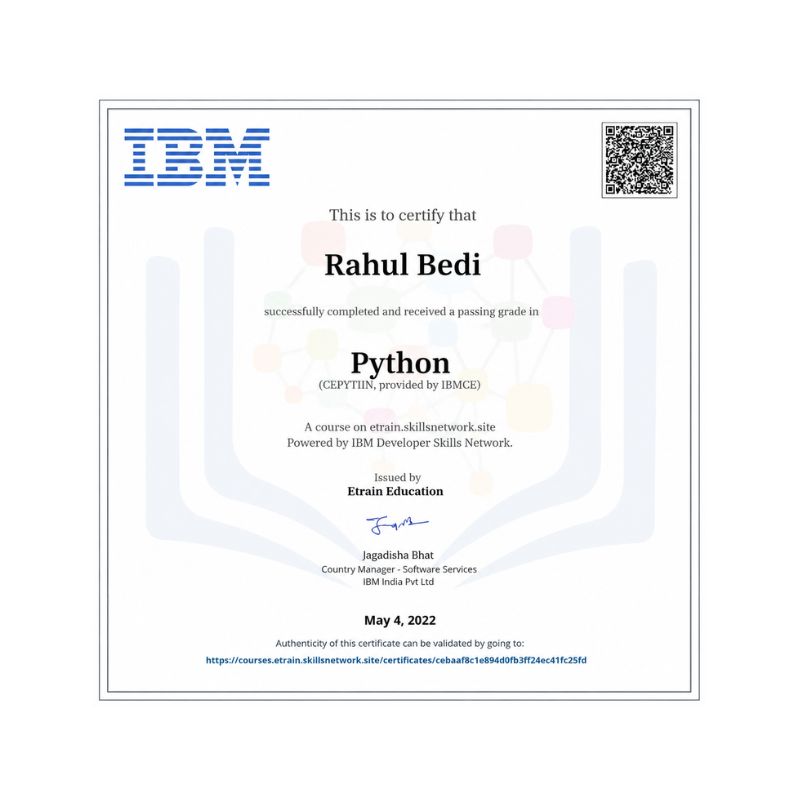
Get Certified
JOB PLACEMENT ELIGIBILITY TEST
Your Placement Eligibility Report
Want more details about MEAN Stack Course?
Course Schedules
Course Syllabus
Course Fees
or any other questions...
Fees, Duration & Batch Timings for MEAN Stack Course
Hands On Training
3-5 Real Time Projects
60-100 Practical Assignments
3+ Assessments / Mock Interviews
July 2026
Week days
(Mon-Fri)
Online/Offline
2 Hours Real Time Interactive Technical Training
1 Hour Aptitude
1 Hour Communication & Soft Skills
(Suitable for Fresh Jobseekers / Non IT to IT transition)
July 2026
Week ends
(Sat-Sun)
Online/Offline
4 Hours Real Time Interactive Technical Training
(Suitable for working IT Professionals)
Save up to 20% in your Course Fee on our Job Seeker Course Series
Syllabus of MEAN Stack Course
Node .js
- Getting started with Node.js
- Node Package Manager
- Modules
- Asynchronous Programming
- Callbacks
- Events and Event Loop
- Streams and Buffers
- Connecting Node.js to Database
- Web Sockets
Angular .js
- Angular Architecture
- Dynamic Binding
- Modules, Controllers, and Scope
- Views
- Custom Directives
- Event Directives
- Expressions
- Built-in and Custom Filters
- Understanding the Digest Loop
- Form Validations
- AngularJS Service Types
- Factories
- Creating Custom Services
- Routing, Redirects, and Promises
Express .js
- MVC Pattern
- Introduction to Express
- Routing
- HTTP Interaction
- Handling Form Data
- Handling Query Parameters
- Cookies and Sessions
- User Authentication
- Error Handling
- Creating and Consuming RESTful Services
- Using Templates
MongoDB
- Concepts
- Scaling
- SQL and Complex Transactions
- Documents Overview
- Installing MongoDB (windows)
- Installing MongoDB (Linux)
- JSON
- Dynamic Schema
- Cursors Introduction
- Query Language: Basic Concepts
- Query Language: Projection
- Query Language: Advantages of a Dynamic Schema
- Shell: Queries
- Sorting
- Query Language: Cursors
- User Authentication
- Error Handling
Objectives of MEAN Stack Training
Our MEAN Stack Online Training has a syllabus that is created by experts from the IT industry while adhering to the current trends and standards in the IT industry, so this makes the syllabus very up-to-date and reliable. The syllabus also covers topics ranging from fundamental and advanced topics some of which are discussed briefly down below:
- In the entire syllabus you will learn in detail about the four main components of MEAN Stack such as MongoDB, Express.js, Angular.js, Node.js.
- Under MongoDB, you will learn various topics like Concepts, Scaling etc.
- Under Express.js, you will learn various topics like MVC Pattern, Introduction to Express.
- Under Angular.js, you will learn various topics like Angular Architecture, Dynamic Binding etc.
- Under Node.js, you will learn various topics like Getting started with Node.js, Node Package Manager etc.
Why Softlogic Systems is the Best Choice for MEAN Stack Training – Learn, Practice, and Get Placed!
Online & Offline Training Options
Learn from 100+ Real-Time Developers
Hands-on Projects & Codeathons
0% EMI Fee Options
Resume & Interview Support
Placement with Top IT Firms
1000+ Hiring Partners
No Backdoor Jobs
Highlights of MEAN Stack Course
What is MEAN Stack?
The MEAN stack is widely adopted for crafting dynamic web apps, comprising MongoDB for the database, Express.js for server-side logic, Angular (or AngularJS) for client-side interface, and Node.js for server runtime. This cohesive JavaScript stack streamlines development and deployment, leveraging a unified language throughout.
What are the reasons for learning MEAN Stack?
The following are the reasons for learning MEAN Stack:
- Scales easily: MEAN apps can grow smoothly to handle more users because Node.js efficiently manages many connections, and MongoDB adapts to new data needs.
- Cloud ready: MEAN applications run well in the cloud since Node.js is lightweight and MongoDB offers cloud deployment options.
- Big community: Learning and fixing problems is easier with the MEAN stack thanks to its large and active community of developers.
What are the prerequisites for learning MEAN Stack Online Training?
SLA does not demand any prerequisites for any courses as all the courses cover topics from fundamental to advanced level. However having a basic knowledge on these below topics can be beneficial in learning MEAN Stack easily:
- JavaScript: The most important language for MEAN Stack development. You’ll need to know how to work with things like data containers, instructions, and how web pages are built.
- HTML and CSS: These are the foundation of web pages, like the bricks and paint of a house. Even though MEAN Stack uses tools to build the user interface, understanding HTML and CSS will help you grasp how web apps are put together and designed.
- Version control (Git): As you build your applications, it’s helpful to keep track of changes. Git is a popular tool that helps you manage your code effectively.
Our MEAN Stack Course is suitable for:
- Students
- Job Seekers
- Freshers
- IT professionals aiming to enhance their skills
- Professionals seeking career change
- Enthusiastic programmers
What are the course fees and duration?
The MEAN Stack course fees depend on the program level (basic, intermediate, or advanced) and the course format (online or in-person).On average, the MEAN Stack course fees come in the range of ₹30,000 to ₹75,000 INR for 4 to 6 months, inclusive of international certification. For some of the most precise and up-to-date details on fees, duration, and certified MEAN Stack certification, kindly contact our Best Placement Training Institute in Chennai directly.
What are some of the jobs related to MEAN Stack?
The following are some of the jobs related to MEAN Stack:
- MEAN Stack Developer
- Full Stack Developer
- Front-End Developer
What is the salary range for the position of MEAN Stack Developer?
The MEAN Stack Developer freshers salary typically with less than 2 years of experience earn approximately ₹3-4 lakhs annually. For a mid-career MEAN Stack Developer with around 3 years of experience, the average annual salary is around ₹5-6 lakhs. An experienced MEAN Stack Developer with more than 4 years of experience can anticipate an average yearly salary of around ₹8-9 lakhs. Visit SLA for more courses.
List a few real time MEAN Stack applications.
Here are several real time MEAN Stack applications:
- Real Time Chat Application
- Collaborative To-do list
- Real time Polling App
- Simple Social Media Platform
Boost Your Skills with Our MEAN Stack Training Experts
Our Mentors are from Top Companies like:
The following are our trainer’s profile for the MEAN Online Training:
- SLA has a set of highly skilled MEAN Stack trainers with over 5 years of experience in software development and training.
- They have a proven track record of delivering successful, industry-aligned MEAN Stack courses to students.
- Extensive experience building web applications, database applications, mobile apps, and enterprise applications using the MEAN stack.
- Creates high-quality, interactive learning materials to enhance the learning experience.
- Possesses in-depth expertise in all core MEAN Stack components: MongoDB, ExpressJS, Angular, and NodeJS.
- Delivers clear and understandable MEAN Stack courses, effectively addressing student questions.
- Well-versed in open-source technologies used in MEAN Stack development.
- Expert at crafting learning materials, technical questions, and effective study strategies.
- Strong written and verbal communication skills to connect and engage with students.
- Adaptable and stays current with the latest advancements in MEAN Stack development.
- Offers career support by guiding students with resume building and interview preparation.
What Modes of Training are available for MEAN Stack Course?
Offline / Classroom Training
- Direct Interaction with the Trainer
- Clarify doubts then and there
- Airconditioned Premium Classrooms and Lab with all amenities
- Codeathon Practices
- Direct Aptitude Training
- Live Interview Skills Training
- Direct Panel Mock Interviews
- Campus Drives
- 100% Placement Support
Online Training
- No Recorded Sessions
- Live Virtual Interaction with the Trainer
- Clarify doubts then and there virtually
- Live Virtual Interview Skills Training
- Live Virtual Aptitude Training
- Online Panel Mock Interviews
- 100% Placement Support
Corporate Training
- Industry endorsed Skilled Faculties
- Flexible Pricing Options
- Customized Syllabus
- 12X6 Assistance and Support
Certifications
Improve your abilities to get access to rewarding possibilities
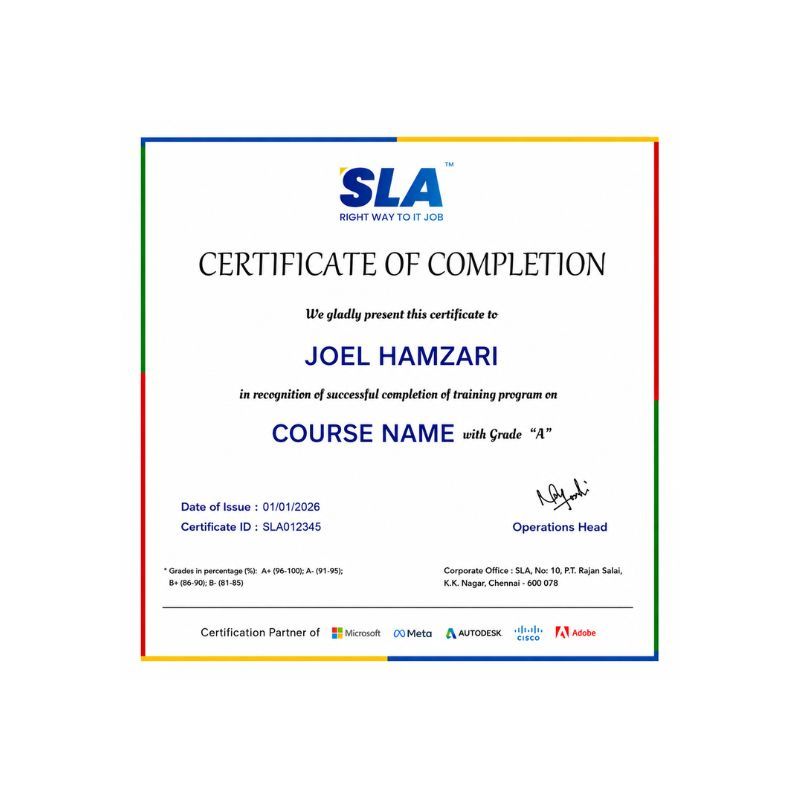
Earn Your Certificate of Completion
Take Your Career to the Next Level with Certifications
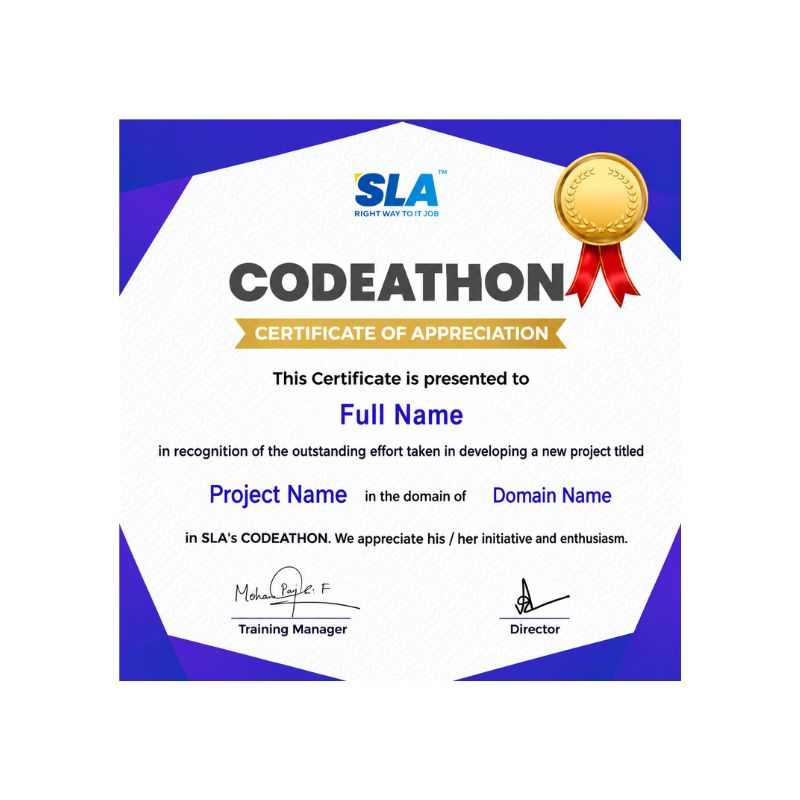
Stand Out from the Crowd with Codethon Certificate
Hands-on Project Practices in MEAN Stack Course
Real-time Fitness Tracker
Real-time Remote Code Execution Tool
Real-time Feedback System
Interactive Real-time Analytics Dashboard
Real-time Music Streaming with Chat
Real-time Code Collaboration Tool
Real-time Auction Platform
Real-time Location Sharing App
Real-time Collaboration Platform
The SLA Way to Get Placed in Top IT Companies
Enrollment
Technology Training
Realtime Projects
Placement Training
Interview Skills
Panel Mock
Interview
Unlimited
Interviews
Interview
Feedback
100%
IT Career
Placement Support for a MEAN Stack Job
Genuine Placements. No Backdoor Jobs at Softlogic Systems.
Aptitude Training
from Day 1
Interview Skills
from Day 1
Softskills Training
from Day 1
Build Your Resume
Build your LinkedIn Profile
Build your GitHub
digital portfolio
Panel Mock Interview
Unlimited Interviews until you get placed
Life Long Placement Support at no cost
FAQs
How many branches does SLA have?
SLA has two branches currently, one is in K.K. Nagar and another is in Navalur, OMR.
What is the special feature of SLA’s OMR branch?
SLA’s OMR branch is located right in the middle of Navalur’s IT hub so students of SLA’s OMR branch have a lot of opportunities when it comes to internships and placements.
Does SLA offer EMI?
Yes, SLA indeed offers EMI with 0% interest.
What is SLA’s policy on student issues?
SLA has HR personnel who will look into students’ issues.
What type of payments does SLA usually accept?
SLA accepts payments ranging from cash, cheques, cards to digital UPI Payments.
How do I handle many users in my MEAN Stack app?
You can add more servers (horizontal scaling) or upgrade your servers (vertical scaling). Use load balancers to spread traffic and explore sharding in MongoDB for big data.
How do I keep my MEAN Stack app secure?
Secure user logins, sanitize user input, use HTTPS, and update libraries often. Consider using libraries for secure tokens and data encryption.
How can I connect to external APIs in my MEAN Stack app?
Use Node.js libraries like Axios to get data from external APIs. Process the data in your Node.js code and integrate it with your Angular frontend.
How can my MEAN Stack app run faster?
Use caching, optimize code, and minimize server-side rendering. Use database indexing in MongoDB and utilize asynchronous operations effectively in your Node.js backend.
How do I fix errors in my MEAN Stack app?
Use browser developer tools to check network requests for frontend errors. Use logging libraries to track backend behavior. Leverage debugging tools for Node.js code and MongoDB queries.
Additional Information for
the MEAN Stack Course
History of MEAN Stack
- Not Invented Here: The MEAN stack wasn’t created by a single person, but rather emerged around 2013 as a popular combination of existing JavaScript technologies for web development.
- Building Blocks with History: Each technology within the MEAN stack (MongoDB, Express.js, Angular, Node.js) pre-dates the term “MEAN.” They arrived on the scene between 2007 and 2010.
- The MEANingful Acronym: Though the exact origin is debated, Valeri Karpov is credited with coining the term “MEAN” around 2013. A blog post and logo featuring the first letter of each technology helped popularize it.
- MEAN Isn’t Fixed: The MEAN stack is flexible. Some developers swap Angular for React.js (another front-end framework) creating the MERN stack (MongoDB, Express.js, React.js, Node.js).
- A Thriving Community: The MEAN stack boasts a large and active developer community. This ongoing collaboration fosters innovation with new tools and best practices for MEAN stack development.
- Organic Growth: The MEAN stack wasn’t a planned invention, but rather a natural fit that gained recognition around 2013. Valeri Karpov’s acronym helped solidify its place in web development, and it keeps evolving alongside the web development landscape.