Softlogic is one of the Top Training institutes for Embedded. Learn how to use Embedded, from beginner basics to advanced techniques. Our Embedded Syllabus covers the microcontroller fundamentals, embedded C programming, interfacing techniques, real-time operating systems (RTOS), and hardware debugging. We offer an Embedded Course with Placement Assistance, Mock interviews, Resume building, and certification.
Embedded Training Institute
4.80
(3672)
DURATION

1 Months
EMI
0% Interest
Mode

Live Online / Offline

Let's take the first step to becoming an expert in Embedded
Click Here to Get Started
Lifelong Placement
Assistance
Get Certified
JOB PLACEMENT ELIGIBILITY TEST
×
Your Placement Eligibility Report
Want more details about Embedded?
Fill out the form, and our counsellors will get in touch with you at your preferred time. You can have all your queries answered. Once you decide that SLA is the perfect fit for your training needs, our counselors will guide you through the process every step of the way.

Course Schedules

Course Syllabus

Course Fees

or any other questions...
Fees, Duration & Batch Timings for Embedded
Hands On Training
3-5 Real Time Projects
60-100 Practical Assignments
3+ Assessments / Mock Interviews
July 2026
Week days
(Mon-Fri)
Online/Offline
2 Hours Real Time Interactive Technical Training
1 Hour Aptitude
1 Hour Communication & Soft Skills
(Suitable for Fresh Jobseekers / Non IT to IT transition)
Course Fee
July 2026
Week ends
(Sat-Sun)
Online/Offline
4 Hours Real Time Interactive Technical Training
(Suitable for working IT Professionals)
Course Fee
Save up to 20% in your Course Fee on our Job Seeker Course Series
Learn More
Syllabus of Embedded
Download Syllabus
Microprocessor & Microcontroller Classification:
- Difference between Microprocessor & Microcontroller
- Classification based on architecture
- Memory Classification
Registers & Memory of AT89C51:
- Description of RAM
- Description of CPU Registers
- Functions of SFR
Introduction of EMBEDDED C
- Introduction to Embedded C
- Difference between C & Embedded C
- Programming style
- Basic structure of C program
Constants, Variables & Data Types
- Keywords & Identifiers
- Data type & its memory representation
- Arrays and strings
Operators
- Types of Operators
- Bitwise Operators explained
- CONTROL STRUCTURES & LOOPS
- Decision making with if statement
- If….else statement
- Switch statement, and GOTO statement
- The While and Do – While statements
- For statement
Functions
- Why Functions
- Types of Functions
- A Multi functional program
- Return values & their types
Interoduction To Softwares
- Kiel Compiler
- Proteus
Interfacing of LED
- Introduction of LED’s
- Interfacing Circuit Description of LED’s
- Programming of LED’s Interfacing
Interfacing of Seven Segment Display
- Introduction to 7 Segment Display
- Types of 7 Segment Display
- Interfacing Circuit Description of 7 Segment Display
- Programming of 7 Segment Display Interfacing
Interfacing of LCD
- Introduction to 16 x 2 LCD
- Commands of 16 x 2 LCD
- Interfacing Circuit Description of 16 x 2 LCD
- Programming of 16 x 2 LCD
Interfacing of Switches & Keyboard Matrix
- Introduction to Switches & Keyboard Matrix
- Interfacing Circuit of Switches & Keyboard Matrix
- Programming of Keyboard Matrix & Switches
- Controlling of LED’s by using Switches
- Key board Matrix & LCD Interfacing Program
Interfacing of Motors
- Introduction to Motors
- Types of Motors used in Embedded System
- Programming & Controlling of motors in Embedded System
Timers & Counters Programming
- Introduction to Timers & Counters
- Difference between Timer and Counter
- Description of SFR associated with Timers & Counters
- Programming of Timers & Counters
Serial Communication Programming
- Introduction to Serial Communication
- Types of Serial Communication
- Description of SFR associated with Serial Communication
- Programming of UART
Interfacing Of ADC
- Introduction to ADC
- Programming of ADC
Sensor Interfacing
- Introduction to sensing devices
- Interfacing of IR Sensors
- Interfacing of Temperature Sensor
Embedded Networking
- I2C Bus Standard
- Bluetooth
- Zigbee
- USB
- UART
Linux Fundamentals & Device Driver Programming
- Linux Fundamentals
- Linux Commands
- VI Editors
- Introduction to Device Driver
- The Role of Device Driver
- Kernel Module Vs Application
- Types of Device Driver
- Character Driver
- Block Driver & Network Driver
Objectives of Embedded
The Embedded Training will cover all the topics ranging from fundamental to advanced concepts, which will make it easy for students to grasp Embedded. The Embedded Course Curriculum is composed of some of the most useful and rare concepts that will surely give students a complete understanding of Embedded as well. So, some of those curriculum are discussed below as objectives:
- To make students well-versed with fundamental concepts in Embedded like – Microprocessor & Microcontroller Classification, Registers & Memory of AT89C51, Introduction to Embedded C, Constants, Variables & Data Types etc.
- To make students know more about Embedded, by making students learn concepts like – Operators, Functions, Keil Compiler, Proteus, Interfacing of LED, Interfacing of Seven Segment Display etc.
- To make students more knowledgeable on the advanced topics of Embedded like – Serial Communication Programming, Interfacing Of ADC, Sensor Interfacing, Embedded Networking, Linux Fundamentals & Device Driver Programming etc.
Request a Free Callback
Why Softlogic Systems is the Best Choice for Embedded – Learn, Practice, and Get Placed!
Online & Offline Training Options
Learn at your convenience with flexible classroom and live online training.

Learn from 100+ Real-Time Developers
Get trained by industry professionals with years of hands-on experience.
Hands-on Projects & Codeathons
Practice with real-time projects and coding challenges to build confidence.
0% EMI Fee Options
Pay your course fees flexibly with easy EMI plans at zero interest.

Resume & Interview Support
Get expert help with resume building, mock interviews, and soft skills.

Placement with Top IT Firms
Access placement opportunities with leading MNCs and IT companies.

1000+ Hiring Partners
Benefit from Softlogic’s strong recruiter network for faster job placement.

No Backdoor Jobs
We ensure only genuine placement opportunities with trusted companies.
Request a Free Callback
Highlights of Embedded
What is Embedded?
Embedded systems are specialized computing units integrated into larger devices to perform dedicated tasks. They consist of a microcontroller, memory, peripherals, and software, and are designed for real-time operation with limited resources. These systems are crucial in consumer electronics, automotive, industrial, and medical applications, providing efficiency and reliability.
What is Embedded Full Stack?
Embedded Full Stack involves mastering all aspects of embedded system development, including both hardware and software. This includes understanding microcontrollers, circuit design, firmware, RTOS, device drivers, application development, communication protocols, testing, debugging, and system integration. It equips professionals to manage the entire development and deployment process for embedded systems.
What are the reasons for learning Embedded?
The following are the reasons for learning Embedded Course:
- Industry Integration: Embedded systems are crucial across sectors like automotive, healthcare, consumer electronics, and industrial automation, creating a strong need for skilled professionals.
- Broad Applications: Proficiency in embedded systems can lead to careers in various industries, including automotive, telecommunications, medical devices, robotics, and consumer electronics.
- Cutting-Edge Work: Engaging with embedded systems often involves working on advanced technologies and innovative solutions.
- Cross-Field Knowledge: Learning embedded systems combines knowledge from electronics, computer science, and engineering, enhancing overall technical expertise.
What are the prerequisites for learning Embedded?
The following are the prerequisites for learning Embedded, but they are not mandatory:
- Electronic Fundamentals: Understanding components like resistors, capacitors, and transistors, and their roles in circuits.
- Programming Languages: Proficiency in languages commonly used in embedded systems, such as C and C++, with Assembly language also being useful.
- Microcontroller/Microprocessor Basics: Knowledge of how microcontrollers and processors operate and their architectures.
- Embedded OS: Familiarity with real-time operating systems (RTOS) or bare-metal programming.
What are the course fees and duration?
Our Embedded Course Fees may vary depending on the specific course program you choose (basic / intermediate / full stack), course duration, and course format (remote or in-person). On an average the Embedded Course Fees range from 25k to 30k, for a duration of 1 month total with international certification.
What are some of the jobs related to Embedded?
The following are the jobs related to Embedded:
- Embedded Systems Engineer
- Firmware Developer
- Hardware Engineer
- Embedded Software Developer
- Systems Architect
- Application Engineer
List a few real time Embedded applications.
The following are the real-time Embedded applications:
- Automotive Systems
- Medical Devices
- Industrial Automation
- Telecommunication
- Consumer Electronics
- Aerospace
- Defense Systems
- Home Automation
Boost Your Skills with Our Embedded Experts
Our Mentors are from Top Companies like:
- Our trainers bring extensive expertise in Embedded Systems Design, Software Development, Fault Diagnosis, and Maintenance.
- They have substantial experience in scripting and embedded coding across various platforms, including ARM, NIOS, PIC, and AVR.
- They possess a deep understanding of multiple operating systems such as Linux, VxWorks, and Windows.
- With excellent communication skills and a patient approach, they effectively mentor and guide students enrolled in Embedded Training.
- Skilled in debugging and troubleshooting both embedded systems and system software, our trainers are well-versed in Object-Oriented Programming (OOP) and Component-Based Development (CBD).
- They also have hands-on experience with real-time operating systems (RTOS), designing intricate protocols, and applying VHDL in Embedded System Design.
- Proficient with version control and bug tracking tools like Git and JIRA, they adhere to various coding and style standards such as MISRA and MISRA-C.
- They excel at imparting complex knowledge and are enthusiastic about providing high-quality education to eager students.
- Additionally, our trainers are adept at assisting students in creating tailored resumes to meet industry standards and are dedicated to preparing them for successful job placements through expert interview preparation.
Request a Free Callback
What Modes of Training are available for Embedded?
Offline / Classroom Training

A Personalized Learning Experience with Direct Trainer Engagement!
- Direct Interaction with the Trainer
- Clarify doubts then and there
- Airconditioned Premium Classrooms and Lab with all amenities
- Codeathon Practices
- Direct Aptitude Training
- Live Interview Skills Training
- Direct Panel Mock Interviews
- Campus Drives
- 100% Placement Support
Online Training

Instructor Led Live Training! Learn at the comfort of your home
- No Recorded Sessions
- Live Virtual Interaction with the Trainer
- Clarify doubts then and there virtually
- Live Virtual Interview Skills Training
- Live Virtual Aptitude Training
- Online Panel Mock Interviews
- 100% Placement Support
Corporate Training

Blended Delivery model (both Online and Offline as per Clients’ requirement)
- Industry endorsed Skilled Faculties
- Flexible Pricing Options
- Customized Syllabus
- 12X6 Assistance and Support
GET Free Consultation
Certifications
Take your career to new heights with Softlogic's software training certifications.
Improve your abilities to get access to rewarding possibilities
Improve your abilities to get access to rewarding possibilities

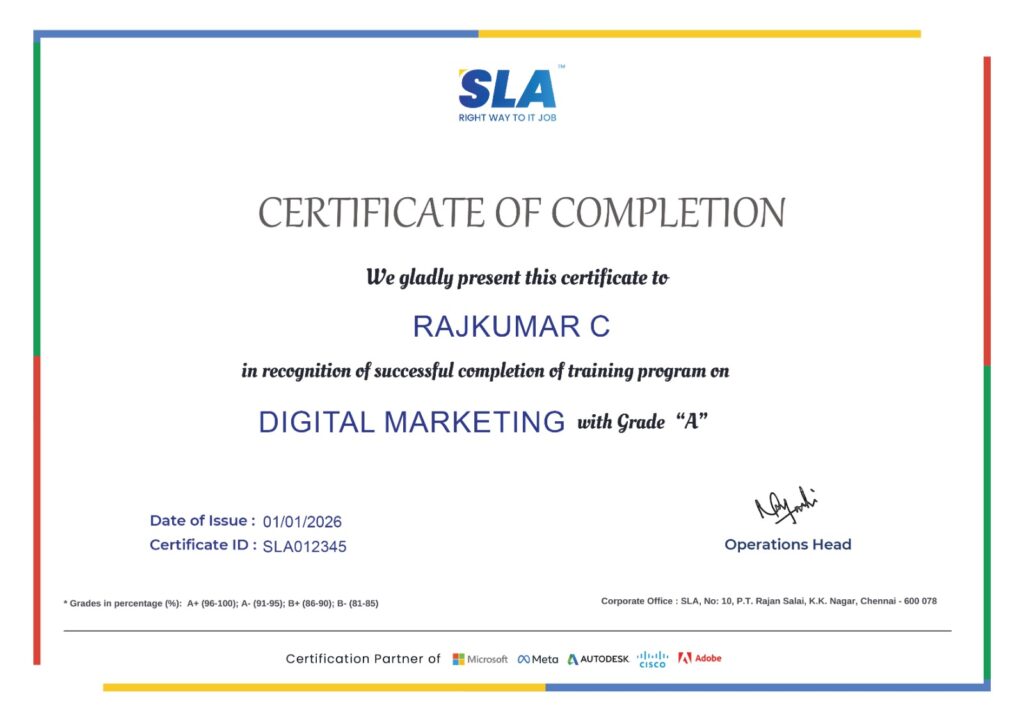
Earn Your Certificate of Completion
Validate your achievements with Softlogic's Certificate of Completion, verifying successful fulfillment of all essential components.
Take Your Career to the Next Level with Certifications
Get a certifications through our training programs to gain a competitive edge in the industry.

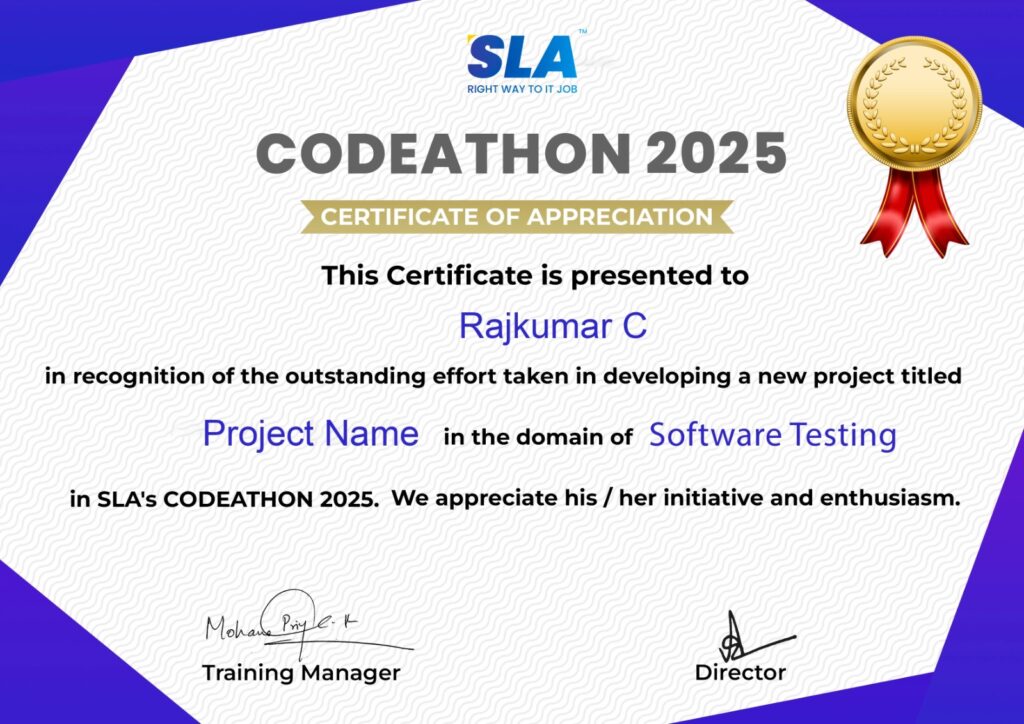
Stand Out from the Crowd with Codethon Certificate
Verify the authenticity of your real-time projects with Softlogic's Codethon certificate.
Hands-on Project Practices in Embedded
Real-Time Data Logger
Smart Energy Meter
Automated Robotic Car
Smart Health Monitoring System
Traffic Light Control System
Home Security System with Motion Detection
Real-Time Weather Monitoring Station
Automated Plant Watering System
Smart Home Automation System
The SLA Way to Get Placed in Top IT Companies
Enrollment

Technology Training
Coding Practices
Realtime Projects
Realtime Projects
Placement Training
Aptitude Training
Interview Skills
Interview Skills
Panel Mock
Interview

Unlimited
Interviews

Interview
Feedback

100%
IT Career
Placement Support for a Embedded Job
Genuine Placements. No Backdoor Jobs at Softlogic Systems.

Aptitude Training
from Day 1
Interview Skills
from Day 1

Softskills Training
from Day 1
Build Your Resume

Build your LinkedIn Profile

Build your GitHub
digital portfolio

Panel Mock Interview
Unlimited Interviews until you get placed

Life Long Placement Support at no cost
Request a Free Callback
FAQs
How do microcontrollers and microprocessors differ?
A microcontroller combines a CPU, memory, and peripherals on one chip, making it ideal for embedded applications with specific functions. Conversely, a microprocessor is used in general-purpose computing and typically needs additional components to function fully.
What distinguishes a real-time operating system (RTOS) from a general-purpose operating system?
RTOS are designed to handle tasks within strict timing constraints, ensuring predictable and timely responses for critical operations. General-purpose operating systems prioritize throughput and multitasking without guaranteeing precise timing.
What are some frequently used communication protocols in embedded systems?
Common communication protocols include UART (Universal Asynchronous Receiver/Transmitter), SPI (Serial Peripheral Interface), I2C (Inter-Integrated Circuit), CAN (Controller Area Network), and USB (Universal Serial Bus).
How does interrupt handling function in embedded systems?
Interrupt handling involves the CPU temporarily halting its current task to respond to a higher-priority event indicated by an interrupt. The system saves the state of the ongoing task, executes the interrupt service routine (ISR), and then resumes the previous task.
What is the role of a watchdog timer in embedded systems?
A watchdog timer monitors system operation and resets the system if it fails to perform a required action within a set time. This helps detect and recover from faults, maintaining system reliability.
What is the importance of memory management in embedded systems?
Memory management involves organizing and overseeing the use of memory resources such as RAM, ROM, and Flash. Effective management is crucial for optimizing performance and preventing issues like memory leaks and overflow.
How can embedded systems reduce power consumption?
Power consumption can be minimized by using energy-efficient components, utilizing power-saving modes (such as sleep and deep-sleep), reducing active processing time, and optimizing software algorithms for lower power usage.
What are common methods for debugging embedded systems?
Common debugging methods include setting breakpoints and stepping through code within an Integrated Development Environment (IDE), using oscilloscopes and logic analyzers to observe signals and communications, and employing serial output for logging and troubleshooting.
Where is the corporate office of Softlogic Systems located?
The corporate office of the Softlogic Systems is located at the institute’s K.K.Nagar branch.
What payment methods does Softlogic accept?
Softlogic accepts a wide range of payment methods, including:
- Cash
- Debit cards
- Credit cards (MasterCard, Visa, Maestro)
- Net banking
- UPI
- Including EMI.
Additional Information for
the Embedded
Scopes available in the future for learning Embedded.
The following are the scopes available in the future for learning the Embedded Course:
- Expansion of IoT Devices: The rise of smart home devices, industrial sensors, and wearable tech is fueling the need for embedded systems expertise.
- Advanced Driver-Assistance Systems (ADAS): Growth in systems for autonomous driving, collision avoidance, and enhanced vehicle safety features.
- Wearable Health Devices: Increasing use of health monitoring gadgets such as fitness trackers, smartwatches, and remote patient monitoring tools.
- Smart Home Innovations: Development of embedded systems for smart appliances, security systems, and home automation.
- Industry 4.0: Integrating embedded systems into manufacturing, robotics, and automation to boost productivity and efficiency.
- Satellite Technology: Creating embedded systems for satellite communications, navigation, and earth observation.
- 5G Infrastructure: Designing embedded systems for network infrastructure, base stations, and communication devices to support 5G technology.
- Edge Computing: Implementing AI and ML algorithms on embedded systems for real-time processing and decision-making at the edge of the network.
Related Blogs
Top 5 Embedded System Challenges and Solutions
Published On: November 19, 2024
Introduction Combining hardware with software results in systems that are strong, efficient, and potent in…
Embedded Project Ideas
Published On: October 12, 2024
Introduction Embedded systems play a vital role in today’s technology-driven world, controlling devices like smart…
Embedded Software Engineer Salary for Freshers and Experienced
Published On: September 23, 2024
Introduction Embedded systems form the core of modern electronics, from consumer devices to automotive and…
Embedded Tutorial for Beginners
Published On: September 14, 2024
Introduction Are you a beginner interested in hardware but intimidated by microcontrollers, complicated circuits, or…
Top 20+ Embedded Interview Questions and Answers
Published On: June 1, 2024
Introduction The continuous investments in cloud computing and artificial intelligence are expected to drive significant…




Google Reviews

Rating
4.8
1,053 Google reviews

Shaaru Menan
I had a 3 year career break. Joined SLA on Java Full Stack course and completed it.Did projects with the help of my Mentor. They…

Click here for Full Review

SARAN M
SLA Institute provides training in communication and aptitude along with strong technical skills. The trainers explain concepts clearly with a practical approach, which helps build…
Click here for Full Review

NalluKumar Ravichandran
Hi, I recently completed the DOT NET Full Stack Development course at SLA, and I had a great learning experience. The teaching style and student…
Click here for Full Review

Nithish Sahoo
I had an excellent experience taking this DevOps course. The curriculum is well-structured and covers both fundamental and advanced DevOps concepts in a clear manner.…
Click here for Full Review

MATHAN KUMAR G EEE
SLA Institute provides a structured learning environment for data analytics. The syllabus is relevant, and trainers are knowledgeable. Some sessions were very useful practically, while…
Click here for Full Review

Surya
Special thanks to Vishal Sir, the Placement Officer, for his interview guidance, resume support, and continuous motivation throughout the placement process. I would also like…
Click here for Full Review