
Our Deep Learning Online Training programs are designed for students, freshers, and working professionals who want to upskill and stay relevant. We offer Deep Learning Online Courses that are practical, interactive, and aligned with the latest industry demands. Our Deep Learning Syllabus covers the deep learning fundamentals, perceptrons, activation functions, convolutional neural networks (CNNs), recurrent neural networks (RNNs), natural language processing (NLP), and model deployment. Enroll now and learn from industry experts with flexible timings and get Job support.
Deep Learning Online Training
DURATION
1.5 Months
EMI
0% Interest
Mode
Live Online / Offline
Let's take the first step to becoming an expert in Deep Learning
100% Placement
Assurance
Get Certified
JOB PLACEMENT ELIGIBILITY TEST
Your Placement Eligibility Report
Want more details about Deep Learning Course?
Course Schedules
Course Syllabus
Course Fees
or any other questions...
Fees, Duration & Batch Timings for Deep Learning Course
Hands On Training
3-5 Real Time Projects
60-100 Practical Assignments
3+ Assessments / Mock Interviews
July 2026
Week days
(Mon-Fri)
Online/Offline
2 Hours Real Time Interactive Technical Training
1 Hour Aptitude
1 Hour Communication & Soft Skills
(Suitable for Fresh Jobseekers / Non IT to IT transition)
July 2026
Week ends
(Sat-Sun)
Online/Offline
4 Hours Real Time Interactive Technical Training
(Suitable for working IT Professionals)
Save up to 20% in your Course Fee on our Job Seeker Course Series
Syllabus of Deep Learning Course
Introduction to Neural Network
- what is neural network..?
- How neural networks works?
- Gradient descent
- Stochastic Gradient descent
- Perceptron
- Multilayer Perceptron
- BackPropagation
Building Deep learning Environment
- Overview of deep learning
- DL environment setup locally
- Installing Tensorflow
- Installing Keras
- Setting up a DL environment in the cloud
- AWS
- GCP
- Run Tensorflow program on AWS cloud plateform
Tenserfow Basics
- Placeholders in Tensorflow
- Defining placeholders
- Feeding placeholders with data
- Variables,
- Constant
- Computation graph
- Visualize graph with Tensor Board
Activation Functions
- What are activation functions?
- Sigmoid function
- Hyperbolic Tangent function
- ReLu -Rectified Linear units
- Softmax function
Training Neural Network for MNIST dataset
- Exploring the MNIST dataset
- Defining the hyperparameters
- Model definition
- Building the training loop
- Overfitting and Underfitting
- Building Inference
Word Representation Using word2vec
- Learning word vectors
- Loading all dependencies
- Preparing the text corpus
- defining our word2vec model
- Training the model
- Analyzing the model
- Visualizing the embedding space by plotting the model on tensorboard
Clasifying Images with Convolutional Neural Networks(CNN)
- Introduction to CNN
- Train a simple convolutional neural net
- Pooling layer in CNN
- Building ,training and evaluating our first CNN
- Model performance optimization
Popular CNN Model Architectures
- Introduction to Imagenet
- LeNet architecture
- AlexNet architecture
- VGGNet architecture
- ResNet architecture
Introduction to Recurrent Neural Networks(RNN)
- What are Recurrent Neural Networks (RNNs)?
- Understanding a Recurrent Neuron in Detail
- Long Short-Term Memory(LSTM)
- Back propagation Through Time(BPTT)
- Implementation of RNN in Keras
HandWritten Digits and letters Classification Using CNN
- Code Implementation
- Importing all of the dependencies
- Defining the hyperparameters
- Building a simple deep neural network
- Convolution in keras
- Pooling
- Dropout technique
- Data augmentation
Objectives of Deep Learning Training
Our Deep Learning Online Training is your best choice to learn from our new and updated syllabus, which includes trending topics, that was curated by our experts in the IT industry, that makes this syllabus a reliable one to learn. Some of the topics in the syllabus are briefly discussed below:
- The syllabus begins with fundamental topics like, What is neural network, Gradient Descent, Perceptron etc.
- The syllabus then moves a little deeper into deep learning through topics like, TensorFlow Basics, Activation Functions, Word Representation using word2vec etc.
- The syllabus then moves to advanced topics like, Popular CNN Model Architectures, Recurrent NEural Network etc.
Why Softlogic Systems is the Best Choice for Deep Learning Training – Learn, Practice, and Get Placed!
Online & Offline Training Options
Learn from 100+ Real-Time Developers
Hands-on Projects & Codeathons
0% EMI Fee Options
Resume & Interview Support
Placement with Top IT Firms
1000+ Hiring Partners
No Backdoor Jobs
Highlights of Deep Learning Course
What is Deep Learning?
Deep learning, a branch of machine learning, employs multi-layered artificial neural networks to discern patterns from vast datasets, mirroring the human brain’s processing mechanism. Through layers of interconnected neurons, deep learning algorithms can autonomously learn data features and complex hierarchies, facilitating tasks like image recognition, speech analysis, and decision-making. Its effectiveness spans across domains like computer vision, speech recognition, and healthcare, showcasing notable achievements.
What are the reasons for learning Deep Learning?
The following are the reasons for learning Deep Learning:
- Advanced Problem Solving: Deep learning gives you powerful tools to solve complicated problems in areas like recognizing images and speech, understanding natural language, and building autonomous systems.
- Cutting-Edge Technology: Deep learning is a leading area of research in artificial intelligence, offering exciting opportunities to be part of a field that is constantly evolving.
- Career Opportunities: Learning deep learning opens doors to many job options in industries such as technology, healthcare, finance, and more, where there’s a high demand for AI skills
What are the prerequisites for learning Deep Learning Online Training?
SLA does not demand any prerequisites for any courses as all the courses cover topics from fundamental to advanced level. However having a basic knowledge on these below topics can be beneficial in learning Deep Learning easily:
- Programming Skills: You need to be good at using programming languages like Python to create deep learning programs and work with popular libraries like TensorFlow and PyTorch.
- Mathematics: It’s important to understand math subjects like algebra, calculus, and probability because they help you understand the math behind deep learning.
- Machine Learning Basics: Knowing about machine learning concepts and types, such as supervised and unsupervised learning, as well as neural networks, gives you a good starting point for deep learning.
Our Deep Learning Course is suitable for:
- Students
- Job Seekers
- Freshers
- IT professionals aiming to enhance their skills
- Professionals seeking career change
- Enthusiastic programmers
What are the course fees and duration?
The fees for our Deep Learning Course in Chennai depend on the program level (basic, intermediate, or advanced) and the course format (online or in-person). On average, the Deep Learning Course Fees in Chennai comes around 25,000 INR for a duration of 1.5 Months, inclusive of international certification. For precise and up-to-date details on fees, duration, and certification, kindly contact our Best Deep Learning Training Institute in Chennai directly.
What are some of the jobs related to Deep Learning?
The following are some of the jobs related to Deep Learning:
- Data Scientist
- Machine Learning Engineer
- Deep Learning Researcher
- Computer Vision Engineer
What is the salary range for the position of Data Scientist?
The Data Scientist freshers salary typically with less than 2 years of experience earn approximately ₹8-9 lakhs annually. For a mid-career Data Scientist with around 4 years of experience, the average annual salary is around ₹14-15 lakhs. An experienced Data Scientist with more than 7 years of experience can anticipate an average yearly salary of around ₹19-20 lakhs. Visit SLA for more courses.
List a few real time Deep Learning applications.
Here are several real time Deep Learning applications:
- Real-Time Object Detection
- Speech Recognition System
- Anomaly Detection in IoT Data
- Real time Gesture Recognition
Boost Your Skills with Our Deep Learning Training Experts
Our Mentors are from Top Companies like:
The following are our trainer’s profile for the Deep Learning Online Training:
- We Deep Learning Trainer with over 6 years of industrial experience specializing in deep learning.
- They are skilled in delivering comprehensive lectures, workshops, and practical exercises to teach artificial intelligence principles.
- They are proficient with popular deep learning frameworks like PyTorch, TensorFlow, and Keras, and well-acquainted with big data technologies such as Apache Spark, Cassandra, and Kafka.
- They are capable of tailoring training modules to suit individual learner requirements.
- They possess excellent interpersonal and communication skills, adept at simplifying complex concepts.
- They are passionate about sharing knowledge on artificial intelligence and deep learning applications.
- They are proficient in scripting and animating Deep Learning training materials for courses in Chennai.
- Committed to ensuring students acquire in-depth understanding of artificial intelligence, Machine Learning, and Deep Learning.
- Highly competent in assisting students in crafting customized resumes tailored to industrial standards.
- Motivated to facilitate student placements by providing expert guidance and interview preparation support.

What Modes of Training are available for Deep Learning Course?
Offline / Classroom Training
- Direct Interaction with the Trainer
- Clarify doubts then and there
- Airconditioned Premium Classrooms and Lab with all amenities
- Codeathon Practices
- Direct Aptitude Training
- Live Interview Skills Training
- Direct Panel Mock Interviews
- Campus Drives
- 100% Placement Support
Online Training
- No Recorded Sessions
- Live Virtual Interaction with the Trainer
- Clarify doubts then and there virtually
- Live Virtual Interview Skills Training
- Live Virtual Aptitude Training
- Online Panel Mock Interviews
- 100% Placement Support
Corporate Training
- Industry endorsed Skilled Faculties
- Flexible Pricing Options
- Customized Syllabus
- 12X6 Assistance and Support
Certifications
Improve your abilities to get access to rewarding possibilities
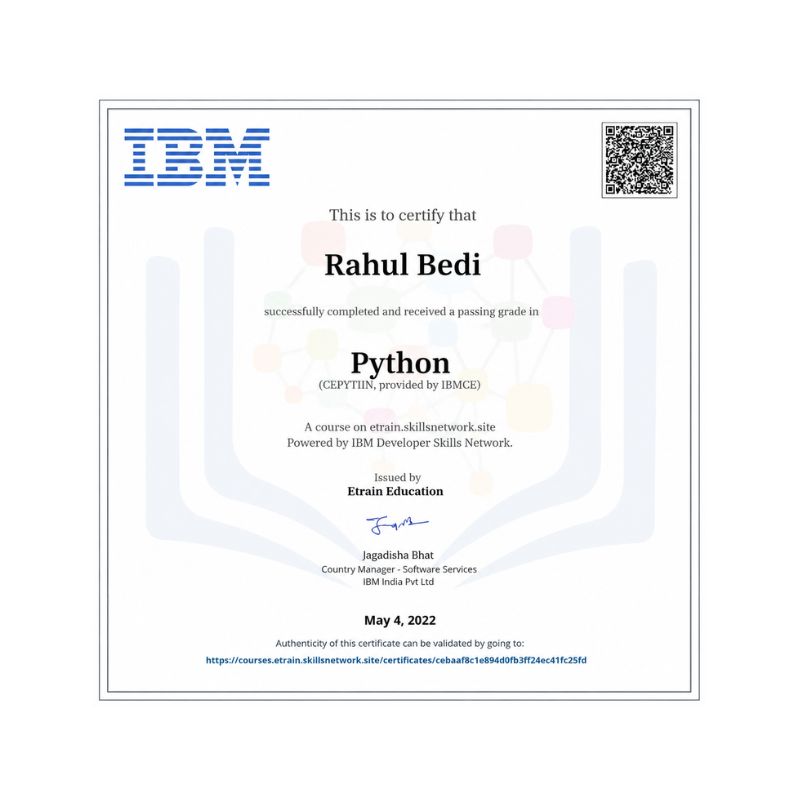
Earn Your Certificate of Completion
Take Your Career to the Next Level with Certifications
Stand Out from the Crowd with Codethon Certificate
Hands-on Project Practices in Deep Learning Course
Real-Time Quality Inspection in Manufacturing
Continuous Gesture-Based Control
Live Traffic Sign Recognition
Continuous Handwriting Recognition
Live Sign Language Recognition
Real-Time Video Captioning
Continuous Heart Rate Monitoring from Video
Live Object Tracking in Sports Analysis:
Real-Time Driver Drowsiness Detection
The SLA Way to Get Placed in Top IT Companies
Enrollment
Technology Training
Realtime Projects
Placement Training
Interview Skills
Panel Mock
Interview
Unlimited
Interviews
Interview
Feedback
100%
IT Career
Placement Support for a Deep Learning Job
Genuine Placements. No Backdoor Jobs at Softlogic Systems.
Aptitude Training
from Day 1
Interview Skills
from Day 1
Softskills Training
from Day 1
Build Your Resume
Build your LinkedIn Profile
Build your GitHub
digital portfolio
Panel Mock Interview
Unlimited Interviews until you get placed
Life Long Placement Support at no cost
FAQs
Is SLA equipped enough to conduct online classes?
Yes, SLA is completely equipped with resources like, SMART classroom, computers and related technologies, to conduct online classes.
Does SLA support EMI?
SLA supports EMI, with 0% interest.
How many branches does SLA have?
SLA has two branches currently, one is in Navalur, OMR and another is in K.K. Nagar.
What is the unique feature of SLA’s OMR branch?
SLA’s OMR branch is located among OMR’s IT hub, which gives ample opportunity for students in internship and placement.
What type of payment methods does SLA support?
SLA’s payment methods includes cash, cheque, cards, EMIs and UPIs.
Explain the vanishing gradient problem in deep learning, and how can it be mitigated?
The vanishing gradient problem happens when gradients in deep neural networks become very small during training, causing slow convergence. Techniques like using different activation functions (e.g., ReLU), careful weight initialization, or methods like batch normalization can help mitigate this issue.
Explain transfer learning in deep learning, and when is it useful?
Transfer learning means using pre-trained models from one task to solve a related task with limited labeled data. It’s handy when you have a small dataset for your target task but a large one for a related task, letting you transfer knowledge and improve performance.
What are regularization techniques in deep learning, and how do they prevent overfitting?
Regularization techniques such as L1 and L2 regularization, dropout, and early stopping are used to prevent overfitting in deep learning models. They introduce constraints on the model’s parameters or training process, reducing its capacity and preventing it from fitting noise in the training data, thus improving generalization performance.
What are hyperparameters in deep learning, and how do they affect model performance?
Hyperparameters are parameters set before training, controlling aspects like learning rate, batch size, and network architecture. They significantly impact model performance, as choosing appropriate values can lead to faster convergence, better generalization, and improved overall performance.
What is the difference between supervised, unsupervised, and semi-supervised learning in deep learning?
Supervised learning learns from labeled input-output pairs, predicting outputs given new inputs. Unsupervised learning discovers patterns and structure from unlabeled data, while semi-supervised learning combines both labeled and unlabeled data to enhance performance, especially when labeled data is scarce.
Additional Information for
the Deep Learning Course
Current Trends in Deep Learning
- Self-Supervised Learning: Self-supervised learning methods teach models from data itself without needing clear labels, allowing training on large amounts of unlabeled data, resulting in better performance on related tasks.
- Transformers and Attention Mechanisms: Transformers, like BERT and GPT, excel in natural language tasks, while attention mechanisms, central to these models, are now applied to areas outside of language processing, such as computer vision and reinforcement learning.
- Generative Models: Generative models, including GANs and VAEs, progress continually, facilitating tasks like image creation, style transformation, and data enhancement, with applications in diverse fields like art and data synthesis.
- Multimodal Learning: As data in various forms (text, images, audio) becomes more available, there’s a rising interest in multimodal learning, enabling models to learn from different types of data simultaneously, driving advancements in tasks like image captioning, video understanding, and cross-modal retrieval.