
Softlogic is one of the Top Training institutes for Data Science with ML. Learn how to use Data Science with ML, from beginner basics to advanced techniques. Our Data Science with Machine Learning Syllabus Covers Python programming, statistical analysis, data preprocessing, supervised and unsupervised learning, deep learning basics, model evaluation, and deployment techniques. We offer a Data Science with ML Course with Placement Assistance, Mock interviews, Resume building, and certification.

Data Science With Machine Learning Training
DURATION
3 Months
EMI
0% Interest
Mode
Live Online / Offline
Let's take the first step to becoming an expert in Data Science with Machine Learning
100% Placement
Assurance
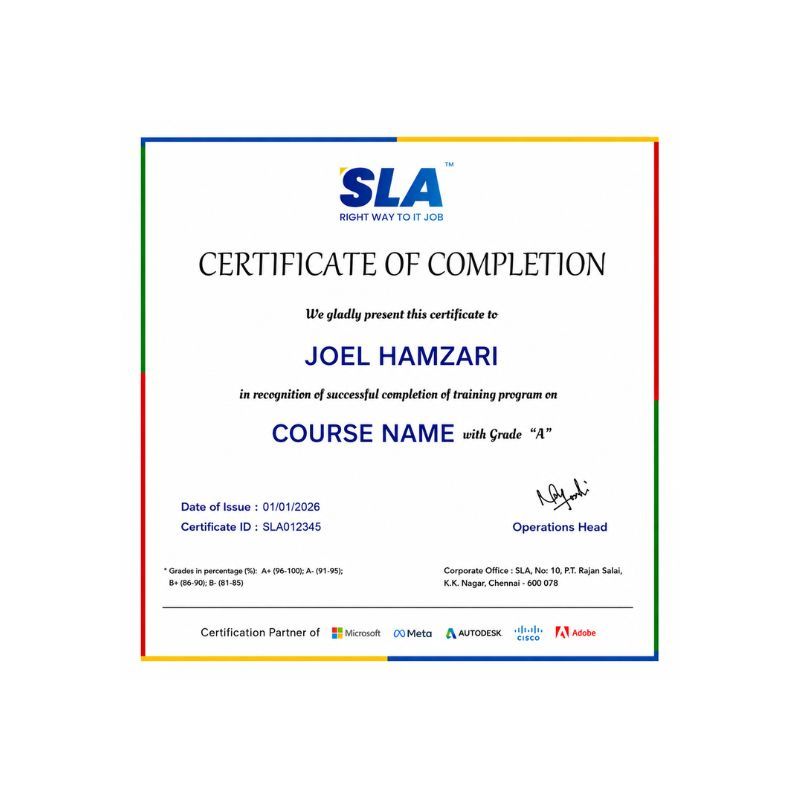
Get Certified
JOB PLACEMENT ELIGIBILITY TEST
Your Placement Eligibility Report
Want more details about Data Science with Machine Learning Course?
Course Schedules
Course Syllabus
Course Fees
or any other questions...
Fees, Duration & Batch Timings for Data Science with Machine Learning Course
Hands On Training
3-5 Real Time Projects
60-100 Practical Assignments
3+ Assessments / Mock Interviews
July 2026
Week days
(Mon-Fri)
Online/Offline
2 Hours Real Time Interactive Technical Training
1 Hour Aptitude
1 Hour Communication & Soft Skills
(Suitable for Fresh Jobseekers / Non IT to IT transition)
July 2026
Week ends
(Sat-Sun)
Online/Offline
4 Hours Real Time Interactive Technical Training
(Suitable for working IT Professionals)
Save up to 20% in your Course Fee on our Job Seeker Course Series
Syllabus of Data Science with Machine Learning Course
Module 1 – Core Java Fundamentals
- Java Programming Language Keywords
- Literals and Ranges of All Primitive
- Data Types
- Array Declaration, Construction, and Initialization
Module 2 – Declarations and Access Control
- Declarations and Modifiers
- Declaration Rules
- Interface Implementation
Module 3 – Object Orientation, Overloading and Overriding, Constructors
- Benefits of Encapsulation
- Overridden and Overloaded Methods
- Constructors and Instantiation
- Legal Return Types
Module 4 – Flow Control, Exceptions, and Assertions
- Writing Code Using if and switch statements
- Writing Code Using Loops
- Handling Exceptions
- Working with the Assertion Mechanism
- Write Java Programs
Module 5 – TestNG
- Setting up TestNG
- Testing with TestNG
- Composing test and test suites
- Generating and analyzing HTML test reports
- Troubleshooting
Module 6 – Machine Learning
- Introducing Machine Learning
- To Automate or Not to Automate?
- Test Automation for Web Applications
- Machine Learning Components
- Supported Browsers
- Flexibility and Extensibility
Module 7 – Machine Learning -IDE
- Introduction
- Installing the IDE
- Opening the IDE
- IDE Features
- Building Test Cases
- Running Test Cases
- Debugging
- Writing a Test Suite
- Executing Machine Learning -IDE Tests on Different Browsers
Module 8 – XPATH
- Understanding of Source files and Target
- XPATH and different techniques
- Using attribute
- Text ()
- Following
Module 9 – Machine Learning
- Introduction
- How Machine Learning Works
- Installation
- Configuring Machine Learning With Eclipse
- Machine Learning RC Vs Machine Learning
- Programming your tests in WebDriver
- Debugging WebDriver test cases
- Troubleshooting
- Handling HTTPS and Security Pop-ups
- Running tests in different browsers
- Handle Alerts / Pop-ups and Multiple Windows using WebDriver
Module 10 – Automation Test Design Considerations
- Introducing Test Design
- What to Test
- Verifying Results
- Choosing a Location Strategy
- UI Mapping
- Handling Errors
- Testing Ajax Applications
- How to debug the test scripts
Module 11 – Handling Test Data
- Reading test data from excel file
- Writing data to excel file
- Reading test configuration data from text file
- Test logging
- Machine Learning Grid Overview
Module 12 – Building Automation Frameworks Using Machine Learning
- What is a Framework
- Types of Frameworks
- Modular framework
- Data Driven framework
- Keyword driven framework
- Hybrid framework
- Use of Framework
- Develop a framework using TestNG/WebDriver
Python – Overview
- A brief history of python
- Application and trends in python
- Available python versions
Python – Environment Setup
- Getting and installing python
- Environmental variables and idle
- Executing python from command line
Fundamentals
- I/o
- Naming conventions
- Datatypes:
- Numbers
- String
- List
- Tuple
- Dictionary
- Set
Python Operators
- List, Tuple, Dictionary, Set Methods
- Statements: If, elif, Break, Continue
- Loops: For loop, while loop
- Functions
Oops Concepts:
- Class and objects
- Getters and setters
- Properties
- Inheritance
- Polymorphism
- Special Functions of Python: Lambda, Map, Reduce, Filter
Modules in Python:
- Math
- Arrow
- Geopy
- Beautiful soup
- Numpy
- Sys
- Os
Multithreading:
- Introducing threads and life cycles
- Priorities
- Dead Locks
Exceptional Handling
- Errors
- Runtime errors
- Exceptional model
- Exceptional hierarchy
- Handling multiple exception
- Raise exceptions
Objectives of Data Science with Machine Learning Training
The Data Science with Machine Learning Training will cover all the topics ranging from fundamental to advanced concepts, which will make it easy for students to grasp Data Science with Machine Learning. The Data Science with Machine Learning Course Curriculum is composed of some of the most useful and rare concepts that will surely give students a complete understanding of Data Science with Machine Learning as well. So, some of those curriculum are discussed below as objectives:
- To make students well-versed with fundamental concepts in Data Science with Machine Learning like – Core Java Fundamentals, Declaration and Access Control, Object Orientation, Overloading and Overriding, Constructors etc.
- To make students be more aware of Data Science with Machine Learning concepts like – Flow Control, Exceptions, and Assertions, TestNG, Machine Learning – IDE, XPATH etc.
- To make students be knowledgeable in advanced Data Science with Machine Learning topics like – Handling Test Data, Modular framework, Data Driven framework, Python – Environment Setup, OOPs Concepts, Multithreading etc.
Why Softlogic Systems is the Best Choice for Data Science with Machine Learning Training – Learn, Practice, and Get Placed!
Online & Offline Training Options
Learn from 100+ Real-Time Developers
Hands-on Projects & Codeathons
0% EMI Fee Options
Resume & Interview Support
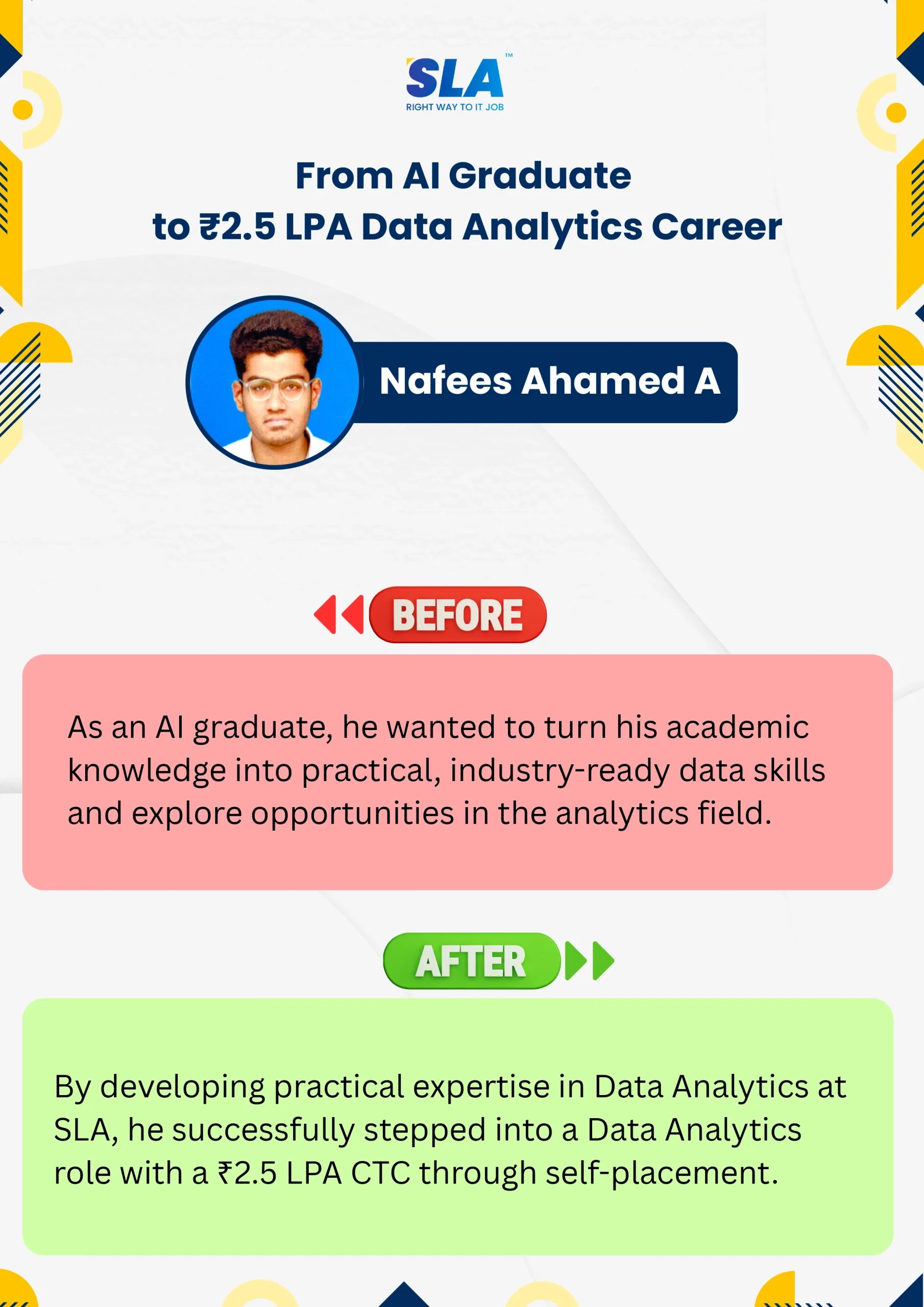
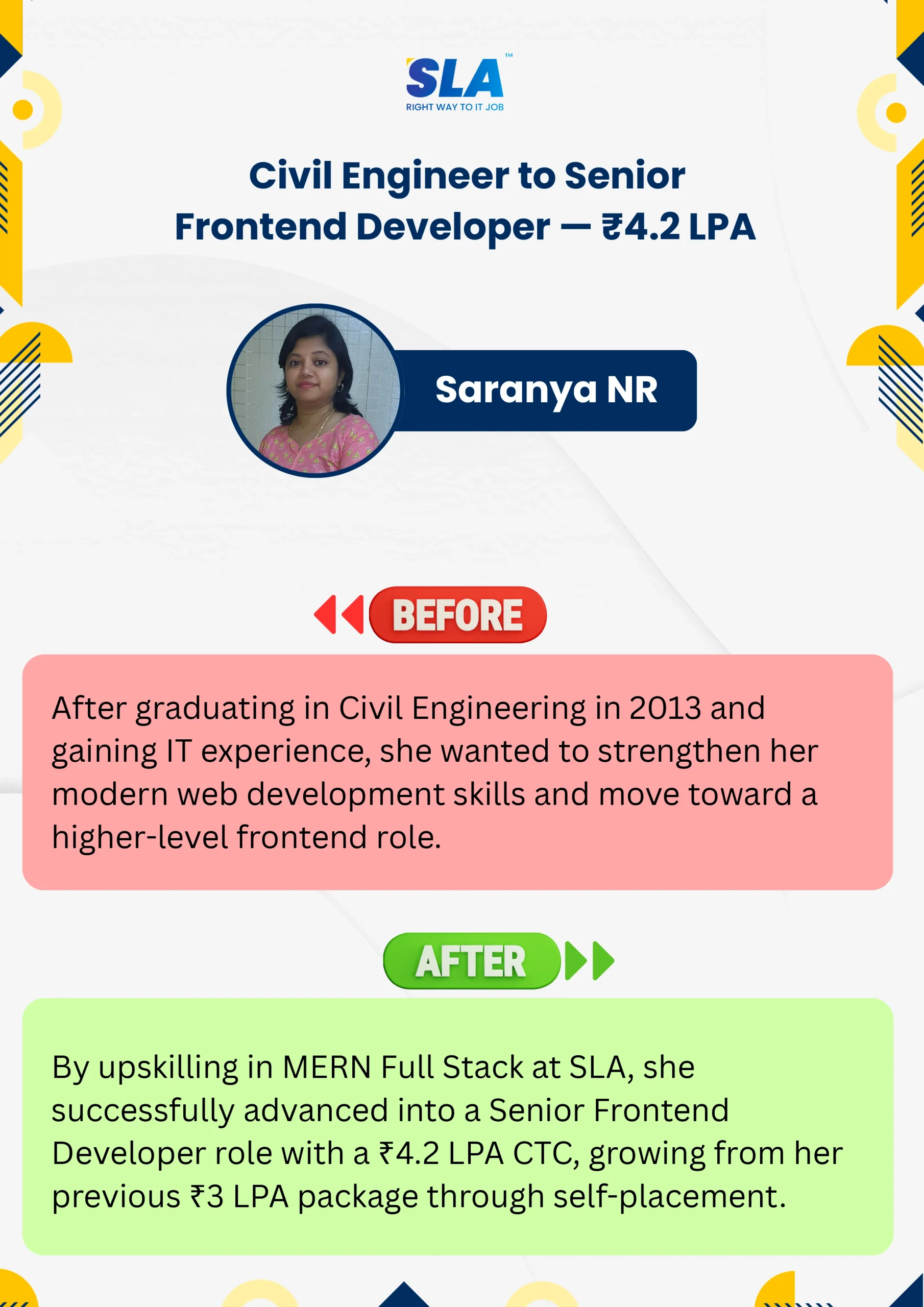
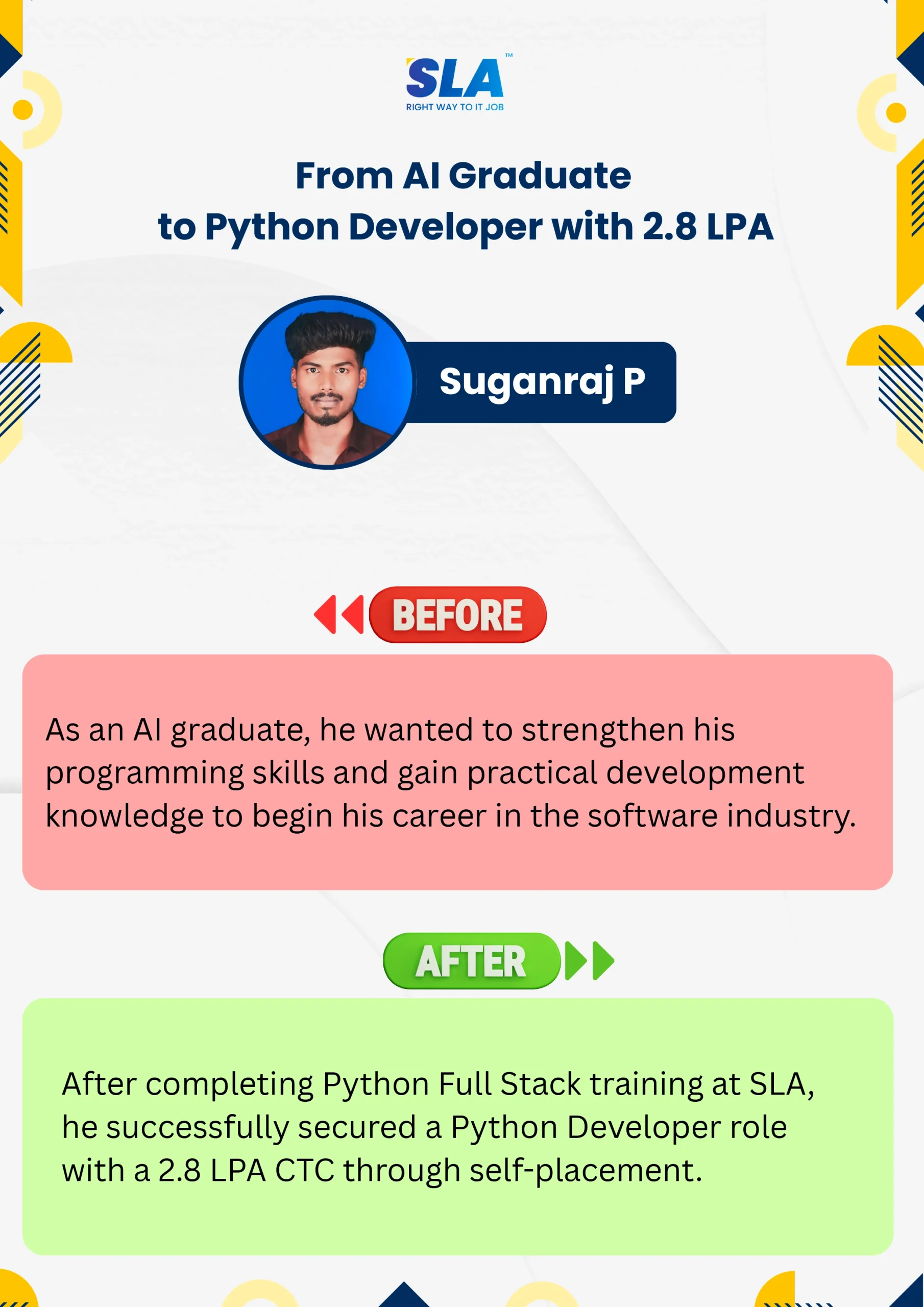
Placement with Top IT Firms
1000+ Hiring Partners
No Backdoor Jobs
Highlights of Data Science with Machine Learning Course
What is Data Science with Machine Learning?
Data Science with Machine Learning merges data science techniques with machine learning to analyze and interpret data. It involves using algorithms for pattern recognition, prediction, and insight generation. Key aspects include data collection, preprocessing, model building, evaluation, deployment, and application across various fields like predictive analytics and recommendation systems.
What is Data Science with Machine Learning Full Stack?
Data Science with Machine Learning Full Stack covers every stage of a data science project, from collecting and cleaning data to developing, evaluating, and deploying machine learning models. It includes data visualization, communication of insights, and optional use of big data technologies for handling large datasets.
What are the reasons for learning Data Science with Machine Learning?
The following are the reasons for learning Data Science with Machine Learning:
- High Demand: Both fields are highly sought after across various sectors, leading to numerous job prospects.
- Enhanced Analytical Skills: Develop the ability to analyze intricate data and make informed, data-driven decisions.
- Predictive Capabilities: Learn to create models that forecast future trends and behaviors, aiding in strategic planning.
- Broad Applications: Utilize your skills in multiple domains including finance, healthcare, marketing, and technology
What are the prerequisites for learning Data Science with Machine Learning?
The following are the prerequisites for learning Data Science with Machine Learning:
- Algebra: Familiarity with algebraic principles for managing data transformations and equations.
- Python: Essential for its widespread use in data science and machine learning, including libraries like Pandas, NumPy, and Scikit-learn.
- Data Cleaning: Proficiency in preparing and refining data by handling missing values and identifying outliers.
- Algorithms: Knowledge of fundamental algorithms such as linear regression, logistic regression, decision trees, and clustering techniques.
What are the course fees and duration?
Our Data Science with Machine Learning Course Fees may vary depending on the specific course program you choose (basic / intermediate / full stack), course duration, and course format (remote or in-person). On an average the Data Science with Machine Learning Course Fees range from 60k to 70k, for a duration of 4 months with international certification based on the above factors.
What are some of the jobs related to Data Science with Machine Learning?
The following are the jobs related to Data Science with Machine Learning:
- Machine Learning Engineer
- Data Scientist
- Data Analyst
- Business Intelligence (BI) Analyst
- Data Engineer
- Research Scientist
List a few real time Data Science with Machine Learning applications.
The following are the real-time Data Science with Machine Learning applications:
- Real-Time Fraud Detection
- Predictive Maintenance
- Real-Time Personalization
- Autonomous Vehicles
- Customer Support Chatbots
- Real-Time Traffic Management
Boost Your Skills with Our Data Science with Machine Learning Training Experts
Our Mentors are from Top Companies like:
- Our trainers bring over a decade of extensive experience in Data Science and Machine Learning training.
- They excel at showcasing the various tools used in the field, ensuring that students grasp the significance of each tool before advancing further.
- Their expertise includes developing machine learning models and providing foundational training in relevant software, along with hands-on experience across multiple engineering disciplines.
- They offer precise guidance on data auditing, cleaning, visualization, and analysis crucial for machine learning application development.
- Having led numerous workshops, they adeptly address the complexities of Data Science, offering a thorough understanding of the subject.
- They possess strong technical problem-solving abilities suited to diverse business contexts and are recognized for their expertise in analyzing and visualizing complex data.
- They quickly adapt to new technologies, create innovative solutions for challenging issues, and excel in both theoretical and practical aspects of machine learning programming.
- Capable of working with students individually or in groups of any size, they are skilled in effective communication and coordination.
- Their extensive experience ensures they meet training objectives, equipping students with the necessary skills to become certified data scientists and machine learning professionals.
What Modes of Training are available for Data Science with Machine Learning Course?
Offline / Classroom Training
- Direct Interaction with the Trainer
- Clarify doubts then and there
- Airconditioned Premium Classrooms and Lab with all amenities
- Codeathon Practices
- Direct Aptitude Training
- Live Interview Skills Training
- Direct Panel Mock Interviews
- Campus Drives
- 100% Placement Support
Online Training
- No Recorded Sessions
- Live Virtual Interaction with the Trainer
- Clarify doubts then and there virtually
- Live Virtual Interview Skills Training
- Live Virtual Aptitude Training
- Online Panel Mock Interviews
- 100% Placement Support
Corporate Training
- Industry endorsed Skilled Faculties
- Flexible Pricing Options
- Customized Syllabus
- 12X6 Assistance and Support
Certifications
Improve your abilities to get access to rewarding possibilities
Earn Your Certificate of Completion
Take Your Career to the Next Level with Certifications
Stand Out from the Crowd with Codethon Certificate
Hands-on Project Practices in Data Science with Machine Learning Course
Image Classification
Fraud Detection System
Healthcare Diagnostics
Real-Time Traffic Forecasting
Recommendation System
Social Media Sentiment Analysis
Stock Price Forecasting
Spam Email Classification
Customer Churn Prediction
The SLA Way to Get Placed in Top IT Companies
Enrollment
Technology Training
Realtime Projects
Placement Training
Interview Skills
Panel Mock
Interview
Unlimited
Interviews
Interview
Feedback
100%
IT Career
Placement Support for a Data Science with Machine Learning Job
Genuine Placements. No Backdoor Jobs at Softlogic Systems.
Aptitude Training
from Day 1
Interview Skills
from Day 1
Softskills Training
from Day 1
Build Your Resume
Build your LinkedIn Profile
Build your GitHub
digital portfolio
Panel Mock Interview
Unlimited Interviews until you get placed
Life Long Placement Support at no cost
FAQs
How do bagging and boosting differ, and what effects do they have on model performance?
Bagging (Bootstrap Aggregating) enhances model performance by training multiple models on different data subsets and averaging their predictions to minimize variance. Boosting improves performance by training models sequentially, where each new model corrects the errors of its predecessor, thus reducing both bias and variance.
What distinguishes hyperparameters from model parameters, and why is hyperparameter tuning essential?
Hyperparameters are configurations that control the training process of a model (e.g., learning rate, number of trees), whereas model parameters are learned from the data (e.g., coefficients in regression). Tuning hyperparameters is vital for fine-tuning model performance and achieving optimal results.
What issues commonly arise with imbalanced datasets, and what strategies can address these issues?
Challenges with imbalanced datasets include skewed model predictions and poor performance on the minority class. Solutions include techniques such as resampling (either oversampling the minority class or undersampling the majority class), generating synthetic data (e.g., using SMOTE), and employing specific metrics (e.g., precision-recall curves).
What is the role of cross-validation in model evaluation, and how does it benefit the process?
Cross-validation evaluates a model’s effectiveness by partitioning the data into several subsets, or folds, and training and testing the model on different combinations of these folds. This method provides a more accurate performance estimate by minimizing variability and ensuring that the model generalizes well to new data.
Can you explain the difference between parametric and non-parametric models?
Parametric models assume a predetermined form for the data distribution and have a fixed number of parameters (e.g., linear regression). Non-parametric models do not assume a specific form and can adapt to the data’s complexity (e.g., k-nearest neighbors, decision trees). Non-parametric models can capture more intricate patterns but may require more data and computational resources.
What is the significance of feature scaling in machine learning, and what methods are commonly used?
Feature scaling adjusts the range of features to ensure they contribute equally to the model’s learning. Common methods include normalization (scaling features to a range between 0 and 1) and standardization (scaling features to have a mean of 0 and a standard deviation of 1).
How does regularization help mitigate overfitting, and what are the typical regularization techniques?
Regularization adds a penalty for complexity to prevent overfitting by discouraging overly complex models. Common techniques include L1 regularization (Lasso), which can lead to sparse models, and L2 regularization (Ridge), which helps to prevent large weights and stabilizes the model.
What strategies are commonly employed to handle missing data, and what effect do they have on model performance?
Handling missing data involves methods such as imputation (filling in missing values with the mean, median, or mode), deleting rows or columns with missing values, and using algorithms capable of managing missing data directly. The method chosen can influence model performance by affecting the data quality and the model’s generalizability.
Where is the corporate office of Softlogic Systems located?
The Corporate office of Softlogic Systems is located at the K.K.Nagar branch.
What payment methods does Softlogic accept?
Softlogic accepts a wide range of payment methods, including:
- Cash
- Debit cards
- Credit cards (MasterCard, Visa, Maestro)
- Net banking
- UPI
- Including EMI.
Additional Information for
the Data Science with Machine Learning Course
Scopes available in the future for learning Data Science with Machine Learning.
The following are the scopes available in the future for learning the Data Science with Machine Learning Course:
- Deep Learning: Gaining expertise in advanced neural network models, including transformers and generative adversarial networks (GANs), for complex tasks like natural language processing and image generation.
- Distributed Systems: Employing technologies like Apache Spark and Hadoop for managing and analyzing large volumes of data.
- Regulatory Compliance: Learning about data protection regulations like GDPR and CCPA and implementing best practices for securing data.
- Healthcare: Applying data science to enhance patient care, personalize treatments, and optimize healthcare operations.
- Streaming Analytics: Implementing real-time data processing with tools like Apache Kafka and Apache Flink.
- Text Processing: Advancing techniques in sentiment analysis, entity extraction, and document summarization.
- Effective Communication: Mastering the art of data storytelling to convey insights clearly and persuasively.
- Research and Development: Contributing to innovative research and the development of new data science methodologies and tools.