Opens in a new tab
Software Training Institute in Chennai with 100% Placements – SLA Institute

Core Java Certification Course

4.80
(1250)

DURATION

Real-Time Location Services

3 Months

EMI

0% Interest

Mode

Rank-Based Percentile Gui Calculator using Tkinter

Live Online / Offline

Softlogic is one of the Top Training institutes for Core Java. Learn how to use Core Java, from beginner basics to advanced techniques. Our Core Java Syllabus covers the Java basics, object-oriented programming concepts, exception handling, collections framework, multithreading, JDBC, and more. We offer a Core Java Course with Placement Assistance, Mock interviews, Resume building, and certification.
Enroll Now
Download Syllabus
0%

AI Powered Syllabus

0+

Realtime Projects

0+

Students Placed in Sept

0+

Certificates

Check Your Eligibility for IT Training

Ready to start your tech career? Whether you have recently graduated and want to begin your IT career, or want to upskill for your next phase, our Eligibility Assessment Form makes the process easy to begin. For this Core Java Certification Course Developer Course, we will match your skills and goals to the best training structure for you. Just fill in the form below for an easy start on your course. Take your first step today!

What We'll Need From You?

Personal & Contact Details

Name and phone number for direct interview updates

Academic Background

Age category, educational qualification, and graduation year.

Technical Experience

Prior programming knowledge and relevant IT certification details.
KNOW MORE ABOUT COURSE +91 86818 84318

IT Training ELIGIBILITY TEST

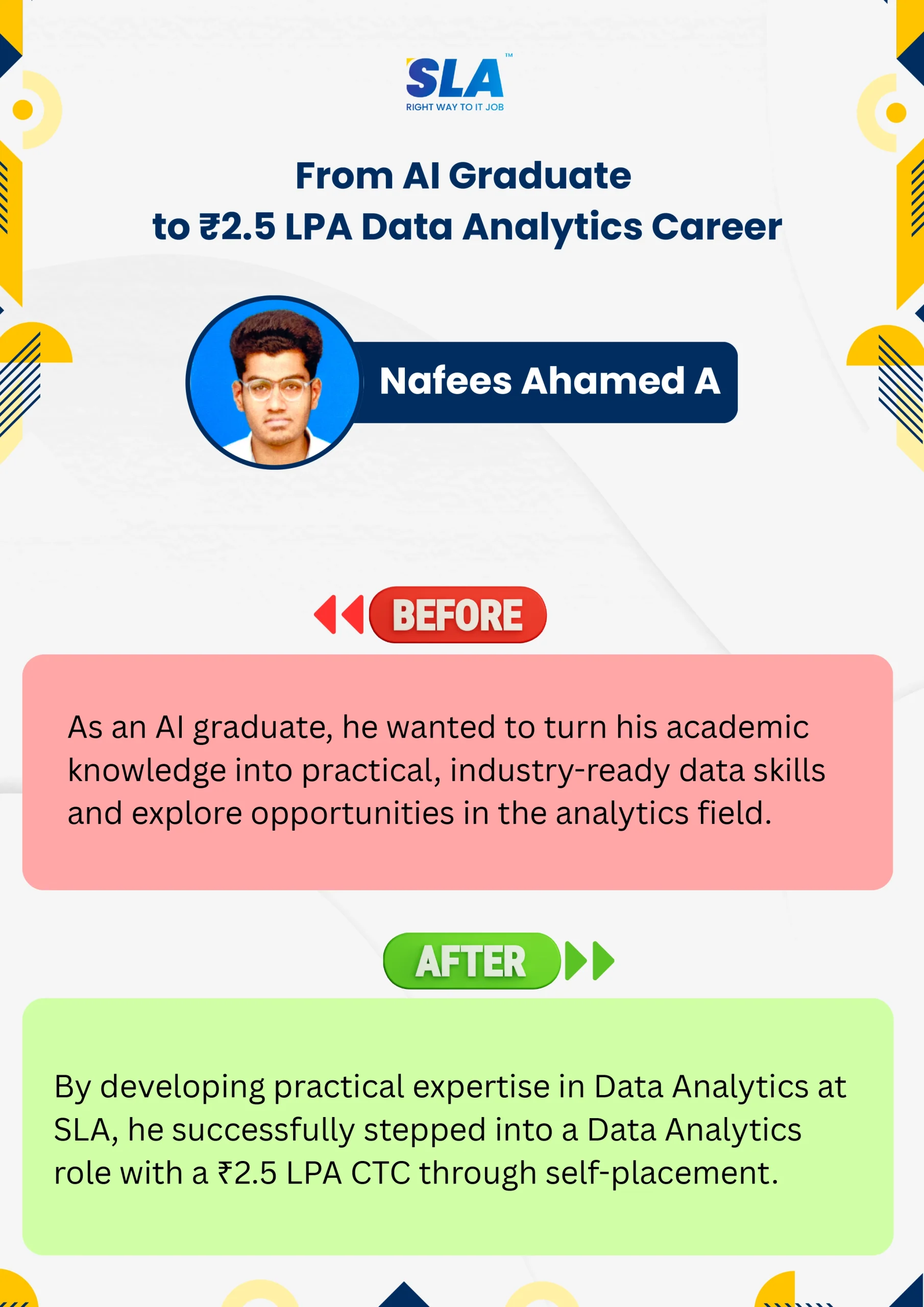
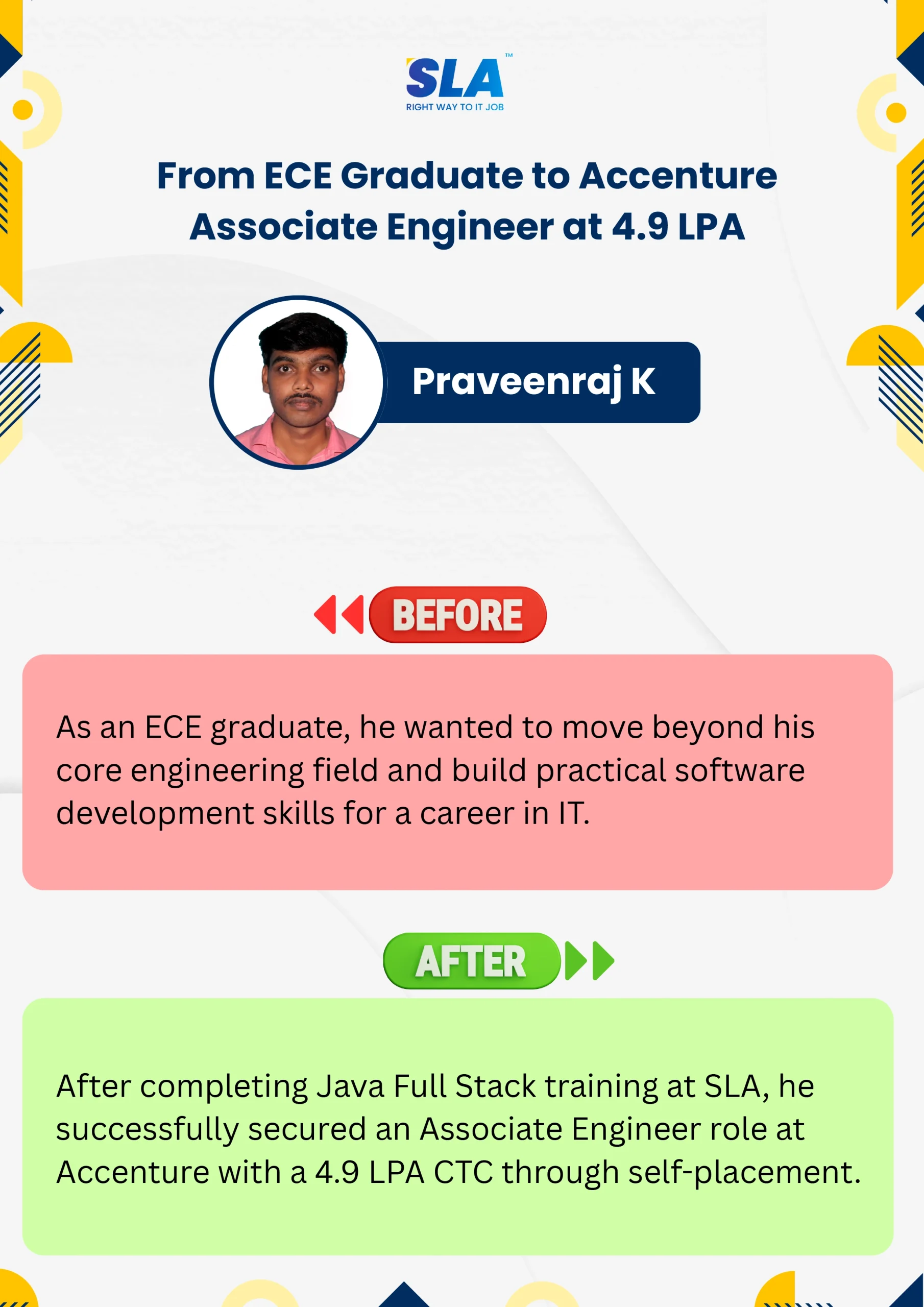
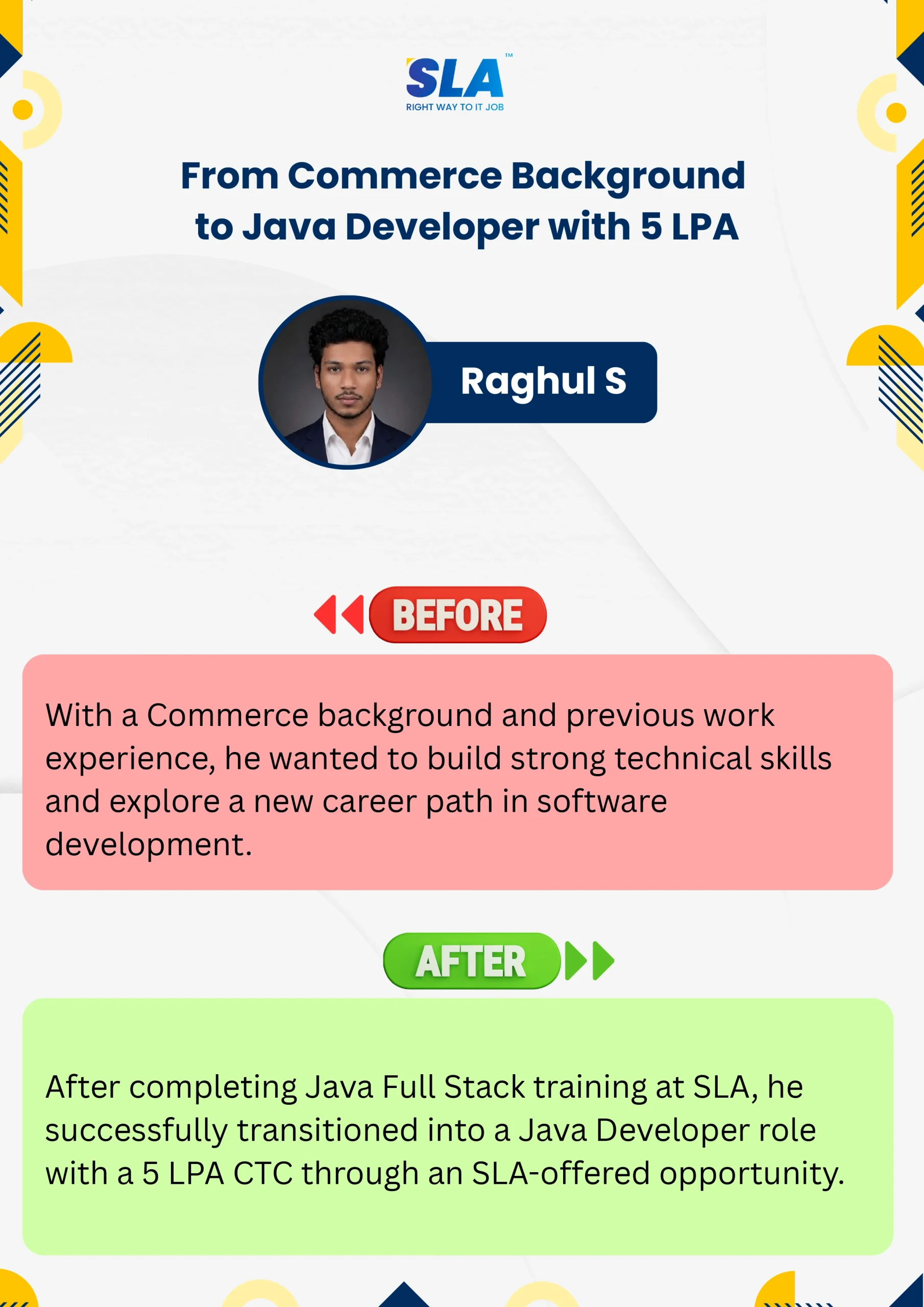
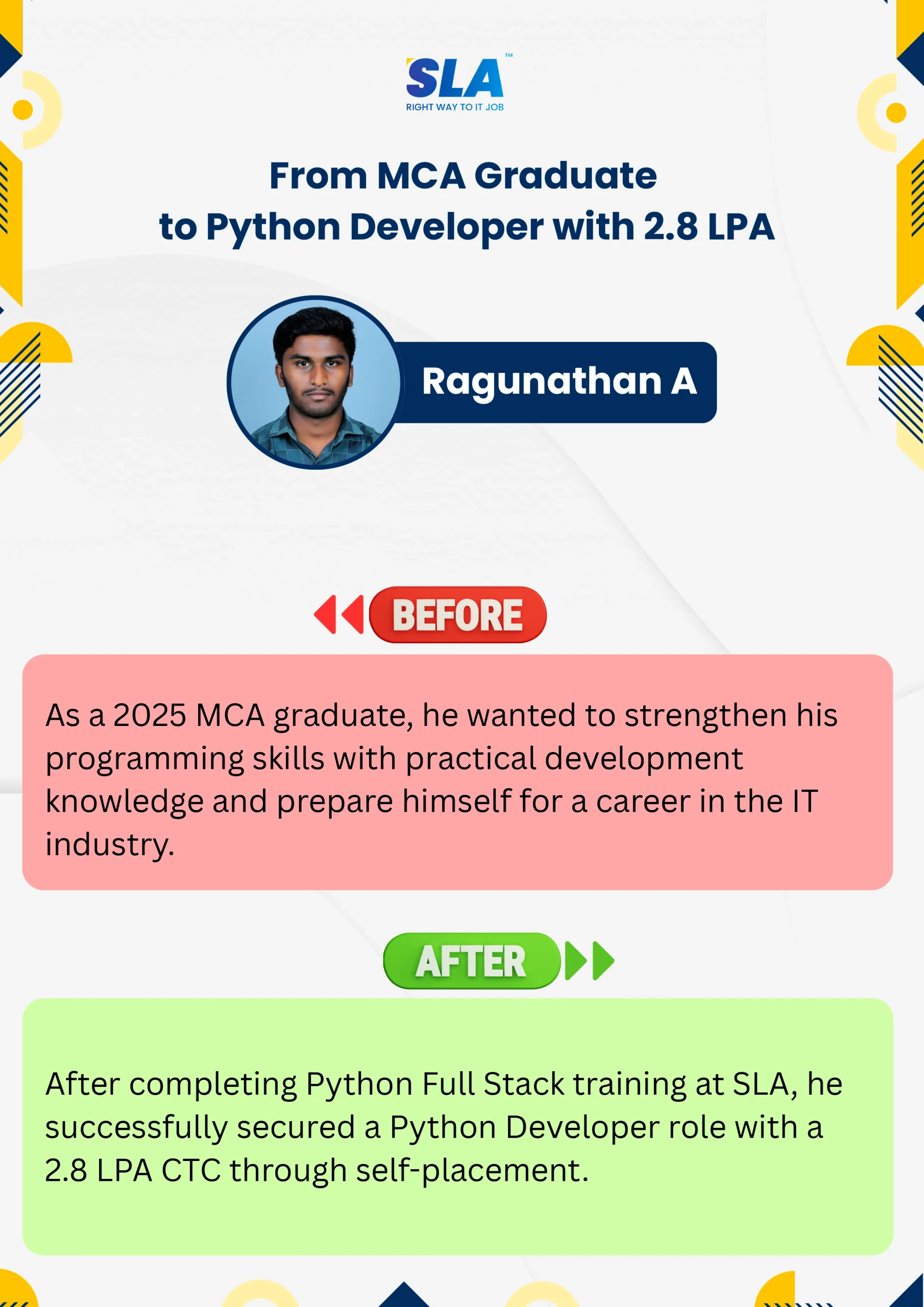
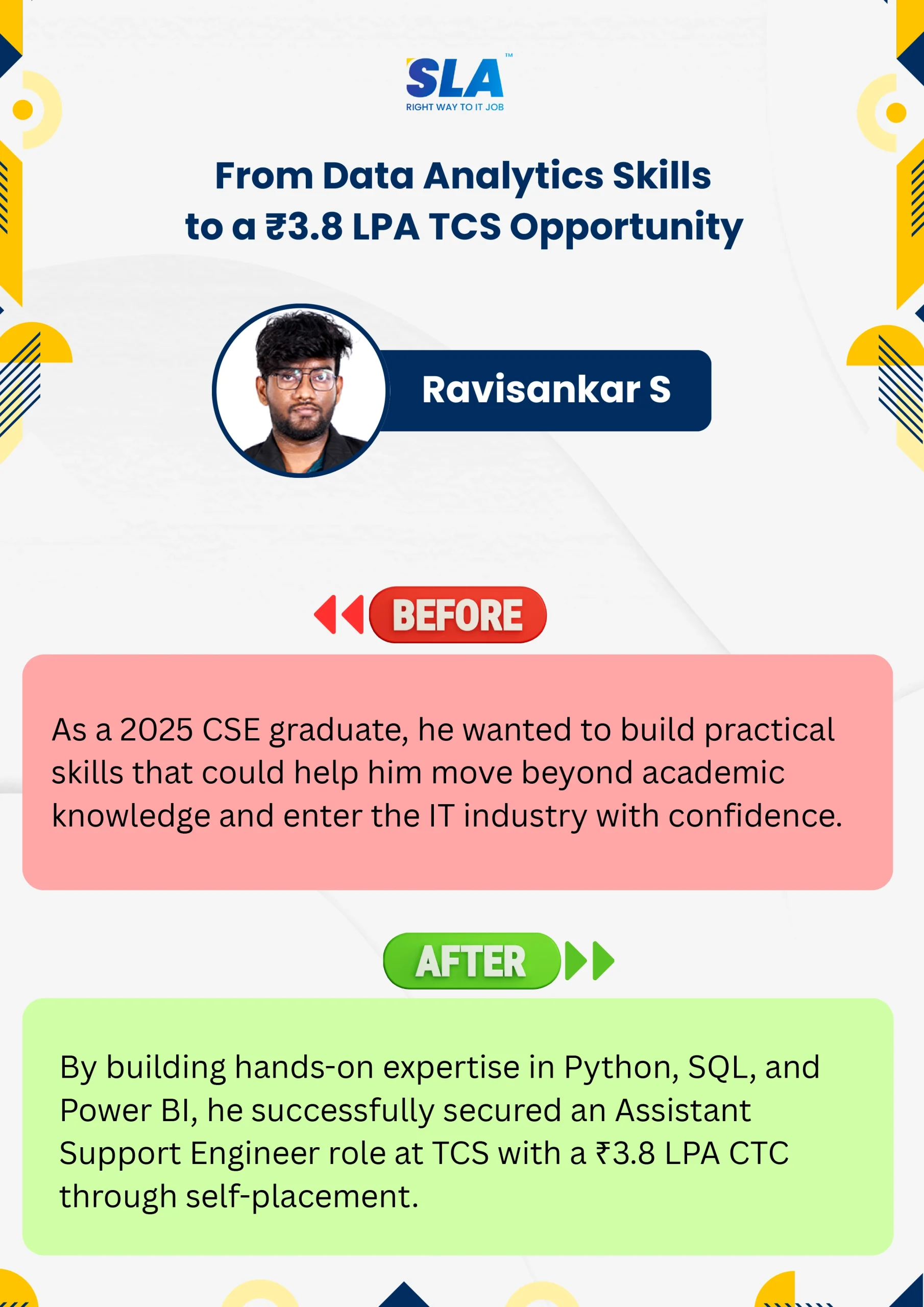
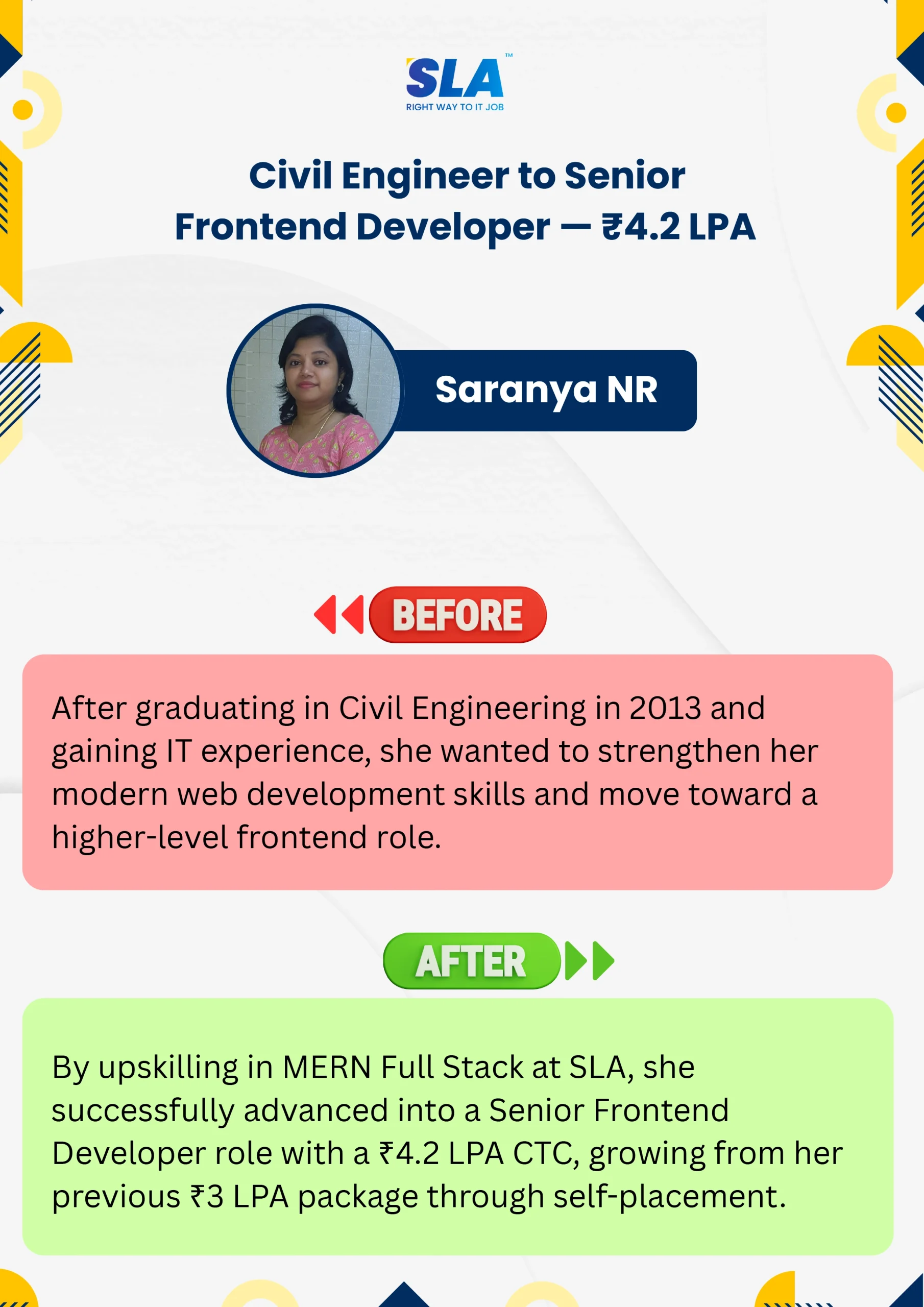
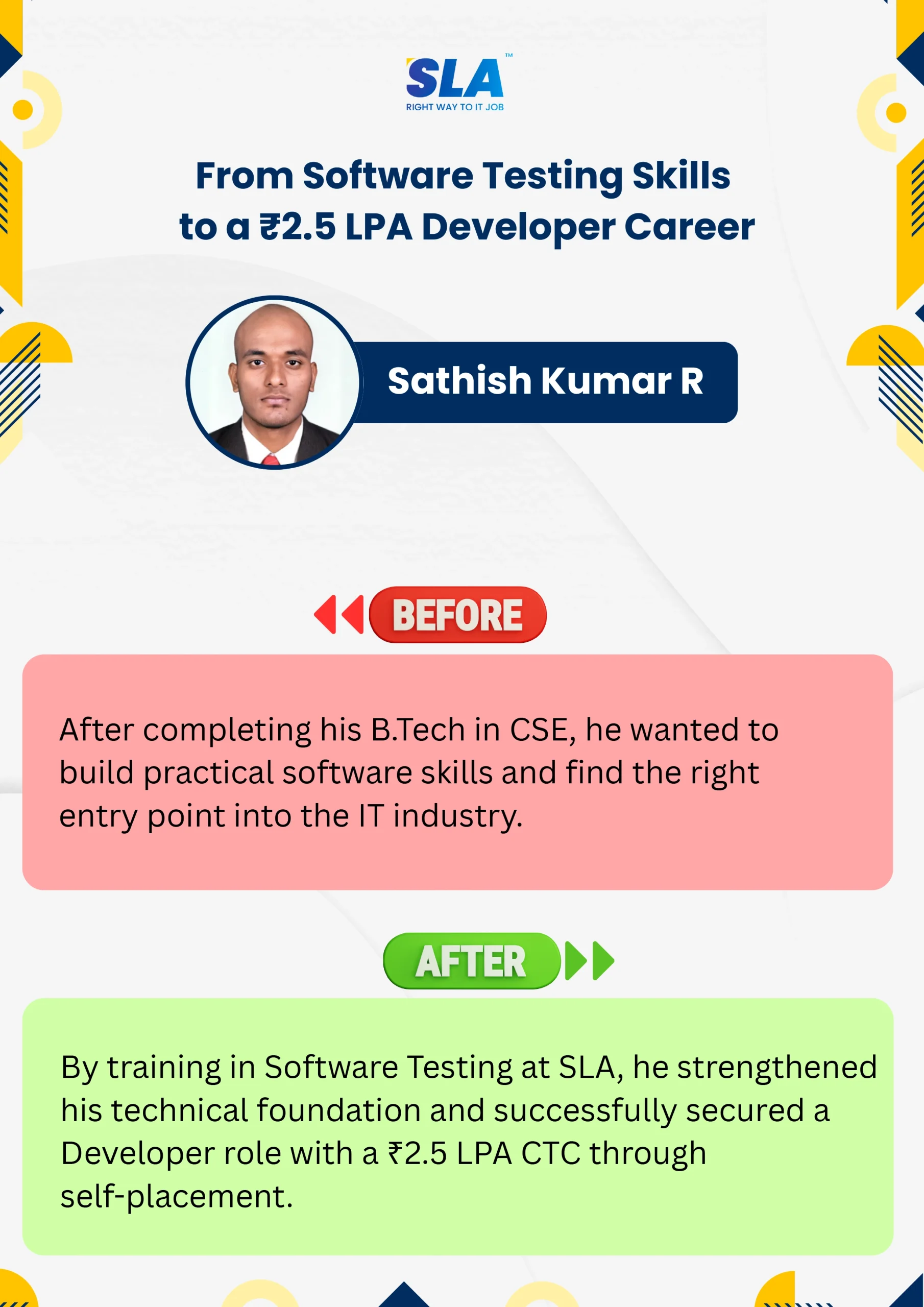
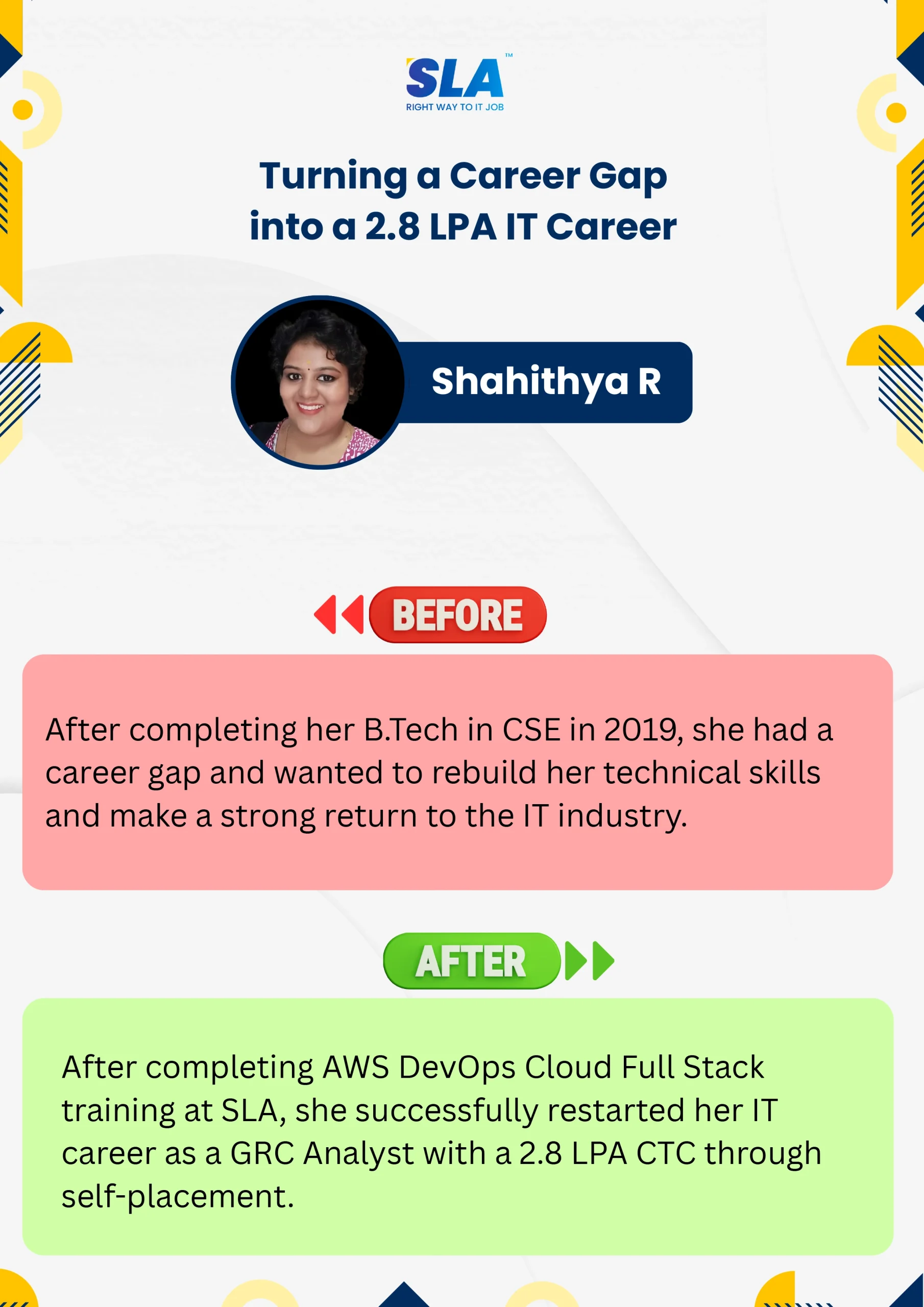
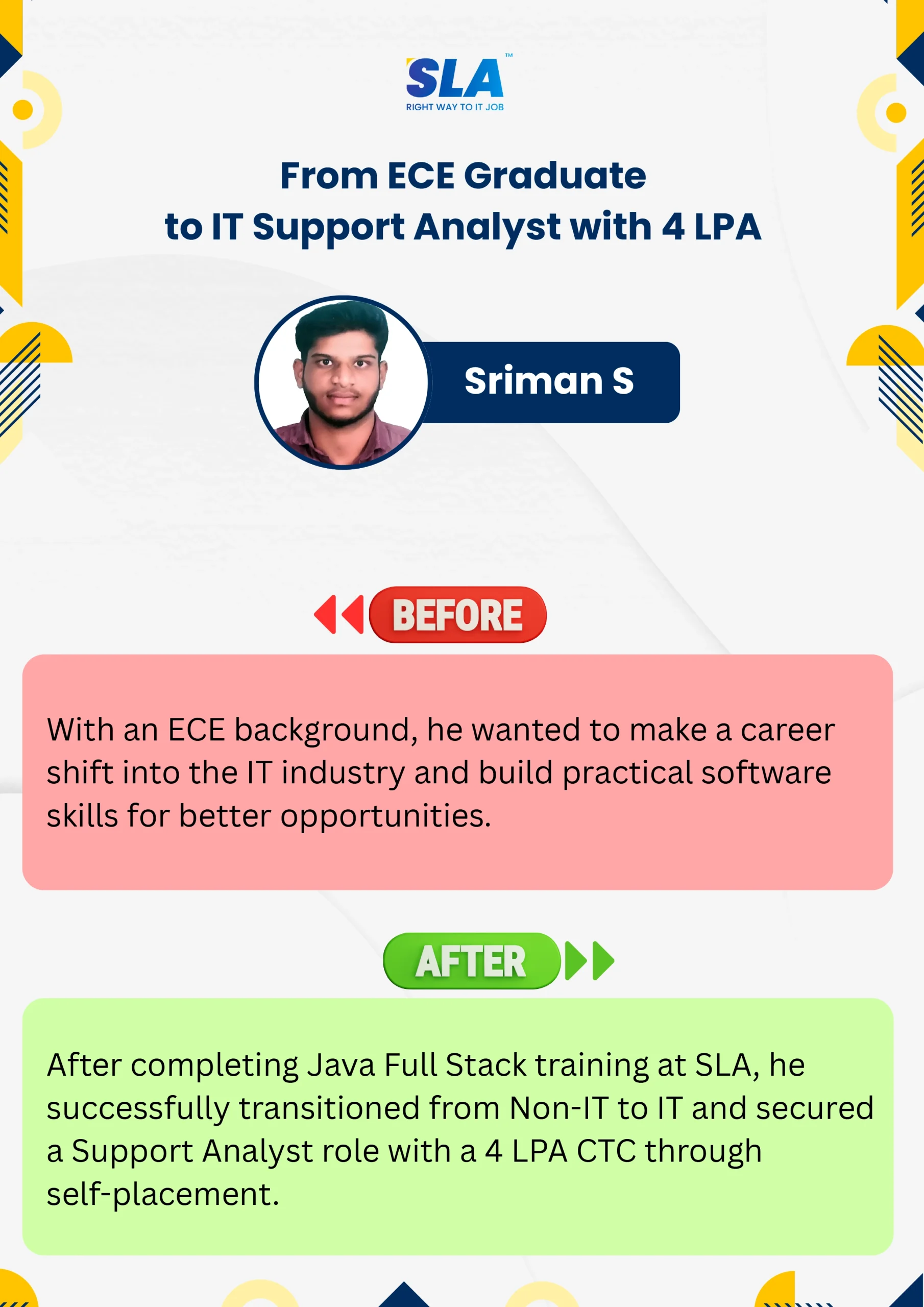
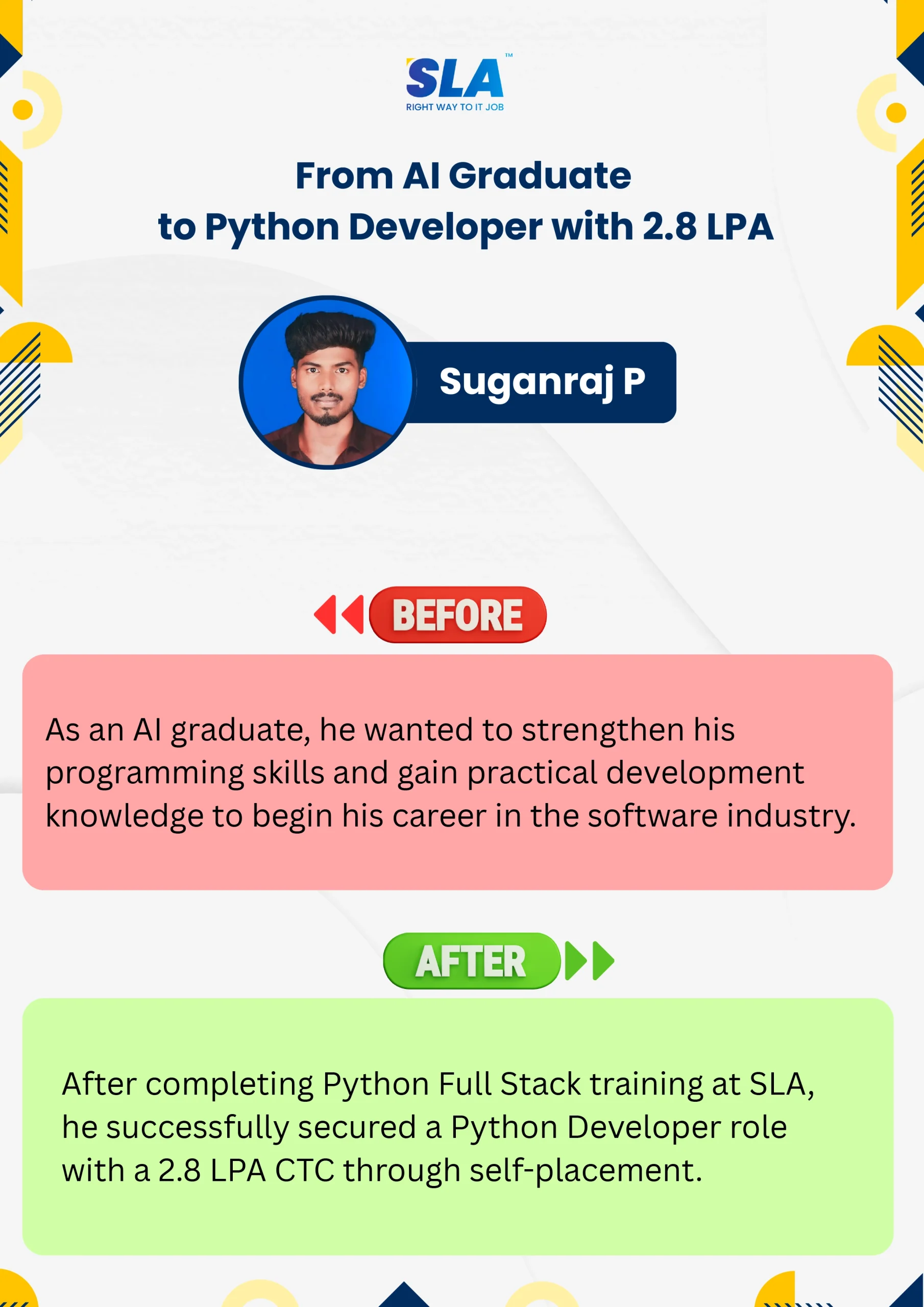
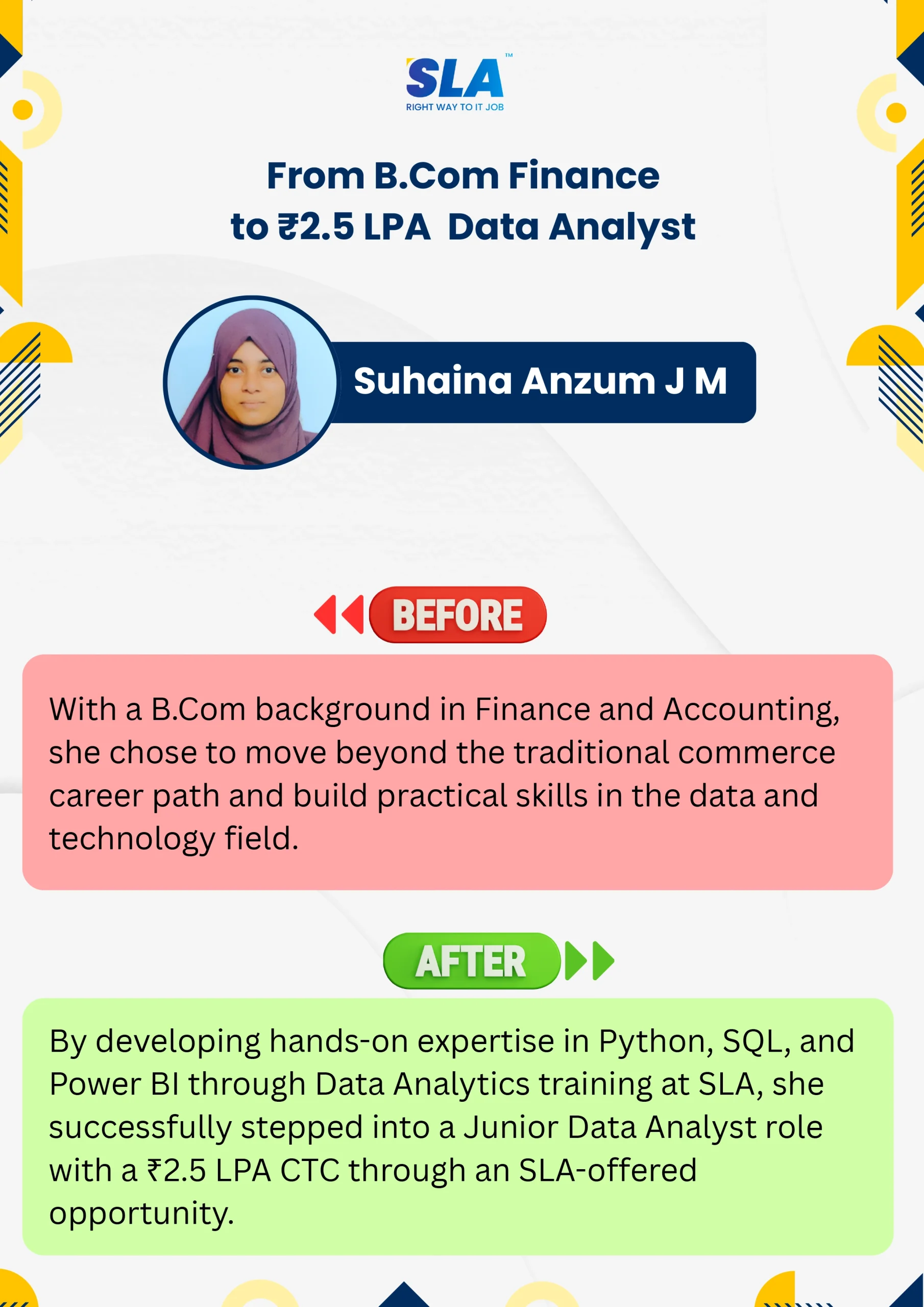
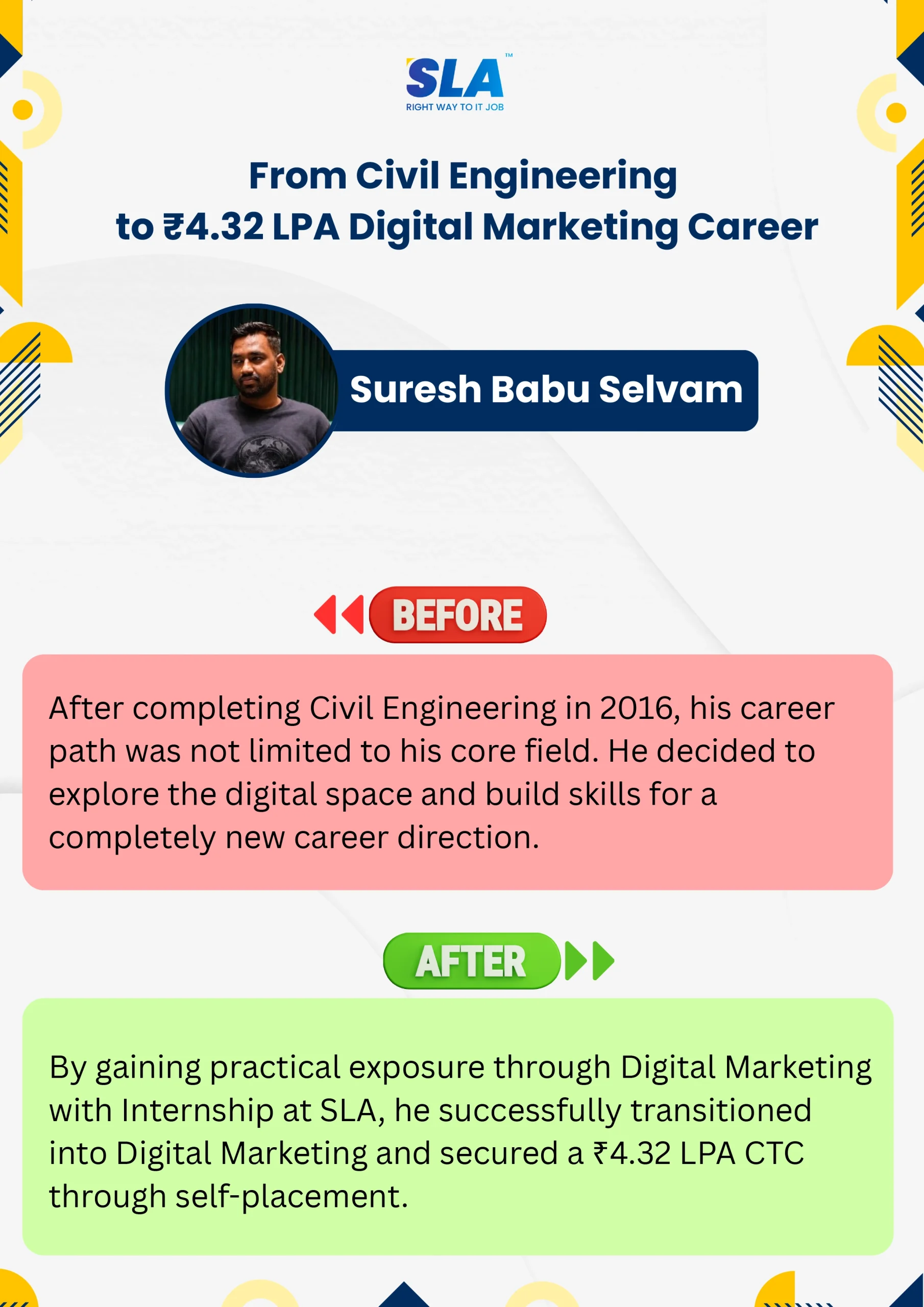
Life Changing Stories

Explore Our Students' Inspiring Leap Stories!

See More Success Stories

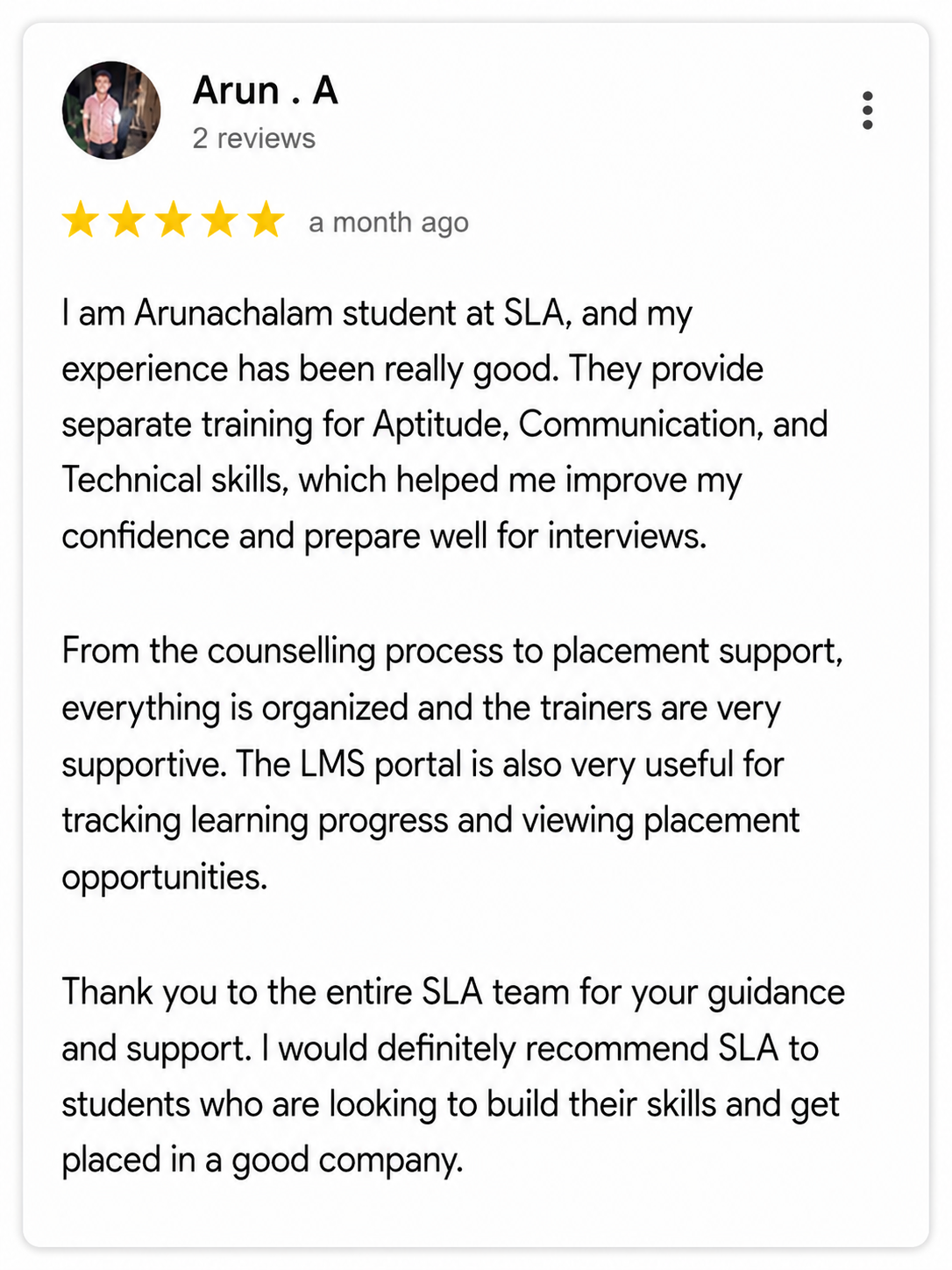
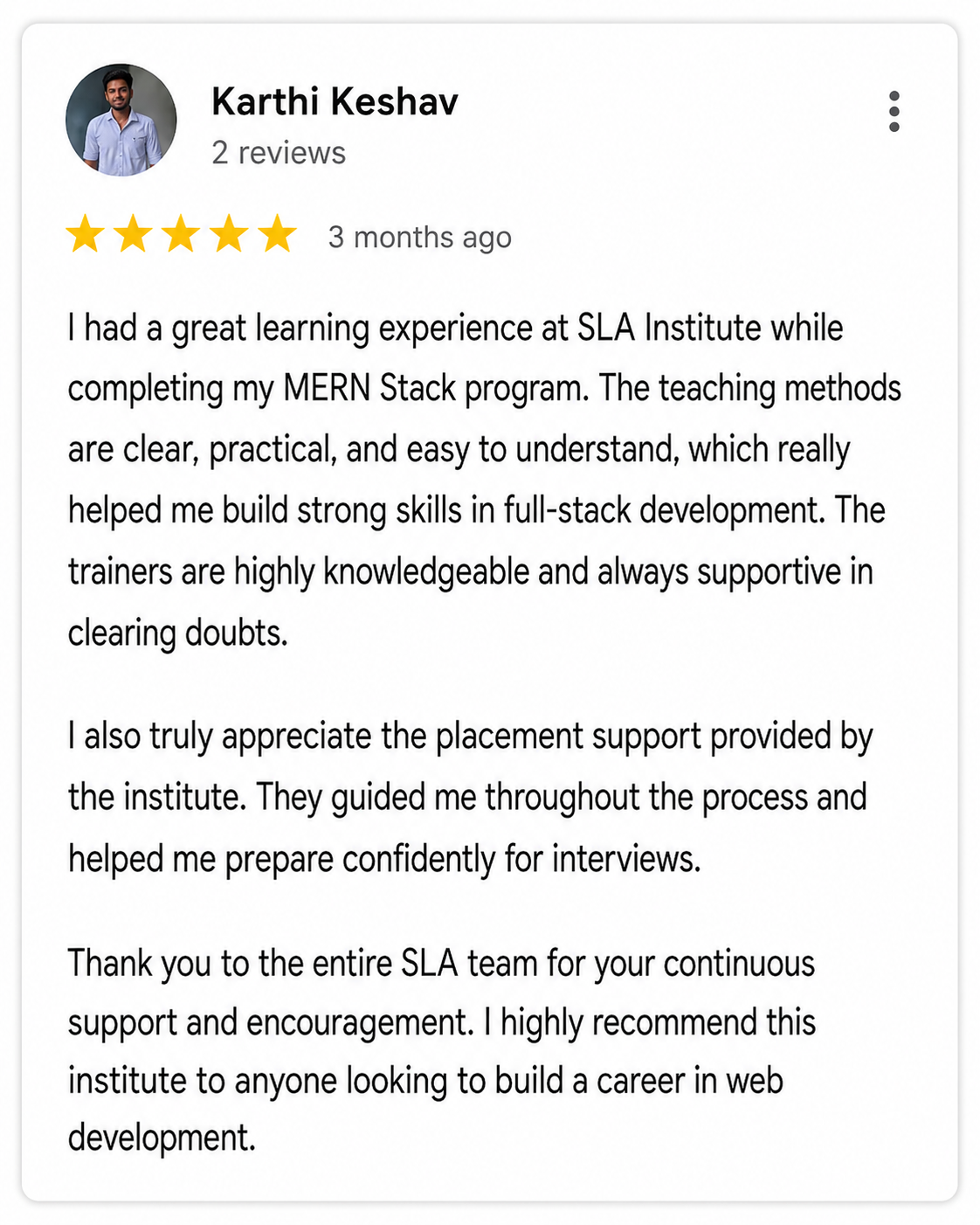
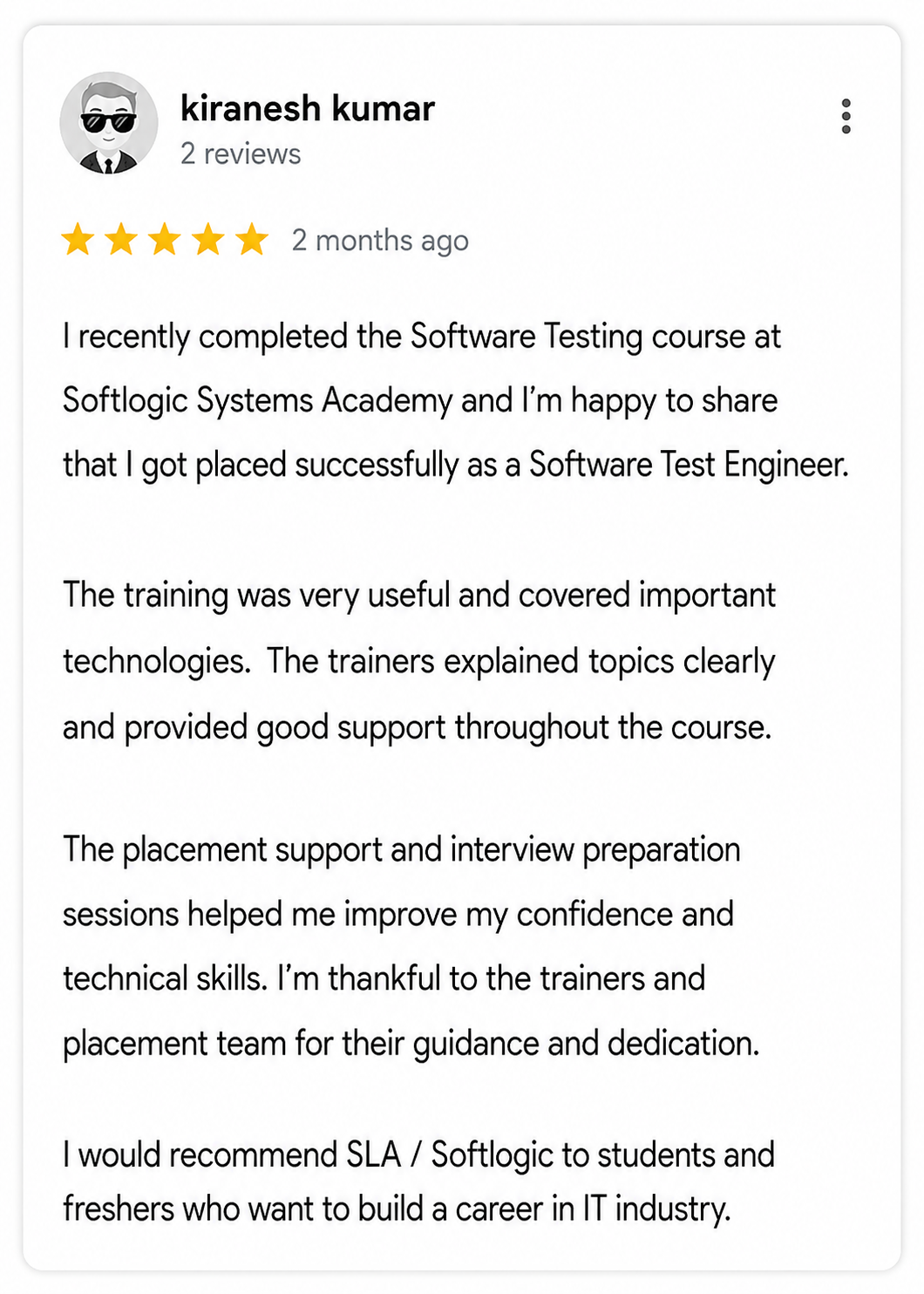
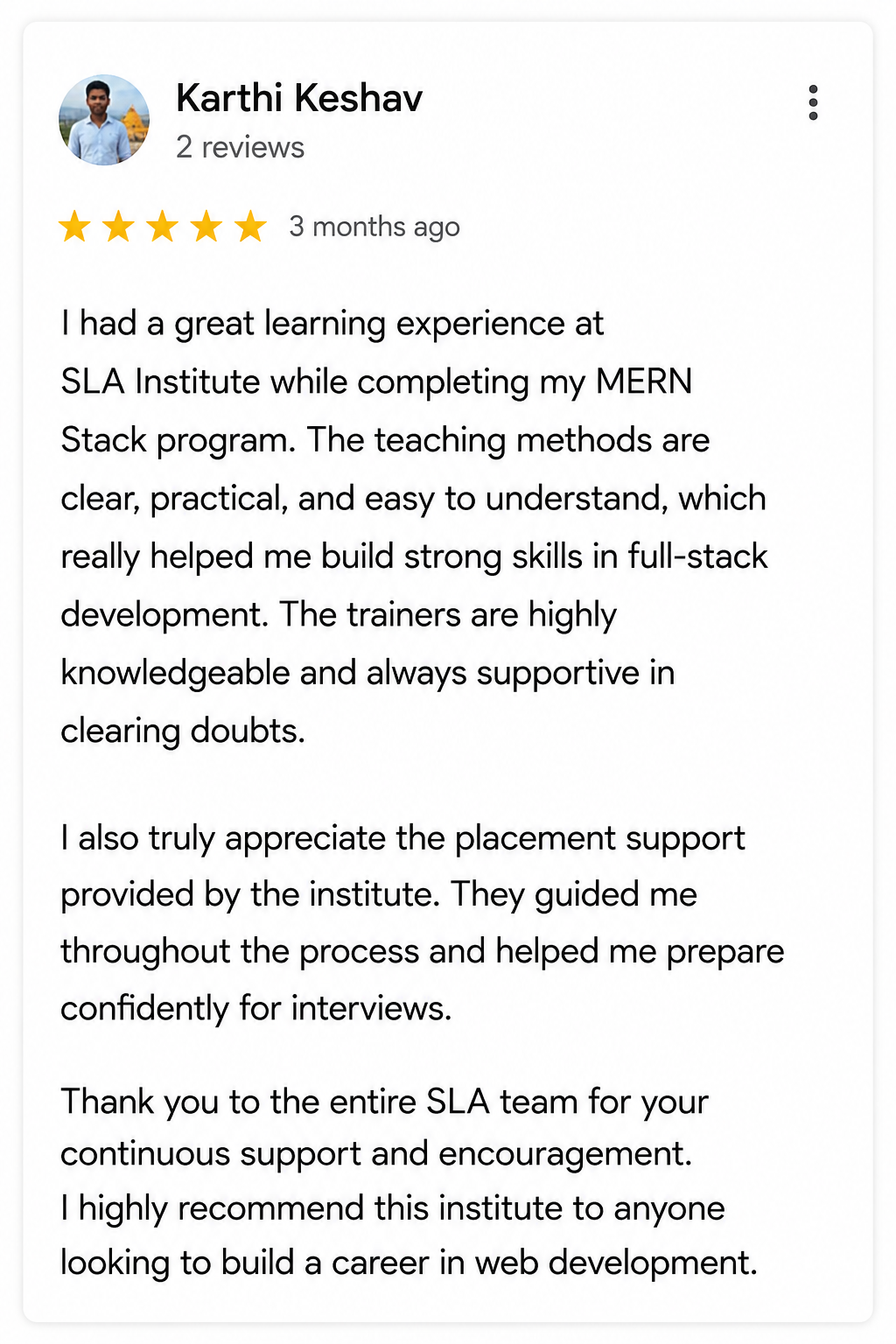
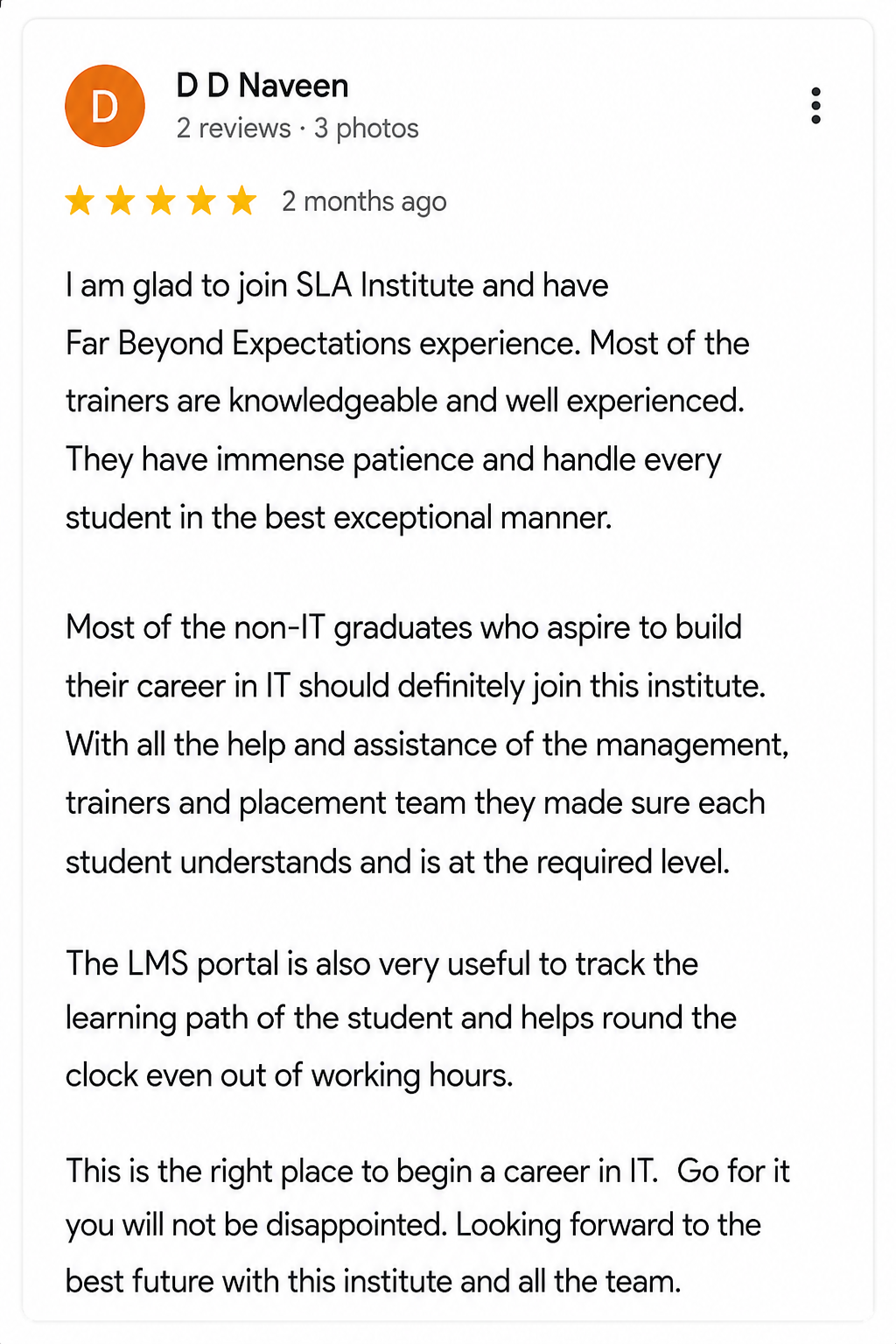
Check our Google Reviews

3D Review Carousel
Click here to view all Reviews

Syllabus of Core Java Certification Course

Download Syllabus
  • Why Java
  • Paradigms
  • Diff B/W Java & Other (C,C++)
  • Java History
  • Java Features
  • Java programming format
  • Java Statements
  • Java Data Types

  • Introduction
  • Object
  • Constructors
  • This Key Word
  • Inheritance
  • Super Key Word
  • Polymorphism (Over Loading & Over Riding)
  • Abstraction
  • Interface
  • Introduction
  • Object
  • Constructors
  • This Key Word
  • Inheritance
  • Super Key Word
  • Polymorphism (Over Loading & Over Riding)
  • Abstraction
  • Interface
  • Introduction
  • Object
  • Constructors
  • This Key Word
  • Inheritance
  • Super Key Word
  • Polymorphism (Over Loading & Over Riding)
  • Abstraction
  • Interface
  • Encapsulation
  • Introduction to all predefined packages
  • User Defined Packages
  • Access Specifiers
  • String
  • String Buffer
  • What is Array
  • Single Dimensional Array
  • Multi Dimensional Array
  • Sorting of Arrays
  • Introduction
  • Byte, Short, Integer, Long, Float, Double, Character
  • Boolean classes
  • Introduction
  • Member Inner Class
  • Static Inner Class
  • Local Inner Class
  • Anonymous Inner Class
  • Introduction
  • Util Package interfaces, List, Set, Map
  • List Interface 7 Its Classes
  • Set Interface & Its Classes
  • Map Interface & Is Classes
  • Introduction
  • Components
  • Event-Delegation-Model
  • Listeners
  • Layouts
  • Individual Components Lable, Button, Check Box, Radio Button,
  • Choice, List, Menu, Text Field, Text Area

Objectives of Core Java Certification Course

The Core Java Training will cover all the topics ranging from fundamental to advanced concepts, which will make it easy for students to grasp Core Java. The Core Java Course Curriculum is composed of some of the most useful and rare concepts that will surely give students a complete understanding of Core Java as well. So, some of those curriculum are discussed below as objectives:

  • To make students well-versed in fundamental concepts of Core Java like – Paradigms, Java History, Java Features; OOPs; STRING Buffer, String Manipulation etc.
  • To make students completely aware of more Core Java topics like – Arrays, Wrapper Classes – Byte, Short, Integer, Long, Float, Double, Character, Boolean classes etc.
  • To make students more knowledgeable in more Core Java topics like – Collection Framework, AWT – Components, Event-Delegation-Model, Listeners, Layouts etc. 
Click Here to Get Started

Highlights of Core Java Certification Course?

Core Java encompasses the basic elements of the Java programming language, concentrating on core concepts and APIs that are integral to all Java applications. It covers fundamental Java programming elements such as object-oriented principles, data types, control structures, exception handling, and core libraries like java.lang, java.util, and java.io. Core Java serves as the foundation for developing more advanced Java technologies and frameworks.

Core Java Full Stack is a development methodology where Core Java is utilized for both the front-end and back-end of applications. This approach involves employing Core Java for server-side logic and back-end processes while integrating it with front-end technologies and frameworks to build comprehensive, end-to-end solutions. Typically, this involves combining Core Java with web technologies such as HTML, CSS, and JavaScript, along with frameworks like Spring and Hibernate, enabling developers to construct both client-side and server-side components of a web application.

The following are the prerequisites for learning Core Java:

  • Foundation for Advanced Technologies: Core Java lays the groundwork for understanding and working with advanced Java technologies and frameworks.
  • Object-Oriented Programming Basics: It introduces essential object-oriented programming principles crucial for effective software development.
  • Broad Applicability: Core Java skills are relevant across various fields such as web development, enterprise solutions, and mobile applications.
  • Career Opportunities: Mastery of Core Java opens up a wide range of job prospects in software development and related areas.

The following are the prerequisites for learning Core Java:

  • Basic Programming Skills: An understanding of basic programming concepts such as variables, control structures (loops, conditionals), and data types aids in grasping Java syntax and programming logic.
  • Object-Oriented Programming Fundamentals: Familiarity with object-oriented principles like classes, objects, inheritance, polymorphism, and encapsulation is essential, given that Java is an object-oriented language.
  • Fundamental Computer Science Knowledge: A grasp of basic computer science concepts, including algorithms, data structures (such as arrays, lists, stacks, and queues), and file handling, is beneficial.
  • Basic Mathematics: Basic mathematical skills are useful for problem-solving and understanding algorithms.

Our Core Java Course is fit for:

  • Students eager to excel in Core Java
  • Professionals considering to transit to Core Java careers
  • IT professionals who are aspiring to enhance their Core Java skills
  • Java Developers who are enthusiastic about expanding their expertise.
  • Individuals seeking opportunities in the Core Java field.

Our Core Java Course Fees may vary depending on the specific course program you choose (basic / intermediate / full stack), course duration, and course format (online or in-person). On an average Core Java Course Fees range from 18k to 70k, for a duration of 3 to 6 months with international certification based on the above factors.

The following are the job roles related to Core Java:

  • Java Developer
  • Backend Developer
  • Full Stack Developer
  • Software Engineer
  • Java Application Developer
  • Enterprise Java Developer
  • Android Developer

The following are the Core Java real-time applications:

  • Web Applications
  • Enterprise Solutions
  • Gaming Applications
  • Android Apps
  • Banking Systems
  • Trading Platforms
  • Healthcare Systems

A fresher Java Developer with less than three years of experience earns an average salary of ₹3.4 Lakhs per year. A mid-career Java Developer with 4-9 years of experience earns an average salary of ₹6.8 Lakhs per year, while an experienced Java Developer with 10-20 years of experience earns an average salary of ₹11.4 Lakhs per year.

Boost your skills with Core Java Certification Course with Experts

Our Mentors are from Top Companies like:

  • Our trainers bring over a decade of hands-on Java training experience.
  • They possess practical project experience across diverse industries, ensuring relevant knowledge application.
  • Annually guiding and supporting 2000+ students, our trainers have a proven success record in effective mentoring.
  • Consistently delivering high-quality training that meets industry standards.
  • They bridge theoretical concepts with practical applications effectively.
  • With strong ties to multinational company HRs, our trainers offer insights into industry trends and job opportunities.
  • Proficiency in essential Java concepts including Exception Handling, Threads, JSP, Operators, XML handling, Loops, Collections, Database Connectivity, and Servlets.
  • They provide comprehensive hands-on training in these key Java development areas.
  • Skillful in communication, they make learning engaging and understandable with relevant examples.
  • Dedicated to helping students achieve their learning goals and prepare for interviews confidently.
Click Here to Get Started

Explore Real Projects Built by Softlogic Students

Explore the real-world, enterprise-level projects designed and executed by our successful alumni. Gain the same hands-on exposure to live industry projects, build a standout portfolio, and prove your practical skills to top hiring managers instantly.
Movie Ticket Reservation System
Inventory Control System
Quiz App
Project Practices for Core Java Certification Course

Why Softlogic Systems is the Best Choice for Core Java Certification Course

Crowdfunding Platform

Online & Offline Training Options

Learn at your convenience with flexible classroom and live online training.

Learn from 100+ Real-Time Developers

Get trained by industry professionals with years of hands-on experience.
Voting System with Python Django

Hands-on Projects & Codeathons

Practice with real-time projects and coding challenges to build confidence.

0% EMI Fee Options

Pay your course fees flexibly with easy EMI plans at zero interest.

Resume & Interview Support

Get expert help with resume building, mock interviews, and soft skills.

Placement with Top IT Firms

Access placement opportunities with leading MNCs and IT companies.

500+ Hiring Partners

Benefit from Softlogic’s strong recruiter network for faster job placement.

No Backdoor Jobs

We ensure only genuine placement opportunities with trusted companies.
Request a Free Callback

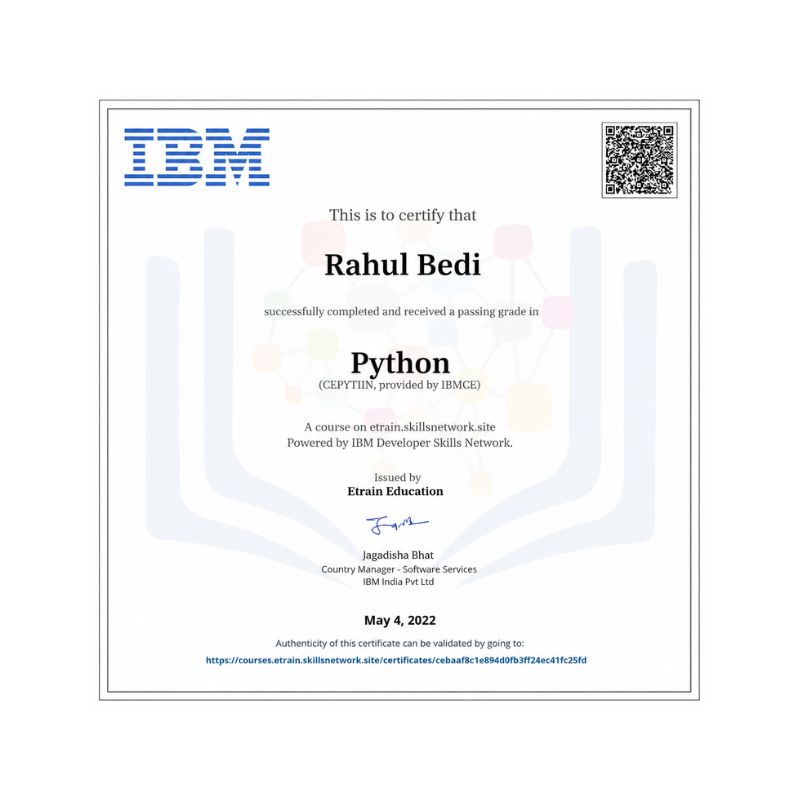
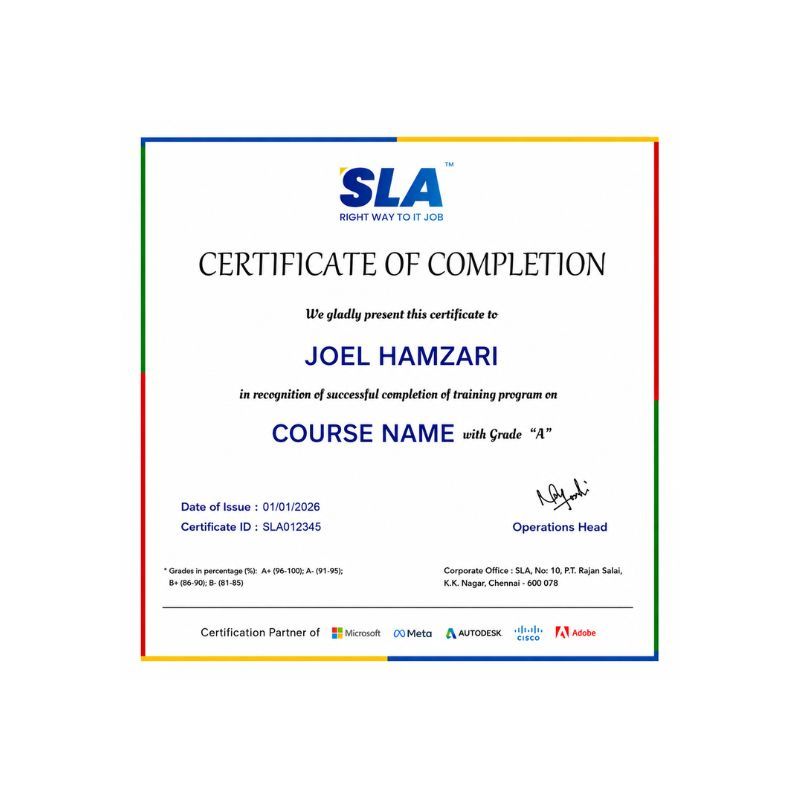
Certifications

Earn Your Certificate of Completion

Validate your achievements with Softlogic's Certificate of Completion, verifying successful fulfillment of all essential components.

Take Your Career to the Next Level with  Certifications

Get a certifications through our training programs to gain a competitive edge in the industry.

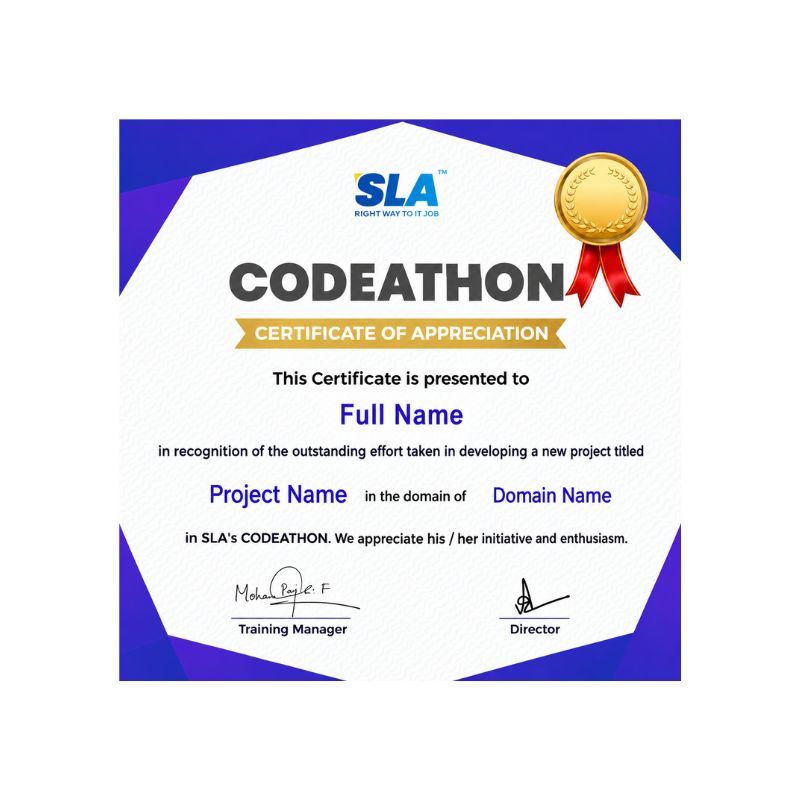
Stand Out from the Crowd with Codethon Certificate

Verify the authenticity of your real-time projects with Softlogic's Codethon certificate.

The Global Edge: Certified Vs. Uncertified

With Global Certification

✅ Visibility in ATS Filters

✅Command Higher Hikes

✅ Verified Skill Proof

✅Global Job Access

✅ Fast-Tracked Senior Roles

Without Global Certification

❌ Stuck in Screening

❌ Lower Starting Pay

❌ Unproven Technical Ability

❌ Limited Local Scope

❌ Slower Career Leader

  •  
Let's take the First Step to a better future! GET Free Career Guidance

The SLA Way to Get Placed

Seven connected stages, one continuous path from enrollment to your career launch — here is exactly how it works, step by step.

01
🎓

Technical Mastery

Industry-aligned curriculum, daily coding tasks, real-time projects.

02
💻

Career Readiness

Aptitude, communication, ATS-friendly resume optimization.

03
🎯

Placement Prep

Aptitude, communication tuning and technical interview mastery.

04
💬

Panel Mock Interviews

Real company-pattern mocks with expert panel feedback.

05
👨‍💼

Interview Schedule

Multiple company drives with lifetime placement support.

06
📝

Interview Feedback

Detailed performance analysis and one-on-one guidance.

07
🏆

Launch Your Career

Land your first job with lifetime alumni and career support.

Listen to Our Students' Video Testimonials

FAQ

Core Java encompasses fundamental features like object-oriented programming concepts (encapsulation, inheritance, polymorphism), comprehensive exception handling, support for multi-threading, and a powerful standard library that includes essential classes and interfaces.

  • JVM (Java Virtual Machine): Runs Java bytecode and provides a runtime environment for Java applications.
  • JRE (Java Runtime Environment): Includes the JVM and standard libraries needed to execute Java applications, but lacks development tools.
  • JDK (Java Development Kit): Contains the JRE along with development tools such as the compiler (javac) for creating Java applications.

Java maintains platform independence through its “write once, run anywhere” capability. Code is compiled into bytecode by the Java compiler, which is then interpreted or compiled into native machine code by the JVM, enabling Java applications to run on any platform with an appropriate JVM.

  • ArrayList: Uses a dynamic array to store elements, offering quick random access but slower insertions and deletions.
  • LinkedList: Employs a doubly linked list, which facilitates faster insertions and deletions but slower access times compared to ArrayList
  • Final Variables: Cannot be reassigned once initialized.
  • Final Methods: Cannot be overridden by subclasses.
  • Final Classes: Cannot be extended.

Java utilizes automatic memory management through garbage collection. The Java Garbage Collector (GC) automatically frees up memory occupied by objects that are no longer reachable, helping to avoid memory leaks and optimize resource use.

  • Synchronized: Ensures that only one thread can execute a particular block of code or method at a time, providing mutual exclusion and avoiding thread interference.
  • Volatile: Guarantees that the value of a variable is consistently read from and written to main memory, ensuring visibility to all threads and avoiding thread caching problems.

Interfaces: Include List, Set, Queue, and Map.

Implementations:

  • List: Examples are ArrayList, LinkedList, and Vector.
  • Set: Includes HashSet, LinkedHashSet, and TreeSet.
  • Queue: Examples include PriorityQueue and LinkedList (which also implements Queue).
  • Map: Includes HashMap, LinkedHashMap, and TreeMap.

Softlogic provides diverse training modes tailored to student needs, including:

  • On-site classroom training
  • Interactive live online training with instructors
  • Customized corporate training sessions

Softlogic accepts a wide range of payment methods, including:

  • Cash
  • Debit cards
  • Credit cards (MasterCard, Visa, Maestro)
  • Net banking
  • UPI.

Related Blogs

Our counselors will share the Syllabus PDF with you via Email / Whatsapp

Get Your Instant Job & Placement Eligibility
Report in Just 30 Seconds!

We are excited to get started with you

Give us your information and we will arange for a free call (at your convenience) with one of our counsellors. You can get all your queries answered before deciding to join SLA and move your career forward.