
Software Training Institute in Chennai with 100% Placements – SLA Institute
⭐ Exclusive Summer Courses Offer ⭐ 💰 Flat ₹5,000 - ₹10,000 off on all courses 👨‍👩‍👧 Additional discounts for group enrollments 🎓 100% Placement Support 🏆 90,000+ Students Successfully Placed 🚀 Avail now! Limited seats only!

Big Data Hadoop Online Training

4.90
(16584)

Our Big Data Hadoop Online Training programs are designed for students, freshers, and working professionals who want to upskill and stay relevant. We offer Big Data Hadoop Online Courses that are practical, interactive, and aligned with the latest industry demands. Our Big Data Hadoop Syllabus covers the core components such as HDFS, MapReduce, YARN, Hive, Pig, HBase, Sqoop, and Flume, along with an introduction to Apache Spark for fast data processing. Enroll now and learn from industry experts with flexible timings and get Job support.


DURATION
Real-Time Location Services
2 Months
EMI
0% Interest
Mode
Rank-Based Percentile Gui Calculator using Tkinter
Live Online / Offline

Let's take the first step to becoming an expert in Big Data Hadoop

Click Here to Get Started

100% Placement
Assurance

Get Certified

JOB PLACEMENT ELIGIBILITY TEST

×

Your Placement Eligibility Report

Want more details about Big Data Hadoop?

Fill out the form, and our counsellors will get in touch with you at your preferred time. You can have all your queries answered. Once you decide that SLA is the perfect fit for your training needs, our counselors will guide you through the process every step of the way.

Course Schedules

Course Syllabus

Course Fees

CRM System Testing

or any other questions...

Fees, Duration & Batch Timings for Big Data Hadoop

Hands On Training
3-5 Real Time Projects
60-100 Practical Assignments
3+ Assessments / Mock Interviews
July 2026
Week days
(Mon-Fri)
Online/Offline

2 Hours Real Time Interactive Technical Training 

1 Hour Aptitude 

1 Hour Communication & Soft Skills

(Suitable for Fresh Jobseekers / Non IT to IT transition)

Course Fee
July 2026
Week ends
(Sat-Sun)
Online/Offline

4 Hours Real Time Interactive Technical Training

(Suitable for working IT Professionals)

Course Fee

Save up to 20% in your Course Fee on our Job Seeker Course Series

Learn More

Syllabus of Big Data Hadoop

Download Syllabus

❖ What is Big Data
❖ Evolution of Big Data
❖ Benefits of Big Data
❖ Operational vs Analytical Big Data
❖ Need for Big Data Analytics
❖ Big Data Challenges

❖ Master Nodes
❖ Name Node
❖ Secondary Name Node
❖ Job Tracker
❖ Client Nodes
❖ Slaves
❖ Hadoop configuration
❖ Setting up a Hadoop cluster

❖ Introduction to HDFS
❖ HDFS Features
❖ HDFS Architecture
❖ Blocks
❖ Goals of HDFS
❖ The Name node & Data Node
❖ Secondary Name node
❖ The Job Tracker
❖ The Process of a File Read
❖ How does a File Write work
❖ Data Replication
❖ Rack Awareness
❖ HDFS Federation
❖ Configuring HDFS
❖ HDFS Web Interface
❖ Fault tolerance
❖ Name node failure management
❖ Access HDFS from Java

❖ Introduction to Yarn
❖ Why Yarn
❖ Classic MapReduce v/s Yarn
❖ Advantages of Yarn
❖ Yarn Architecture
❖ Resource Manager
❖ Node Manager
❖ Application Master
❖ Application submission in YARN
❖ Node Manager containers
❖ Resource Manager components
❖ Yarn applications
❖ Scheduling in Yarn
❖ Fair Scheduler
❖ Capacity Scheduler
❖ Fault tolerance

❖ What is MapReduce
❖ Why MapReduce
❖ How MapReduce works
❖ Difference between Hadoop 1 & Hadoop 2
❖ Identity mapper & reducer
❖ Data flow in MapReduce
❖ Input Splits
❖ Relation Between Input Splits and HDFS Blocks
❖ Flow of Job Submission in MapReduce
❖ Job submission & Monitoring
❖ MapReduce algorithms
❖ Sorting
❖ Searching
❖ Indexing
❖ TF-IDF

❖ What is Hadoop
❖ History of Hadoop
❖ Hadoop Architecture
❖ Hadoop Ecosystem Components
❖ How does Hadoop work
❖ Why Hadoop & Big Data
❖ Hadoop Cluster introduction
❖ Cluster Modes
❖ Standalone
❖ Pseudo-distributed
❖ Fully – distributed
❖ HDFS Overview
❖ Introduction to MapReduce
❖ Hadoop in demand

❖ Starting HDFS
❖ Listing files in HDFS
❖ Writing a file into HDFS
❖ Reading data from HDFS
❖ Shutting down HDFS

❖ Listing contents of directory
❖ Displaying and printing disk usage
❖ Moving files & directories
❖ Copying files and directories
❖ Displaying file contents

❖ Object oriented concepts
❖ Variables and Data types
❖ Static data type
❖ Primitive data types
❖ Objects & Classes
❖ Java Operators
❖ Method and its types
❖ Constructors
❖ Conditional statements
❖ Looping in Java
❖ Access Modifiers
❖ Inheritance
❖ Polymorphism
❖ Method overloading & overriding
❖ Interfaces

❖ Hadoop data types
❖ The Mapper Class
❖ Map method
❖ The Reducer Class
❖ Shuffle Phase
❖ Sort Phase
❖ Secondary Sort
❖ Reduce Phase
❖ The Job class
❖ Job class constructor
❖ Job Context interface
❖ Combiner Class
❖ How Combiner works
❖ Record Reader
❖ Map Phase
❖ Combiner Phase
❖ Reducer Phase
❖ Record Writer
❖ Partitioners
❖ Input Data
❖ Map Tasks
❖ Partitioner Task
❖ Reduce Task
❖ Compilation & Execution

❖ What is Apache Pig?
❖ Why Apache Pig?
❖ Pig features
❖ Where should Pig be used
❖ Where not to use Pig
❖ The Pig Architecture
❖ Pig components
❖ Pig v/s MapReduce
❖ Pig v/s SQL
❖ Pig v/s Hive
❖ Pig Installation
❖ Pig Execution Modes & Mechanisms
❖ Grunt Shell Commands
❖ Pig Latin – Data Model
❖ Pig Latin Statements
❖ Pig data types
❖ Pig Latin operators
❖ Case Sensitivity
❖ Grouping & Co Grouping in Pig Latin
❖ Sorting & Filtering
❖ Joins in Pig latin
❖ Built-in Function
❖ Writing UDFs
❖ Macros in Pig

❖ What is HBase
❖ History Of HBase
❖ The NoSQL Scenario
❖ HBase & HDFS
❖ Physical Storage
❖ HBase v/s RDBMS
❖ Features of HBase
❖ HBase Data model
❖ Master server
❖ Region servers & Regions
❖ HBase Shell
❖ Create table and column family
❖ The HBase Client API

❖ Introduction to Apache Spark
❖ Features of Spark
❖ Spark built on Hadoop
❖ Components of Spark
❖ Resilient Distributed Datasets
❖ Data Sharing using Spark RDD
❖ Iterative Operations on Spark RDD
❖ Interactive Operations on Spark RDD
❖ Spark shell
❖ RDD transformations
❖ Actions
❖ Programming with RDD
❖ Start Shell
❖ Create RDD
❖ Execute Transformations
❖ Caching Transformations
❖ Applying Action
❖ Checking output
❖ GraphX overview

❖ Introducing Cloudera Impala
❖ Impala Benefits
❖ Features of Impala
❖ Relational databases vs Impala
❖ How Impala works
❖ Architecture of Impala
❖ Components of the Impala
❖ The Impala Daemon
❖ The Impala Statestore
❖ The Impala Catalog Service
❖ Query Processing Interfaces
❖ Impala Shell Command Reference
❖ Impala Data Types
❖ Creating & deleting databases and tables
❖ Inserting & overwriting table data
❖ Record Fetching and ordering
❖ Grouping records
❖ Using the Union clause
❖ Working of Impala with Hive
❖ Impala v/s Hive v/s HBase

❖ Introduction to MongoDB
❖ MongoDB v/s RDBMS
❖ Why & Where to use MongoDB
❖ Databases & Collections
❖ Inserting & querying documents
❖ Schema Design
❖ CRUD Operations

❖ Introduction to Apache Oozie
❖ Oozie Workflow
❖ Oozie Coordinators
❖ Property File
❖ Oozie Bundle system
❖ CLI and extensions
❖ Overview of Hue

❖ What is Hive?
❖ Features of Hive
❖ The Hive Architecture
❖ Components of Hive
❖ Installation & configuration
❖ Primitive types
❖ Complex types
❖ Built in functions
❖ Hive UDFs
❖ Views & Indexes
❖ Hive Data Models
❖ Hive vs Pig
❖ Co-groups
❖ Importing data
❖ Hive DDL statements
❖ Hive Query Language
❖ Data types & Operators
❖ Type conversions
❖ Joins
❖ Sorting & controlling data flow
❖ local vs mapreduce mode
❖ Partitions
❖ Buckets

❖ Introducing Sqoop
❖ Scoop installation
❖ Working of Sqoop
❖ Understanding connectors
❖ Importing data from MySQL to Hadoop HDFS
❖ Selective imports
❖ Importing data to Hive
❖ Importing to Hbase
❖ Exporting data to MySQL from Hadoop
❖ Controlling import process

❖ What is Flume?
❖ Applications of Flume
❖ Advantages of Flume
❖ Flume architecture
❖ Data flow in Flume
❖ Flume features
❖ Flume Event
❖ Flume Agent
❖ Sources
❖ Channels
❖ Sinks
❖ Log Data in Flume

❖ Zookeeper Introduction
❖ Distributed Application
❖ Benefits of Distributed Applications
❖ Why use Zookeeper
❖ Zookeeper Architecture
❖ Hierarchial Namespace
❖ Znodes
❖ Stat structure of a Znode
❖ Electing a leader

Objectives of Big Data Hadoop

Our Big Data Hadoop Online Training has the best up-to-date syllabus crafted by expert IT professionals by adhering to the current trends in the IT industry. The syllabus covers both fundamental and advanced topics, some of which are explored below briefly:

  • The syllabus begins with fundamental topics such as, Installation and Setup of Hadoop Cluster,  Mastering HDFS (Hadoop Distributed File System), MapReduce Hands-on using JAVA etc.
  • The syllabus then moves a little deeper into Big Data Hadoop through topics like, YARN Architecture, Understanding Hadoop framework, Linux Essentials for Hadoop etc.
  • The syllabus then moves to advanced topics such as, Data loading using Sqoop and Flume, Workflow Scheduler Using OoZie, and Hands-on Real time Projects etc.

Why Softlogic Systems is the Best Choice for Big Data Hadoop – Learn, Practice, and Get Placed!

Crowdfunding Platform
Online & Offline Training Options
Learn at your convenience with flexible classroom and live online training.
Learn from 100+ Real-Time Developers
Get trained by industry professionals with years of hands-on experience.
Voting System with Python Django
Hands-on Projects & Codeathons
Practice with real-time projects and coding challenges to build confidence.
0% EMI Fee Options
Pay your course fees flexibly with easy EMI plans at zero interest.
Resume & Interview Support
Get expert help with resume building, mock interviews, and soft skills.
Placement with Top IT Firms
Access placement opportunities with leading MNCs and IT companies.
1000+ Hiring Partners
Benefit from Softlogic’s strong recruiter network for faster job placement.
No Backdoor Jobs
We ensure only genuine placement opportunities with trusted companies.
Want to Speak to a Trainer about Big Data Hadoop?Request a Free Callback

Highlights of Big Data Hadoop

Big Data Hadoop, an open-source distributed computing framework, handles storage, processing, and analysis of large datasets through HDFS and MapReduce. It’s used for data warehousing, log processing, and real-time analytics, with ecosystem tools like Hive, Pig, Spark, and HBase aiding developers and analysts.

The following are the reasons for learning Big Data Hadoop:

  • Scalability: Data Hadoop manages huge datasets across multiple clusters, easily scaling up to handle increasing data volumes.
  • Efficient Data Processing: Hadoop’s MapReduce framework speeds up processing of large datasets by splitting tasks across cluster nodes, making it more efficient.
  • Cost-Effectiveness: Hadoop uses affordable commodity hardware for distributed computing, cutting down infrastructure expenses compared to proprietary solutions.

SLA does not demand any prerequisites for any courses as all the courses cover topics from fundamental to advanced level. However having a basic knowledge on these below topics can be beneficial in learning the Big Data Hadoop easily:

  • Basic Programming Skills: Having a grasp of programming fundamentals, especially in languages such as Java, Python, or Scala, is advantageous for working with Hadoop frameworks.
  • Knowledge of Linux/Unix: Understanding how to use Linux or Unix command-line interfaces is necessary for navigating through Hadoop’s distributed environment.
  • Understanding of Data Structures and Algorithms: Knowledge about data structures and algorithms is useful for improving the efficiency of data processing tasks within the Hadoop ecosystem.

Our Big Data Hadoop Course is suitable for: 

  • Students
  • Job Seekers
  • Freshers
  • IT professionals aiming to enhance their skills
  • Professionals seeking career change
  • Enthusiastic programmers

The Big Data Hadoop course fees depend on the program level (basic, intermediate, or advanced) and the course format (online or in-person).On average, the Big Data Hadoop course fees come in the range of ₹25,000 to ₹30,000 INR for 2 months, inclusive of international certification. For some of the most precise and up-to-date details on fees, duration, and certified Big Data Hadoop certification, kindly contact our Best Placement Training Institute in Chennai directly.

The following are some of the jobs related to Big Data Hadoop:

  • Big Data Engineer
  • Data Scientist
  • Data Analyst
  • Hadoop Administrator

The Big Data Engineer freshers salary typically with around less than 2 years of experience earn approximately ₹4-5 lakhs annually. For a mid-career Big Data Engineer with around 4 years of experience, the average annual salary is around ₹6-10 lakhs. An experienced Big Data Engineer with more than 7 years of experience can anticipate an average yearly salary of around ₹12-13  lakhs. Visit SLA for more courses.

Here are several real time Big Data Hadoop applications:

  • Social Media Sentiment Analysis
  • Clickstream Analysis
  • Fraud Detection:
  • Predictive Maintenance

Boost Your Skills with Our Big Data HadoopExperts

Our Mentors are from Top Companies like:

The following are our trainer’s profile for the Big Data Hadoop Online Training:

Our Big Data Hadoop Trainers:

  • Possess extensive experience and expertise in Big Data and advanced Hadoop technologies.
  • Demonstrate advanced knowledge of Hadoop components, aiding learners in understanding data structures.
  • Guide learners in storing and processing data from various sources effectively.
  • Develop comprehensive guides for managing real-time Big Data workloads and deriving advanced analytics.
  • Deeply knowledgeable in Hadoop and Apache Spark, preparing learners for certifications.
  • Teach through examples, covering components, architecture, and engineering of Hadoop solutions.
  • Configure and deploy Hadoop Distributed File System (HDFS) and design MapReduce programs for data analysis.
  • Competent in big data, analytics, cloud platforms, and storage technologies.
  • Employ high-end testing tools to evaluate student performance and provide constructive feedback.
  • Possess excellent communication skills, ensuring effective learning coordination.
  • Foster a collaborative spirit and positive attitude to support students in their learning journey and job placement endeavors in top MNCs.
Want to Speak to a Trainer about Big Data Hadoop?Request a Free Callback

What Modes of Training are available for Big Data Hadoop?

Offline / Classroom Training

A Personalized Learning Experience with Direct Trainer Engagement!
  • Direct Interaction with the Trainer
  • Clarify doubts then and there
  • Airconditioned Premium Classrooms and Lab with all amenities
  • Codeathon Practices
  • Direct Aptitude Training
  • Live Interview Skills Training
  • Direct Panel Mock Interviews
  • Campus Drives
  • 100% Placement Support
Explore Offline Courses

Online Training

Interactive Quiz Website
Instructor Led Live Training! Learn at the comfort of your home
  • No Recorded Sessions
  • Live Virtual Interaction with the Trainer
  • Clarify doubts then and there virtually
  • Live Virtual Interview Skills Training
  • Live Virtual Aptitude Training
  • Online Panel Mock Interviews
  • 100% Placement Support
Explore Online Courses

Corporate Training

Blended Delivery model (both Online and Offline as per Clients’ requirement)
  • Industry endorsed Skilled Faculties
  • Flexible Pricing Options
  • Customized Syllabus
  • 12X6 Assistance and Support
Explore Offline Courses
Want to Master your Skills in Big Data Hadoop?GET Free Consultation

Certifications

Take your career to new heights with Softlogic's software training certifications.
Improve your abilities to get access to rewarding possibilities
Earn Your Certificate of Completion
Validate your achievements with Softlogic's Certificate of Completion, verifying successful fulfillment of all essential components.
Take Your Career to the Next Level with  Certifications
Get a certifications through our training programs to gain a competitive edge in the industry.
Stand Out from the Crowd with Codethon Certificate
Verify the authenticity of your real-time projects with Softlogic's Codethon certificate.

Hands-on Project Practices in Big Data Hadoop

Smart City Traffic Management
Weather Forecasting
Customer Churn Prediction
Social Media Analytics
Predictive Maintenance for Manufacturing
Healthcare Fraud Detection
E-commerce Recommendation System
Energy Consumption Optimization
Network Traffic Analysis

The SLA Way to Get Placed in Top IT Companies

Enrollment

Technology Training

Coding Practices
Realtime Projects

Placement Training

Aptitude Training
Interview Skills
CRM System Testing

Panel Mock
Interview

Unlimited
Interviews

Interview
Feedback

100%
IT Career

Placement Support for a Big Data Hadoop Job

Genuine Placements. No Backdoor Jobs at Softlogic Systems.

Aptitude Training
from Day 1

CRM System Testing

Interview Skills
from Day 1

Softskills Training
from Day 1

Build Your Resume

Build your LinkedIn Profile

Build your GitHub
digital portfolio

Panel Mock Interview

Unlimited Interviews until you get placed

Life Long Placement Support at no cost

Unlock Career Opportunities with our Placement TrainingRequest a Free Callback

FAQs

Yes, SLA has trainers who are experienced in both IT and teaching.

Yes, SLA provides EMI options with 0% interest.

SLA has two branches currently. One is in Navalur, OMR and another is in K.K. Nagar 

SLA’ OMR branch has the advantage of being situated in the middle of OMR IT hub which gives the institute a lot of credibility.

SLA accepts cheques, cash, cards (debit/credit), EMIs, and all other types of digital UPI payments.

HDFS, or Hadoop Distributed File System, plays a vital role in Big Data processing by providing a distributed storage system that can handle large data volumes across clusters, ensuring fault tolerance and high availability.

MapReduce, a model in Hadoop, allows data to be processed in parallel by breaking tasks into smaller sub-tasks (maps), which run concurrently across multiple nodes, and then consolidating (reducing) the results.

Apache Spark offers advantages like in-memory processing, support for multiple programming languages, and a wider range of data processing operations compared to traditional MapReduce, resulting in faster and more flexible data processing.

YARN enhances resource management in Hadoop clusters by separating resource management and job scheduling tasks, enabling multiple applications to efficiently share cluster resources and allowing for dynamic resource allocation.

Designing a real-time data processing pipeline involves factors such as choosing data ingestion methods, selecting stream processing frameworks like Spark Streaming or Kafka, ensuring fault tolerance, and scaling to handle high data volumes effectively.

Additional Information for
the Big Data Hadoop

  • In the mid-2000s, Doug Cutting and Mike Cafarella started developing the Nutch open-source search engine.
  • Doug Cutting later joined Yahoo! in 2006, where he continued his work on Nutch.
  • Around this time, Google released papers on distributed computing, inspiring Cutting and his team to create Hadoop.
  • Named after Cutting’s son’s toy elephant, Hadoop was launched as an open-source project in 2006, comprising HDFS and MapReduce.
  • In 2008, Yahoo! deployed the first Hadoop cluster, showcasing its scalability.
  • Hadoop became popular across industries for its efficient handling of large data volumes.
  • Major companies like Facebook, Twitter, and LinkedIn adopted Hadoop for data processing and analytics.
  • Apache continued to enhance Hadoop, releasing versions like Hadoop 1.0 in 2012 and Hadoop 2.0 in 2013 with YARN for better resource management.
  • The Hadoop ecosystem expanded with additional projects like Hive, Pig, HBase, and Spark to address various Big Data processing needs.
  • Today, Hadoop remains integral to Big Data, driving insights and innovations worldwide.

Related Blogs

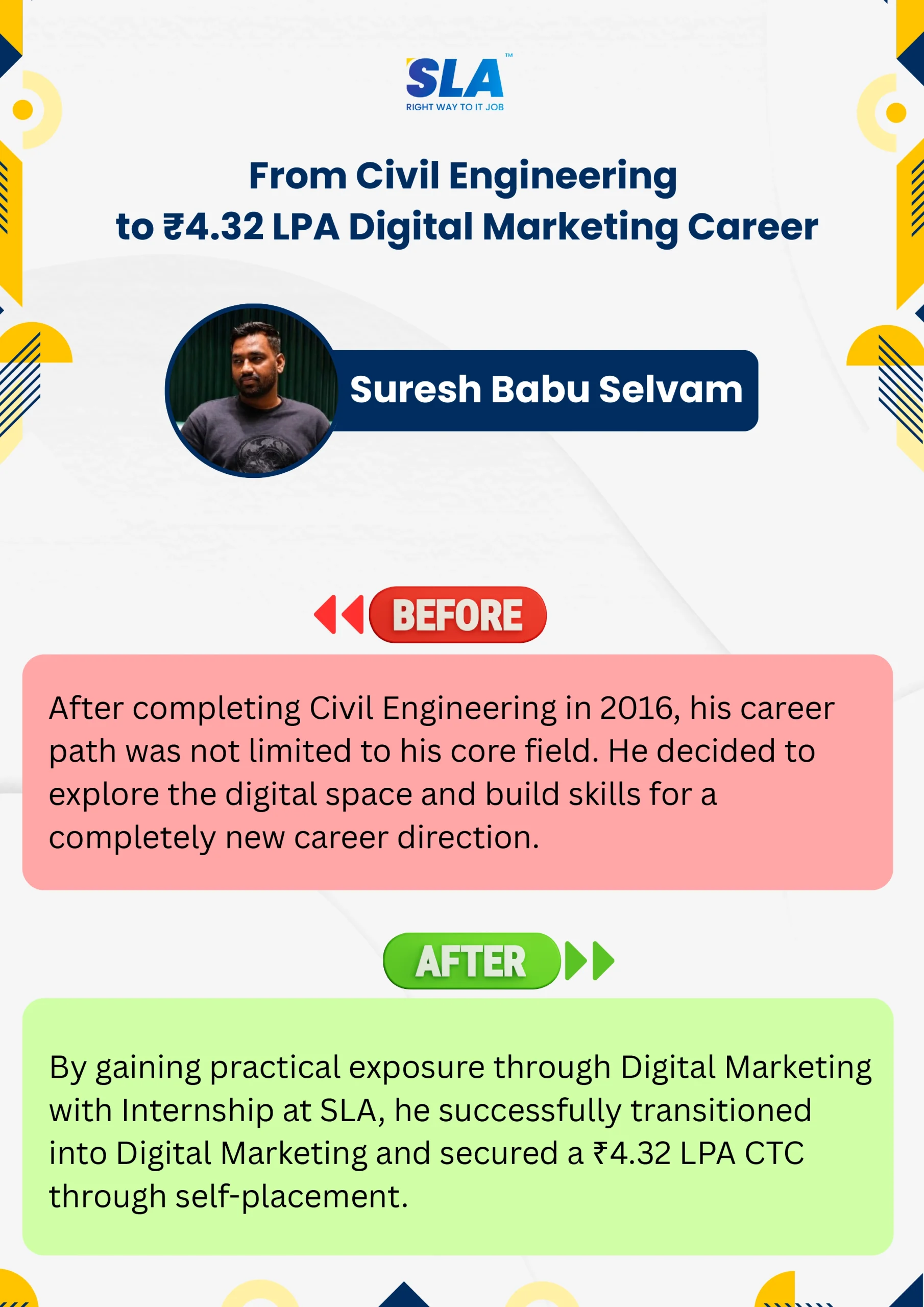
Life Changing Stories

Explore Our Students' Inspiring Leap Stories!

See More Success Stories

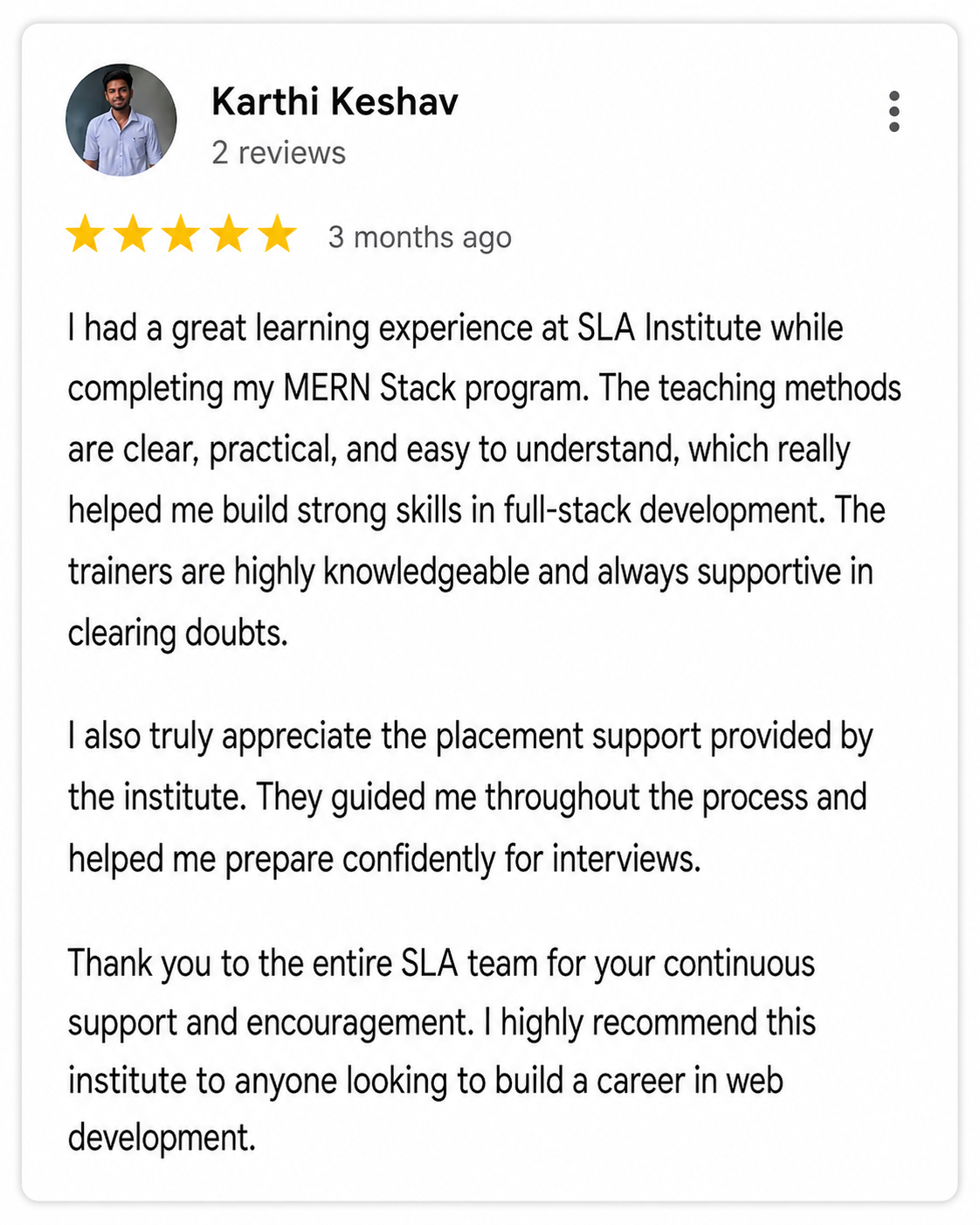
Google Reviews

Rating
4.8
1,053 Google reviews

MATHAN KUMAR G EEE

SLA Institute provides a structured learning environment for data analytics. The syllabus is relevant, and trainers are knowledgeable. Some sessions were very useful practically, while…
Click here for Full Review

Nithish Sahoo

I had an excellent experience taking this DevOps course. The curriculum is well-structured and covers both fundamental and advanced DevOps concepts in a clear manner.…
Click here for Full Review

 Surya

 Special thanks to Vishal Sir, the Placement Officer, for his interview guidance, resume support, and continuous motivation throughout the placement process. I would also like…
Click here for Full Review

NalluKumar Ravichandran

Hi, I recently completed the DOT NET Full Stack Development course at SLA, and I had a great learning experience. The teaching style and student…
Click here for Full Review

Shaaru Menan

I had a 3 year career break. Joined SLA on Java Full Stack course and completed it.Did projects with the help of my Mentor. They…
Click here for Full Review

SARAN M

SLA Institute provides training in communication and aptitude along with strong technical skills. The trainers explain concepts clearly with a practical approach, which helps build…
Click here for Full Review

Discover What Our Students Have To Say

See More Reviews

Listen to Our Students' Video Testimonials

Our counselors will share the Syllabus PDF with you via Email / Whatsapp

Get Your Instant Job & Placement Eligibility
Report in Just 30 Seconds!
Below 30% - not Eligible (Needs Preparation)
30% – 70% - Partially Eligible (Needs Guidance)
Above 70% - Fully Eligible (Ready to Start)

We are excited to get started with you

Give us your information and we will arange for a free call (at your convenience) with one of our counsellors. You can get all your queries answered before deciding to join SLA and move your career forward.