Softlogic Systems Embedded Course Syllabus is specifically designed for College Students, Freshers, and Job Seekers. Our Embedded Syllabus covers the microcontroller fundamentals, embedded C programming, interfacing techniques, real-time operating systems (RTOS), and hardware debugging. Our Embedded Course Content helps you learn Embedded Step by Step with real-time projects and Interview Preparations.
Embedded Systems Course Syllabus
4.40
(526)
DURATION

2 Months
JOB READY

Syllabus
CERTIFIED

Courses

Let's take the first step to becoming an expert in Embedded Systems
Click Here to Get Started
Lifelong Placement
Support
Get Certified
Check Your Job Eligibility
×
Your Placement Eligibility Report
Syllabus for The Embedded Systems Course
Download Syllabus
Microprocessor & Microcontroller Classification:
- Difference between Microprocessor & Microcontroller
- Classification based on architecture
- Memory Classification
Registers & Memory of AT89C51:
- Description of RAM
- Description of CPU Registers
- Functions of SFR
Introduction of EMBEDDED C
- Introduction to Embedded C
- Difference between C & Embedded C
- Programming style
- Basic structure of C program
Constants, Variables & Data Types
- Keywords & Identifiers
- Data type & its memory representation
- Arrays and strings
Operators
- Types of Operators
- Bitwise Operators explained
- CONTROL STRUCTURES & LOOPS
- Decision making with if statement
- If….else statement
- Switch statement, and GOTO statement
- The While and Do – While statements
- For statement
Functions
- Why Functions
- Types of Functions
- A Multi functional program
- Return values & their types
Interoduction To Softwares
- Kiel Compiler
- Proteus
Interfacing of LED
- Introduction of LED’s
- Interfacing Circuit Description of LED’s
- Programming of LED’s Interfacing
Interfacing of Seven Segment Display
- Introduction to 7 Segment Display
- Types of 7 Segment Display
- Interfacing Circuit Description of 7 Segment Display
- Programming of 7 Segment Display Interfacing
Interfacing of LCD
- Introduction to 16 x 2 LCD
- Commands of 16 x 2 LCD
- Interfacing Circuit Description of 16 x 2 LCD
- Programming of 16 x 2 LCD
Interfacing of Switches & Keyboard Matrix
- Introduction to Switches & Keyboard Matrix
- Interfacing Circuit of Switches & Keyboard Matrix
- Programming of Keyboard Matrix & Switches
- Controlling of LED’s by using Switches
- Key board Matrix & LCD Interfacing Program
Interfacing of Motors
- Introduction to Motors
- Types of Motors used in Embedded System
- Programming & Controlling of motors in Embedded System
Timers & Counters Programming
- Introduction to Timers & Counters
- Difference between Timer and Counter
- Description of SFR associated with Timers & Counters
- Programming of Timers & Counters
Serial Communication Programming
- Introduction to Serial Communication
- Types of Serial Communication
- Description of SFR associated with Serial Communication
- Programming of UART
Interfacing Of ADC
- Introduction to ADC
- Programming of ADC
Sensor Interfacing
- Introduction to sensing devices
- Interfacing of IR Sensors
- Interfacing of Temperature Sensor
Embedded Networking
- I2C Bus Standard
- Bluetooth
- Zigbee
- USB
- UART
Linux Fundamentals & Device Driver Programming
- Linux Fundamentals
- Linux Commands
- VI Editors
- Introduction to Device Driver
- The Role of Device Driver
- Kernel Module Vs Application
- Types of Device Driver
- Character Driver
- Block Driver & Network Driver
The SLA way to Become
a Embedded Systems Expert

Enrollment

Technology Training
Coding Practices
Realtime Projects
Realtime Projects

Placement Training
Aptitude Training
Interview Skills
Interview Skills

Panel Mock
Interview

Unlimited
Interviews

Interview
Feedback
100%
IT Career
FAQ
What are the topics covered in Embedded Training?
Topics covered during Embedded Training include microcontrollers and development boards, I/O hardware interfacing, embedded programming languages and operating systems, embedded software design, real time operating system, wireless communication and network protocols, hardware programming, embedded hardware design, embedded system control and embedded system design.
How do microcontrollers and microprocessors differ?
A microcontroller combines a CPU, memory, and peripherals on one chip, making it ideal for embedded applications with specific functions. Conversely, a microprocessor is used in general-purpose computing and typically needs additional components to function fully.
Why opt for SLA as your preferred Embedded Online Training Institute?
Choose SLA as your preferred Embedded Online Training Institute for its expert-led training, hands-on learning, guaranteed placement guidance, flexible scheduling, and personalized support. Our program guarantees your success in mastering Appium.
Why opt for SLA as your preferred Embedded Training Institute in OMR?
Choose SLA as your preferred Embedded Training Institute in OMR for its expert-led training, hands-on learning, guaranteed placement guidance, flexible scheduling, and personalized support. Our program guarantees your success in mastering Embedded.
Who can attend Embedded Training?
A wide range of personnel including entry-level engineers, mid-level engineers, senior engineers, and other professionals in the electronic engineering industry, such as members of engineering teams, software testers and project managers.
What distinguishes a real-time operating system (RTOS) from a general-purpose operating system?
RTOS are designed to handle tasks within strict timing constraints, ensuring predictable and timely responses for critical operations. General-purpose operating systems prioritize throughput and multitasking without guaranteeing precise timing.
Does SLA provide EMI options for students?
Yes, SLA offers EMI options for students with 0% interest to make the training more financially manageable.
Does SLA provide EMI options for students?
Does SLA provide EMI options for students?
Does SLA have any other branch?
SLA operates two branches, one in K.K. Nagar and the other in OMR Navalur, providing students with convenient access to their training centers.
What are some frequently used communication protocols in embedded systems?
Common communication protocols include UART (Universal Asynchronous Receiver/Transmitter), SPI (Serial Peripheral Interface), I2C (Inter-Integrated Circuit), CAN (Controller Area Network), and USB (Universal Serial Bus).
What are the career opportunities available after Embedded Training?
Embedded Training provides a solid foundation of the skills and knowledge required for a career in the field of embedded systems. After completing the course, one may take up a range of career paths in the electronics industry, such as embedded systems designer or engineer, embedded systems programmer, embedded systems tester, and database designer.
Does SLA have any other branch?
SLA operates two branches, one in K.K. Nagar and the other in OMR Navalur, providing students with convenient access to their training centers.
How does interrupt handling function in embedded systems?
Interrupt handling involves the CPU temporarily halting its current task to respond to a higher-priority event indicated by an interrupt. The system saves the state of the ongoing task, executes the interrupt service routine (ISR), and then resumes the previous task.
What are embedded skills?
Embedded skills involve programming in C/C++, understanding microcontrollers, knowing about real-time operating systems (RTOS), hardware connections, networking basics, debugging, power efficiency, and project management, which are essential for embedded systems development.
Do embedded systems need coding?
Yes, embedded systems need programming. Developers write code, usually in C or C++, to control the system’s hardware like sensors and communication interfaces. The code determines how the system works, responding to inputs, processing data, and generating outputs.
What is included in the course fee?
In the course fee, we include lab access, trainer support, course material and other necessary training materials, and placement assiatnce.
Do embedded systems have a future?
Yes, embedded systems are expected to remain important in various industries. They are used in cars, healthcare, electronics, and more. As technology improves, the need for better embedded systems will continue to grow.
What is the role of a watchdog timer in embedded systems?
A watchdog timer monitors system operation and resets the system if it fails to perform a required action within a set time. This helps detect and recover from faults, maintaining system reliability.
Which language is best for embedded system?
C and C++ are widely considered the best programming languages for embedded systems due to their efficiency, low-level access to hardware, and broad support in the embedded industry.
What are the benefits of attending Embedded Training?
After attending Embedded Training, one can become skilled at embedded design, development, programming and implementation; build a strong foundation in embedded systems; and develop the skills required to lead or be part of a design or programming team.

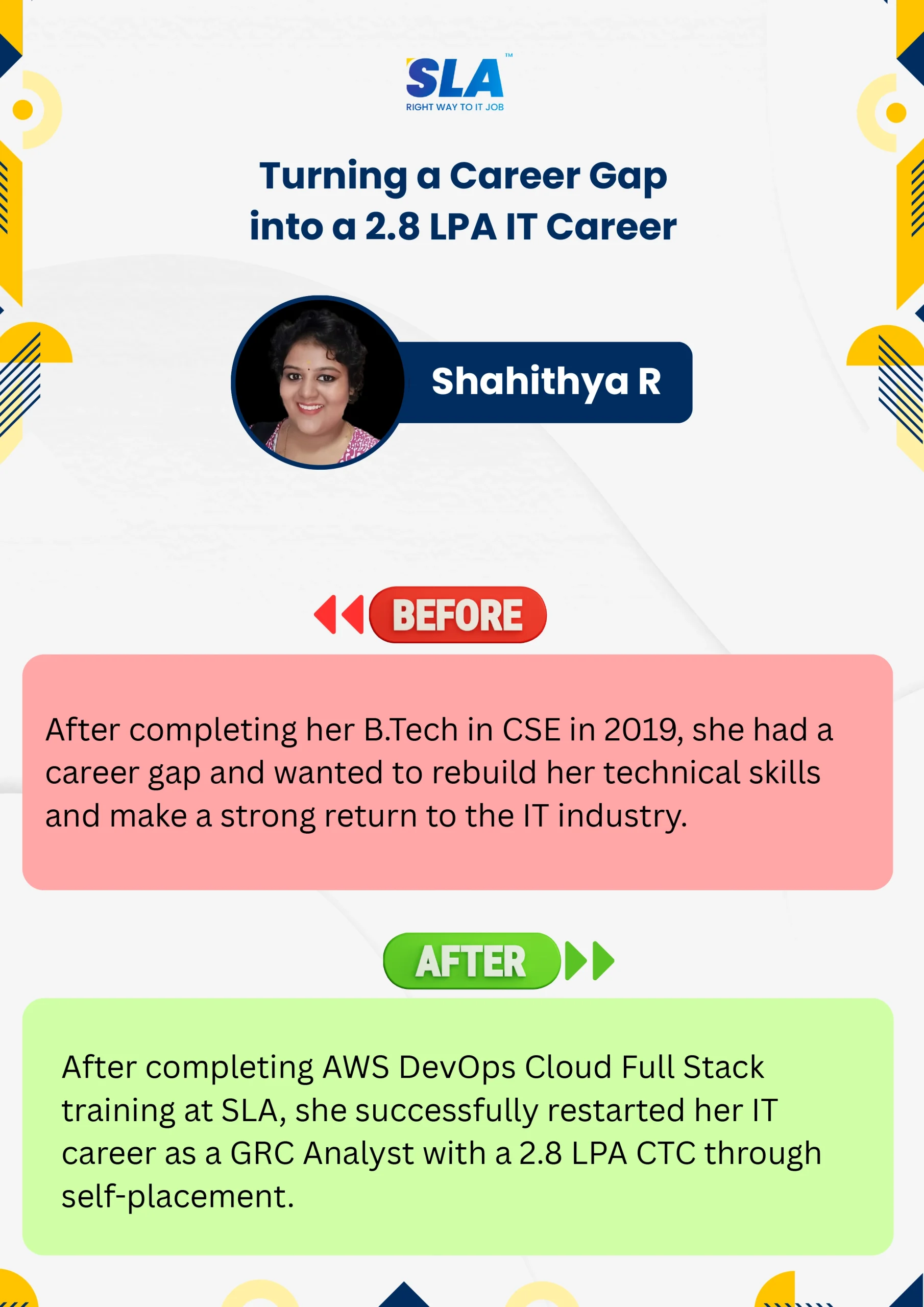
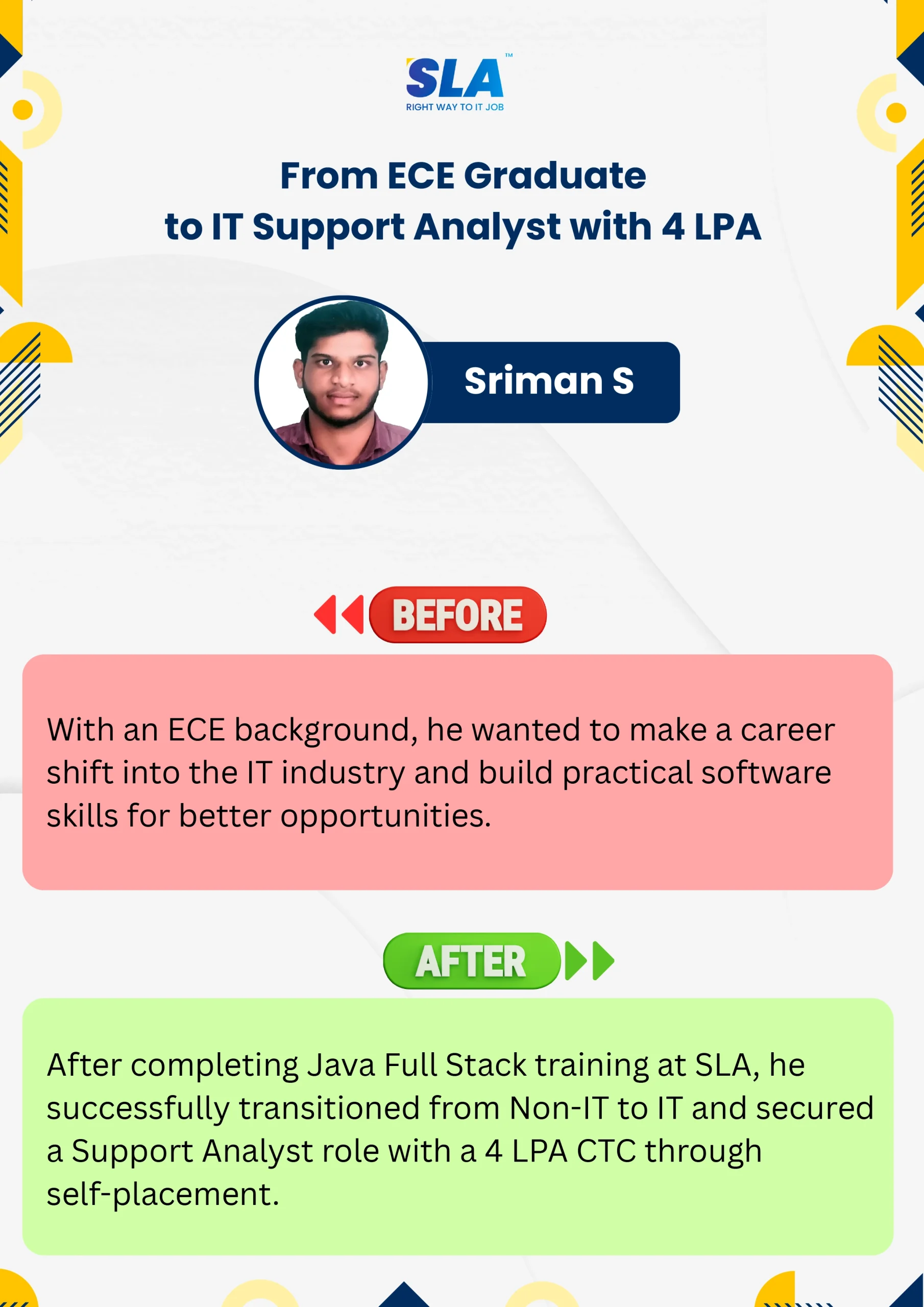
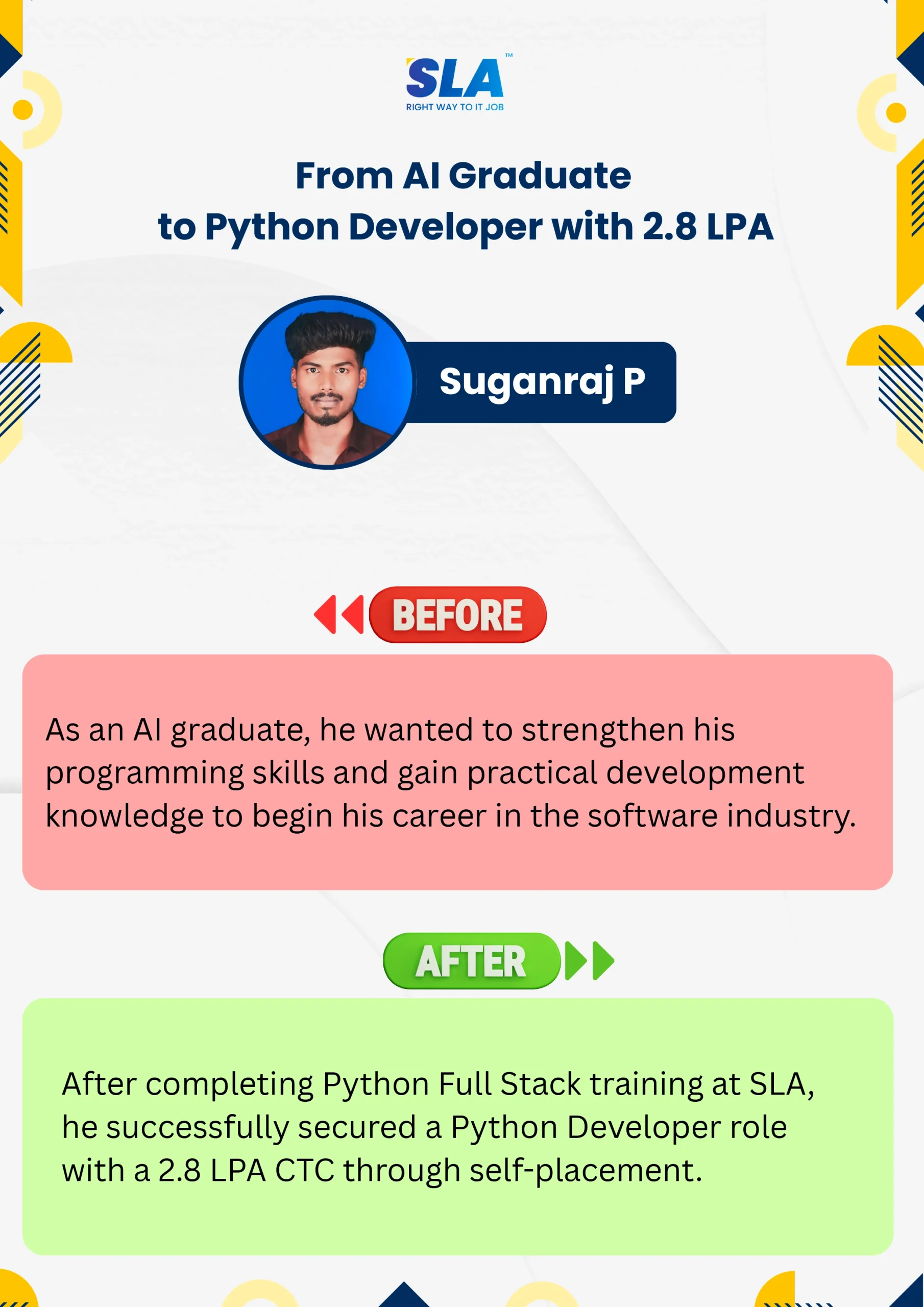
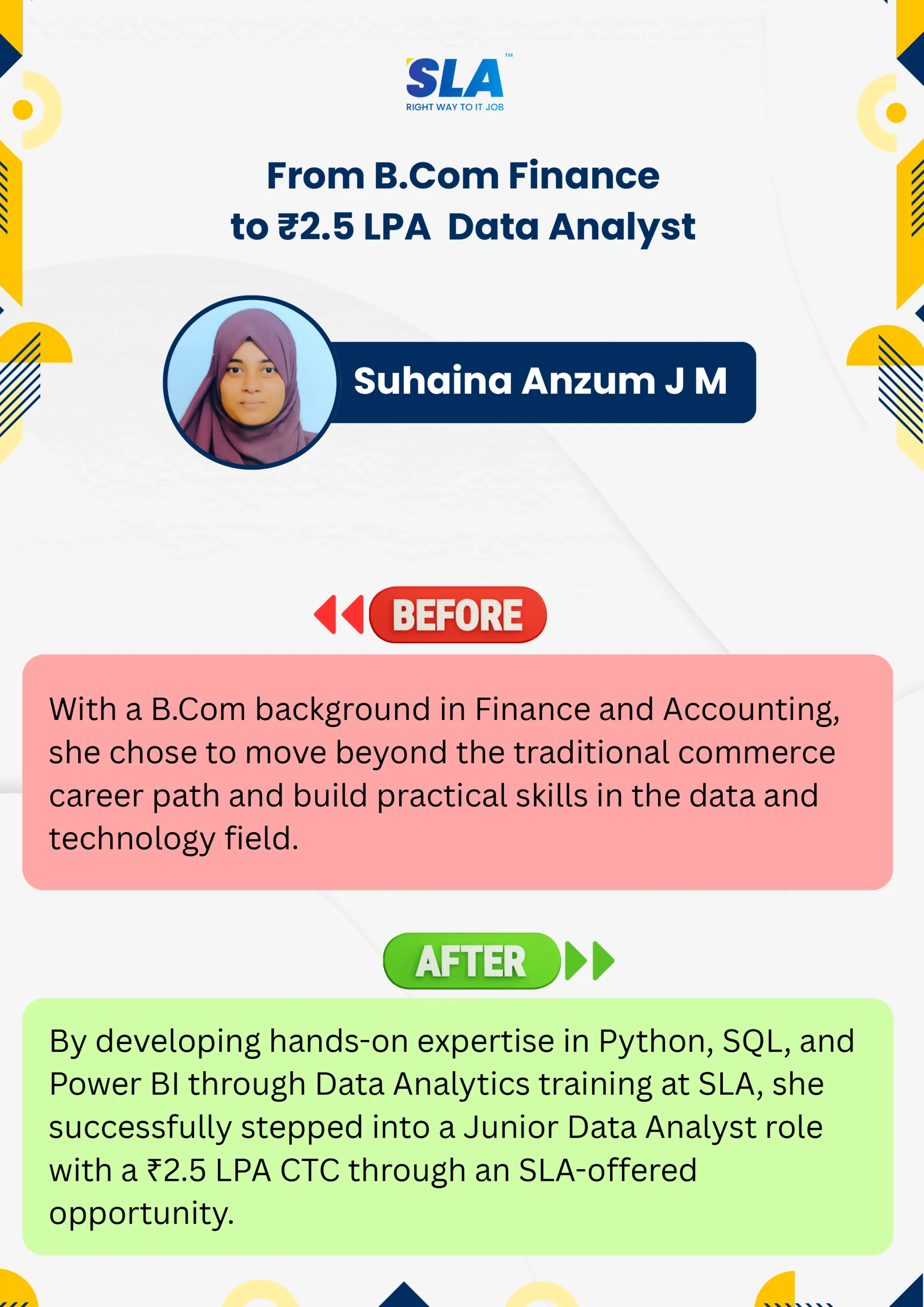
Google Reviews

Rating
4.8
1,053 Google reviews

NalluKumar Ravichandran
Hi, I recently completed the DOT NET Full Stack Development course at SLA, and I had a great learning experience. The teaching style and student…

Click here for Full Review

Surya
Special thanks to Vishal Sir, the Placement Officer, for his interview guidance, resume support, and continuous motivation throughout the placement process. I would also like…
Click here for Full Review

SARAN M
SLA Institute provides training in communication and aptitude along with strong technical skills. The trainers explain concepts clearly with a practical approach, which helps build…
Click here for Full Review

MATHAN KUMAR G EEE
SLA Institute provides a structured learning environment for data analytics. The syllabus is relevant, and trainers are knowledgeable. Some sessions were very useful practically, while…
Click here for Full Review

Shaaru Menan
I had a 3 year career break. Joined SLA on Java Full Stack course and completed it.Did projects with the help of my Mentor. They…
Click here for Full Review

Nithish Sahoo
I had an excellent experience taking this DevOps course. The curriculum is well-structured and covers both fundamental and advanced DevOps concepts in a clear manner.…
Click here for Full Review
Discover What Our Students Have To Say
See More ReviewsRelated Blogs for
The Embedded Systems Course
Courses After 12th
Published On: April 8, 2026
Introduction Hurray! You have successfully sailed past your board exams, navigated through the vast ocean…
Top 5 Embedded System Challenges and Solutions
Published On: November 19, 2024
Introduction Combining hardware with software results in systems that are strong, efficient, and potent in…
Embedded Project Ideas
Published On: October 12, 2024
Introduction Embedded systems play a vital role in today’s technology-driven world, controlling devices like smart…
Embedded Software Engineer Salary for Freshers and Experienced
Published On: September 23, 2024
Introduction Embedded systems form the core of modern electronics, from consumer devices to automotive and…
Embedded Tutorial for Beginners
Published On: September 14, 2024
Introduction Are you a beginner interested in hardware but intimidated by microcontrollers, complicated circuits, or…
Top 20+ Embedded Interview Questions and Answers
Published On: June 1, 2024
Introduction The continuous investments in cloud computing and artificial intelligence are expected to drive significant…