
Softlogic is one of the Top Training institutes for Core Java. Learn how to use Core Java, from beginner basics to advanced techniques. Our Core Java Syllabus covers the Java basics, object-oriented programming concepts, exception handling, collections framework, multithreading, JDBC, and more. We offer a Core Java Course with Placement Assistance, Mock interviews, Resume building, and certification.
Core Java Certification Course
4.80
(1250)
DURATION

3 Months
EMI

0% Interest
Mode

Live Online / Offline

Let's take the first step to becoming an expert in Core Java Certification Course
Click Here to Get Started
Lifelong Placement
Assistance
Get Certified
IT Training ELIGIBILITY TEST
×
Your Placement Eligibility Report
Want more details about Core Java Certification Course?
Fill out the form, and our counsellors will get in touch with you at your preferred time. You can have all your queries answered. Once you decide that SLA is the perfect fit for your training needs, our counselors will guide you through the process every step of the way.

Course Schedules

Course Syllabus

Course Fees

or any other questions...
Fees, Duration & Batch Timings for Core Java Certification Course
Hands On Training
3-5 Real Time Projects
60-100 Practical Assignments
3+ Assessments / Mock Interviews
August 2026
Week days
(Mon-Fri)
Online/Offline
2 Hours Real Time Interactive Technical Training
1 Hour Aptitude
1 Hour Communication & Soft Skills
(Suitable for Fresh Jobseekers / Non IT to IT transition)
Course Fee
August 2026
Week ends
(Sat-Sun)
Online/Offline
4 Hours Real Time Interactive Technical Training
(Suitable for working IT Professionals)
Course Fee
Save up to 20% in your Course Fee on our Job Seeker Course Series
Learn More
Syllabus of Core Java Certification Course
Download Syllabus
Introduction:
- Why Java
- Paradigms
- Diff B/W Java & Other (C,C++)
- Java History
- Java Features
- Java programming format
- Java Statements
- Java Data Types
OOPS (Object Oriented Programming & Systems)
- Introduction
- Object
- Constructors
- This Key Word
- Inheritance
- Super Key Word
- Polymorphism (Over Loading & Over Riding)
- Abstraction
- Interface
- Introduction
- Object
- Constructors
- This Key Word
- Inheritance
- Super Key Word
- Polymorphism (Over Loading & Over Riding)
- Abstraction
- Interface
- Introduction
- Object
- Constructors
- This Key Word
- Inheritance
- Super Key Word
- Polymorphism (Over Loading & Over Riding)
- Abstraction
- Interface
- Encapsulation
- Introduction to all predefined packages
- User Defined Packages
- Access Specifiers
STRING Manipulation
- String
- String Buffer
Array
- What is Array
- Single Dimensional Array
- Multi Dimensional Array
- Sorting of Arrays
Wrapper Classes
- Introduction
- Byte, Short, Integer, Long, Float, Double, Character
- Boolean classes
Inner Classes
- Introduction
- Member Inner Class
- Static Inner Class
- Local Inner Class
- Anonymous Inner Class
Collection Frame Work
- Introduction
- Util Package interfaces, List, Set, Map
- List Interface 7 Its Classes
- Set Interface & Its Classes
- Map Interface & Is Classes
AWT
- Introduction
- Components
- Event-Delegation-Model
- Listeners
- Layouts
- Individual Components Lable, Button, Check Box, Radio Button,
- Choice, List, Menu, Text Field, Text Area
Objectives of Core Java Certification Course
The Core Java Training will cover all the topics ranging from fundamental to advanced concepts, which will make it easy for students to grasp Core Java. The Core Java Course Curriculum is composed of some of the most useful and rare concepts that will surely give students a complete understanding of Core Java as well. So, some of those curriculum are discussed below as objectives:
- To make students well-versed in fundamental concepts of Core Java like – Paradigms, Java History, Java Features; OOPs; STRING Buffer, String Manipulation etc.
- To make students completely aware of more Core Java topics like – Arrays, Wrapper Classes – Byte, Short, Integer, Long, Float, Double, Character, Boolean classes etc.
- To make students more knowledgeable in more Core Java topics like – Collection Framework, AWT – Components, Event-Delegation-Model, Listeners, Layouts etc.
Request a Free Callback
Why Softlogic Systems is the Best Choice for Core Java Certification Course – Learn, Practice, and Get Placed!
Online & Offline Training Options
Learn at your convenience with flexible classroom and live online training.

Learn from 100+ Real-Time Developers
Get trained by industry professionals with years of hands-on experience.

Hands-on Projects & Codeathons
Practice with real-time projects and coding challenges to build confidence.
0% EMI Fee Options
Pay your course fees flexibly with easy EMI plans at zero interest.

Resume & Interview Support
Get expert help with resume building, mock interviews, and soft skills.

Placement with Top IT Firms
Access placement opportunities with leading MNCs and IT companies.

1000+ Hiring Partners
Benefit from Softlogic’s strong recruiter network for faster job placement.

No Backdoor Jobs
We ensure only genuine placement opportunities with trusted companies.
Request a Free Callback
Highlights of Core Java Certification Course
What is Core Java?
Core Java encompasses the basic elements of the Java programming language, concentrating on core concepts and APIs that are integral to all Java applications. It covers fundamental Java programming elements such as object-oriented principles, data types, control structures, exception handling, and core libraries like java.lang, java.util, and java.io. Core Java serves as the foundation for developing more advanced Java technologies and frameworks.
What is Core Java Full Stack?
Core Java Full Stack is a development methodology where Core Java is utilized for both the front-end and back-end of applications. This approach involves employing Core Java for server-side logic and back-end processes while integrating it with front-end technologies and frameworks to build comprehensive, end-to-end solutions. Typically, this involves combining Core Java with web technologies such as HTML, CSS, and JavaScript, along with frameworks like Spring and Hibernate, enabling developers to construct both client-side and server-side components of a web application.
What are the reasons for learning Core Java?
The following are the prerequisites for learning Core Java:
- Foundation for Advanced Technologies: Core Java lays the groundwork for understanding and working with advanced Java technologies and frameworks.
- Object-Oriented Programming Basics: It introduces essential object-oriented programming principles crucial for effective software development.
- Broad Applicability: Core Java skills are relevant across various fields such as web development, enterprise solutions, and mobile applications.
- Career Opportunities: Mastery of Core Java opens up a wide range of job prospects in software development and related areas.
What are the prerequisites for learning Core Java?
The following are the prerequisites for learning Core Java:
- Basic Programming Skills: An understanding of basic programming concepts such as variables, control structures (loops, conditionals), and data types aids in grasping Java syntax and programming logic.
- Object-Oriented Programming Fundamentals: Familiarity with object-oriented principles like classes, objects, inheritance, polymorphism, and encapsulation is essential, given that Java is an object-oriented language.
- Fundamental Computer Science Knowledge: A grasp of basic computer science concepts, including algorithms, data structures (such as arrays, lists, stacks, and queues), and file handling, is beneficial.
- Basic Mathematics: Basic mathematical skills are useful for problem-solving and understanding algorithms.
Our Core Java Course is fit for:
- Students eager to excel in Core Java
- Professionals considering to transit to Core Java careers
- IT professionals who are aspiring to enhance their Core Java skills
- Java Developers who are enthusiastic about expanding their expertise.
- Individuals seeking opportunities in the Core Java field.
What are the course fees and duration?
Our Core Java Course Fees may vary depending on the specific course program you choose (basic / intermediate / full stack), course duration, and course format (online or in-person). On an average Core Java Course Fees range from 18k to 70k, for a duration of 3 to 6 months with international certification based on the above factors.
What are some job roles related to Core Java?
The following are the job roles related to Core Java:
- Java Developer
- Backend Developer
- Full Stack Developer
- Software Engineer
- Java Application Developer
- Enterprise Java Developer
- Android Developer
List a few Core Java real-time applications.
The following are the Core Java real-time applications:
- Web Applications
- Enterprise Solutions
- Gaming Applications
- Android Apps
- Banking Systems
- Trading Platforms
- Healthcare Systems
What is the salary for a Java Developer?
A fresher Java Developer with less than three years of experience earns an average salary of ₹3.4 Lakhs per year. A mid-career Java Developer with 4-9 years of experience earns an average salary of ₹6.8 Lakhs per year, while an experienced Java Developer with 10-20 years of experience earns an average salary of ₹11.4 Lakhs per year.
Boost Your Skills with Our Core Java Certification Course Experts
Our Mentors are from Top Companies like:
- Our trainers bring over a decade of hands-on Java training experience.
- They possess practical project experience across diverse industries, ensuring relevant knowledge application.
- Annually guiding and supporting 2000+ students, our trainers have a proven success record in effective mentoring.
- Consistently delivering high-quality training that meets industry standards.
- They bridge theoretical concepts with practical applications effectively.
- With strong ties to multinational company HRs, our trainers offer insights into industry trends and job opportunities.
- Proficiency in essential Java concepts including Exception Handling, Threads, JSP, Operators, XML handling, Loops, Collections, Database Connectivity, and Servlets.
- They provide comprehensive hands-on training in these key Java development areas.
- Skillful in communication, they make learning engaging and understandable with relevant examples.
- Dedicated to helping students achieve their learning goals and prepare for interviews confidently.
Request a Free Callback
What Modes of Training are available for Core Java Certification Course?
Offline / Classroom Training

A Personalized Learning Experience with Direct Trainer Engagement!
- Direct Interaction with the Trainer
- Clarify doubts then and there
- Airconditioned Premium Classrooms and Lab with all amenities
- Codeathon Practices
- Direct Aptitude Training
- Live Interview Skills Training
- Direct Panel Mock Interviews
- Campus Drives
- 100% Placement Support
Online Training

Instructor Led Live Training! Learn at the comfort of your home
- No Recorded Sessions
- Live Virtual Interaction with the Trainer
- Clarify doubts then and there virtually
- Live Virtual Interview Skills Training
- Live Virtual Aptitude Training
- Online Panel Mock Interviews
- 100% Placement Support
Corporate Training

Blended Delivery model (both Online and Offline as per Clients’ requirement)
- Industry endorsed Skilled Faculties
- Flexible Pricing Options
- Customized Syllabus
- 12X6 Assistance and Support
GET Free Consultation
Certifications
Take your career to new heights with Softlogic's software training certifications.
Improve your abilities to get access to rewarding possibilities
Improve your abilities to get access to rewarding possibilities

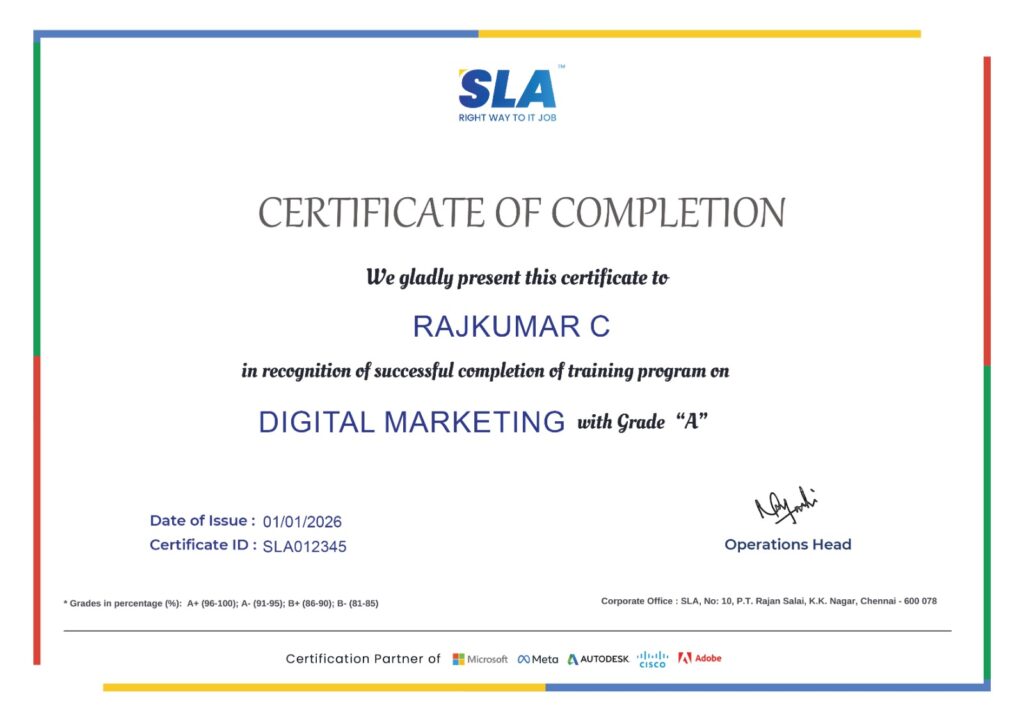
Earn Your Certificate of Completion
Validate your achievements with Softlogic's Certificate of Completion, verifying successful fulfillment of all essential components.
Take Your Career to the Next Level with Certifications
Get a certifications through our training programs to gain a competitive edge in the industry.
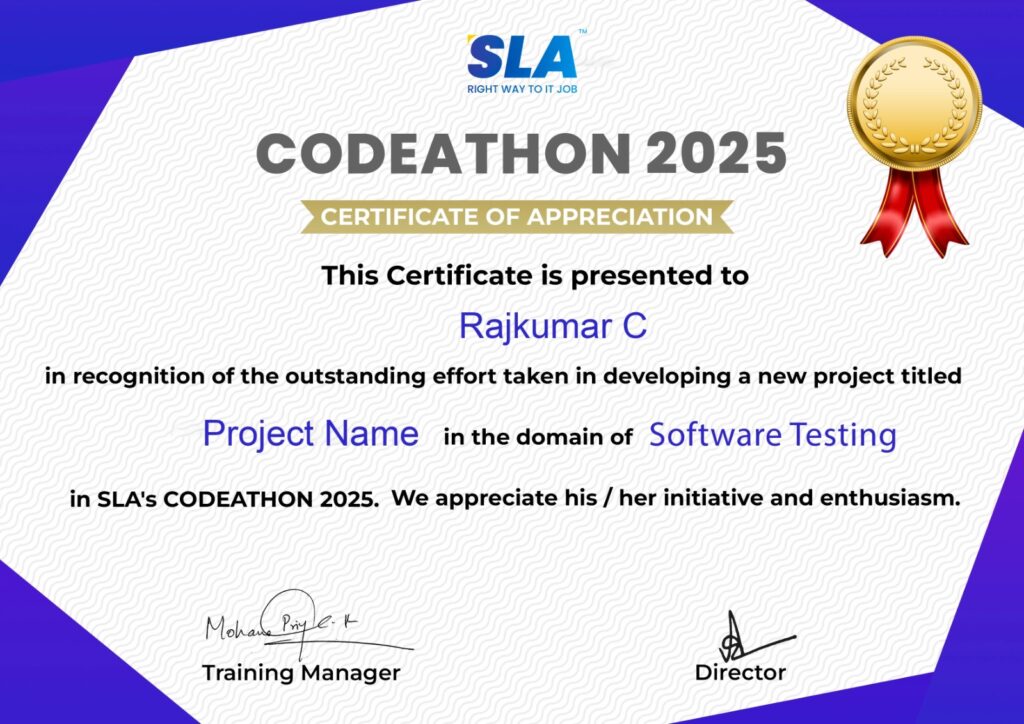
Stand Out from the Crowd with Codethon Certificate
Verify the authenticity of your real-time projects with Softlogic's Codethon certificate.
Hands-on Project Practices in Core Java Certification Course
Movie Ticket Reservation System
Inventory Control System
Quiz App
Task Management Application
Weather Forecast App
Expense Tracker
Real-Time Chat Application
Hotel Booking System
Student Record System
The SLA Way to Get Placed in Top IT Companies
Enrollment

Technology Training
Coding Practices
Realtime Projects
Realtime Projects
Placement Training
Aptitude Training
Interview Skills
Interview Skills
Panel Mock
Interview

Unlimited
Interviews

Interview
Feedback

100%
IT Career
Placement Support for a Core Java Certification Course Job
Genuine Placements. No Backdoor Jobs at Softlogic Systems.

Aptitude Training
from Day 1
Interview Skills
from Day 1

Softskills Training
from Day 1
Build Your Resume

Build your LinkedIn Profile

Build your GitHub
digital portfolio

Panel Mock Interview
Unlimited Interviews until you get placed

Life Long Placement Support at no cost
Request a Free Callback
FAQs
What are the core features of Core Java?
Core Java encompasses fundamental features like object-oriented programming concepts (encapsulation, inheritance, polymorphism), comprehensive exception handling, support for multi-threading, and a powerful standard library that includes essential classes and interfaces.
How do JDK, JRE, and JVM differ?
- JVM (Java Virtual Machine): Runs Java bytecode and provides a runtime environment for Java applications.
- JRE (Java Runtime Environment): Includes the JVM and standard libraries needed to execute Java applications, but lacks development tools.
- JDK (Java Development Kit): Contains the JRE along with development tools such as the compiler (javac) for creating Java applications.
What ensures Java’s platform independence?
Java maintains platform independence through its “write once, run anywhere” capability. Code is compiled into bytecode by the Java compiler, which is then interpreted or compiled into native machine code by the JVM, enabling Java applications to run on any platform with an appropriate JVM.
How do ArrayList and LinkedList differ?
- ArrayList: Uses a dynamic array to store elements, offering quick random access but slower insertions and deletions.
- LinkedList: Employs a doubly linked list, which facilitates faster insertions and deletions but slower access times compared to ArrayList
What does the final keyword signify in Java?
- Final Variables: Cannot be reassigned once initialized.
- Final Methods: Cannot be overridden by subclasses.
- Final Classes: Cannot be extended.
How does Java manage memory?
Java utilizes automatic memory management through garbage collection. The Java Garbage Collector (GC) automatically frees up memory occupied by objects that are no longer reachable, helping to avoid memory leaks and optimize resource use.
What distinguishes synchronized from volatile in Java?
- Synchronized: Ensures that only one thread can execute a particular block of code or method at a time, providing mutual exclusion and avoiding thread interference.
- Volatile: Guarantees that the value of a variable is consistently read from and written to main memory, ensuring visibility to all threads and avoiding thread caching problems.
What are the main interfaces and implementations in the Java Collections Framework?
Interfaces: Include List, Set, Queue, and Map.
Implementations:
- List: Examples are ArrayList, LinkedList, and Vector.
- Set: Includes HashSet, LinkedHashSet, and TreeSet.
- Queue: Examples include PriorityQueue and LinkedList (which also implements Queue).
- Map: Includes HashMap, LinkedHashMap, and TreeMap.
What training modes does Softlogic provide?
Softlogic provides diverse training modes tailored to student needs, including:
- On-site classroom training
- Interactive live online training with instructors
- Customized corporate training sessions
What payment methods does Softlogic accept?
Softlogic accepts a wide range of payment methods, including:
- Cash
- Debit cards
- Credit cards (MasterCard, Visa, Maestro)
- Net banking
- UPI.
Additional Information for
the Core Java Certification Course
Scopes available in the future for learning Core Java
The following are the scopes available in the future for learning the Core Java Course:
- Software Development Kits (SDKs): Core Java is frequently used in the creation and maintenance of SDKs for diverse platforms and tools, aiding developers in building applications more effectively.
- Blockchain Applications: Java is applied in developing blockchain technologies and smart contracts, benefiting from its stability, security features, and extensive libraries.
- Data Science: Although Python is more dominant, Java is used in data science due to its efficiency and capability to handle large-scale datasets, especially in environments reliant on Java-based systems.
- DevOps and Automation: Java plays a role in DevOps practices and automation scripts for continuous integration and deployment, leveraging its flexibility in automating tasks and processes.
- Robotic Process Automation (RPA): Java is utilized in RPA tools and frameworks to streamline repetitive tasks and enhance business operations.
- Scientific Research: Core Java is employed in scientific research and computing for developing algorithms and simulations, thanks to its performance and reliability.
Related Blogs
Java Developer Course Eligibility
Published On: February 18, 2025
Introduction To enroll in a Java Developer course, it's important to understand the eligibility for…
Core Java Project Ideas
Published On: November 2, 2024
Trying out different Core Java Project Ideas helps beginners move beyond theory and start building…
Core Java Developer Salary for Freshers and Experienced
Published On: September 18, 2024
Introduction Core Java is the bedrock behind most systems that range from enterprise-level banking to…
Core Java Interview Questions and Answers
Published On: May 28, 2024
Introduction Learning Core Java is the foundation for creating scalable enterprise applications. This guide includes…
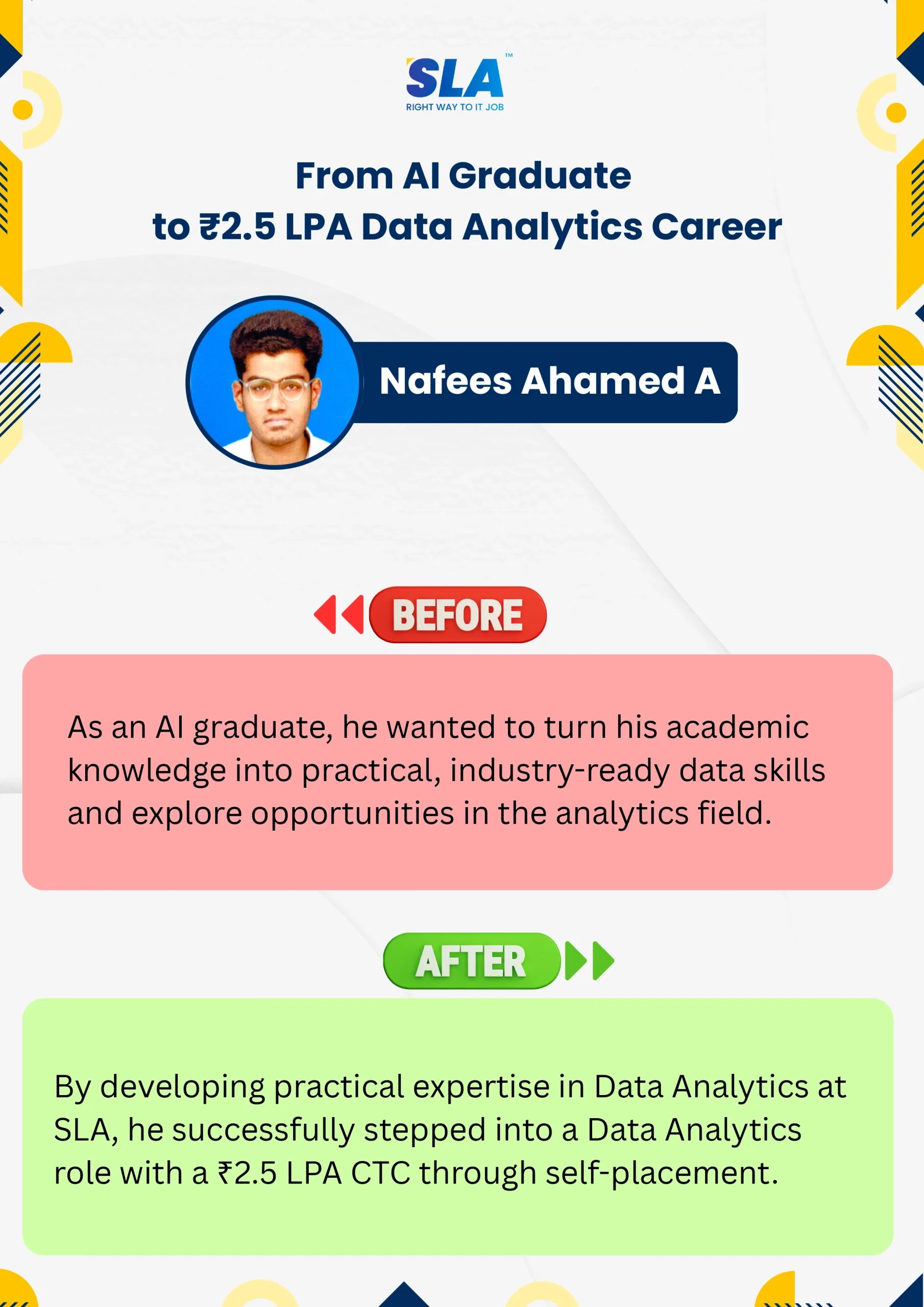
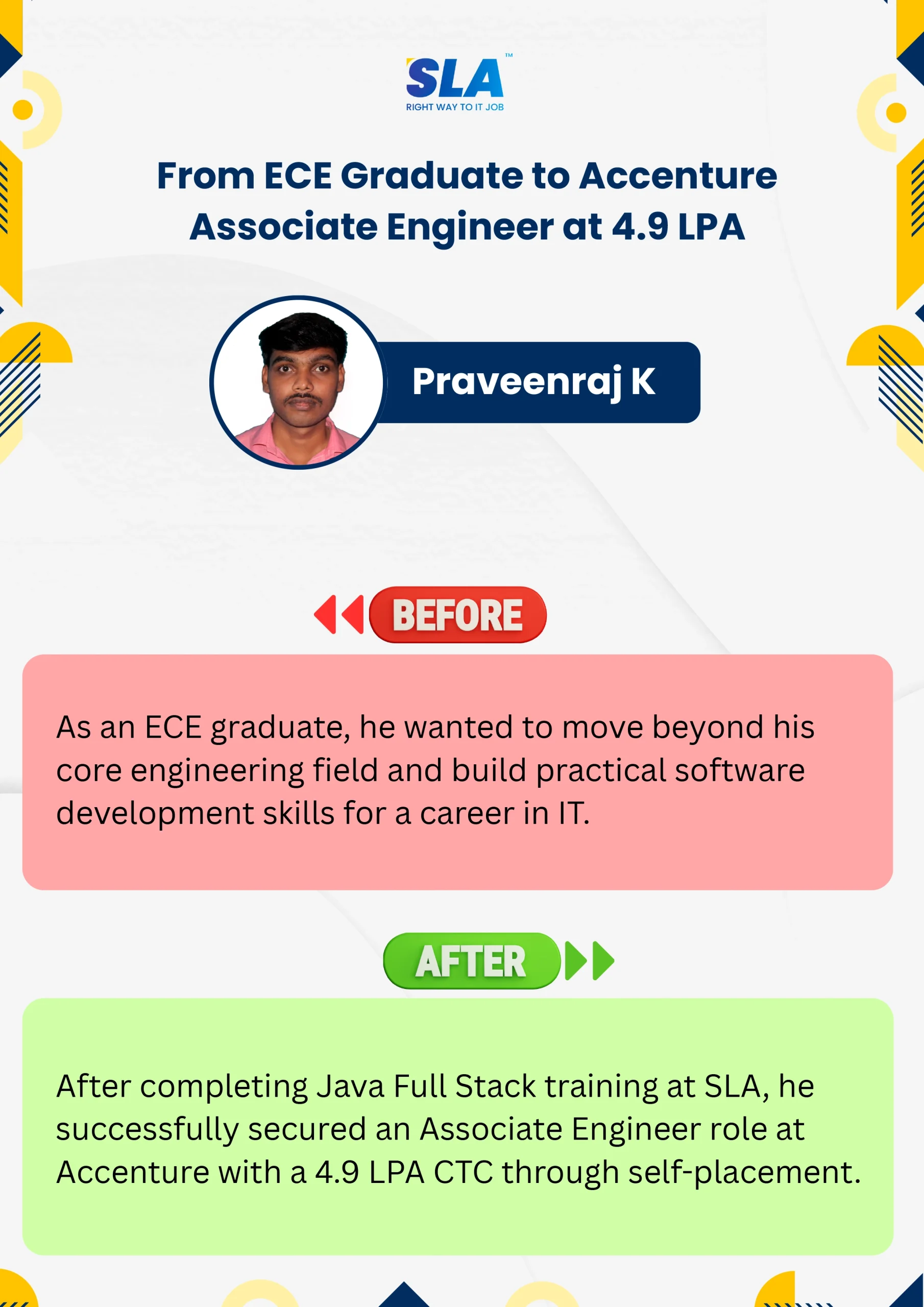
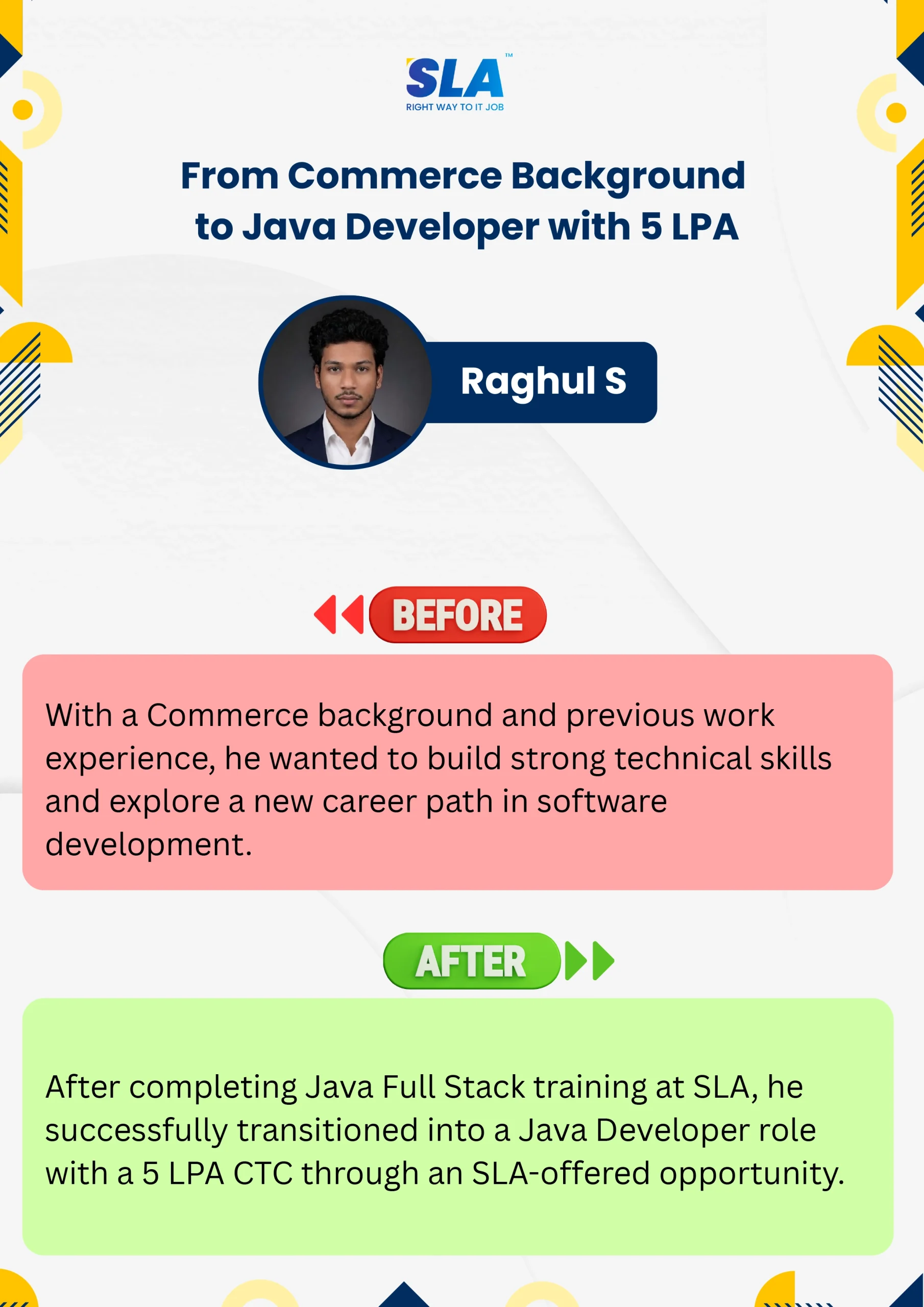
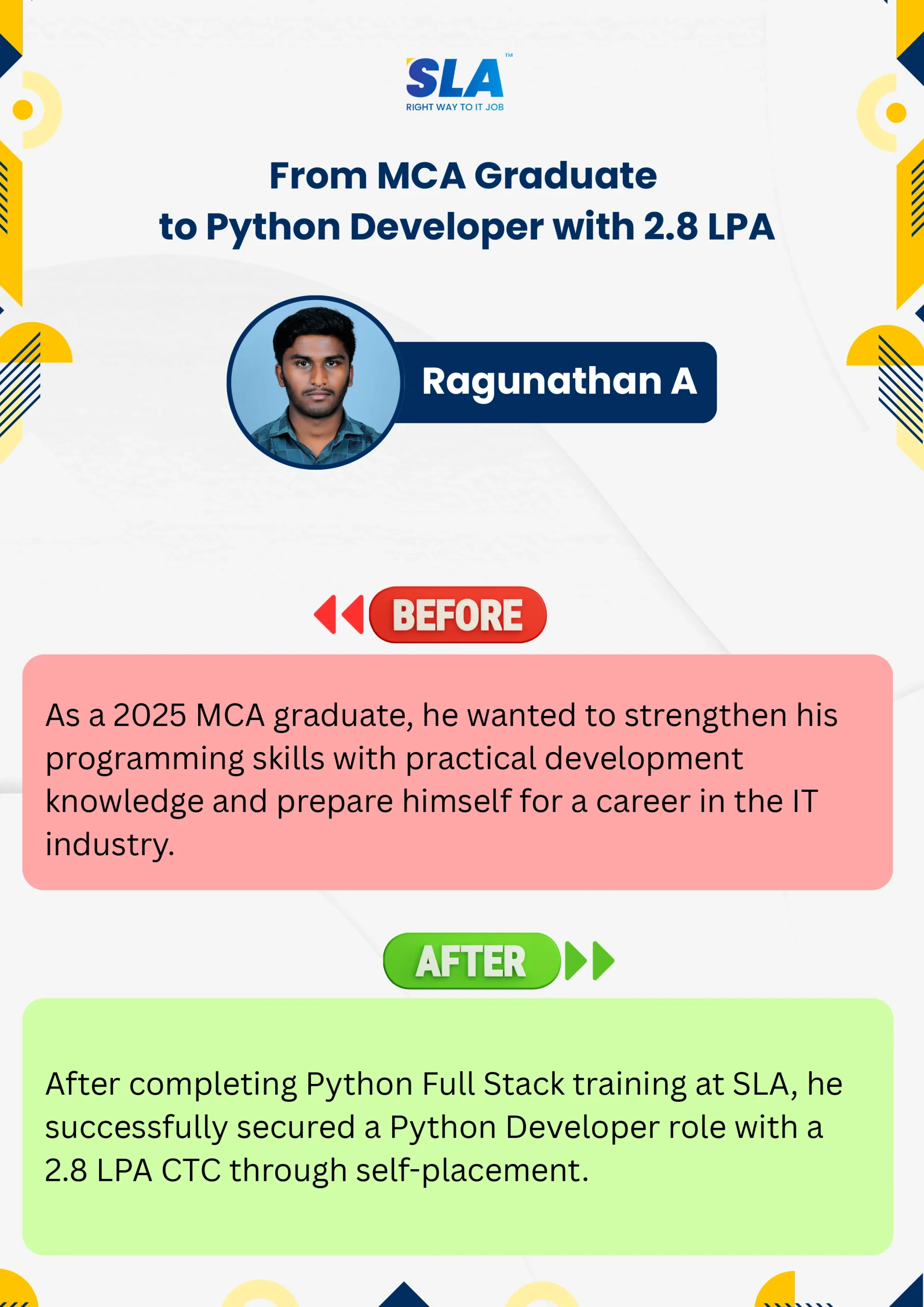
Google Reviews

Rating
4.8
1,053 Google reviews

SARAN M
SLA Institute provides training in communication and aptitude along with strong technical skills. The trainers explain concepts clearly with a practical approach, which helps build…

Click here for Full Review

Nithish Sahoo
I had an excellent experience taking this DevOps course. The curriculum is well-structured and covers both fundamental and advanced DevOps concepts in a clear manner.…
Click here for Full Review

NalluKumar Ravichandran
Hi, I recently completed the DOT NET Full Stack Development course at SLA, and I had a great learning experience. The teaching style and student…
Click here for Full Review

Surya
Special thanks to Vishal Sir, the Placement Officer, for his interview guidance, resume support, and continuous motivation throughout the placement process. I would also like…
Click here for Full Review

MATHAN KUMAR G EEE
SLA Institute provides a structured learning environment for data analytics. The syllabus is relevant, and trainers are knowledgeable. Some sessions were very useful practically, while…
Click here for Full Review

Shaaru Menan
I had a 3 year career break. Joined SLA on Java Full Stack course and completed it.Did projects with the help of my Mentor. They…
Click here for Full Review