
Upgrade your career with the Clinical SAS Training in Chennai at Softlogic Systems. Our Clinical SAS Syllabus covers the SAS programming basics, data manipulation, statistical analysis, clinical data management, CDISC standards, and generating FDA-compliant reports. Our Clinical SAS course in Chennai comes with placement support, flexible schedules, real-time projects, and certification to help you successfully launch your career. Our placement team connects you with top IT companies for a smooth career transition.
Clinical Sas Training In Chennai
DURATION
2 to 4 months
EMI
0% Interest
Mode
Live Online / Offline
Let's take the first step to becoming an expert in Clinical SAS
100% Placement
Assurance
Get Certified
JOB PLACEMENT ELIGIBILITY TEST
Your Placement Eligibility Report
Want more details about Clinical SAS Course?
Course Schedules
Course Syllabus
Course Fees
or any other questions...
Fees, Duration & Batch Timings for Clinical SAS Course
Hands On Training
3-5 Real Time Projects
60-100 Practical Assignments
3+ Assessments / Mock Interviews
July 2026
Week days
(Mon-Fri)
Online/Offline
2 Hours Real Time Interactive Technical Training
1 Hour Aptitude
1 Hour Communication & Soft Skills
(Suitable for Fresh Jobseekers / Non IT to IT transition)
July 2026
Week ends
(Sat-Sun)
Online/Offline
4 Hours Real Time Interactive Technical Training
(Suitable for working IT Professionals)
Save up to 20% in your Course Fee on our Job Seeker Course Series
Syllabus of Clinical SAS Course
Working in the SAS Environment
- Functionality of SAS Windows.
- Creating and managing SAS Libraries.
- Overview of SAS Data states.
- Types of Libraries.
- Storing files temporarily and permanently.
- Referencing SAS files.
Creation database from raw data
- Steps to create a SAS dataset.
- Creating SAS dataset using text file.
- Creating SAS dataset using text file with delimiters.
- Creating SAS dataset using structured text file.
- Creating SAS dataset using unstructured text file.
- Creating SAS dataset using Excel file.
- Creating SAS dataset using Access file.
- Creating SAS dataset using values inside the code.
Output delivery system
- Concepts of output delivery system.
- How ODS works and viewing output of ODS in different format.
- HTML, RTF, PDF etc..
Combination the dataset
- One-o-one reading
- One to many
- Many to many
- Concatenation
- Interleaving,
- Match merge
Functions
- Character function
- Numerical function
- Arithmetical function
- Mathematical function
- Date Function
Loops in SAS: Do Loops
- Do Loop
- Do While
- Do Until
Array
- Definition of array
- Example of array
PROCEDURES
- Procedure Format.
- Procedure Contents.
- Procedure Options.
- Procedure Append.
- Procedure Compare.
- Procedure Transpose.
- Procedure Print.
- Procedure Import.
- Procedure Export.
- Procedure Datasets.
- Procedure Tabulate.
- Procedure Chart, Gchart, Gplot.
- Procedure Report.
GRAPHS
- Introduction to graphics.
- Types of Graphics (with latest models)
- Defining procedure Graphics.
ProcSql
- Generate detail reports by working with a single table, joining tables, or using set operators in the SQL procedure.
- Generate summary reports by working with a single table, joining tables, or using set operators in the SQL procedure.
- Construct sub-queries and in-line views within an SQL procedure step.
- Compare solving a problem using the SQL procedure versus using traditional SAS programming techniques.
Macro
- Create and use user-defined and automatic macro variables within the SAS Macro Language.
- Automate programs by defining and calling macros using the SAS Macro Language.
Introduction of SAS and Clinical research
- SAS role in Clinical Research.
- What is Clinical trial?
- What is Protocol and role of Protocol in Clinical Research?
- Which is playing main role in Clinical Research?
Clinical Trials Data Structures
- Identify the classes of clinical trials data (demographic, lab, baseline, concomitant medication, etc.).
- Identify key CDISC principals and terms.
- Describe the structure and purpose of the CDISC SDTM data model.
- Describe the structure and purpose of the CDISC ADaM data model.
- Describe the contents and purpose of define.xml.
Transform Clinical Trials Data
- Apply categorization and windowing techniques to clinical trials data.
- Transpose SAS data sets.
- Apply ‘observation carry forward’ techniques to clinical trials data (LOCF, BOCF, WOCF).
- Calculate ‘change from baseline’ results.
Objectives of Clinical SAS Training
This training program offers a thorough introduction to operating within the SAS environment. It includes topics such as
- SAS Environment Proficiency: Become skilled at using SAS for data processing and analysis.
- Database Creation: Learn efficient methods to create databases from raw data.
- Output Delivery System (ODS): Understand how to use ODS for effective data output.
- Combining Datasets: Learn techniques to combine datasets in SAS for thorough analysis.
- Advanced SAS Skills: Explore advanced SAS features like functions, loops, arrays, and procedures for better data manipulation and analysis.
- Clinical Research with SAS: Understand how SAS is used in clinical research, including data structures and transformation in clinical trials.
Why Softlogic Systems is the Best Choice for Clinical SAS Training – Learn, Practice, and Get Placed!
Online & Offline Training Options
Learn from 100+ Real-Time Developers
Hands-on Projects & Codeathons
0% EMI Fee Options
Resume & Interview Support
Placement with Top IT Firms
1000+ Hiring Partners
No Backdoor Jobs
Highlights of Clinical SAS Course
What is Clinical SAS?
Clinical SAS programming involves utilizing the SAS programming language to effectively handle, examine, and present data from clinical trials. SAS, a prominent statistical software, finds extensive application in the pharmaceutical and biotech sectors, serving diverse functions such as data administration, analysis, and documentation for clinical research.
What are the reasons for learning Clinical SAS?
There are several compelling reasons to consider learning Clinical SAS programming:
- Data Management: Efficiently handle and clean complex clinical trial data.
- Statistical Analysis: Utilize SAS’s powerful stats tools for informed decision-making.
- Industry Relevance: SAS is crucial in managing clinical trial data for pharmaceutical and biotech industries.
- High Demand: Skill in Clinical SAS is consistently sought after for drug development and compliance.
- Career Opportunities: Opens doors to roles like clinical data programmer and biostatistician.
What are the prerequisites for learning Clinical SAS?
No specific prerequisites are required to enroll in the Clinical SAS Course in Chennai. A strong grasp of computer operations and usage will greatly enhance your learning experience.
Our Clinical SAS Training in Chennai is suitable for:
- Students
- Professionals seeking a career change
- IT professionals aiming to enhance their skills
- Enthusiastic programmers
- Job Seekers
What are the course fees and duration?
The fees for our Clinical SAS Course in Chennai depend on the program level (basic, intermediate, or advanced) and the course format (online or in-person). On average, the Clinical SAS Course Fees in Chennai range from 25,000 INR to 50,000 INR for a duration of 2 to 4 months, inclusive of international certification. For precise and up-to-date details on fees, duration, and certification, kindly contact our Best Clinical SAS Training Institute in Chennai directly.
What are some job roles related to Clinical SAS?
Professions connected to Clinical SAS programming include:
- Clinical Data Programmer
- Clinical Data Manager
- Clinical SAS Analyst
- Clinical Database Developer
- Biomedical Statistician
- Epidemiologist
List a few Clinical SAS real-time applications
Clinical SAS programming has several real-time applications in the field of clinical research and healthcare:
- Data Management: Organize, validate, and maintain accurate clinical trial data.
- Statistical Analysis: Perform diverse statistical analyses on trial data.
- Safety Monitoring: Analyze adverse events for patient safety.
- Regulatory Reports: Generate reports for regulatory submissions.
- CDISC Standards: Convert data into standardized formats.
- Meta-Analysis: Analyze combined data from multiple trials.
What is the salary range for Clinical SAS programmer?
As per Ambition Box, the average annual salary for entry-level Clinical SAS Programmers in India with less than three years of experience is ₹4.2 Lakhs. Clinical SAS Programmers with 4-9 years of experience typically earn an average annual salary of ₹7.2 Lakhs, while those with 10-20 years of experience earn an average of ₹11.0 Lakhs per year.
Boost Your Skills with Our Clinical SAS Training Experts
Our Mentors are from Top Companies like:
- Our trainers are highly experienced SAS specialist with 10+ years of experience in Clinical SAS Programming.
- They have the proven ability of properly preparing and debugging clinical datasets for different studies.
- They are experienced in writing statistical plans/datasets and creating tables/listings/figures and they hold expert knowledge on SDTM and CDISC standards subject areas.
- They have exceptional working knowledge of all possible SAS functions, macros suitable for executing a project.
- They are experienced in creating SAS programs and writing SAS codes in order to ensure study is built and approved as per regulatory specifications.
- They are exceptionnaly specialized in statistical analysis, generating tables, listings and graphs for clinical trials and are competent to manage and monitor SAS data templates across clinical data management processes.
- They are skilled in teaching about creating comprehensive summary reports as well as producing standard editorials and critiques.
- They possess comprehensive understanding of FDA-GCP and ICH guidelines along with 21 CFR Part 11 Compliance.
- They are experienced in using software solutions like JMP, SPSS, Excel, Access and Word and have hands-on experience in creating study specific SAS programs, flowlogs, NCDOC, etc.
- They are highly knowledgeable in SDTM and CDISC ADaM standards and are proficient in using various tools like Clinical Database System – ODM/Listent/Accelovance etc.
- They are certified Clinical Data Interchange Standards Consortium Professional (CCDSP) and Certified Clinical SAS Programmer (CCSP).
- They have a collaborative spirit and positive attitude to helping students learn clinical SAS, preparing for their interview, and cracking their interview like a breeze.
What Modes of Training are available for Clinical SAS Course?
Offline / Classroom Training
- Direct Interaction with the Trainer
- Clarify doubts then and there
- Airconditioned Premium Classrooms and Lab with all amenities
- Codeathon Practices
- Direct Aptitude Training
- Live Interview Skills Training
- Direct Panel Mock Interviews
- Campus Drives
- 100% Placement Support
Online Training
- No Recorded Sessions
- Live Virtual Interaction with the Trainer
- Clarify doubts then and there virtually
- Live Virtual Interview Skills Training
- Live Virtual Aptitude Training
- Online Panel Mock Interviews
- 100% Placement Support
Corporate Training
- Industry endorsed Skilled Faculties
- Flexible Pricing Options
- Customized Syllabus
- 12X6 Assistance and Support
Certifications
Improve your abilities to get access to rewarding possibilities
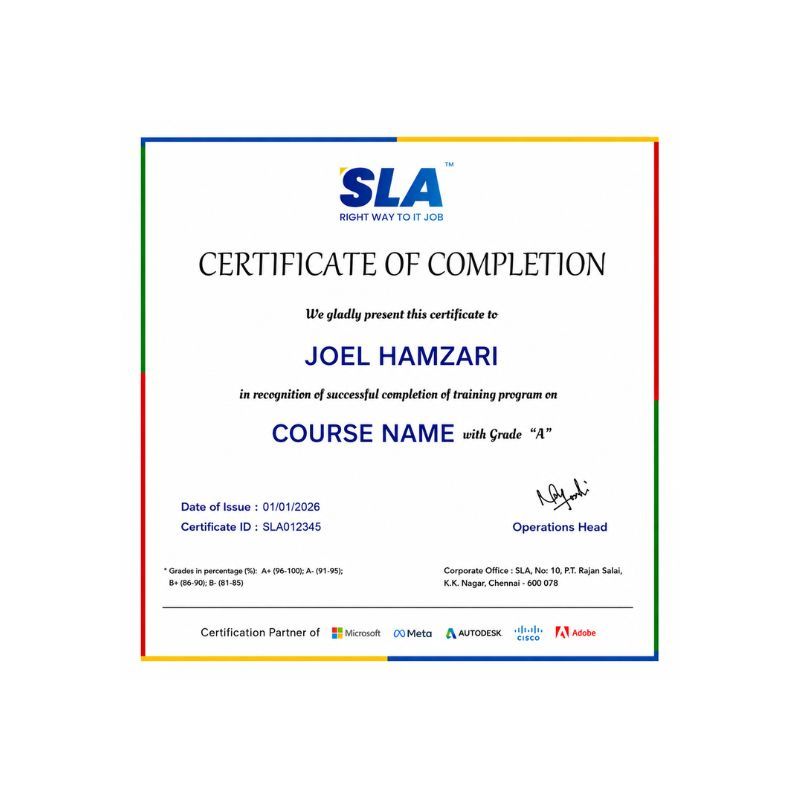
Earn Your Certificate of Completion
Take Your Career to the Next Level with Certifications
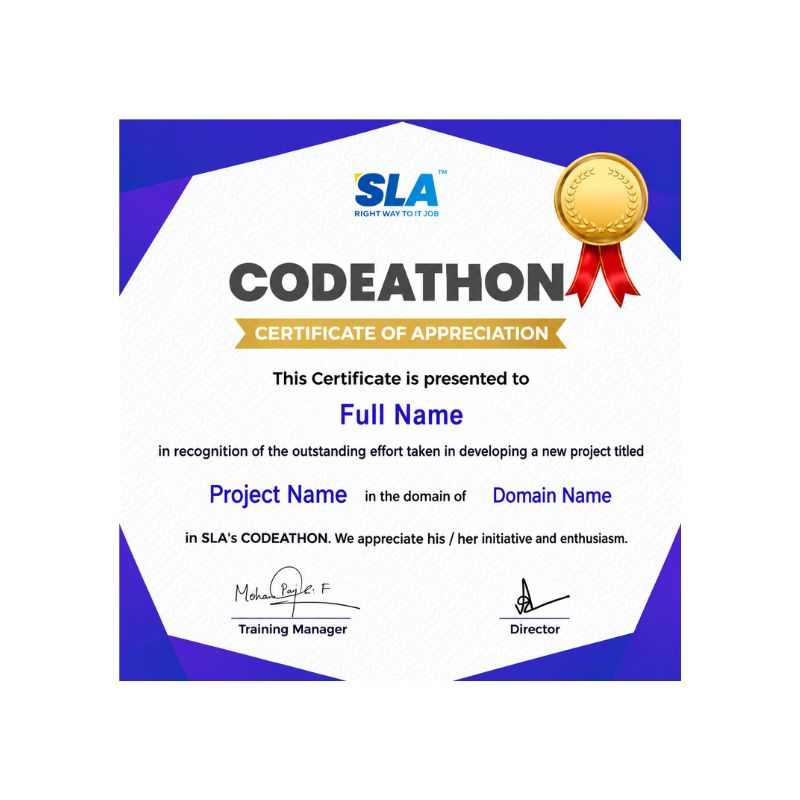
Stand Out from the Crowd with Codethon Certificate
Hands-on Project Practices in Clinical SAS Course
Electronic Submissions
Adaptive Design Analysis
Regulatory Submissions
Clinical Trial Data Integration
Safety Reporting and Analysis
Tables, Listings, and Figures (TLFs)
Data Visualization and Reporting
ADaM Dataset Creation
Safety Signal Detection
The SLA Way to Get Placed in Top IT Companies
Enrollment
Technology Training
Realtime Projects
Placement Training
Interview Skills
Panel Mock
Interview
Unlimited
Interviews
Interview
Feedback
100%
IT Career
Placement Support for a Clinical SAS Job
Genuine Placements. No Backdoor Jobs at Softlogic Systems.
Aptitude Training
from Day 1
Interview Skills
from Day 1
Softskills Training
from Day 1
Build Your Resume
Build your LinkedIn Profile
Build your GitHub
digital portfolio
Panel Mock Interview
Unlimited Interviews until you get placed
Life Long Placement Support at no cost
FAQs
What type of data can I analyze using Clinical SAS?
Clinical SAS can be used to analyze patient and clinical trial data from studies involving drugs and biologics. It can be used for descriptive analytics, biomarker analysis, clinical trial data integration, safety analysis, and more.
How can I access datasets in Clinical SAS?
Data can be accessed in Clinical SAS using the Data step. This step retrieves data from an external source such as a text file, database, or an Excel spreadsheet, and stores it in the LIBREF library for further manipulation and analysis.
How can I clean the data using Clinical SAS?
The data can be cleaned using functions such as ‘SET’, ‘WHERE’, ‘DELETE’, and ‘KEEP’. These functions help in conditionally selecting data for analysis, deleting records, and rapidly updating existing datasets.
How can I check the data integrity in Clinical SAS?
Data integrity in Clinical SAS can be checked using the ‘DATA VALIDATE’ command. This command verifies the consistency of the data values in a dataset and help identify inconsistencies in the data.
How can I generate reports from Clinical SAS?
Reports in Clinical SAS can be generated using the ‘PROC REPORT’ command. This command helps in creating reports based on criteria such as data sorting, calculation, tabulation, and multi-column formats for a better understanding of the data.
Is it necessary to have prior knowledge of SAS before taking Clinical SAS training?
No, prior knowledge of SAS is not necessary to learn Clinical SAS. The course begins with an introduction to SAS programming and provides in-depth knowledge about Clinical SAS.
What are the benefits of Clinical SAS training in Chennai?
Clinical SAS training helps one develop the necessary skills to handle large datasets, explore different levels of data analysis, and interpret data accurately. It also helps in improving decision-making and understanding data patterns and trends in clinical studies.
Are there any internships or jobs available after completing Clinical SAS training?
Yes, completing Clinical SAS training can open doors to various internships and job opportunities. Clinical SAS career opportunities include Clinical SAS programmer, Clinical Data Analyst, Clinical Data Management Specialist, and Clinical SAS Consultant.
What are the career opportunities after completing Clinical SAS training?
The career opportunities after completing Clinical SAS training include Clinical SAS programmer, Clinical Data Analyst, Clinical Data Management Specialist, and Clinical SAS Consultant.
What is the growth potential for Clinical SAS professionals in Chennai?
Clinical SAS professionals in Chennai have a lot of growth potential. With the increasing demand for Clinical SAS knowledge and expertise, professionals with the right skills can enjoy lucrative salaries and career progression.
Additional Information for
the Clinical SAS Course
Rising Demand in Healthcare
The outlook for Clinical SAS training is bright, with a growing need in the healthcare and pharmaceutical sectors. As clinical research and data analysis become increasingly crucial, the demand for skilled Clinical SAS programmers is expected to soar. Opportunities are likely to arise in pharmaceutical firms, contract research organizations (CROs), and healthcare establishments.
Significant Role in Precision Medicine
With the advent of precision medicine and personalized healthcare, the role of Clinical SAS programmers will be pivotal. They will be responsible for analyzing clinical trial data, ensuring its accuracy, and adhering to regulatory standards. As the healthcare industry embraces more digital solutions, the demand for professionals proficient in handling vast datasets and conducting advanced analytics using tools like SAS is projected to grow.
Diverse Career Paths
Professionals trained in Clinical SAS can pursue various career paths, including clinical data management, biostatistics, pharmacovigilance, and regulatory affairs. The field’s adaptability allows for specialization in different areas, offering numerous opportunities for advancement and career growth. With technology advancements and the prevalence of data-driven decision-making, the future for Clinical SAS professionals is promising, offering a wide array of career options.