
Our Data Science Online Training programs are designed for students, freshers, and working professionals who want to upskill and stay relevant. We offer Data Science Online Courses that are practical, interactive, and aligned with the latest industry demands. Our Data Science Syllabus Covers Python programming, statistics, data wrangling, data visualization, machine learning, deep learning, and big data analytics. Enroll now and learn from industry experts with flexible timings and get Job support.
Data Science Online Training
DURATION
4 to 8 months
EMI
0% Interest
Mode
Live Online / Offline
Let's take the first step to becoming an expert in Data Science
100% Placement
Assurance
Get Certified
JOB PLACEMENT ELIGIBILITY TEST
Your Placement Eligibility Report
Want more details about Data Science Course?
Course Schedules
Course Syllabus
Course Fees
or any other questions...
Fees, Duration & Batch Timings for Data Science Course
Hands On Training
3-5 Real Time Projects
60-100 Practical Assignments
3+ Assessments / Mock Interviews
July 2026
Week days
(Mon-Fri)
Online/Offline
2 Hours Real Time Interactive Technical Training
1 Hour Aptitude
1 Hour Communication & Soft Skills
(Suitable for Fresh Jobseekers / Non IT to IT transition)
July 2026
Week ends
(Sat-Sun)
Online/Offline
4 Hours Real Time Interactive Technical Training
(Suitable for working IT Professionals)
Save up to 20% in your Course Fee on our Job Seeker Course Series
Syllabus of Data Science Course
Introduction
- Introduction to Data Analytics
- Introduction to Business Analytics
- Understanding Business Applications
- Data types and data Models
- Type of Business Analytics
- Evolution of Analytics
- Data Science Components
- Data Scientist Skillset
- Univariate Data Analysis
- Introduction to Sampling
Basic Operations in R Programming
- Introduction to R programming
- Types of Objects in R
- Naming standards in R
- Creating Objects in R
- Data Structure in R
- Matrix, Data Frame, String, Vectors
- Understanding Vectors & Data input in R
- Lists, Data Elements
- Creating Data Files using R
Data Handling in R Programming
- Basic Operations in R – Expressions, Constant Values, Arithmetic, Function Calls, Symbols
- Sub-setting Data
- Selecting (Keeping) Variables
- Excluding (Dropping) Variables
- Selecting Observations and Selection using Subset Function
- Merging Data
- Sorting Data
- Adding Rows
- Visualization using R
- Data Type Conversion
- Built-In Numeric Functions
- Built-In Character Functions
- User Built Functions
- Control Structures
- Loop Functions
Introduction to Statistics
- Basic Statistics
- Measure of central tendency
- Types of Distributions
- Anova
- F-Test
- Central Limit Theorem & applications
- Types of variables
- Relationships between variables
- Central Tendency
- Measures of Central Tendency
- Kurtosis
- Skewness
- Arithmetic Mean / Average
- Merits & Demerits of Arithmetic Mean
- Mode, Merits & Demerits of Mode
- Median, Merits & Demerits of Median
- Range
- Concept of Quantiles, Quartiles, percentile
- Standard Deviation
- Variance
- Calculate Variance
- Covariance
- Correlation
Introduction to Statistics – 2
- Hypothesis Testing
- Multiple Linear Regression
- Logistic Regression
- Market Basket Analysis
- Clustering (Hierarchical Clustering & K-means Clustering)
- Classification (Decision Trees)
- Time Series Analysis (Simple Moving Average, Exponential smoothing, ARIMA+)
Introduction to Probability
- Standard Normal Distribution
- Normal Distribution
- Geometric Distribution
- Poisson Distribution
- Binomial Distribution
- Parameters vs. Statistics
- Probability Mass Function
- Random Variable
- Conditional Probability and Independence
- Unions and Intersections
- Finding Probability of dataset
- Probability Terminology
- Probability Distributions
Data Visualization Techniques
- Bubble Chart
- Sparklines
- Waterfall chart
- Box Plot
- Line Charts
- Frequency Chart
- Bimodal & Multimodal Histograms
- Histograms
- Scatter Plot
- Pie Chart
- Bar Graph
- Line Graph
Introduction to Machine Learning
- Overview & Terminologies
- What is Machine Learning?
- Why Learn?
- When is Learning required?
- Data Mining
- Application Areas and Roles
- Types of Machine Learning
- Supervised Learning
- Unsupervised Learning
- Reinforcement learning
Machine Learning Concepts & Terminologies
Steps in developing a Machine Learning application
- Key tasks of Machine Learning
- Modelling Terminologies
- Learning a Class from Examples
- Probability and Inference
- PAC (Probably Approximately Correct) Learning
- Noise
- Noise and Model Complexity
- Triple Trade-Off
- Association Rules
- Association Measures
Regression Techniques
- Concept of Regression
- Best Fitting line
- Simple Linear Regression
- Building regression models using excel
- Coefficient of determination (R- Squared)
- Multiple Linear Regression
- Assumptions of Linear Regression
- Variable transformation
- Reading coefficients in MLR
- Multicollinearity
- VIF
- Methods of building Linear regression model in R
- Model validation techniques
- Cooks Distance
- Q-Q Plot
- Durbin- Watson Test
- Kolmogorov-Smirnof Test
- Homoskedasticity of error terms
- Logistic Regression
- Applications of logistic regression
- Concept of odds
- Concept of Odds Ratio
- Derivation of logistic regression equation
- Interpretation of logistic regression output
- Model building for logistic regression
- Model validations
- Confusion Matrix
- Concept of ROC/AOC Curve
- KS Test
Market Basket Analysis
- Applications of Market Basket Analysis
- What is association Rules
- Overview of Apriori algorithm
- Key terminologies in MBA
- Support
- Confidence
- Lift
- Model building for MBA
- Transforming sales data to suit MBA
- MBA Rule selection
- Ensemble modelling applications using MBA
Time Series Analysis (Forecasting)
- Model building using ARIMA, ARIMAX, SARIMAX
- Data De-trending & data differencing
- KPSS Test
- Dickey Fuller Test
- Concept of stationarity
- Model building using exponential smoothing
- Model building using simple moving average
- Time series analysis techniques
- Components of time series
- Prerequisites for time series analysis
- Concept of Time series data
- Applications of Forecasting
Decision Trees using R
- Understanding the Concept
- Internal decision nodes
- Terminal leaves.
- Tree induction: Construction of the tree
- Classification Trees
- Entropy
- Selecting Attribute
- Information Gain
- Partially learned tree
- Overfitting
- Causes for over fitting
- Overfitting Prevention (Pruning) Methods
- Reduced Error Pruning
- Decision trees – Advantages & Drawbacks
- Ensemble Models
K Means Clustering
- Parametric Methods Recap
- Clustering
- Direct Clustering Method
- Mixture densities
- Classes v/s Clusters
- Hierarchical Clustering
- Dendogram interpretation
- Non-Hierarchical Clustering
- K-Means
- Distance Metrics
- K-Means Algorithm
- K-Means Objective
- Color Quantization
- Vector Quantization
Tableau Analytics
- Tableau Introduction
- Data connection to Tableau
- Calculated fields, hierarchy, parameters, sets, groups in Tableau
- Various visualizations Techniques in Tableau
- Map based visualization using Tableau
- Reference Lines
- Adding Totals, sub totals, Captions
- Advanced Formatting Options
- Using Combined Field
- Show Filter & Use various filter options
- Data Sorting
- Create Combined Field
- Table Calculations
- Creating Tableau Dashboard
- Action Filters
- Creating Story using Tableau
Analytics using Tableau
- Clustering using Tableau
- Time series analysis using Tableau
- Simple Linear Regression using Tableau
R integration in Tableau
- Integrating R code with Tableau
- Creating statistical model with dynamic inputs
- Visualizing R output in Tableau
- Case Study 1- Real time project with Twitter Data Analytics
- Case Study 2- Real time project with Google Finance
- Case Study 3- Real time project with IMDB Website
Objectives of Data Science Training
Our Data Science online training syllabus is curated and customized by some of our IT professionals while keeping in mind the current trends in the IT industry. Students will have the opportunity to learn a lot of interesting concepts like – control structures, loop functions, skewness, binomial distribution and more.
By the time students finish the course they will be completely well-versed in major data science topics like:
- Data Handling in R programming
- Statistics
- Probability
- Regression Techniques
- Market Basket Analysis
- Decision trees and more.
Why Softlogic Systems is the Best Choice for Data Science Training – Learn, Practice, and Get Placed!
Online & Offline Training Options
Learn from 100+ Real-Time Developers
Hands-on Projects & Codeathons
0% EMI Fee Options
Resume & Interview Support
Placement with Top IT Firms
1000+ Hiring Partners
No Backdoor Jobs
Highlights of Data Science Course
What is Data Science?
Data science is an interdisciplinary domain focused on extracting insights and wisdom from both structured and unstructured data. It utilizes methodologies and principles from diverse disciplines including statistics, mathematics, computer science, and domain expertise to analyze data, detect patterns, forecast outcomes, and facilitate informed decision-making processes.
What are the reasons for learning Data Science?
Learning data science offers many compelling reasons:
- Lots of Jobs: Many industries need data scientists because they have a lot of data. Learning data science can lead to many job opportunities in areas like technology, finance, healthcare, retail, and more.
- Good Pay: Data scientists get paid well because they have special skills that are valuable to companies. Because there aren’t enough data scientists to go around, they often get offered competitive salaries.
- Useful Everywhere: Knowing data science can be helpful in lots of different industries and jobs. Whether you’re interested in analyzing business data, working with artificial intelligence, doing machine learning, or doing research, data science skills can be useful in many different areas.
- Helps Come Up with New Ideas: Data science helps companies use data to solve complicated problems, find trends, and make smart decisions. Learning data science can help you think of new ideas that make a real difference in companies and society.
What are the prerequisites for learning Data Science?
No prior prerequisites are necessary, but a basic understanding of math concepts like algebra, calculus, probability, and statistics is helpful. Learn programming in Python or R and use tools like NumPy, pandas, scikit-learn, and TensorFlow. Understand statistics and data visualization with Matplotlib, Seaborn, and ggplot2.
Our Data Science Course is suitable for:
- Students
- Job Seekers
- Freshers
- IT professionals aiming to enhance their skills
- Professionals seeking career change
- Enthusiastic programmers
What are the course fees and duration?
The Data Science course fees depend on the program level (basic, intermediate, or advanced) and the course format (online or in-person). On average, the Data Science course fees come in the range of 1 to 1.4 Lakhs INR for 6 months, inclusive of international certification. For some of the most precise and up-to-date details on fees, duration, and certified Data Science certification, kindly contact our Best Placement Training Institute in Chennai directly.
What are some of the jobs related to Data Science?
The following are some of the jobs related to Data Science:
- Data Scientist
- Data Analyst
- Machine Learning Engineer
- Data Engineer
- Business Intelligence Analyst
What is the salary range for the position of Data Scientist?
As per data from AmbitionBox, the Data Scientist freshers salary typically with less than 2 years of experience earn approximately ₹8-9 lakhs annually. For mid-career Data Scientist with around 4 years of experience, the average annual salary is around ₹14.1 lakhs. An experienced Data Scientist with more than 7 years of experience can anticipate an average yearly salary of around ₹19.7 lakhs. Visit SLA for more Data Science courses.
List a few real-time Data Science applications.
Here are several real-time Data Science applications:
- Fraud Detection
- Predictive maintenance
- Real-time recommendation
- Dynamic pricing
- Supply Chain optimization
Boost Your Skills with Our Data Science Training Experts
Our Mentors are from Top Companies like:
- Experienced and motivated Data Science Trainers, specialising in teaching Data Science concepts to students of all levels.
- They possess expertise in using programming languages like R, Python and Scala for data analysis, predictive modelling and visualisations.
- They have exceptional understanding of machine learning algorithms like Linear Regression, Logistic Regression, Random Forests, Gradient Boosting and clustering.
- They hold proven ability to develop predictive models using regression and classification techniques.
- They are xperienced in using SQL, NoSQL and big-data technologies for building data pipelines.
- They have detailed knowledge of using tools like Tableau, Power BI and Google Data Studio to create visualisations for business presentations.
- They have astute understanding of the real-world data analysis scenarios and the need for high-level data interpretation.
- They have the ability to motivate and encourage students to understand and apply Data Science techniques for business solutions in the data science training in Chennai.
- They are able to guide students with the fundamentals and the current trends of the industry and have demonstrated ability to stay abreast to the recent developments in the Data Science domain.
- They are adept in teaching students to use the right tools, industry-standard and open-source Data Science tools for the right tasks and are experienced in designing and delivery of hands-on Data Science projects and assignments.
- They are well-versed in teaching basics of statistics and mathematics with relevant problems.
- They are well versed in building strong and positive relationships with the students and is able to motivate them in complex tasks, assignments, resume making, and interview preparation.
What Modes of Training are available for Data Science Course?
Offline / Classroom Training
- Direct Interaction with the Trainer
- Clarify doubts then and there
- Airconditioned Premium Classrooms and Lab with all amenities
- Codeathon Practices
- Direct Aptitude Training
- Live Interview Skills Training
- Direct Panel Mock Interviews
- Campus Drives
- 100% Placement Support
Online Training
- No Recorded Sessions
- Live Virtual Interaction with the Trainer
- Clarify doubts then and there virtually
- Live Virtual Interview Skills Training
- Live Virtual Aptitude Training
- Online Panel Mock Interviews
- 100% Placement Support
Corporate Training
- Industry endorsed Skilled Faculties
- Flexible Pricing Options
- Customized Syllabus
- 12X6 Assistance and Support
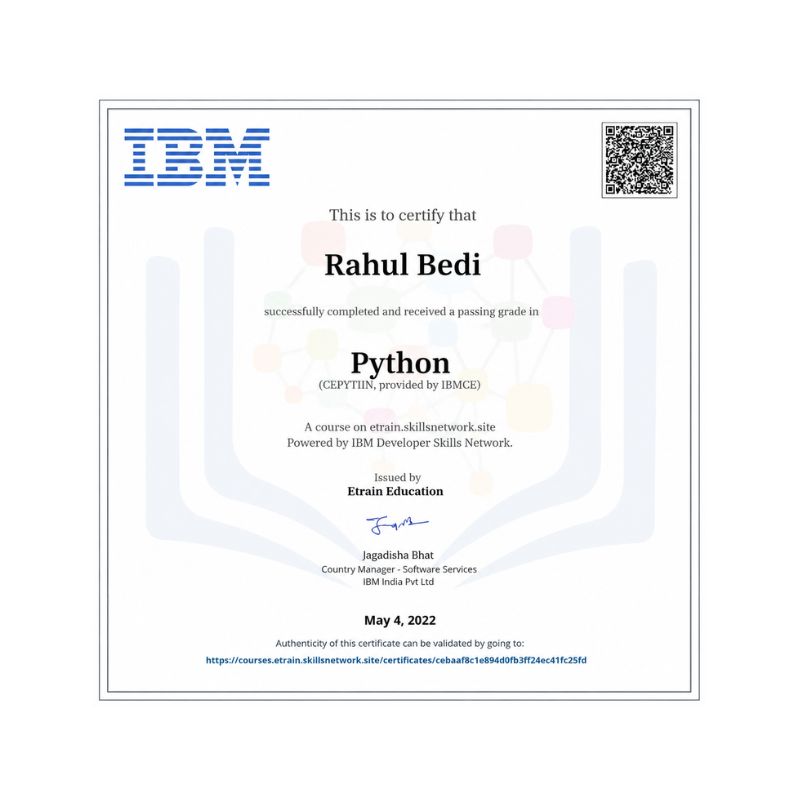
Certifications
Improve your abilities to get access to rewarding possibilities
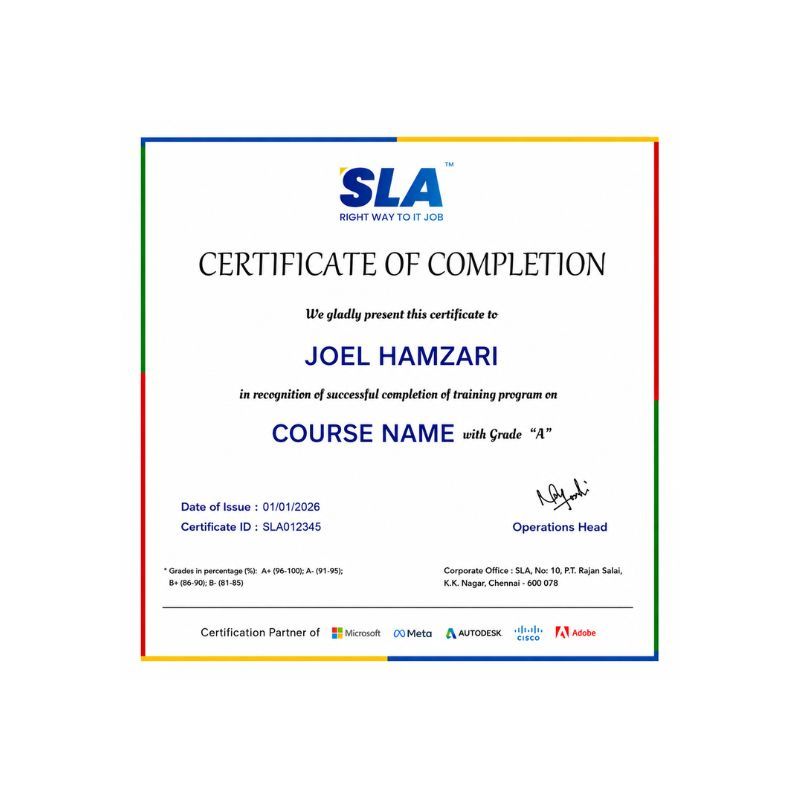
Earn Your Certificate of Completion
Take Your Career to the Next Level with Certifications
Stand Out from the Crowd with Codethon Certificate
Hands-on Project Practices in Data Science Course
Factory Maintenance Prediction
Health Monitoring Devices
Emergency Response
Stock Market Prediction
Smart Home Systems
Health Monitoring Devices
Energy Trading
Traffic Management
Aircraft Maintenance
The SLA Way to Get Placed in Top IT Companies
Enrollment
Technology Training
Realtime Projects
Placement Training
Interview Skills
Panel Mock
Interview
Unlimited
Interviews
Interview
Feedback
100%
IT Career
Placement Support for a Data Science Job
Genuine Placements. No Backdoor Jobs at Softlogic Systems.
Aptitude Training
from Day 1
Interview Skills
from Day 1
Softskills Training
from Day 1
Build Your Resume
Build your LinkedIn Profile
Build your GitHub
digital portfolio
Panel Mock Interview
Unlimited Interviews until you get placed
Life Long Placement Support at no cost
FAQs
What is the importance of data visualization in Data Science?
Data visualization is an important step in data science. It helps to quickly and easily explore and understand the data, identify patterns in the data and find relationships between variables.
What are the different techniques used for data pre-processing?
The different techniques used for data pre-processing include normalization, imputation, binning, scaling, outlier detection and treatment.
What is the purpose of exploratory data analysis?
Exploratory data analysis (EDA) is an iterative process used to analyze data in order to summarize their main characteristics, uncover relationships between variables, and identify outliers and anomalies.
How is supervised learning different from unsupervised learning?
In supervised learning, models are trained on a set of labeled data and learn from it to make predictions, while in unsupervised learning, models find patterns and relationships from datasets without labels to generate insights.
What is the difference between a decision tree and a random forest?
A decision tree is a type of supervised machine learning algorithm which creates a tree-like structure to predict the value of a target variable by learning simple decision rules inferred from the data. A random forest is an ensemble technique that combines multiple decision trees to produce more accurate and stable predictions than a single decision tree.
Which organisations are actively looking to hire employees with expertise in Data Science?
Professionals who are skilled in data science are in high demand across a wide range of organizations, including those of Google, Microsoft, Deloitte Accenture, IBM, Capgemini, Amazon, Apple, and many more MNCs.
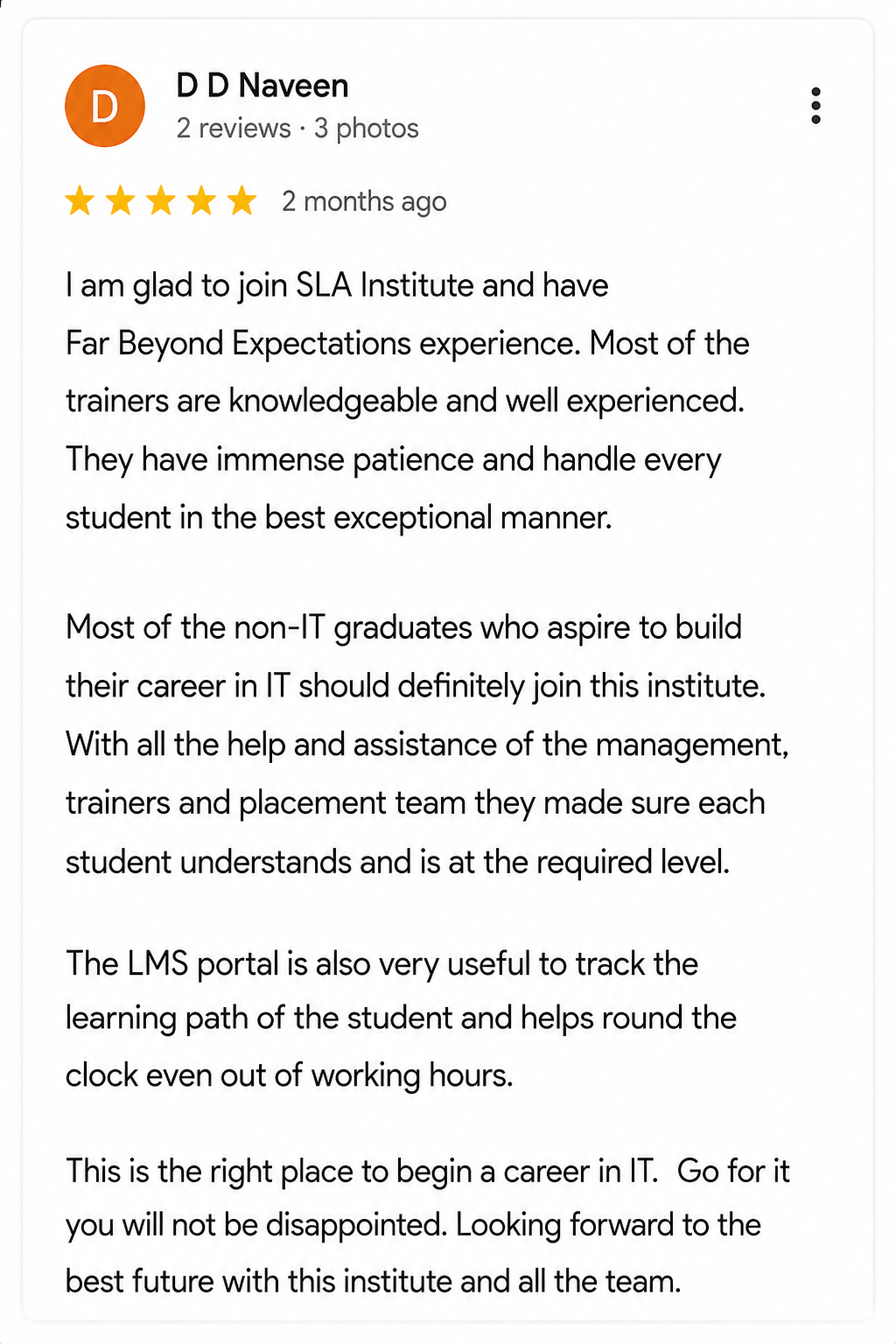
What makes Softlogic Systems a good place to study?
- At Softlogic Systems, you will receive hands-on experience and rigorous training from industry professionals. The course content covers both introductory and advanced-level material.
- Learning from Data Science training in Chennai, which combines excellence and innovation, will provide you with abilities and expertise that are unique and essential in both your personal and professional lives.
- When compared to competitors in the software training market, our placement services are unparalleled.
How does the Softlogics Placement team support us?
The placement support offered by Softlogic increases your chances of getting the job of your dreams. Certified students who are interested in making a career change or entering the workforce for the first time will have access to comprehensive assistance through our placement assistance. Softlogic will provide the following premium services as part of our placement assistance:
- Resume building
- Career Guidance and Advising
- Interview practise sessions
- Career Expos
Does the Institute offer any certification after completing the Data Science training in Chennai?
Yes, once you complete the training succesfully, you will be awarded the Softlogic Systems Data Science Training Certification that is accredited by IBM.
Does the Institute provide access to additional resources for the students during the Data Science training in Chennai?
Yes, the Institute will provide project files and study materials for reference, sample papers, interview questions, and extra help when needed.
Additional Information for
the Data Science Course
Augmented Analytics with Machine Learning and AI
Augmented analytics, using machine learning and AI, is making data analysis easier. It integrates natural language processing (NLP) and automated insights, simplifying data extraction for all users, not just tech experts.
Continuous Intelligence for Real-Time Decision Making
Continuous intelligence uses real-time data for quick decision-making. Businesses are using data to respond rapidly to changes. This trend involves real-time data processing and integration with business processes, improving operations and decision-making.
Data-Driven Solutions for Global Challenges
Data is increasingly used to tackle global issues like climate change and poverty. More innovative data applications are expected to have a positive impact on the world. These trends show how data science is evolving and the importance of using data for informed decisions and addressing complex challenges.