Join Our 100% Job-Guaranteed Data Science with R Course in OMR. We Provide Quality Data Science with R training with an affordable Cost in OMR. Our Data Science With R Syllabus Covers the R programming fundamentals, data manipulation with dplyr, data visualization with ggplot2, statistical modeling, hypothe sis testing, and implementing machine learning algorithms in R. At Softlogic Systems, you’ll earn globally recognized certifications, build real-time projects, and receive complete placement assistance to launch a successful career in your chosen field.
Data Science With R Training In Omr
DURATION
2months
EMI
0% Interest
Mode
Live Online / Offline
Let's take the first step to becoming an expert in Data Science with R
100% Placement
Assurance
Get Certified
JOB PLACEMENT ELIGIBILITY TEST
Your Placement Eligibility Report
Want more details about Data Science with R Course?
Course Schedules
Course Syllabus
Course Fees
or any other questions...
Fees, Duration & Batch Timings for Data Science with R Course
Hands On Training
3-5 Real Time Projects
60-100 Practical Assignments
3+ Assessments / Mock Interviews
June 2026
Week days
(Mon-Fri)
Online/Offline
2 Hours Real Time Interactive Technical Training
1 Hour Aptitude
1 Hour Communication & Soft Skills
(Suitable for Fresh Jobseekers / Non IT to IT transition)
June 2026
Week ends
(Sat-Sun)
Online/Offline
4 Hours Real Time Interactive Technical Training
(Suitable for working IT Professionals)
Save up to 20% in your Course Fee on our Job Seeker Course Series
Syllabus of Data Science with R Course
Module: 1 R Introduction
- Overview of R Programming
- Downloading and installing
- Help of Function
- Viewing documentation
- General issues in R
- Package Management
Module: 2 Data Inputting in R
- Data Types
- Subsetting
- Writing data
- Reading from csv files
- Creating a vector and vector operation
- Initializing data frame
- Control structure
- Re-directing R Output
Module: 3 Data Visualization
- Creating bar chart and dot plot
- Creating histogram and box plot
- Plotting with base graphics
- Plotting and coloring in R
Module: 4 Basic Statistic
- Computing Basic Statistics
- Comparing means of two samples
- Testing a proportion
- Data Munging Basics
Module: 5 Functions and Programming in R
- Flow control: For loop
- If condition
- Debugging tools
Module: 6 Data manipulation in R
- List Management
- Data Transformation
- Merging Data Frames
- Outlier Detection
- Combining multiple vectors
Module: 7 R an Database
- Performing queries
- RODBC and DBI Package
- Advanced Data handling
- Combined and restructuring data frames
Statistical Modelling in R
- Logical Regression
- Hierarchical Clustering PCA for Dimensionality Reduction
Objectives of Data Science with R Training
Our Data Science with R training in OMR, thrives upon the up-to-date syllabus curated by our expert IT professionals. Our Data Science with R syllabus shows that our IT experts made the syllabus according to the current IT trends and standards, which makes this a reliable syllabus among other institutes. The syllabus and its topics are briefly discussed below:
- The syllabus begins with introduction to R, viewing documentation, help of functions, package management etc.
- Candidates will also learn about topics like flow control, if condition, debugging tools etc.
- Candidates will finally learn advanced topics such as performing queries, advanced data handling, combining and restructuring data frames etc.
Why Softlogic Systems is the Best Choice for Data Science with R Training – Learn, Practice, and Get Placed!
Online & Offline Training Options
Learn from 100+ Real-Time Developers
Hands-on Projects & Codeathons
0% EMI Fee Options
Resume & Interview Support
Placement with Top IT Firms
1000+ Hiring Partners
No Backdoor Jobs
Highlights of Data Science with R Course
What is Data Science with R ?
Data Science with R involves utilizing the R programming language along with its associated libraries and tools to perform data analysis, statistical modeling, and machine learning tasks within the realm of data science projects. R is a widely-used open-source programming language and environment uniquely tailored for statistical computing and graphics.
What are the reasons for learning Data Science with R?
- Variety of Tools: Data Science with R offers a wide range of tools and libraries made for data science tasks like data handling, visualization, statistics, and machine learning.
- Strong in Statistics: Data Science with R is well-known for its ability to perform complex statistical analyses and tests.
- Effective Data Visualization: Data Science with R provides strong tools to make clear and impactful visualizations, helping users understand and share insights from data.
Supportive Community: Data Science with R has a large and active community of users and developers who share resources, tutorials, and help each other learn and solve problems.
What are the prerequisites for learning Data Science with R Training in OMR?
- Foundational Programming: While R is user-friendly, knowing basic programming concepts like variables, loops, conditionals, and functions is beneficial.
- Statistical Understanding: Understanding statistics—like mean, median, standard deviation, probability distributions, hypothesis testing, and regression analysis is crucial for data analysis in R.
- Data Handling Skills: Being familiar with data manipulation techniques such as filtering, sorting, joining, and aggregating data sets is helpful. Knowledge of SQL or similar querying languages can also be advantageous.
- Mathematical Basics: Having a grasp of linear algebra and calculus can aid in understanding certain machine learning algorithms and mathematical concepts used in data science.
Our Data Science with R Training Course is suitable for:
- Students
- Job Seekers
- Freshers
- IT professionals aiming to enhance their skills
- Professionals seeking career change
- Enthusiastic programmers
What are the course fees and duration?
The Data Science with R course fees depend on the program level (basic, intermediate, or advanced) and the course format (online or in-person).On average, the Data Science with R course fees come in the range of ₹65,000 to ₹70,000 INR for 4 months, inclusive of international certification. For some of the most precise and up-to-date details on fees, duration, and certified Data Science with R certification, kindly contact our Best Placement Training Institute in Chennai directly.
What are some of the jobs related to Data Science with R?
The following are some of the jobs related to Data with R:
- Data Analyst
- Data Scientist
- Statistical Analyst
- Quantitative Analyst
What is the salary range for the position of Data Scientist?
The Data Scientist freshers salary typically with less than a year of experience earn approximately ₹6-7 lakhs annually. For a mid-career Data Scientist with around 4 years of experience, the average annual salary is around ₹14-15 lakhs. An experienced Data Scientist with more than 7 years of experience can anticipate an average yearly salary of around ₹19-20 lakhs. Visit SLA for more courses.
List a few real-time Data Science with R applications.
Here are several real-time Data Science with R applications:
- Sentiment Analysis Dashboard
- Stock Market Monitoring
- Sensor Data Analytics
- Website Traffic Analysis
Boost Your Skills with Our Data Science with R Training Experts
Our Mentors are from Top Companies like:
The following are our trainer’s profile for the Data Science with R Training in OMR:
- Our trainers have over a decade of highly specialized experience in Data Science and R programming, delivering certified training and software expertise.
- Specializing in facilitating accelerated, adaptable, and dependable skill development among students.
- They have expertise that spans the entire Data Science and R programming spectrum, encompassing data visualization, exploration, cleansing, analysis, and predictive modeling.
- Conducting numerous workshops, they introduce the intricacies of Data Science and R programming, offering comprehensive product overviews.
- They offer extensive knowledge on Algorithms and Big Data tools such as Hadoop, Apache Spark, and NoSQL Databases.
- Providing precise guidance on visualization, simulation, real-time application development, and high-performance computation.
- Possessing a diverse range of technical problem-solving skills suitable for various business environments, they are recognized for their ability to innovate and devise solutions for challenging problems.
- Rapidly assimilating new technologies, they excel in understanding and developing complex analytics modules, demonstrating proficiency in both theory and practical programming.
- Equipped to work effectively with teams or individuals, our trainers possess the skills necessary to train groups of any size.
- Leveraging their experience and capabilities, our trainers are instrumental in imparting essential skills to students, facilitating successful placement.
What Modes of Training are available for Data Science with R Course?
Offline / Classroom Training
- Direct Interaction with the Trainer
- Clarify doubts then and there
- Airconditioned Premium Classrooms and Lab with all amenities
- Codeathon Practices
- Direct Aptitude Training
- Live Interview Skills Training
- Direct Panel Mock Interviews
- Campus Drives
- 100% Placement Support
Online Training
- No Recorded Sessions
- Live Virtual Interaction with the Trainer
- Clarify doubts then and there virtually
- Live Virtual Interview Skills Training
- Live Virtual Aptitude Training
- Online Panel Mock Interviews
- 100% Placement Support
Corporate Training
- Industry endorsed Skilled Faculties
- Flexible Pricing Options
- Customized Syllabus
- 12X6 Assistance and Support
Certifications
Improve your abilities to get access to rewarding possibilities
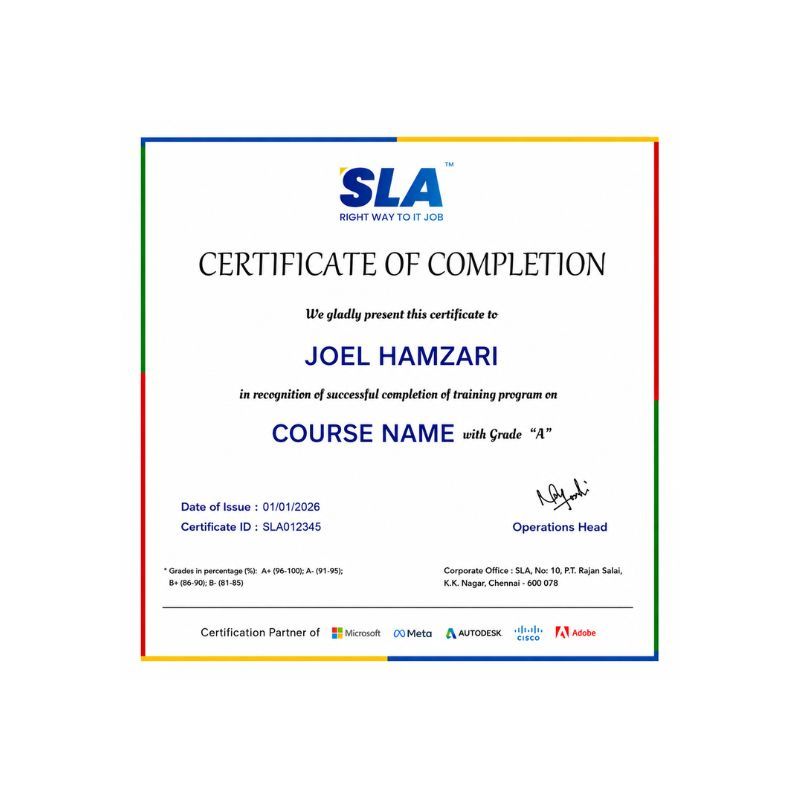
Earn Your Certificate of Completion
Take Your Career to the Next Level with Certifications
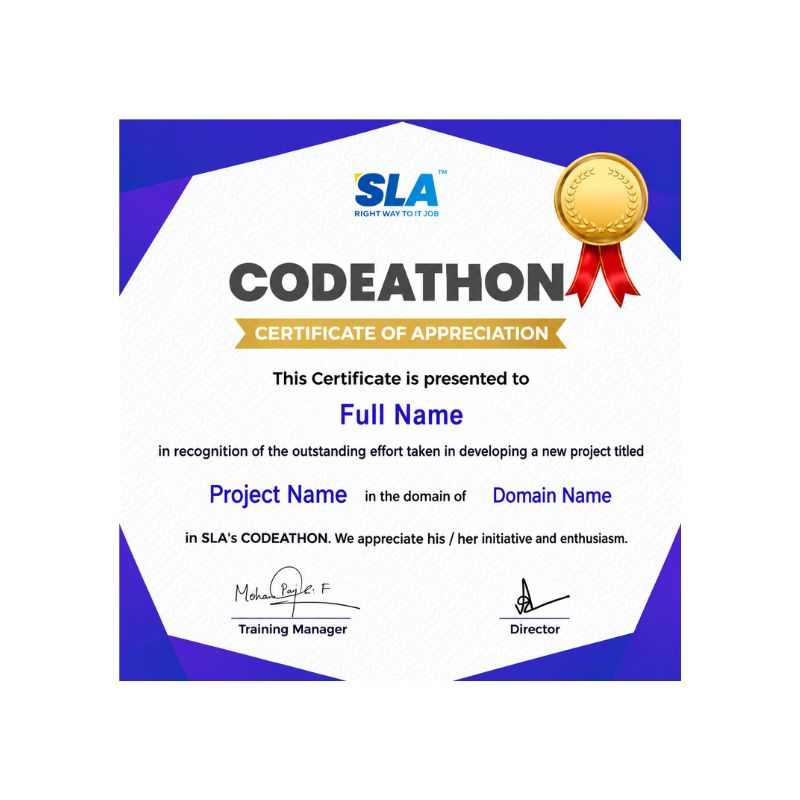
Stand Out from the Crowd with Codethon Certificate
Hands-on Project Practices in Data Science with R Course
Real-Time Personalized E-commerce Product Suggestions
Real-Time Social Media Influence Monitoring
Sentiment Analysis in Customer Support Chats
Customer Segmentation and Personalization
Energy Consumption Optimization
Traffic Congestion Prediction
Stock Market Sentiment Analysis
Disease Outbreak Detection
Object Detection in Video Streams
The SLA Way to Get Placed in Top IT Companies
Enrollment
Technology Training
Realtime Projects
Placement Training
Interview Skills
Panel Mock
Interview
Unlimited
Interviews
Interview
Feedback
100%
IT Career
Placement Support for a Data Science with R Job
Genuine Placements. No Backdoor Jobs at Softlogic Systems.
Aptitude Training
from Day 1
Interview Skills
from Day 1
Softskills Training
from Day 1
Build Your Resume
Build your LinkedIn Profile
Build your GitHub
digital portfolio
Panel Mock Interview
Unlimited Interviews until you get placed
Life Long Placement Support at no cost
FAQs
Does SLA accept cheques as a form of payment?
Yes, not only cheques but SLA also accepts a variety of payment methods ranging from cash, cards to all types of digital UPI Payments.
Does SLA have only one branch?
No, SLA has two branches in total. One is in K.K. Nagar and another in Navalur, OMR. Our OMR branch particularly is situated right in the middle of the IT hub which makes our OMR branch a particularly demanded one.
Does SLA have an EMI option?
Yes, SLA does provide an EMI option which has 0% interest.
How much experience does SLA’s trainers have?
SLA’s trainers have sufficient experience ranging from 5- 8 years, which makes them experienced enough to tackle any situations in their teaching.
Does SLA have a modern infrastructure?
Yes, SLA has modern SMART classrooms equipped with monitors and laptops to facilitate a practical learning environment.
How do I deal with imbalanced datasets in R?
In R, you can handle imbalanced datasets by adjusting the data through methods like oversampling the minority class or undersampling the majority class. You can also use evaluation metrics like AUC-ROC or precision-recall curves and algorithms like random forests or gradient boosting that are robust to imbalances.
What techniques can I use for dimensionality reduction in R?
In R, you can reduce the dimensions of your data using methods like principal component analysis (PCA), t-distributed stochastic neighbor embedding (t-SNE), or linear discriminant analysis (LDA). Other options include feature extraction methods like autoencoders or non-negative matrix factorization (NMF).
How can I tune hyperparameters for machine learning models in R?
To tune hyperparameters in R, you can employ methods such as grid search or random search using functions like tune() or train(). For more efficient tuning, you can utilize Bayesian optimization techniques available in packages like rBayesianOptimization.
What techniques are available for time series analysis in R?
R offers various techniques for time series analysis, including decomposition methods, ARIMA modeling, exponential smoothing, and machine learning approaches like recurrent neural networks (RNNs) and long short-term memory (LSTM) networks.
How do I deploy R models into production?
To deploy R models into production, you can create APIs using frameworks like plumber or opencpu. Alternatively, you can containerize R applications with Docker and deploy them on cloud platforms such as AWS, Azure, or Google Cloud Platform. Integration with web frameworks like Shiny can also be considered for interactive applications.
Additional Information for
the Data Science with R Course
Skill Development
Data Science covers many areas like data analysis, machine learning, and stats. R is great for stats and data tasks, so learning both helps students understand theory and practice.
Industry Use
R is widely used in finance, healthcare, and academia. Knowing R makes students more attractive to employers in data-related jobs.
Flexibility
R has many tools for different data tasks like visualization and machine learning. Learning R in Data Science means students can handle various data jobs in different fields.
Hands-on Practice
Data Science with R courses give students real-world projects to apply what they learn. This helps them get practical experience in data analysis and R programming.
Theory and Practice
Data Science covers theory, while R lets students try out those ideas. Combining both helps students understand data concepts better by using R to experiment with them.