
Join Our 100% Job-Guaranteed API Testing Course in OMR. We Provide Quality Api Testing training with an affordable Cost in OMR. Our Api Testing Syllabus Covers the fundamentals of APIs, HTTP methods, status codes, request/response handling, and dives into tools like Postman, SoapUI, and automation frameworks using Rest Assured with Java. At Softlogic Systems, you’ll earn globally recognized certifications, build real-time projects, and receive complete placement assistance to launch a successful career in your chosen field.
Api Testing Training In Omr
DURATION
2 Months
EMI
0% Interest
Mode
Live Online / Offline
Let's take the first step to becoming an expert in API Testing
100% Placement
Assurance
Get Certified
JOB PLACEMENT ELIGIBILITY TEST
Your Placement Eligibility Report
Want more details about API Testing Course?
Course Schedules
Course Syllabus
Course Fees
or any other questions...
Fees, Duration & Batch Timings for API Testing Course
Hands On Training
3-5 Real Time Projects
60-100 Practical Assignments
3+ Assessments / Mock Interviews
June 2026
Week days
(Mon-Fri)
Online/Offline
2 Hours Real Time Interactive Technical Training
1 Hour Aptitude
1 Hour Communication & Soft Skills
(Suitable for Fresh Jobseekers / Non IT to IT transition)
June 2026
Week ends
(Sat-Sun)
Online/Offline
4 Hours Real Time Interactive Technical Training
(Suitable for working IT Professionals)
Save up to 20% in your Course Fee on our Job Seeker Course Series
Syllabus of API Testing Course
PART 1: Rest API – An overview
- What is Web Services?
- Deep Dive on SOAP and REST Web Services
- How does REST API architecture works?
- What is BaseURL?
- What is Resources in REST API?
- How to use GET and POST request?
- How to use PUT and DELETE request?
- What are headers and cookies in rest request?
PART 2: Get started with REST API Testing
- Deep Dive on google place Search API for scripting
- What do you know about POSTMAN -Manual testing client?
- How is it useful for REST API?
- How to adding new place in Google Maps with google API?
- Do you know to validate responses with POSTMAN client?
PART 3: Automation Set Up
- What do you know Test API?
- How to set up Test Project with Rest Assured API?
- How to use tag for passing requests?
PART 4: Validate the Rest API Responses
- How to validate the body of first JSON response?
- Do you know to validate response headers and status codes?
- Real Time Examples
PART 5: Deep Dive on REST API Automation
- Do you know to automate POST request with payload?
- How to grab the response body into String for Advance validations?
- How to pass the response values into subsequent requests?
- Do you know to optimize the script?
- Deep Dive on Data driven testing best practices
PART 6: Automation Utilities
- How to Validate advanced xml responses?
- What are the Shortcut methods to convert raw data to xml/JSON?
- How to parse JSON response to extract values?
- How to log feature to debug automation script?
PART 7: Automate Jira
- How does Jira API Works?
- Deep Dive on Cookie Authentication API for Jira requests
- How to use GET and POST API Script in JIRA to create bugs?
- How to automate JIRA API?
- Real Time Examples
- How to add comment API using POST and PUT?
- How to use JIRA API Script?
PART 8: Deep Dive on OAuth Authentication Set Up
- What is OAuth?
- How does OAuth works?
- Difference between OAuth and OpenID
- Deep Dive on User Authentication using OAuth
PART 9: Maven- Build Management tool
- Deep Dive on Maven in Framework Dev
- How to install and configure Maven?
- Important things to know about Maven
- How to creating Maven Project?
- Do you know to import Maven in Eclipse?
- What do you know about POM.xml file?
- What do you know about surefire plugin?
- How is it used to execute Test?
- Do you know to integrate Testng with Maven?
- How to switch the Test with Maven Profiling?
PART 10: Jenkins- Continuous Integration Tool
- Deep Dive on Jenkins in Test frameworks
- How to Install and configure Jenkins?
- How to Configure Jenkin Settings and Workspace?
PART 12: Testng Reporting Plugin into Jenkin jobs
- Real Time Configuration
PART 13: Logging Framework – log4j
- What is log4j?
- How is it used in Rest API framework?
- Do you know to import log4j in Eclipse project?
- Deep Dive on log4j xml file
- How to use xml file to control logging in Testcase?
PART 14: Integrate Excel
- What is Apace POI API?
- What do you know about download instructions?
- Do you know the Approach to Access Excel Data?
- How to access rows and its cells from sheet?
- Do you know to retrieve data from excel?
- Deep Dive on Library API
- What do you know about Library API Postman and Rest Assured?
- How to convert HashMap to JSON?
- How to integrate excel with Rest Assured Test?
Objectives of API Testing Training
The API Testing Training syllabus was curated by our industry professionals while bearing in mind the current trends and changes in the IT industry. Hence, the syllabus is fully updated and reliable.
- The syllabus begins with base level topics REST API, REST API Automation, Depth Automating REST API etc.
- The course then moves towards mid-range topics such as TestNG, TestNG Setup
- The course then finally moves to advanced topics like Jenkins, Maven, Log4j library etc.
Why Softlogic Systems is the Best Choice for API Testing Training – Learn, Practice, and Get Placed!
Online & Offline Training Options
Learn from 100+ Real-Time Developers
Hands-on Projects & Codeathons
0% EMI Fee Options
Resume & Interview Support
Placement with Top IT Firms
1000+ Hiring Partners
No Backdoor Jobs
Highlights of API Testing Course
What is API Testing?
API stands for application programming interface. API testing encompasses assessing an application programming interface’s (API) functionality, performance, reliability, and security to confirm its adherence to expected behavior and quality benchmarks.
What are the reasons for learning API Testing?
The following are the reasons for learning API Testing:
- Expanding test coverage: API testing permits evaluation of an application’s essential functions without the need to examine every user interface detail, resulting in broader coverage and streamlined testing procedures.
- Early identification of defects: Conducting API testing in the early stages of development aids in spotting defects and issues before they impact the user interface, leading to swifter bug resolution and cost-efficiency.
- Automation capability: APIs are conducive to automation, enabling the creation of robust, repeatable tests that can be swiftly executed. Automated API tests seamlessly integrate into continuous integration and deployment pipelines, expediting releases while maintaining quality standards.
- Enhanced performance evaluation: API testing facilitates the assessment of backend system and service performance by replicating various load scenarios and gauging response times. This process assists in pinpointing performance bottlenecks and optimizing system efficiency.
What are the prerequisites for learning API Testing training in OMR?
The following are the prerequisites for learning API Testing training in OMR:
SLA does not require any prerequisites for learning API Testing training. But still, having a base knowledge in the below topics will help you learn API easily:
- Proficiency in programming: A grasp of programming concepts and syntax is crucial for scripting tests and automating API testing, typically using languages such as Java, Python, or JavaScript.
- Understanding of web protocols: Knowledge of HTTP and familiarity with RESTful and SOAP web services are essential for understanding how APIs interact with applications over the internet.
- Testing fundamentals: Knowledge of software testing principles, including test case design, execution, and defect tracking, forms the basis for effective API testing.
- Familiarity with testing tools: Experience with tools like Postman, SoapUI, or REST Assured can be beneficial for API testing, as they are commonly used for testing and automating APIs.
Our API Testing Course is suitable for:
- Students
- Job Seekers
- Freshers
- IT professionals aiming to enhance their skills
- Professionals seeking career change
- Enthusiastic programmers
What are the course fees and duration?
The API Testing course fees depend on the program level (basic, intermediate, or advanced) and the course format (online or in-person).On average, the API Testing course fees come in the range of ₹20,000 to ₹25,000 Lakhs INR for 1.5 months, inclusive of international certification. For some of the most precise and up-to-date details on fees, duration, and certified API Testing certification, kindly contact our Best Placement Training Institute in Chennai directly.
What are some of the jobs related to API Testing?
The following are some of the jobs related to API Testing:
- QA/Test Engineer
- Automation Engineer
- Software Developer in Test
- Quality Assurance Analyst
- Integration Tester
What is the salary range for the position of QA Engineer?
The QA Engineer freshers salary typically with less than 1 year of experience earn approximately ₹3-4 lakhs annually. For mid-career QA Engineers with around 4 years of experience, the average annual salary is around ₹5.6 lakhs. An experienced QA Engineer with more than 5 years of experience can anticipate an average yearly salary of around ₹7.9 lakhs. Visit SLA for more courses.
List a few real-time API Testing applications.
Here are several real-time API Testing applications:
- Petstore API Testing Project
- Weather API Testing Project
- E-commerce API Testing Project
- Banking API Testing Project
Boost Your Skills with Our API Testing Training Experts
Our Mentors are from Top Companies like:
- Our API Testing Trainers are experienced professionals in software development and API operations, with strong technical knowledge and practical skills.
- They have hands-on experience in creating API test plans, designing tests, and solving software problems.
- These experts provide clear guides to help learners understand and perform API tests effectively.
- Our trainers understand API integration well and know how to optimize API development.
- They use practical exercises, real projects, and modern tools to teach course objectives.
- With great communication skills, our trainers ensure smooth learning experiences for students.
- They can create complex test scripts for automated API testing and use tools like Cucumber, Selenium, and Postman.
- Our trainers use different testing methods to evaluate student performance and give helpful feedback.
- They are collaborative and positive, committed to helping students learn API testing easily.
What Modes of Training are available for API Testing Course?
Offline / Classroom Training
- Direct Interaction with the Trainer
- Clarify doubts then and there
- Airconditioned Premium Classrooms and Lab with all amenities
- Codeathon Practices
- Direct Aptitude Training
- Live Interview Skills Training
- Direct Panel Mock Interviews
- Campus Drives
- 100% Placement Support
Online Training
- No Recorded Sessions
- Live Virtual Interaction with the Trainer
- Clarify doubts then and there virtually
- Live Virtual Interview Skills Training
- Live Virtual Aptitude Training
- Online Panel Mock Interviews
- 100% Placement Support
Corporate Training
- Industry endorsed Skilled Faculties
- Flexible Pricing Options
- Customized Syllabus
- 12X6 Assistance and Support
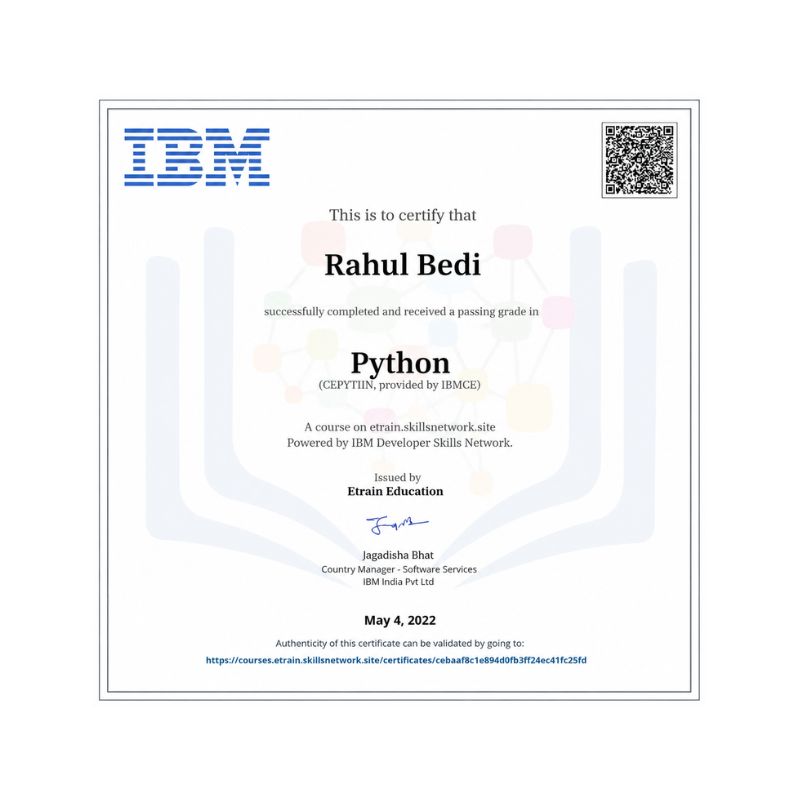
Certifications
Improve your abilities to get access to rewarding possibilities
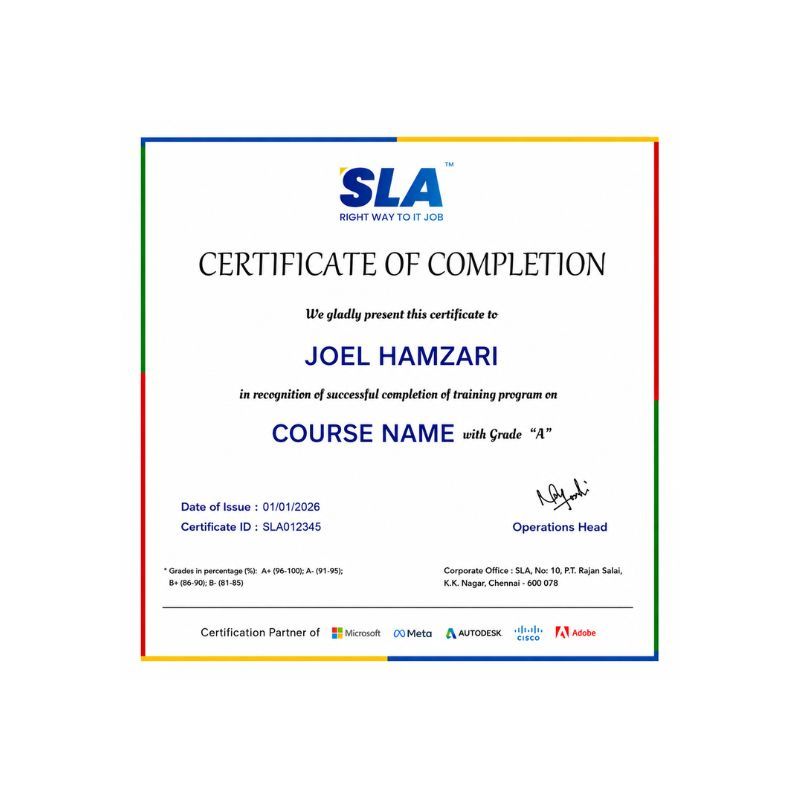
Earn Your Certificate of Completion
Take Your Career to the Next Level with Certifications
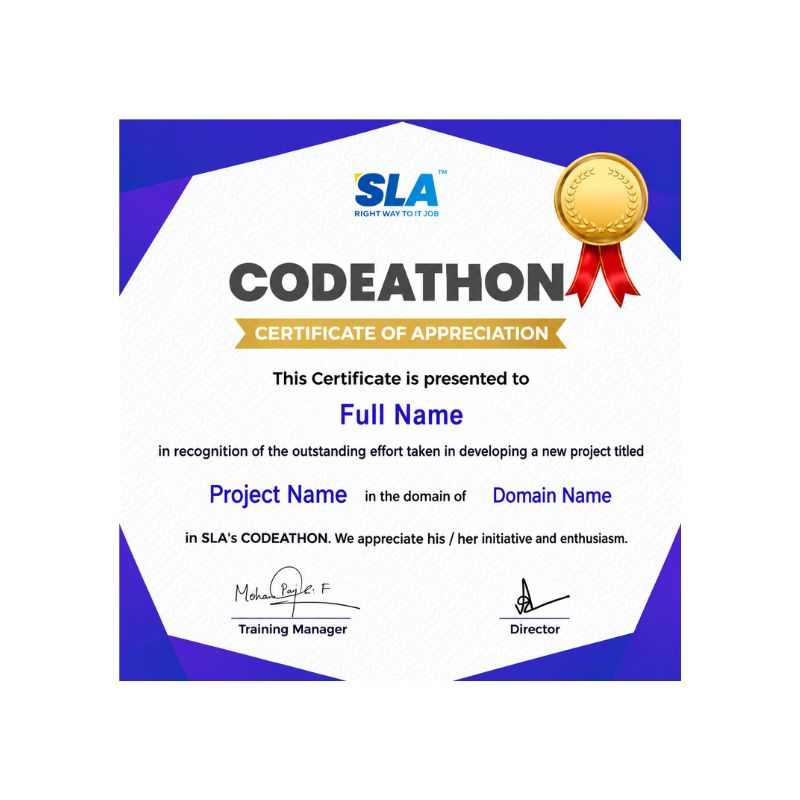
Stand Out from the Crowd with Codethon Certificate
Hands-on Project Practices in API Testing Course
Fitness Tracking
Healthcare Appointment Scheduling
Online Shopping
Hotel Reservation
Inventory Management
Social Media Analytics
Weather Forecast
Payment Gateway
Flight Booking
The SLA Way to Get Placed in Top IT Companies
Enrollment
Technology Training
Realtime Projects
Placement Training
Interview Skills
Panel Mock
Interview
Unlimited
Interviews
Interview
Feedback
100%
IT Career
Placement Support for a API Testing Job
Genuine Placements. No Backdoor Jobs at Softlogic Systems.
Aptitude Training
from Day 1
Interview Skills
from Day 1
Softskills Training
from Day 1
Build Your Resume
Build your LinkedIn Profile
Build your GitHub
digital portfolio
Panel Mock Interview
Unlimited Interviews until you get placed
Life Long Placement Support at no cost
FAQs
Does SLA address students’ grievances?
Yes, SLA does indeed address students’ grievances. In fact, SLA has a specialized HR personnel who will look into students’ issues.
What kinds of payment methods does SLA accept?
SLA accepts cash, card, cheque and any kind of UPI payments.
Does SLA provide practical training?
Yes, SLA does indeed provide practical hands-on training.
How many branches does SLA have in total?
SLA currently has two branches, one in K.K. Nagar, and another in Navalur, OMR.
Does SLA have experienced trainers?
SLA has one of the most seasoned and experienced trainers who will make the learning process easy.
What are the key differences between SOAP and REST APIs, and how do they affect testing?
SOAP and REST are different API architectural styles; SOAP uses XML and HTTP/SMTP, while REST uses simpler formats like JSON and standard HTTP methods, impacting testing by requiring distinct approaches and tools.
How do you approach authentication and authorization testing in API testing?
Authentication ensures user/client validation, while authorization verifies access controls based on roles, tested through scenarios like credential validation and role-based access checks.
What are common API security vulnerabilities, and how can they be tested?
Common vulnerabilities include injection attacks, broken authentication, and sensitive data exposure, tested using techniques like fuzz testing, penetration testing, and vulnerability scanning.
How do you execute parameterization and data-driven testing in API testing?
Parameterization involves testing APIs with varied input values, while data-driven testing validates functionality across multiple datasets, supported by tools like Postman, SoapUI, and Karate.
What strategies are effective for API performance testing?
API performance testing assesses responsiveness, scalability, and reliability under different loads, employing strategies such as load testing, stress testing, and spike testing, facilitated by tools like Apache JMeter, Gatling, and LoadRunner.
Additional Information for
the API Testing Course
What makes API Testing worthy to learn?
- Increasing Demand: As more companies adopt microservices and create web and mobile apps, APIs have become essential. This means there’s a growing need for people who can test APIs well.
- Key Component: APIs are like the bridge between different parts of software, making sure they can talk to each other smoothly. Checking that APIs work right is super important for making sure software projects succeed.
- Efficiency and Automation: API testing lets you check the most important parts of an app without having to click around the user interface. Automating these tests makes things faster, saves time, and makes sure more stuff gets checked.
- Finding Problems Early: Testing APIs early in making an app can catch problems before they become big issues. Fixing problems at this stage is way cheaper and easier than later on.
- Making Things Faster: API testing helps figure out how well backend systems and services are working, especially under different loads. Fixing any slow spots in APIs helps make the whole system work faster and handle more users.
- Checking Connections: APIs often link different parts of software, like connecting to other services or apps. Testing APIs makes sure these connections work smoothly and data can move between systems without any problems.
- Better Quality: By focusing on making sure APIs work right in terms of what they do, how fast they are, and how secure they are, API testing makes sure software is strong and reliable.