
Softlogic Systems Java Full Stack Developer Course Syllabus is specifically designed for College Students, Freshers, and Job Seekers. Our Java Full Stack Developer Course Syllabus covers the Core Java, Advanced Java (J2EE), Spring, Hibernate, RESTful APIs, along with frontend technologies like HTML, CSS, JavaScript, React/Angular, and database skills in MySQL/MongoDB. Our Java Full Stack Developer Course Content helps you learn Java Full Stack Step by Step with real-time projects and Interview Preparations.
Java Full Stack Developer Course Syllabus
4.60
(1429)
DURATION

3 Months
JOB READY

Syllabus
CERTIFIED
Courses

Let's take the first step to becoming an expert in Java Full Stack
Click Here to Get Started
Lifelong Placement
Support
Get Certified
Check Your Job Eligibility
×
Your Placement Eligibility Report
Syllabus for The Java Full Stack Course
Download Syllabus
HTML
- Introduction about HTML
- Building blocks
- Tags and Attributes
- Elements
- Formatting Tags
- Practicals with Tags (List, Image, Link)
- Form Tag
- Input Tag
- Meta Tag
- Media Tag
- Table Tag
- Practical
CSS
- Common CSS Selectors
- Values
- Colors
- Keyword Colors
- RGB
- HSL
- Absolute Length
- Relative Length
- Percentages
- EM
- Inline Display
- Working with BOX model
- Content Box
- width
- Height
- Margin and Padding
- Color & Declarations
- With Practicals
- Working with Borders
- Individual Border
- Radius
- Padding Box
- Border Box
- Browser Specific Properties
- Typography
- Typography
- Typeface Vs Fonts
- Font Attributes
- Adding Media
- List
- Building Forms with
- Tables
BOOTSTRAP
- Bootstrap Pagination
- Dropdown
- Navigation Bar
- Carousel
- Filters And Grid with Practicals
JAVA SCRIPT
- Introduction
- Arrays
- Variables
- Typecasting
- Operators with Practicals
- Loops
- Conditional statements
- Functions with Practicals
- Classes & Objects
JAVA
- Introduction about Java
- Internal working of a java program
- Software Installation
- Collection Framework
- Introduction
- Collection Framework Implementations
- HashSet
- LinkedHashSet
- ArrayList
- Stack
- LinkedList
- Vector
- Map
- Date and calendar with practical session
- Loops
- Conditional statement with practicals
- Arrays single and
- multidimensional
- OOPS Introduction
- Class and Objects
- Constructor
- Polymorphism
- Abstraction & Encapsulation Packages
- Inheritance
- Final, This, Super keywords
- Static
- Wrapper Class
- Inner Class
- Implementation of 50 essential logical Programs
- using Java Script
- String Handling Methods
- String Buffer
- String Tokenizer
- Introduction about Exception Handling
- Built in Exception
- User Defined Exception
- Practical
- Creating database and Tables
- Basic queries
- JDBC architecture
- File Class
- I/O Stream Hierarchy
- File Input Stream
- File Output Stream
- Practical with File handling
- Introduction about Multithreading
- Thread Lifecycle
- Thread Class
- Runnable Interface and Synchronization
- Threading Practical
MYSQL
- MYSQL Connector Practical Programs with CRUD operation
- Queries in advance and its implementation
- MYSQL Joins with backend implementations
JSP AND SERVLET
- JSP Life cycle
- JSP API
- Scripting elements
- Java Beans
- Servlet terminology
- Servlet API
- Generic Servlet
- Http Servlet
- Servlet Life Cycle
- JSP/Servlet implementation in MVC Architecture
SPRING BOOT FRAMEWORK
- Spring Introduction and Installation
- Spring Boot MVC set up with CRUD operation
- Spring Boot with JPA for Rest API
- Spring Boot Security
- Spring Boot with Micro Services
- Project Implementation ER diagram and Project Architecture
- Project Documentation and Design Analysis
The SLA way to Become
a Java Full Stack Expert

Enrollment

Technology Training
Coding Practices
Realtime Projects
Realtime Projects

Placement Training
Aptitude Training
Interview Skills
Interview Skills

Panel Mock
Interview

Unlimited
Interviews

Interview
Feedback

100%
IT Career
FAQ
Is Java good for full stack?
Yes, Java is great for full stack development. It’s widely used for both back-end and front-end development, with many frameworks available for building robust web applications.
Which institute is best for Java Full Stack Developer?
SLA is a top choice for Java Full Stack Developer training. Known for its practical approach and experienced instructors, SLA ensures you gain valuable skills and opportunities in Java Full Stack Development. With effective placement assistance, SLA is a reliable option for your Java Full Stack Developer training journey.
How to learn Java full-stack?
Begin your Java Full Stack development journey by mastering programming basics and Java. Progress to frontend technologies like HTML, CSS, and JavaScript, and backend frameworks such as Spring Boot. Practice by building projects. Explore databases, version control, and full stack frameworks. Stay updated with online resources and network with developers. Enhance your skills with SLA’s comprehensive training.
Is Java full-stack good career?
Becoming a Java Full Stack Developer can lead to a great career. Java is widely used, so there are many job opportunities. As a Java Full Stack Developer, you work on both the front and back ends of websites, which is valuable. The skills you learn can also be used with other languages, making it a flexible career choice.
Is Java good for full-stack?
Java is a fantastic choice for full-stack development because of its robust backend capabilities and compatibility with various front-end tools. Building complex web applications with Java is made easier by its widespread use and strong community support.
Does Java full stack need coding?
Yes, Java Full Stack development requires coding. As a Full Stack developer, you’ll be working on both the front-end and back-end of web applications, which involves writing code in Java (for the back-end) and often in other languages like JavaScript (for the front-end).
Is Java full stack coding hard?
Java Full Stack coding can be challenging, especially for beginners, due to the complexity of building both front-end and back-end components. However, with dedication, practice, and access to resources like tutorials and courses, it’s manageable to learn and master.
Is Java full stack still in demand?
Yes, Java Full Stack developers are still in demand. With its versatility, scalability, and extensive ecosystem, Java remains a popular choice for building robust and scalable web applications. Additionally, many enterprises rely on Java for their backend systems, ensuring a steady demand for Java Full Stack developers in the industry.
Is Java full stack difficult?
Java Full Stack Development can be challenging, especially for beginners, because it involves learning Java for the back-end and front-end technologies like HTML, CSS, and JavaScript. You also need to learn frameworks and tools. However, with dedication and the right resources, it’s possible to master Java Full Stack Development and build a rewarding career.
Is Java in demand in 2024?
Java continues to be in demand in 2024, especially for roles like Full Stack Developers, Software Engineers, and Java Developers. Its versatility, performance, and large ecosystem of libraries and frameworks make it a popular choice for a wide range of applications.
Can I learn Java full stack in 3 months?
With dedicated effort, it’s possible to learn Java Full Stack Development in 3 months. While you may not achieve mastery in every aspect in this short time frame, you can establish a solid foundation for starting your career in this field.
How many languages are in Java full stack?
In Java Full Stack development, you use different languages and tools. Java works on the backend, JavaScript on the front end. HTML structures pages, CSS styles them, and Bootstrap ensures responsiveness. Spring Boot builds robust backend apps, while MySQL handles databases. Together, they help create dynamic and scalable web applications.
Can I still join job placement events if I already have a job offer?
Definitely! We offer ongoing placement assistance to help candidates achieve their career goals. Contact our career advisor to arrange a free demo for the leading Java Fullstack online course, featuring placement support.
Is Java good for Full Stack Developer?
Yes, Java is a great option for Full Stack Development. It’s widely used and has many tools and frameworks for both front-end and back-end development. Java is popular in companies, so it’s a valuable skill to have. It’s also good for building large and reliable full-stack applications.
Can I still join job placement events if I already have a job offer?
Definitely! We offer ongoing placement assistance to help candidates achieve their career goals. Contact our career advisor to arrange a free demo for the leading Java Fullstack course in Chennai, featuring placement support.
Does SLA support the EMI option?
Yes, SLA does indeed give the option of EMI to students with 0% interest.
Is Java Fullstack in demand?
Yes, Java Fullstack developers are in high demand due to the versatility and scalability of Java technology. Organizations rely on Java for building robust and scalable web applications, ensuring a continuous demand for skilled Java Fullstack developers in the industry.
Can a fresher learn full stack?
Yes, beginners can learn Full Stack Development! SLA offers a Jobseeker program for freshers interested in Java Full Stack Development. This program covers front-end, back-end, and database aspects, providing a complete learning experience. It helps beginners acquire the skills needed to start their careers in Java Full Stack Development.
How does the placement team at SLA support us?
The placement team at SLA enhances your job prospects by providing comprehensive support. Whether you’re a certified student looking to switch careers or entering the workforce for the first time, you’ll receive extensive assistance through our placement services. SLA offers the following premium services as part of our placement support:
- Resume building
- Career guidance and advising
- Interview practice sessions
- Career expos
Does SLA offer any certification or badge for Java Full stack developer Jobseeker program?
Yes, SLA offers IBM-accredited certifications upon successful completion of their Java Full stack developer training course.
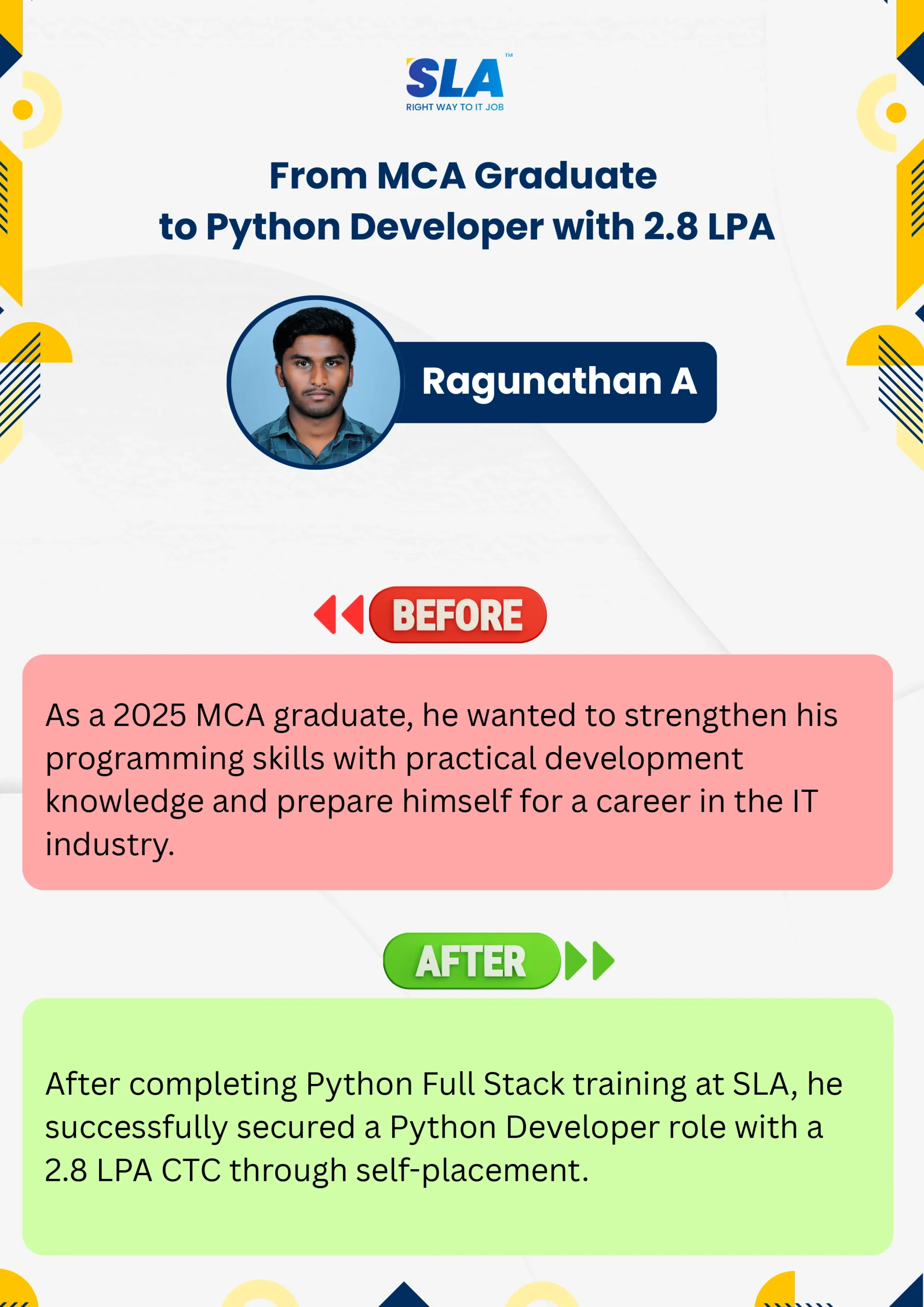
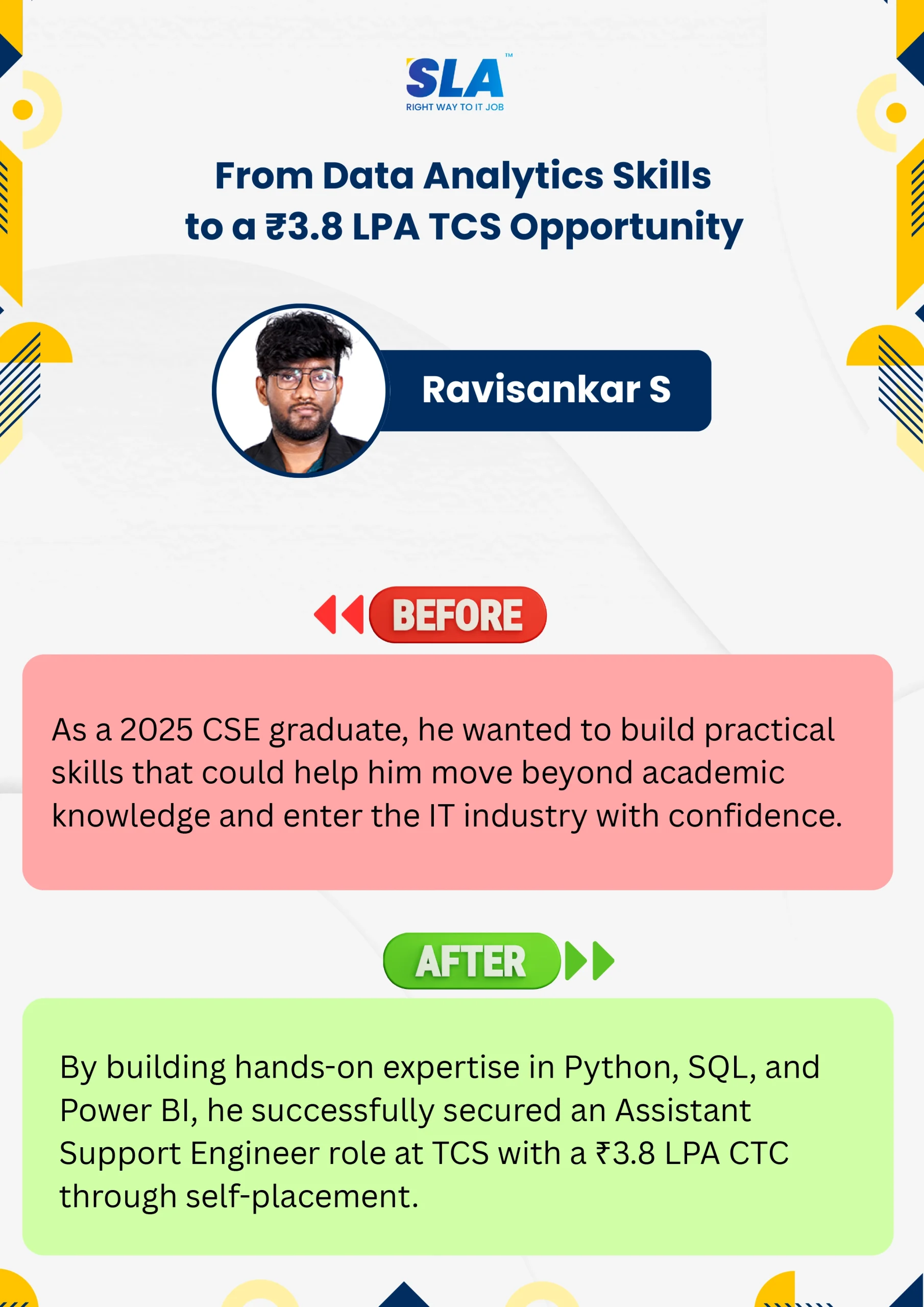
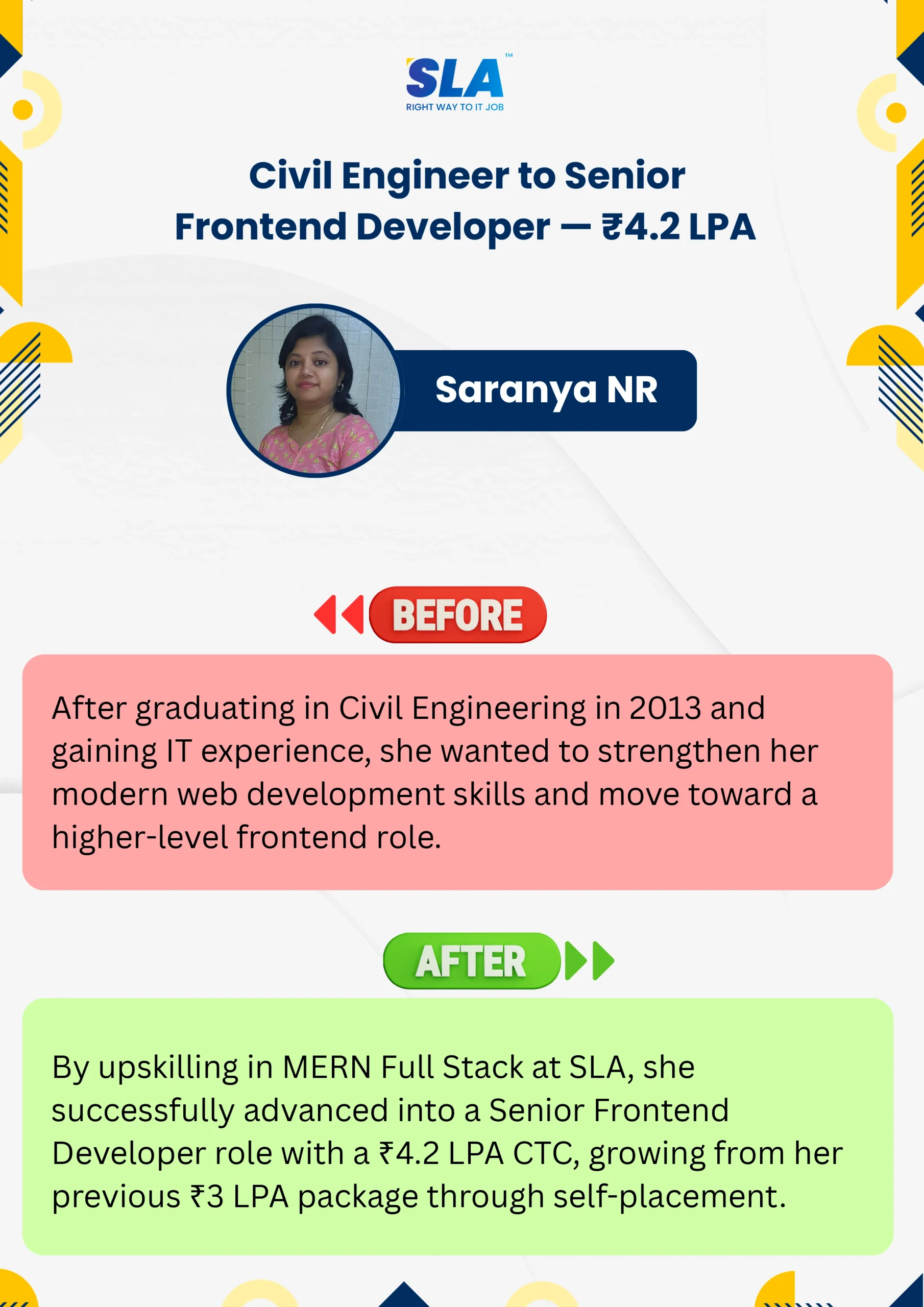
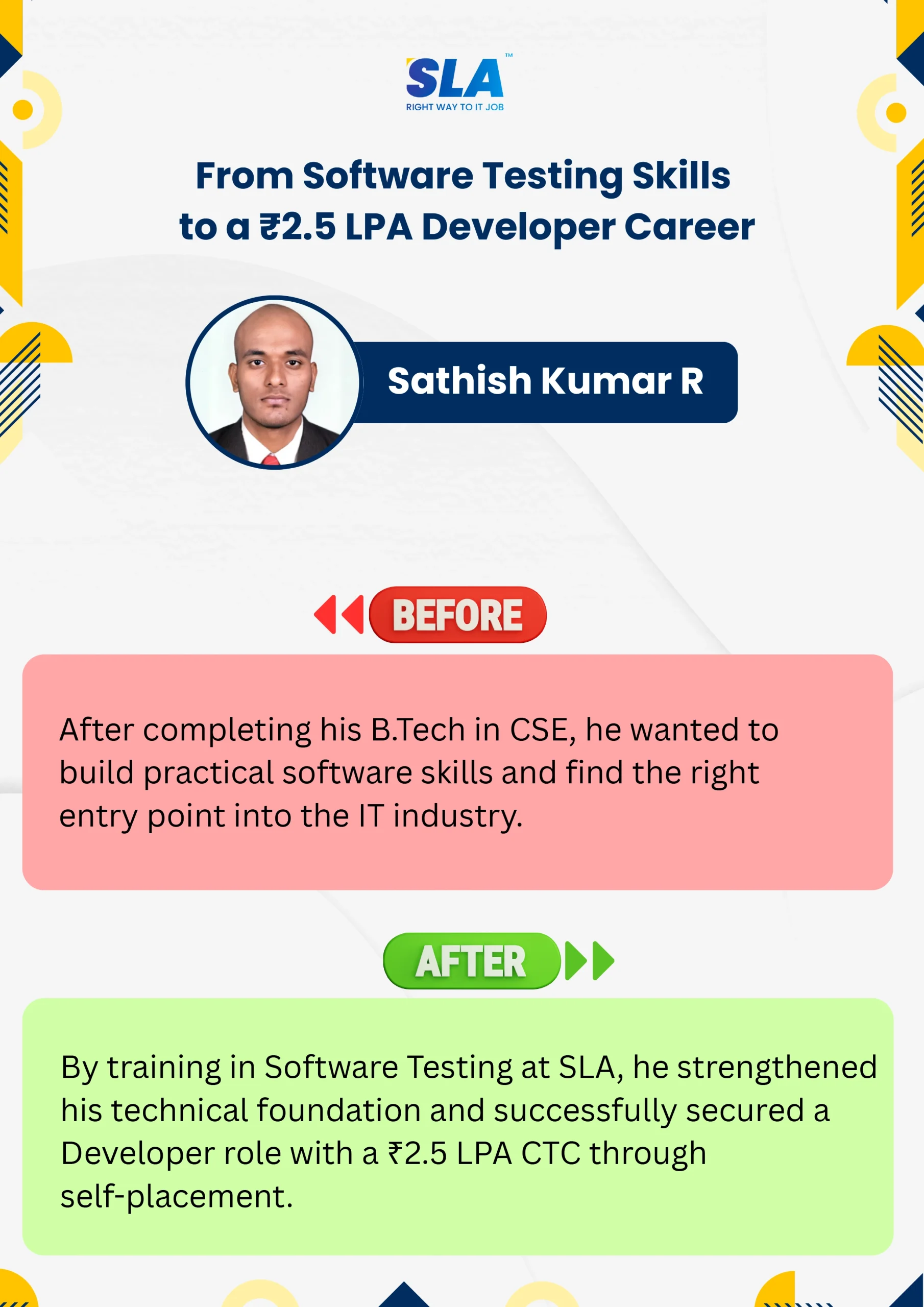
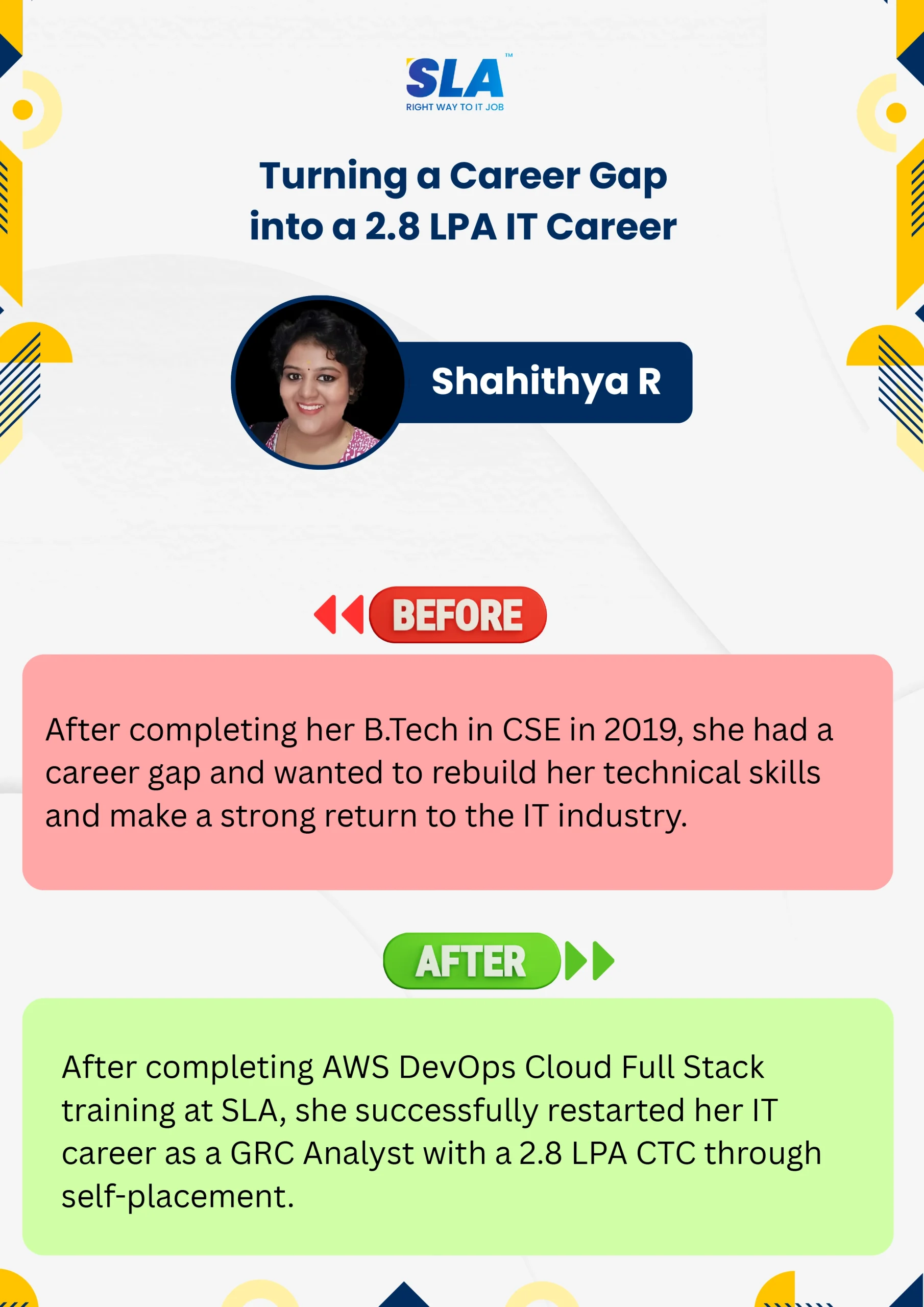
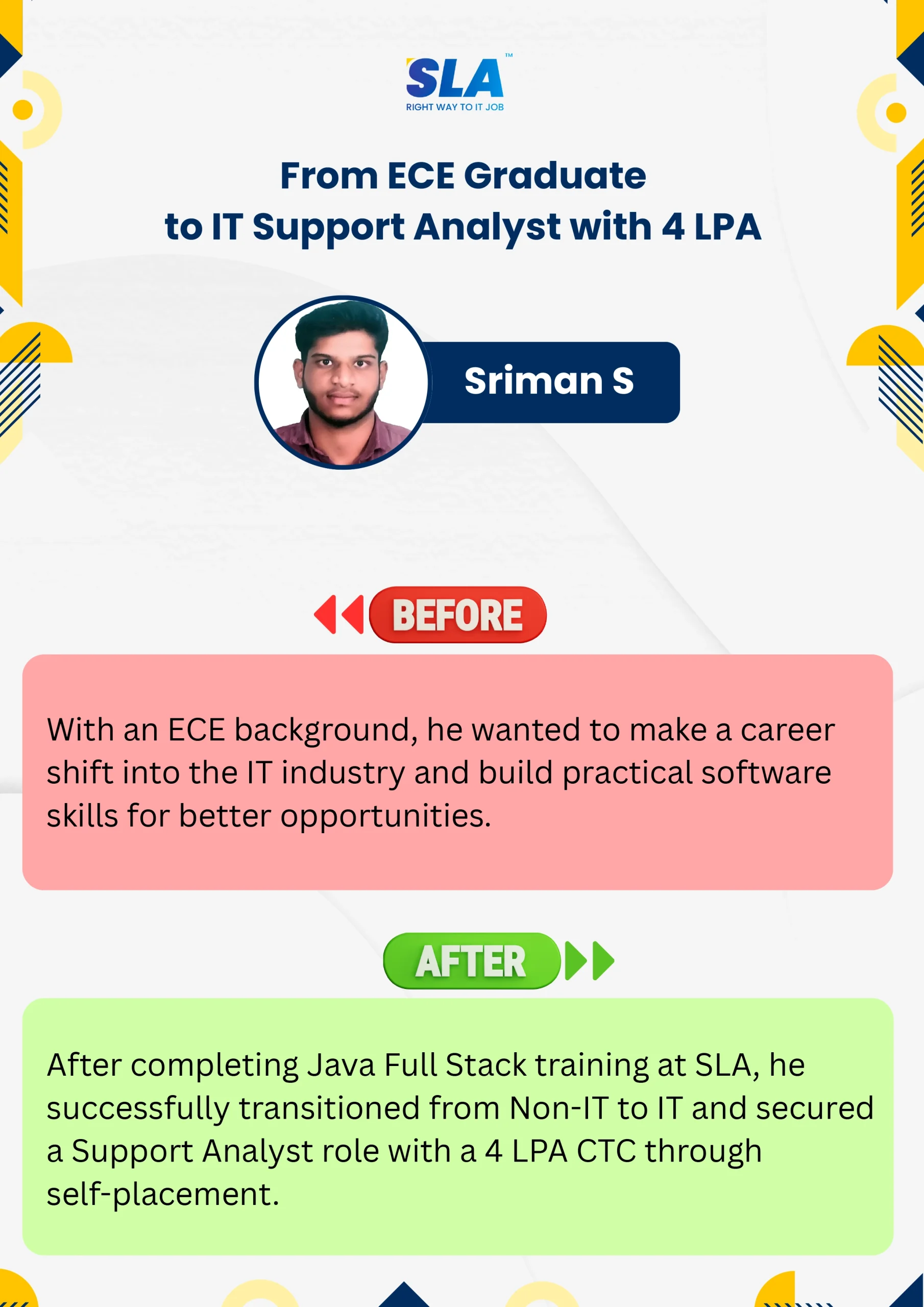
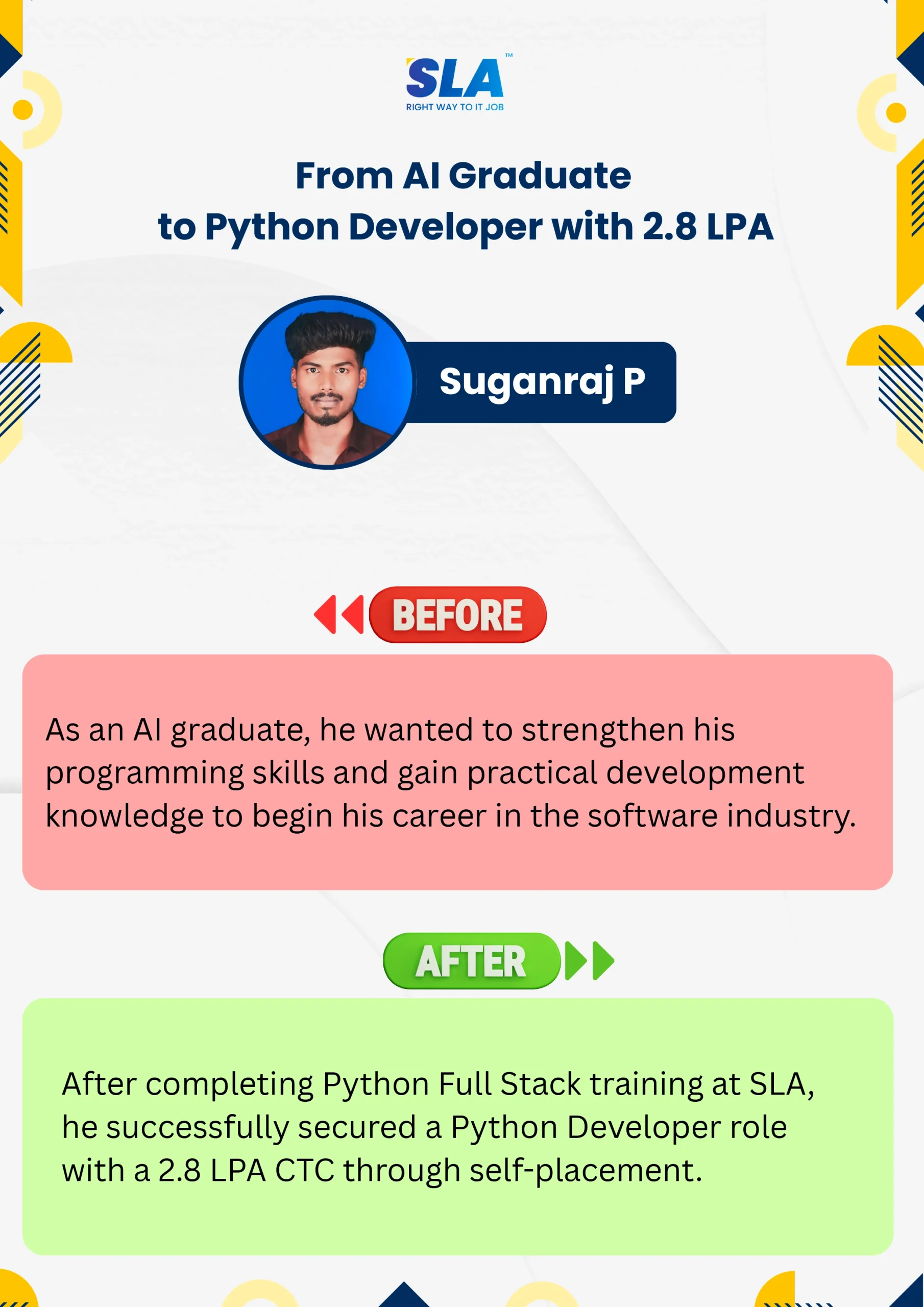
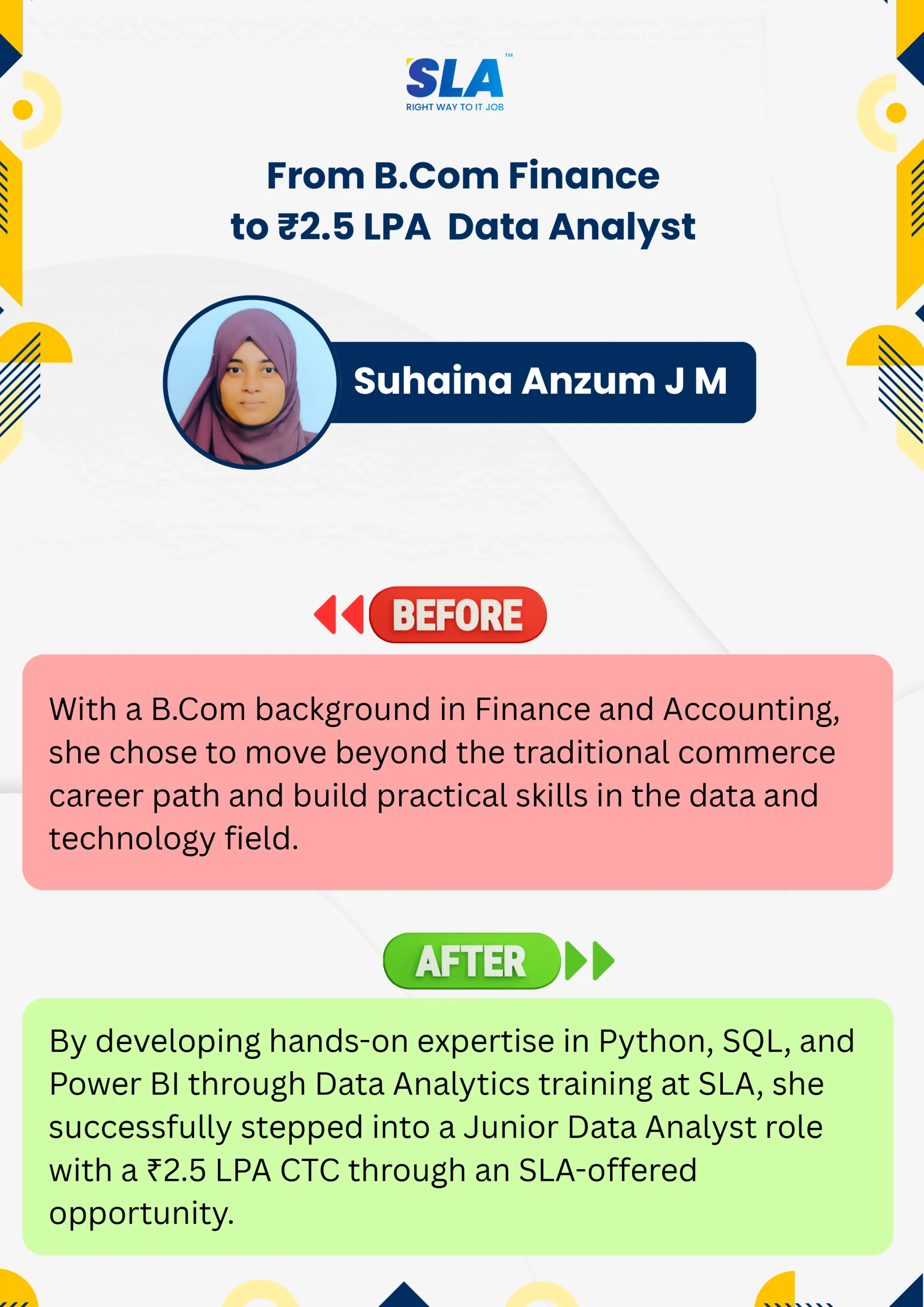
Google Reviews

Rating
4.8
1,053 Google reviews

Surya
Special thanks to Vishal Sir, the Placement Officer, for his interview guidance, resume support, and continuous motivation throughout the placement process. I would also like…

Click here for Full Review

SARAN M
SLA Institute provides training in communication and aptitude along with strong technical skills. The trainers explain concepts clearly with a practical approach, which helps build…
Click here for Full Review

MATHAN KUMAR G EEE
SLA Institute provides a structured learning environment for data analytics. The syllabus is relevant, and trainers are knowledgeable. Some sessions were very useful practically, while…
Click here for Full Review

Shaaru Menan
I had a 3 year career break. Joined SLA on Java Full Stack course and completed it.Did projects with the help of my Mentor. They…
Click here for Full Review

NalluKumar Ravichandran
Hi, I recently completed the DOT NET Full Stack Development course at SLA, and I had a great learning experience. The teaching style and student…
Click here for Full Review

Nithish Sahoo
I had an excellent experience taking this DevOps course. The curriculum is well-structured and covers both fundamental and advanced DevOps concepts in a clear manner.…
Click here for Full Review
Discover What Our Students Have To Say
See More ReviewsRelated Blogs for
The Java Full Stack Course
Object Class in Java
Published On: April 9, 2026
In the Java programming language, the top of the class hierarchy is occupied by the…
Variables in Java
Published On: April 8, 2026
Introduction to Java Variables In the programming world, the most prized possession is data. But…
Java Developer Roadmap – From Beginner to Expert
Published On: May 9, 2025
Introduction Java continues to serve as a fundamental technology in the field of software development.…
Full Stack Developer Course Eligibility
Published On: February 18, 2025
Understanding the Full Stack Developer course eligibility is essential for anyone looking to master both…
Java Developer Course Eligibility
Published On: February 18, 2025
Introduction To enroll in a Java Developer course, it's important to understand the eligibility for…
Full Stack Developer Course Fee in Chennai
Published On: January 29, 2025
Full Stack Developer Course Fee in Chennai Full-stack developer training programs typically offer a wide…
Top 10 Full Stack Developer Challenges and Solutions
Published On: November 19, 2024
Introduction Full stack engineers have to oversee both client-side and server-side development, which can be…
Java Full Stack Developer Salary for Freshers and Experienced
Published On: September 4, 2024
Introduction Java Full Stack development has become a core skill for professionals working in web…
Java Full Stack Project Ideas
Published On: July 20, 2024
Java Full Stack development is about developing fully functional web applications using frontend frameworks and…